Eight Counties and 79 Communities Sharing Ground with 760
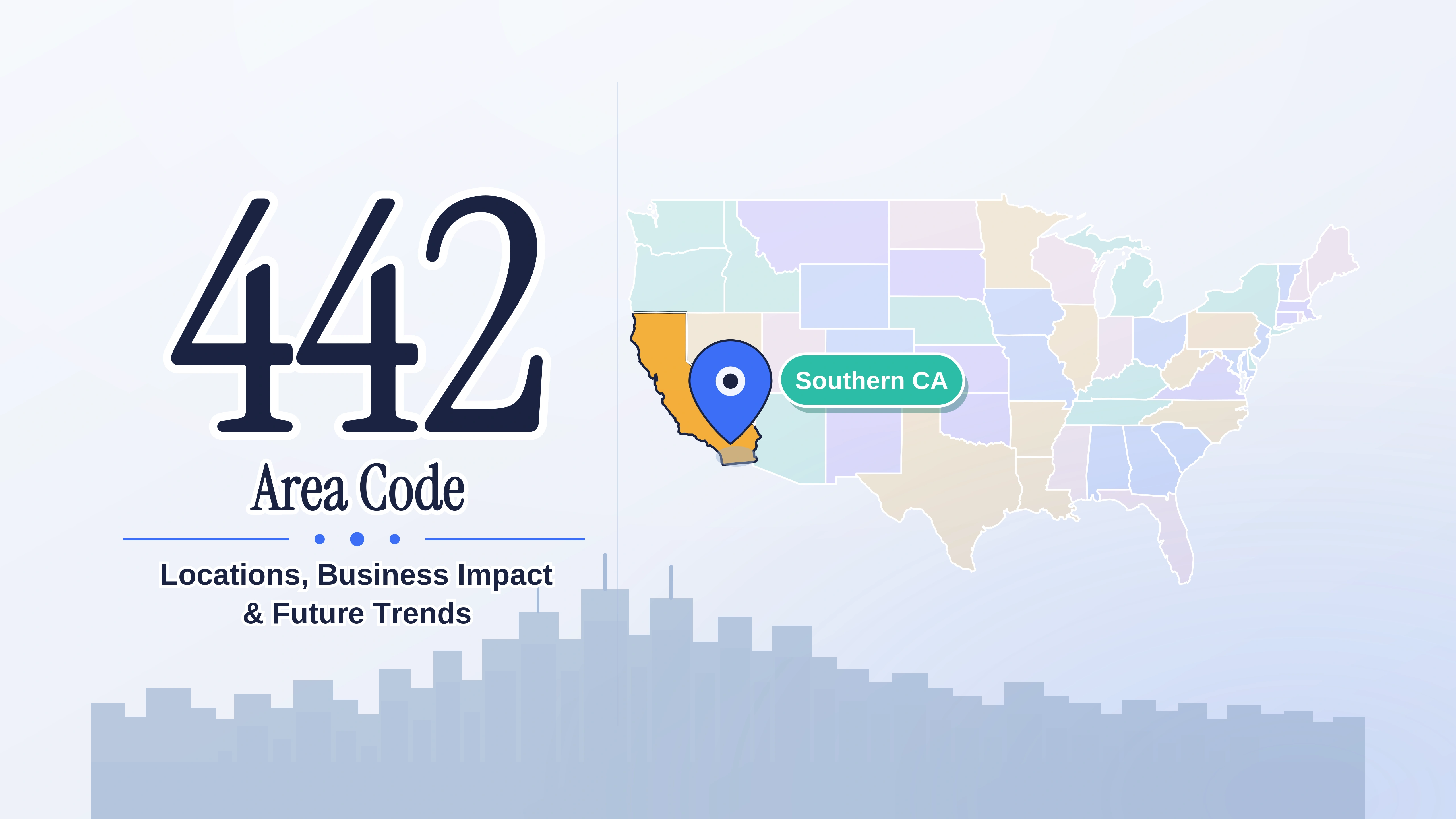
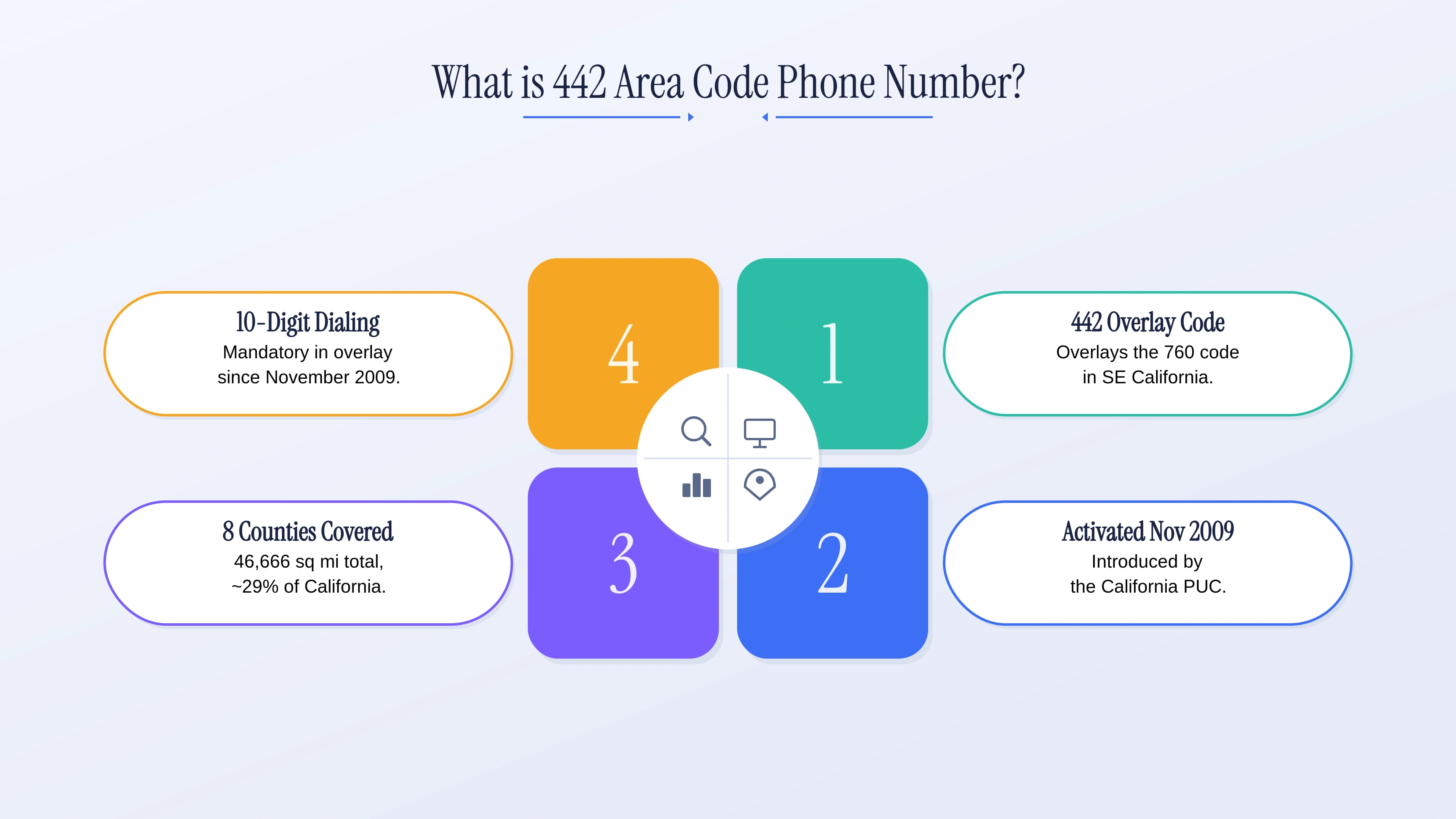
The 442 prefix is a key part of California's phone network. It covers a large stretch of southeastern California. This area spans eight counties and more than 79 communities. The California Public Utilities Commission introduced it on November 21, 2009. It works as an overlay to the existing 760 code. That means both prefixes share the same geographic boundaries.
The 442 sits alongside the 760 and 951 codes. It is more than a string of digits. It signals regional identity and enables local connectivity. It also reflects California's ongoing need to meet growing phone demand.
Key Takeaways
- The 442 prefix covers southeastern California — spanning portions of San Diego, Riverside, San Bernardino, Imperial, Inyo, Mono, Los Angeles, and Kern counties — representing approximately 29% of the state's total land area
- Businesses within the region can leverage the local prefix for marketing and building a strong community presence
- Residents and consumers benefit from expanded number availability, easier trust-building with nearby businesses, and modern 10-digit dialing standards in place since 2009
- The overlay design is part of a broader trend of area code management and technological advancement across California's telecom landscape
- Understanding the dialing format, number portability rules, and scam risks helps individuals and businesses navigate the numbering plan effectively
Why Did Regulators Choose an Overlay over Splitting 760?
The 442 prefix is a key part of California's phone network. It serves southeastern regions that need their own local phone numbers. It was set up as an overlay for the 760 code. It went live on November 21, 2009, after a ruling by the California Public Utilities Commission. Regulators chose the overlay instead of splitting 760 by geography. This spared millions of businesses from changing their numbers a second time in about a decade. Both codes now share the same territory.
Exploring California's Area Code System
California's area code system keeps changing. Population growth and more devices use up available number blocks. The 760 code was carved from 619 on March 22, 1997. Before that, 619 split from 714 in 1982. Within a decade of 760's launch, cell phones and pagers spread fast. This threatened to use up its central office prefixes. The overlay kept all existing numbers. It also opened fresh inventory for new subscribers across the southeastern California corridor.
The Need for the 442 Area Code
A geographic split was proposed at first. Under it, San Diego and Imperial County numbers would move to the new prefix. But business pushback reversed that plan. Companies had already changed numbers in the 1997 760/619 split. They resisted another disruptive change. The California PUC chose the overlay design instead. Since November 2009, all callers in the region must dial the full 10-digit number for every local call.
Geographical Overview: Locations Served by This Prefix
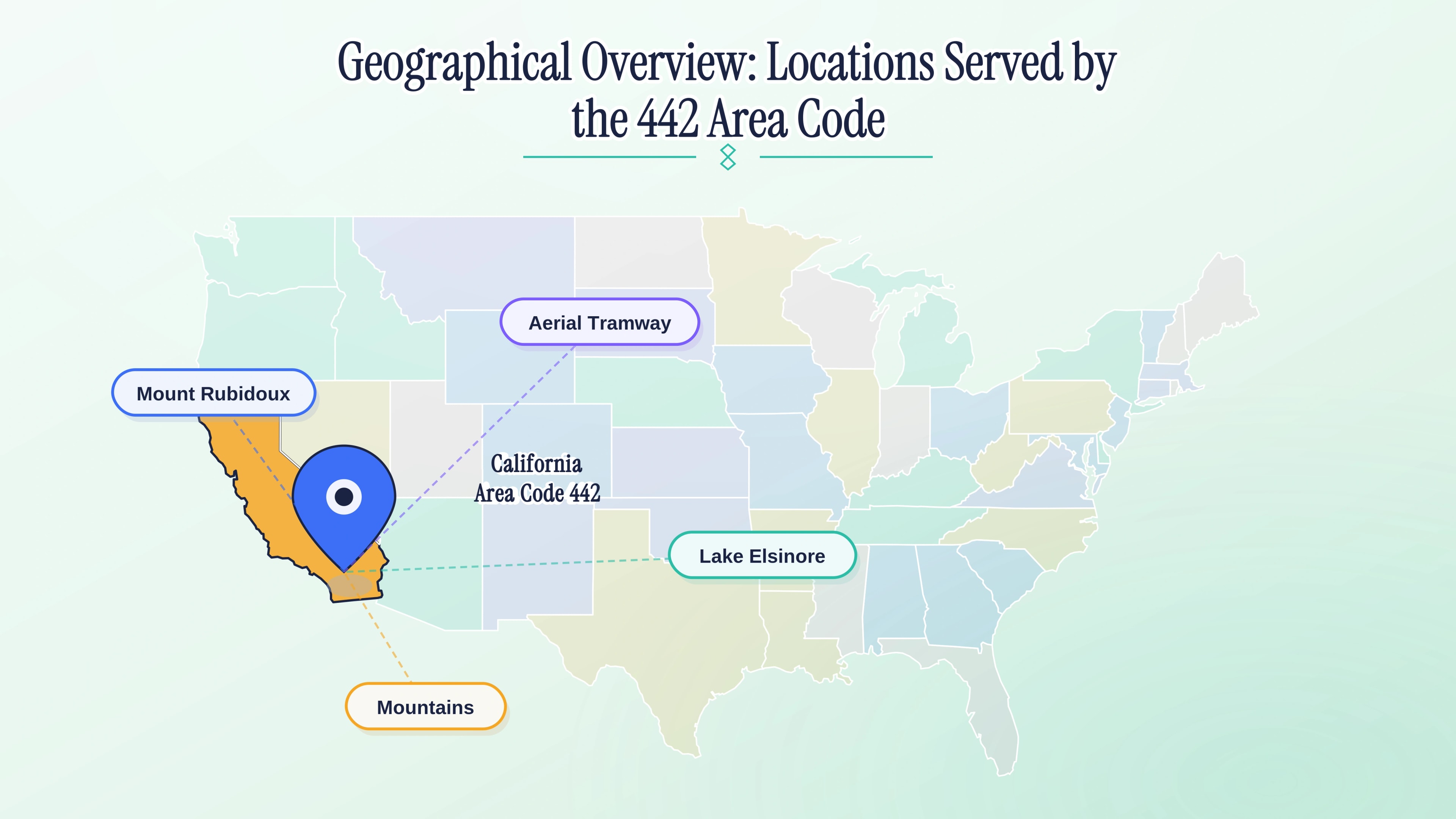
The 760/442 overlay covers 46,666 square miles. That is about 29% of California's entire land area. This makes it the single largest numbering plan area in the state. Eight counties and more than 79 communities fall within its borders. The region spans desert, mountain, coastal, and farm landscapes.
Key Areas Within the 442 Region
The overlay serves a wide swath of southeastern California. Major population centers include Palm Springs, Victorville, Indio, Escondido, and El Centro. Others include Oceanside, Carlsbad, Vista, Hesperia, San Marcos, La Quinta, and Desert Hot Springs. The footprint stretches north through the Eastern Sierra, including parts of Inyo and Mono counties. It also reaches west into parts of northern Los Angeles and Kern counties.
| City / County | Notable Landmarks & Features |
|---|---|
| Palm Springs | Aerial Tramway, Art Museum, Coachella Valley gateway |
| Victorville / Hesperia | High-desert commercial hub, San Bernardino County |
| Escondido / Oceanside / Carlsbad | North San Diego County — coastal and inland cities |
| Indio / La Quinta | Coachella music festival site, resort communities |
| Imperial County (El Centro) | Agricultural heartland, US–Mexico border region |
| Riverside County | Joshua Tree National Park, Temecula Valley Wine Country |
| Inyo / Mono Counties | Death Valley, Eastern Sierra Nevada, Bishop |
Understanding the Dialing Format for This Prefix
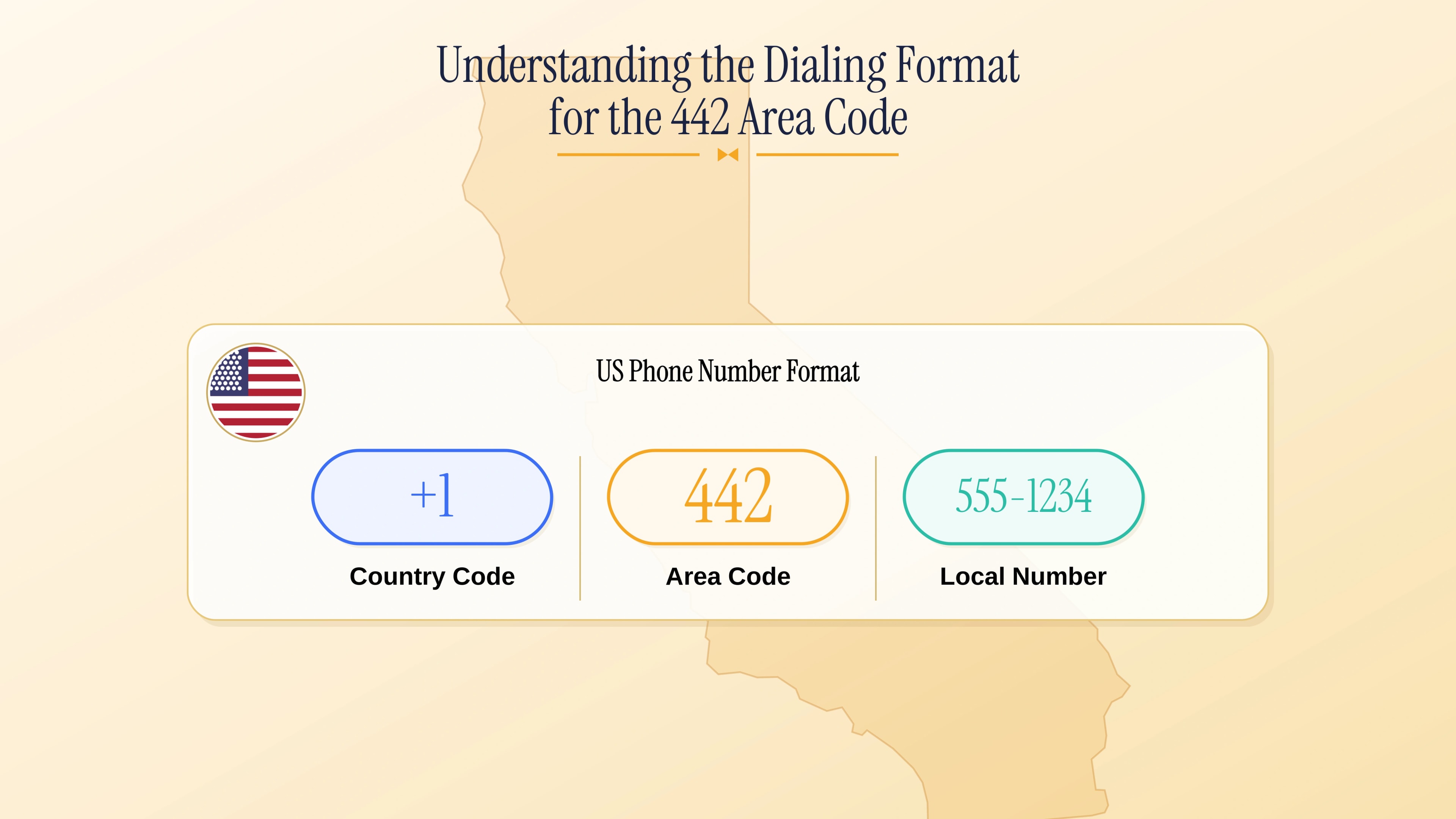
Correct dialing matters for anyone calling within or into the overlay region. The 760 and 442 codes share the same geography. So 10-digit dialing has been required for all local calls since the overlay launched in 2009.
Local Dialing Format
To call any number in the overlay region, dial all 10 digits including the prefix. For example, dial 442-555-1234. The rule applies whether you call from a 760 or a 442 number. Both serve the same geography.
What Happens Without the Area Code?
A call to an overlay number with only seven digits will fail. Most carriers in the region require the full 10-digit format. Calls made with the subscriber number alone usually return an error or an intercept recording. That recording tells the caller to redial with the full code.
Dialing Outside the 442 Area Code
- To call outside the overlay, dial 1 + the full 10-digit number — for example, 1-323-555-1234 for a number in the 323 prefix
- Long-distance calls within California but outside the overlay follow the same 1 + 10-digit format
- For international calls, use the destination country code alongside the standard US +1 prefix before the 10-digit number
How This Prefix Affects Businesses and Consumers
The overlay has reshaped how people communicate across the region. That region covers nearly a third of California's land area. Both businesses and residents have adjusted their habits. They have also found new opportunities that the dual-prefix system creates. Acepeak's cloud phone platform covers provisioning, porting, and compliance across all major US regions.
Leveraging the Area Code for Marketing and Local Presence
For businesses in southeastern California, a local overlay number signals community roots. Consumers trust numbers they see as local. They also call these numbers back more often. Companies using the prefix can look like accessible, neighborhood-level service providers. This is a real advantage in markets like Palm Springs hospitality, Coachella Valley tourism, or Riverside County logistics and distribution.
Advantages of Using a Local Area Code
A local number makes a business feel closer to its customers. People are more likely to answer a familiar prefix. Local numbers also beat out-of-area numbers on answer rates. The overlay design added more available inventory too. This gives new and growing businesses more options when they pick a distinctive number.
Changes in Dialing Patterns and Number Availability
Since 2009, 10-digit dialing has been the standard across the full overlay footprint. Residents and businesses have fully adjusted. The format has made full-number dialing normal across Southern California. Available number inventory stays healthy thanks to the dual-code structure.
Carriers, VoIP Platforms and Virtual Apps That Offer 442
Getting a number in the overlay region is simple. You have many provider options across different carrier types.
Steps to Acquire a 442 Phone Number
- Determine the use case — whether for business operations, personal use, or a secondary contact line
- Research local providers — compare features, pricing, and number availability among carriers serving the 760/442 geography
- Contact the provider — select a local number with the 442 prefix and confirm the activation process
- Complete setup — activate the line, port any existing numbers if needed, and integrate with existing communication systems
Services and Providers Offering 442 Numbers
Many trusted carriers provide numbers within the overlay. These include local landline providers in the 760/442 geography. VoIP platforms such as Vonage, RingCentral, and Grasshopper offer them too. So do major mobile carriers like AT&T, Verizon, and T-Mobile. Virtual number services such as Google Voice and Sideline are options as well. A local overlay number shows real regional presence. That is valuable for businesses targeting Coachella Valley visitors, Inland Empire residents, or communities across the high-desert corridor.
From Oceanside to Needles: Trust, Inventory and Savings
The overlay prefix keeps gaining traction. Businesses and residents see its practical benefits. A cloud phone system in the 442 region can go live the same day. You need no office or hardware. Professional call routing and voicemail come included.
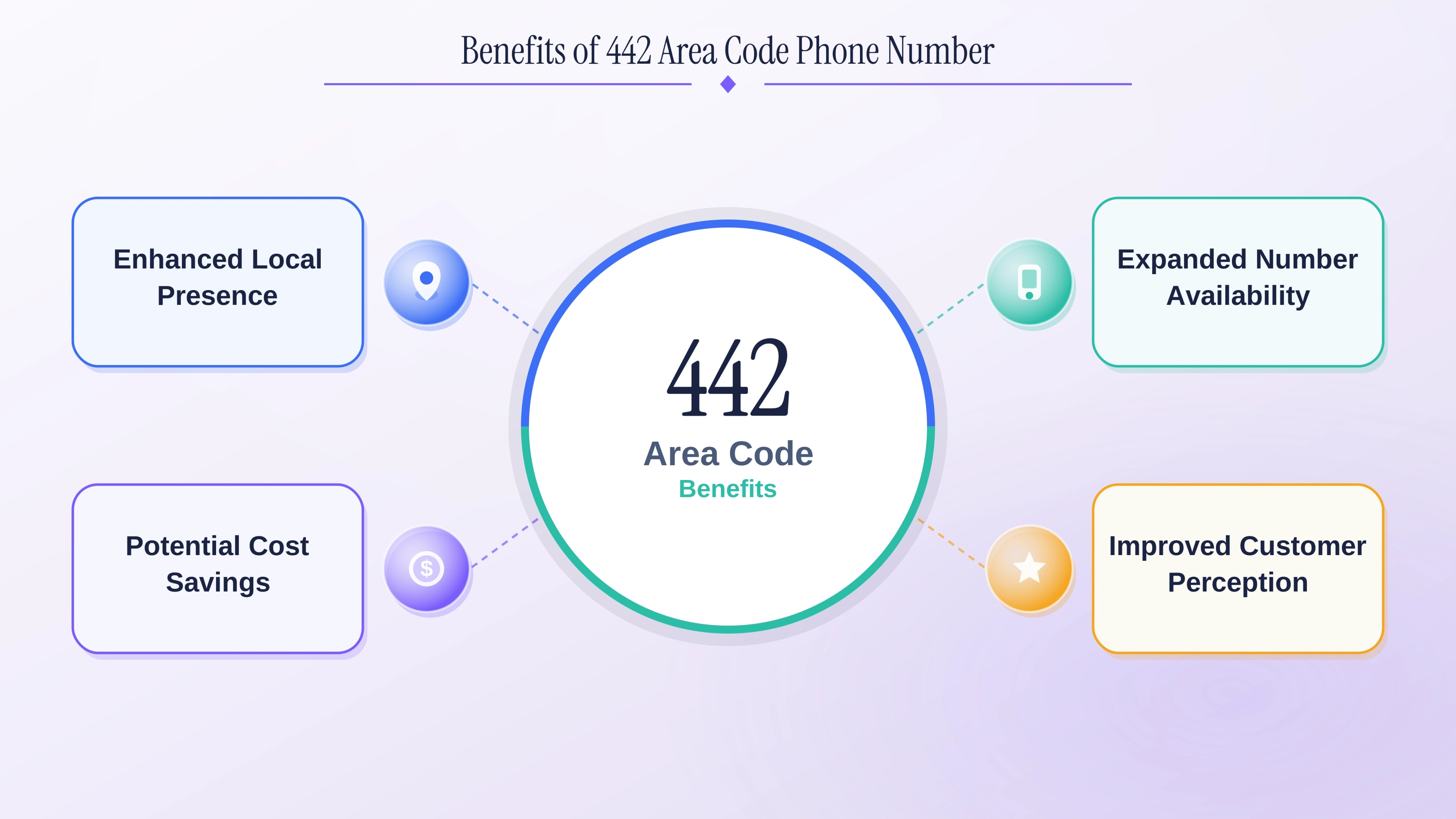
Enhanced Local Presence
A local number signals closeness and community investment right away. Some businesses span the overlay's varied geography, from coastal Oceanside to desert Needles. For them, a local number builds trust and familiarity. That trust drives customer engagement and long-term loyalty.
Expanded Number Availability
The overlay design doubled available inventory for the region. Businesses moving into fast-growing communities like Victorville, Hesperia, or the Coachella Valley still find distinctive, memorable numbers. They no longer compete for used-up 760 assignments.
Potential Cost Savings
Local overlay numbers can lower per-call costs for businesses and customers alike. Consumers who dial a local number avoid long-distance charges. VoIP providers also tend to offer competitive flat-rate pricing for overlay-region numbers.
Improved Customer Perception
Research shows that consumers trust businesses with local numbers more than out-of-area brands. A number tied to the 442 prefix tells customers the business is rooted in their region. That signal leads to higher answer rates, stronger brand affinity, and better retention.
Understanding Local Number Portability with This Prefix
Local number portability lets people and businesses keep their phone numbers when they switch carriers or service types. This holds true even when moving between the 760 and 442 codes in the same overlay geography.
Porting a Number to the 442 Area Code
Porting to the 442 prefix follows the standard FCC local number portability process. Businesses and individuals work with their current provider to start the transfer. The two overlay codes share the same geographic footprint. So porting between them is simple and needs no change in service location.
What Happens if You're Already Using the 760 Area Code?
Existing 760 numbers stay fully valid. They can continue indefinitely alongside newer 442 assignments. The overlay does not force you to change a 760 number. Businesses that built brand recognition around a 760 number can keep it. Meanwhile, new subscribers receive the 442 prefix.
Preventing Scam Calls in This Region
The overlay region has seen more fraudulent calls. These calls use the local prefix to appear familiar to residents. Scammers use spoofing technology to display numbers with the 442 or 760 prefix. This raises answer rates across the southeastern California corridor.
Recognizing Scam Calls
Fraudulent callers often pose as government agencies, utility providers, or tech support teams. A common tactic is fake urgency. They may claim your Social Security number is suspended, your utility bill is overdue, or your device is hacked. These claims aim to stop you from thinking clearly. Treat any inbound call that creates false pressure as suspicious until you verify it on your own.
How to Protect Yourself
- Never share Social Security numbers, bank account details, or passwords on an inbound call, regardless of how the caller identifies
- Hang up on suspicious callers and dial the organization's official published number directly to verify the claim
- Register with the National Do Not Call Registry to reduce unsolicited contact
- Use call-screening features available through most modern carriers and smartphones to flag or silence unfamiliar numbers
Report suspicious calls at reportfraud.ftc.gov. Doing so helps track fraud patterns. It also protects communities across the southeastern California corridor.
| Scam Technique | How It Works | Impact on the Overlay Region |
|---|---|---|
| Area Code Spoofing | Technology alters the caller ID display to show a local-looking prefix, even when the caller is remote | Local-appearing numbers raise answer rates, making residents more likely to engage and potentially fall victim to the scheme |
The Future of This Prefix and Its Impact on Californians
The overlay's long-term outlook reflects broader trends in California telecom. These include steady population growth, faster device adoption, and rapid VoIP growth. The 760/442 footprint already covers 29% of the state's land area. That scale magnifies the impact of each of these forces.
Potential for Additional Area Code Splits or Overlays
Demand for numbers keeps growing. IoT devices, new business lines, and mobile growth drive it. Regulators may add more relief for the 760/442 footprint. They could do this through new overlays or geographic realignments. Businesses and residents should watch California PUC updates for future numbering plan changes in southeastern California.
Technological Advancements and VoIP Adoption
Voice over Internet Protocol keeps reshaping how the overlay prefix is used. VoIP platforms let businesses get numbers and route calls anywhere. So a prefix's geographic tie is now more a branding choice than a physical limit. AI-driven call routing, analytics, and automation are becoming standard tools. They add more strategic value to local numbers as anchors for customer-facing communications.
Get Your Southern California 442 Number Today
Establish a local southeastern California presence in minutes. Acepeak makes it simple to provision, port, and manage your 442 business number from anywhere.
A Strategic Asset Across a Third of California's Land
The 442 prefix in California is far more than a routing number. It covers nearly a third of the state's land area. It connects communities from coastal San Diego County to the Eastern Sierra. It also gives businesses a credible local identity across one of America's most economically dynamic regions. It was born in 2009 from the need to ease pressure on the 760 code. That history reflects California's relentless growth and the phone network needed to support it.
For businesses, a local overlay number is a strategic asset. It builds trust, improves answer rates, and shows real community investment. For residents, it is a familiar marker of place in a large, varied region. VoIP adoption keeps growing, and new technologies reshape how people communicate. The 760/442 overlay will keep adapting. But its role as a connector of people, businesses, and communities across southeastern California will only grow stronger.
Questions, answered.
The 442 prefix covers southeastern California as part of an overlay with 760. It serves portions of San Diego, Riverside, San Bernardino, Imperial, Inyo, Mono, Los Angeles, and Kern counties — spanning approximately 46,666 square miles, the largest numbering plan area in California. Major cities include Palm Springs, Victorville, Escondido, Oceanside, Indio, and El Centro.
The prefix was activated on November 21, 2009, by the California Public Utilities Commission to relieve number exhaustion in the 760 geography. A geographic split was initially proposed but rejected after protests from businesses that had already changed numbers when 760 split from 619 in 1997. The overlay preserved all existing numbers while opening fresh inventory.
Dial the full 10-digit number including the prefix — for example, 442-555-1234. Ten-digit dialing has been mandatory in the overlay region since 2009. For calls from outside the region, dial 1 + the 10-digit number.
Yes. Local number portability allows individuals and businesses to retain their existing numbers when switching carriers. A 760 number can be ported to a new provider offering 442 service and will continue to function without interruption.
Never share sensitive personal or financial information on an inbound call. Verify callers by hanging up and dialing the organization's official number directly. Register for the National Do Not Call Registry, use carrier-provided call-screening tools, and treat any call creating artificial urgency — such as claims about a suspended Social Security number — as a red flag.
Signing up for a 442 area code number takes minutes with a cloud phone provider — no local office in California required. Pick the number, connect it to your existing phone or app, and calls route in immediately. This keeps the 442 area code presence you already have while adding the local credibility California customers respond to.