A Long-Standing Code and the Choice It Shapes
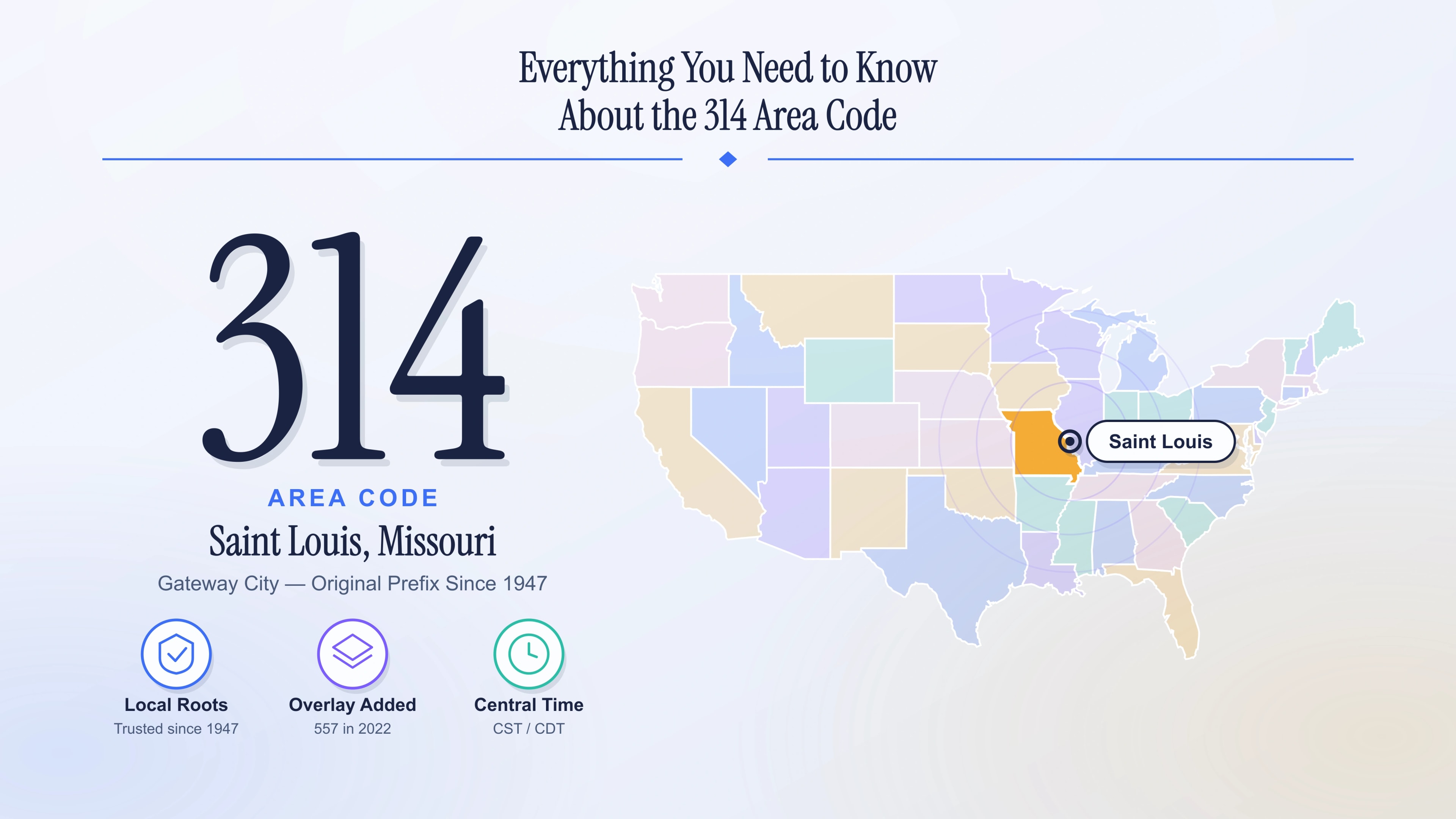
The 314 code has belonged to St. Louis since 1947, when it was drawn up among the country's first area codes, and today it covers the independent city along with its inner-ring suburbs in St. Louis County. New lines there can carry either 314 or the 557 overlay, so a firm opening in Clayton or Webster Groves has a real decision to make about the digits customers will see first. What follows explains how the territory reached its current shape, which inner-ring suburbs it reaches, the cost of a number, and the steps to get a line running.
Key Takeaways
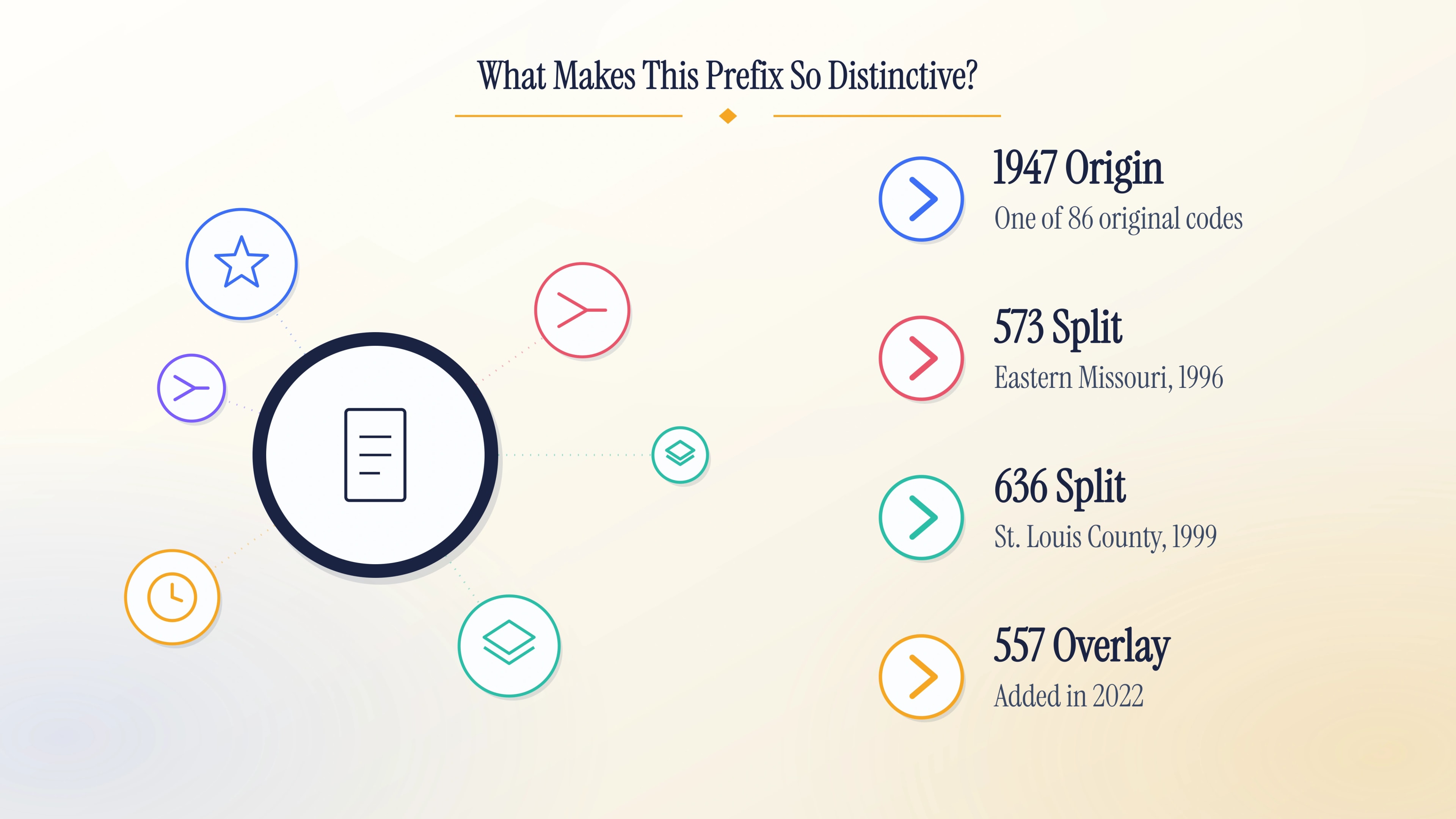
- Origin — the 314 area code was one of the original 86 area codes created in 1947, and it originally served all of eastern Missouri.
- Coverage — after two splits, the territory now centers on the city of St. Louis and its inner-ring suburbs in St. Louis County.
- Overlay partner — the 557 code was added in 2022, so both prefixes now share the same territory and require ten-digit dialing.
- Time zone — Central Time (CST, UTC−6 / CDT, UTC−5).
- Typical cost — a standard local number runs from a few dollars a month with a cloud provider up to several hundred dollars, or more, for a premium vanity pattern.
The Value of a St. Louis Area Code
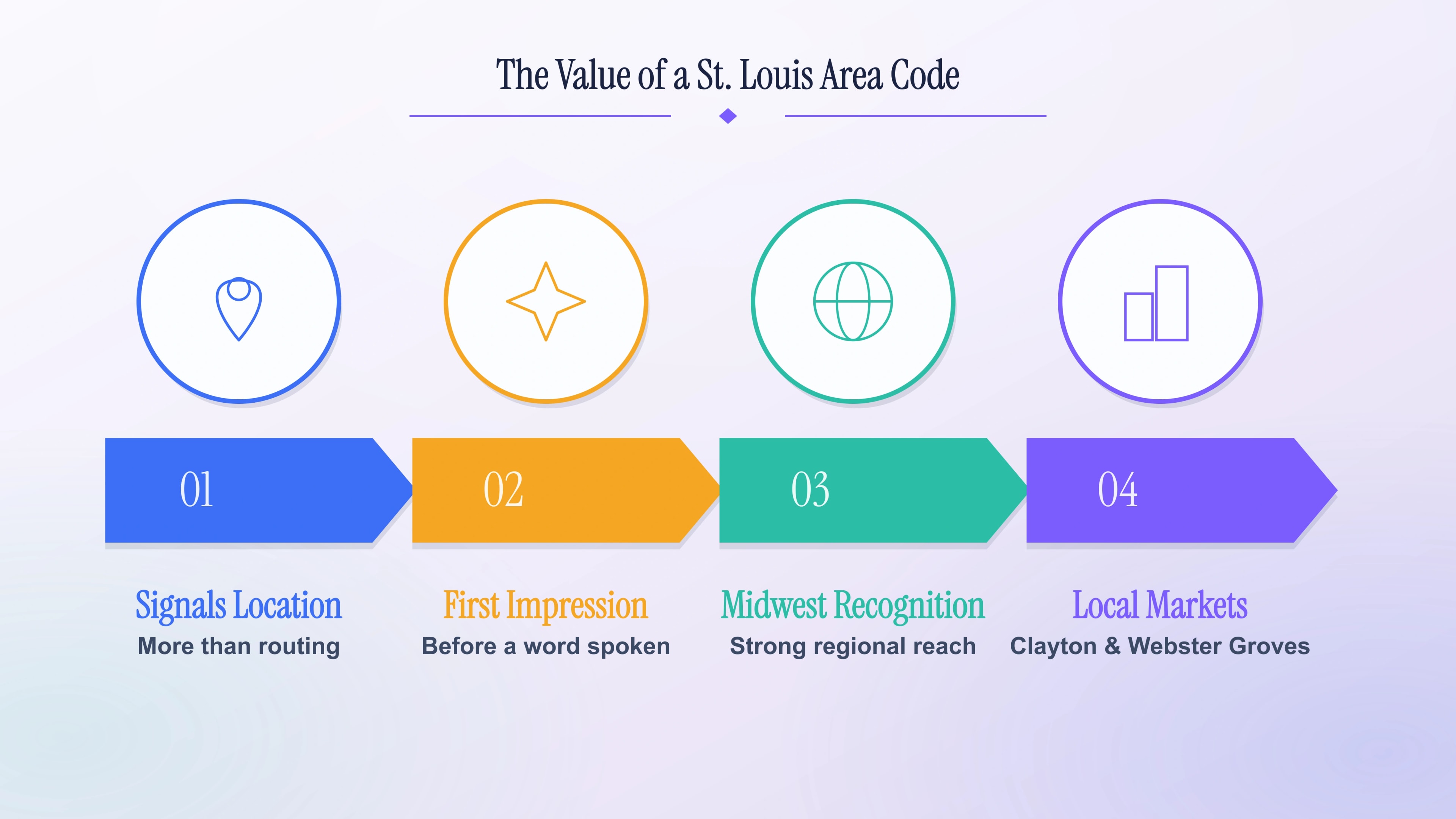
Before a prospect in University City or Maplewood answers, the caller ID has already suggested where the business is based. A 314 number puts it squarely in St. Louis, the Mississippi River city that has used these digits since the mid-20th century and whose code is widely recognized across the Midwest. That quick read of local roots works in a company's favor well before any conversation about price or service begins.
Two Splits, Then an Overlay Instead of a Third
The code traces back to 1947, when it was assigned as one of the original area codes covering all of eastern Missouri. As the region's population and phone demand grew, regulators split the territory twice: 573 took most of eastern Missouri outside the St. Louis metro in 1996, and 636 took the suburban St. Louis County exchanges in 1999. Rather than split a third time, planners added the 557 overlay in 2022 once the remaining supply of 314 numbers neared exhaustion. That history, paired with the city's identity as a river and rail hub, is part of why the prefix still reads as a marker of an established, homegrown presence.
Coverage, Time Zone & Suburbs Served
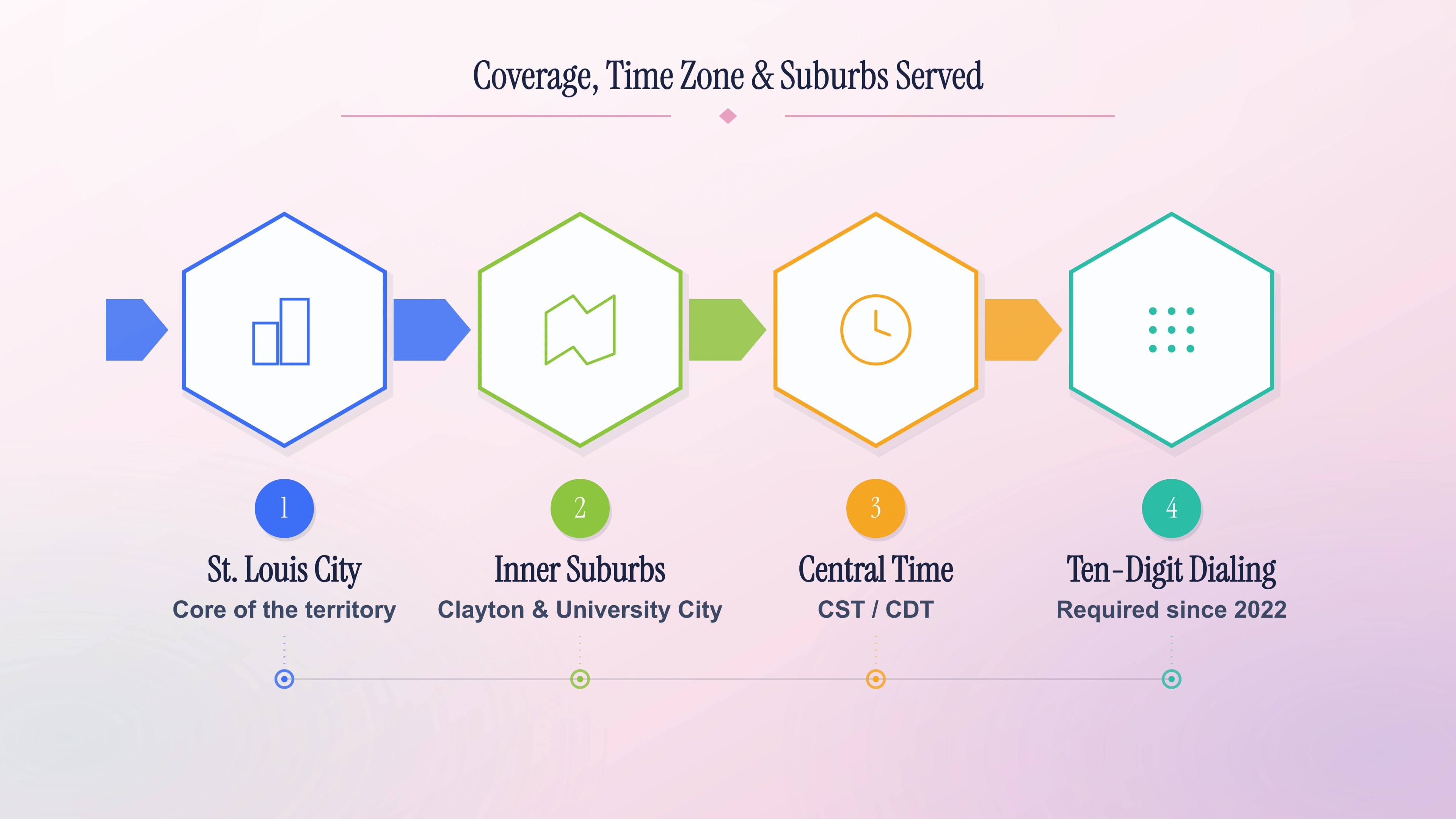
The service territory now centers on the independent city of St. Louis and extends into its inner-ring suburbs in St. Louis County. Major communities include Clayton, University City, Webster Groves, Maplewood, Richmond Heights, Brentwood, Ladue, and Olivette. The entire footprint sits in the Central Time zone, observing CST in winter and CDT during daylight saving. Since the 557 overlay took effect in 2022, every local call in the territory requires all ten digits, even calls between two 314 numbers.
Business Benefits of a Local St. Louis Number
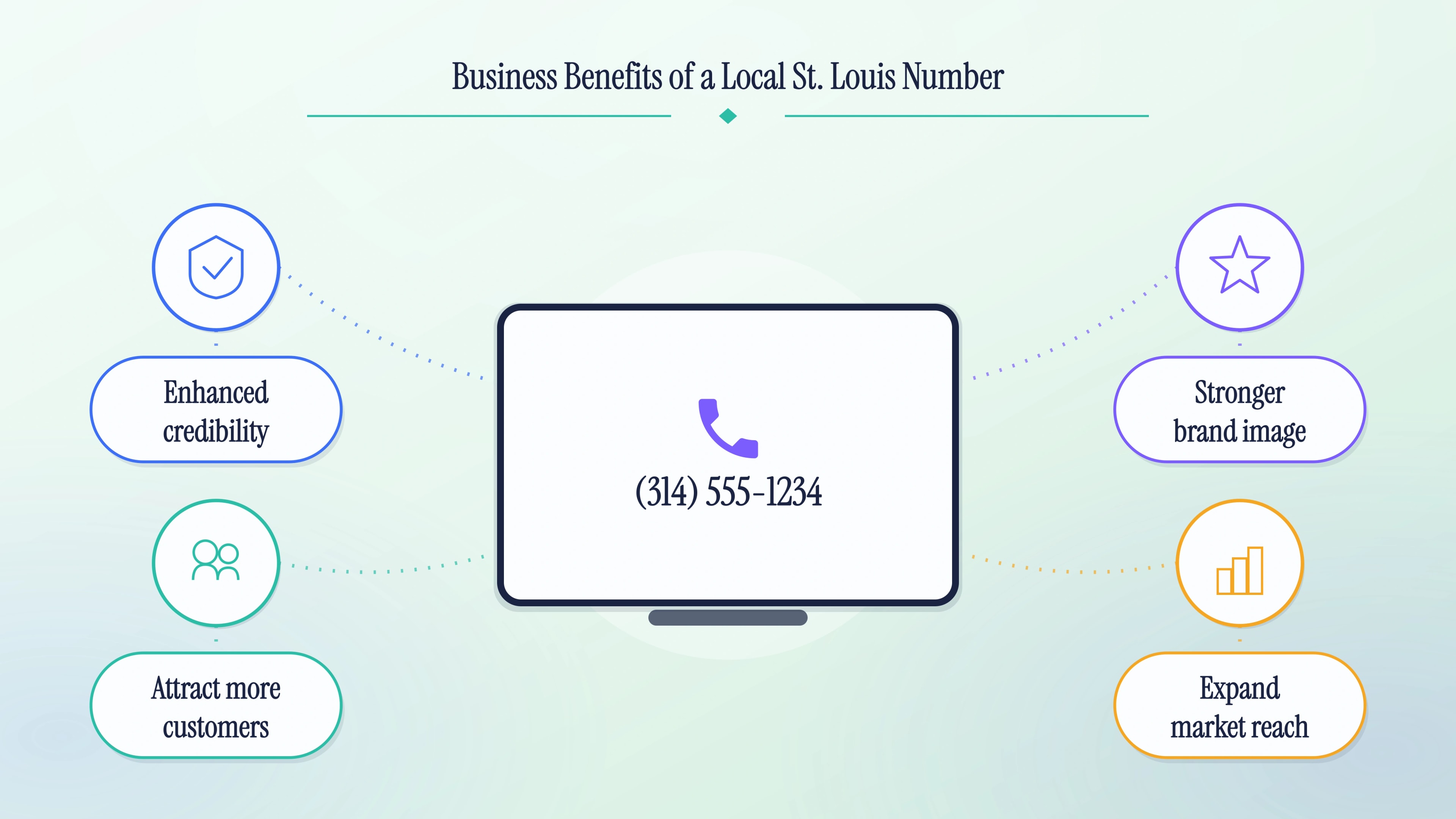
Businesses cite four consistent advantages to carrying a recognizable St. Louis number:
- River-hub credibility — a 314 prefix ties a business to St. Louis's identity as a Mississippi River and rail hub, reading as an established local presence rather than an out-of-state caller.
- Consistent identity across inner-ring suburbs — pairing a 314 number with listings in Clayton, University City, and Webster Groves keeps a business recognizable now that the 557 overlay shares the same territory.
- Higher answer rates in logistics and healthcare outreach — outbound calls to clients across the region's logistics, healthcare, and financial-services sectors get picked up more often on a familiar 314 number than an unfamiliar out-of-area line.
- Reach into St. Louis without added rent — a virtual 314 line lets a team based anywhere maintain a St. Louis identity, the same approach Acepeak covers for the Kansas City market in its 816 area code guide.
Planning Around a Tight Supply of Original Numbers
Supply of 314 numbers was close to running out before planners added the 557 overlay in 2022, so the original prefix is not something to take for granted. Inventory still turns over whenever numbers get returned, ported out, or handed to a new holder, which rewards a plan built around what is actually open today. Review a provider's current listings for the city and inner-ring suburbs, settle on either a simple sequential number or a vanity pattern, and check that activation will not drag. Accepting a wider range of digits is the quickest way to a working line.
One Number for City and County Audiences
Visibility is what turns a new 314 line into calls. List it in the website header, on a Google Business Profile for each office, whether that office is in the city or in Brentwood or Ladue, in every email signature, on vehicle wraps, and on printed materials, rather than leaving it buried in account settings. A business serving both the independent city and the St. Louis County suburbs gets the most from showing one consistent number to both audiences, and that consistency keeps call-tracking figures reliable when results are reviewed.
Judging the Switch by Calls, Leads and Reply Speed
Judge the new St. Louis line on three indicators: total inbound calls, the share of those calls that become leads, and how fast logistics, healthcare, and financial-services contacts reply to outreach. Lining up a few months of those figures against the previous number's results gives a straightforward verdict on the switch. Call-tracking platforms generally credit the new number's calls automatically, so the comparison takes little manual work.
Ready for a local St. Louis number?
Acepeak activates 314-area numbers in minutes on a cloud platform — no Missouri office required. Explore plans and route calls to any device.
Paying for a Number Without Overpaying for Digits
What a number costs comes down to who supplies it and how memorable it is. Through a cloud communications platform, a standard 314 or 557 number usually comes as part of a business phone plan and costs just a few dollars a month. Brokers handle the eye-catching vanity sequences, and those can carry a one-time price anywhere from hundreds of dollars to the low thousands. For a firm courting clients in Clayton or University City, the everyday monthly number does most of the work of looking local, so paying extra for a pattern is rarely required.
Steady Demand and Why Flexibility Shortens the Wait
Logistics firms, healthcare systems, and financial-services offices keep asking for St. Louis lines, so easy-to-remember sequential blocks in 314 seldom stay open for long. If a particular pattern matters, ask the provider to watch the pool and notify you when a match is released. If any reasonable set of digits will do, the wait is usually short, particularly when a 557 number is acceptable as well. Acepeak's 660 area code guide covers another Missouri market where availability works in a similar way.
No Prefix Makes Up for Weak Service
No area code can make up for weak service, and a 314 number is no exception. Prospects in Clayton, Ladue, or Webster Groves size up a company through its website, its branding, and how it handles their first request, and the digits on its phone line are a single detail in that picture. When those pieces agree, a St. Louis number strengthens the sense that the business is reliable. Treat the line as one part of a coherent, carefully presented brand rather than as a shortcut to credibility.
Reach Beyond Missouri: The Global Angle
Nothing about a 314 line requires staff to be in Missouri. Calls travel over cloud telephony networks, so a team working from another state or overseas still shows up on caller ID as a St. Louis business. For a company expanding into the Midwest, that makes it possible to build a client base in Clayton, Brentwood, and the city itself before committing to office space.
Caller ID Recognition in the Inner-Ring Suburbs
A familiar prefix changes the odds that a phone gets picked up. A call bearing the recipient's own area code is much more likely to be answered than one from an unfamiliar part of the country or a toll-free block, because local digits signal relevance rather than a stranger. For a team calling across Maplewood, Richmond Heights, and Olivette, a 314 caller ID matches the code those communities have used for decades, and that advantage adds up over a full calling list.
Core Industries and the Extra Room from an Overlay
The metro area's economy continues to lean on logistics, healthcare systems, and financial and professional services, all of which draw new business formation into the city and St. Louis County. As long as that activity continues, demand for a recognizable local number is likely to stay elevated, and the added 557 overlay means the combined pool has more headroom than a single-code territory facing renewed exhaustion.
Decades of Familiarity Customers Still Trust
Having identified St. Louis since 1947, 314 carries a familiarity that the 557 overlay, added in 2022, has not had time to earn. Logistics companies, healthcare providers, and professional-services firms lean on the original prefix as evidence that they belong to the city. That evidence counts with customers who instinctively trust a St. Louis number they know over one they do not.
The Setup Sequence, Step by Step
Four steps cover most St. Louis setups. Start by finding providers that sell numbers in the 314 territory. Next, check real-time availability for the pattern you want. Then compare a standard number's price with a vanity option. Finally, confirm the selection so it can be activated. A business porting a current number over from a different carrier should plan on several business days before that move is complete.
Bringing an Existing Number Along
The number a St. Louis company already uses can come along when it switches providers; that right is federally protected, and a provider may not slow down a valid port request without documented cause. With that settled, the business can request a quote, compare the 314 and 557 numbers currently open, and expect a new line to be active within a business week.
Why the Original St. Louis Code Is Worth Its Cost
Two splits pared 314 down, with 573 taking most of eastern Missouri in 1996 and 636 taking suburban St. Louis County exchanges in 1999, and in 2022 planners added the 557 overlay rather than divide the territory a third time. Through each change, the original digits stayed with the city and its inner-ring suburbs. Set against the few dollars a month a standard line usually costs, a 314 number is an inexpensive way for a business to be seen as a St. Louis company by the customers it most wants to reach.
Add a local St. Louis number to your business
Explore virtual number options through Acepeak and get a Missouri line activated today.
Questions, answered.
The territory covers the city of St. Louis and inner-ring St. Louis County suburbs, including Clayton, University City, Webster Groves, Maplewood, Richmond Heights, Brentwood, Ladue, and Olivette.
No, but the two share identical geography through an overlay introduced in 2022. Both can be dialed and received anywhere within the shared territory, and every local call requires all ten digits.
Central Time — CST (UTC−6) in winter, shifting to CDT (UTC−5) during daylight saving, which runs from the second Sunday in March to the first Sunday in November.
Yes. Cloud communications providers issue virtual numbers in this territory to businesses located anywhere, and calls route through the standard telecom network while presenting a local St. Louis identity to callers.
A standard number typically costs a few dollars monthly through a business phone plan, while a distinctive vanity sequence sourced through a number broker can cost anywhere from roughly $150 to several thousand dollars as a one-time fee, depending on demand.
Consumers can report suspected scam or spoofed calls directly to the FCC and FTC, both of which track patterns of abuse tied to specific number ranges and can direct carriers to block confirmed offenders.
Signing up for a 314 area code number takes minutes with a cloud phone provider — no local office in St. Louis required. Pick the number, connect it to your existing phone or app, and calls route in immediately. This keeps the 314 area code presence you already have while adding the local credibility Missouri customers respond to.