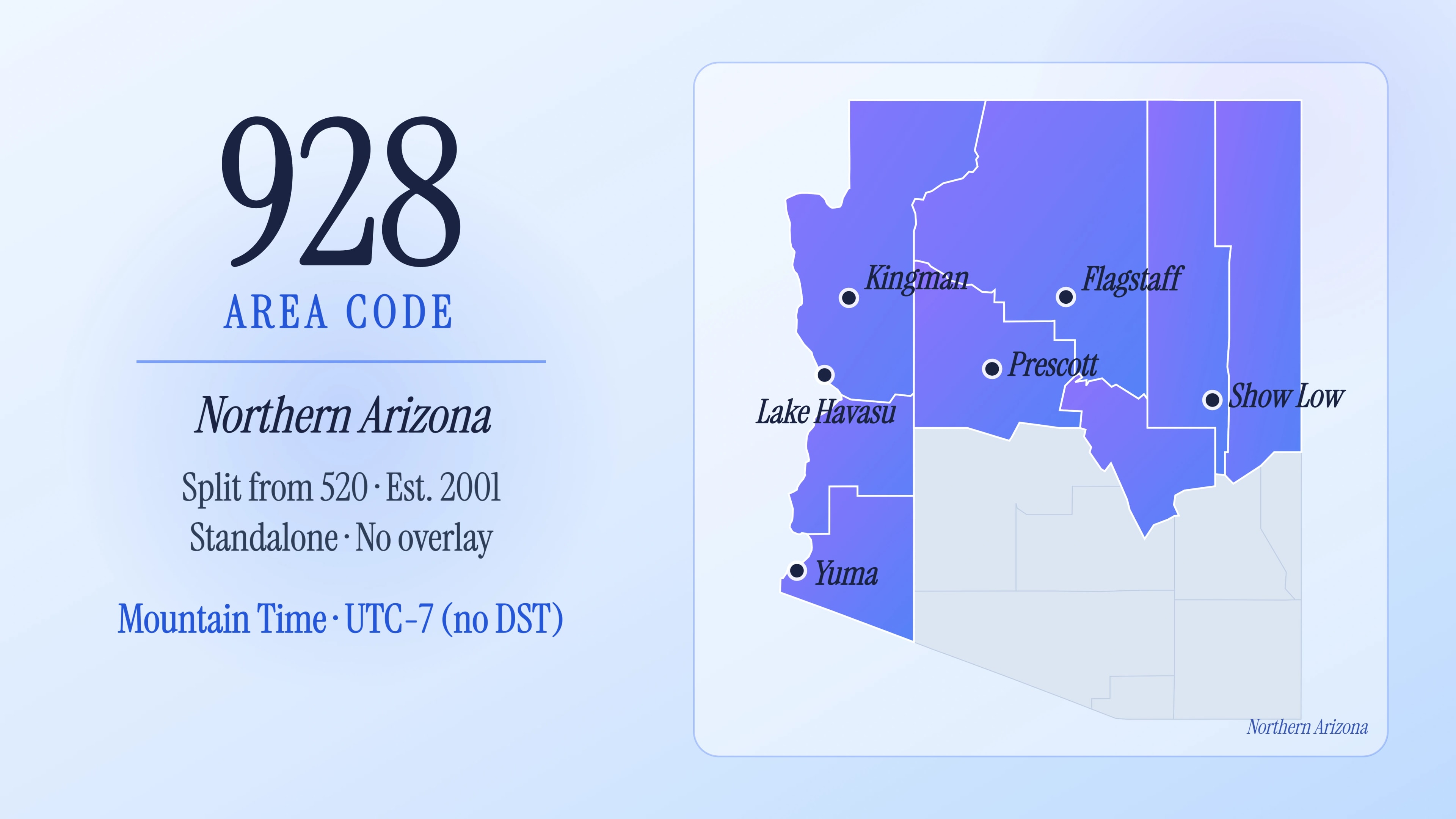
High Desert, Canyon Country and Mountain Towns
Northern Arizona covers a vast stretch of high desert, canyon country and mountain towns, and one three-digit prefix ties much of it together on the phone network. From the pine forests around Flagstaff to the Colorado River communities near Lake Havasu City, this is the number that reaches the region's residents and businesses. For a company trying to build a foothold across this part of the state, understanding how the prefix works — where it reaches, why it exists and how to claim a number on it — is the first practical step. This guide walks through the geography, the split that created it, the dialing rules and the fastest route to a working local line.
Key Takeaways
- The 928 prefix covers most of northern, eastern and western Arizona — including Flagstaff, Yuma, Prescott, Sedona, Lake Havasu City and Kingman — but not the Phoenix or Tucson metros.
- It was created on June 23, 2001, when the state's 520 numbering plan was split to relieve number exhaustion.
- The region runs on Mountain Standard Time year-round and does not observe daylight saving time, with the Navajo Nation the notable exception.
- A local northern-Arizona number signals real regional presence, which can lift answer rates and customer trust for businesses.
- Getting a number takes minutes through a cloud calling provider — no physical office in Arizona is required.
What Is the 928 Area Code?
Area code 928 is a telephone numbering plan area serving the majority of Arizona outside the Phoenix and Tucson metropolitan cores. It spans the northern, eastern and western portions of the state, reaching roughly 107 cities across 13 counties. Geographically it is one of the largest coverage regions in the state, taking in the Grand Canyon, the Arizona portion of the Navajo Nation, and the western fringes bordering Nevada and California.
That footprint makes it fundamentally a regional, small-city and rural prefix rather than a big-metro one — a profile it shares with its neighbor across the state line, the Nevada 775 code, which blankets everything in that state outside Las Vegas. Both were built to serve wide areas with dispersed populations rather than a single dense downtown.
Flagstaff, Yuma, Sedona and the Colorado River Towns
The prefix reaches a long list of communities spread across a huge area. The primary cities and towns include:
- Flagstaff — the largest city on the prefix and the hub of northern Arizona
- Yuma — the agricultural and border city in the state's southwest corner
- Prescott and Prescott Valley — the historic central-Arizona county seat
- Lake Havasu City and Bullhead City — Colorado River communities on the western edge
- Kingman — a Route 66 crossroads in Mohave County
- Sedona, Winslow, Holbrook and Show Low — red-rock country, the high desert and the White Mountains
- Payson, Camp Verde, Cottonwood and Parker — the central highlands and the Colorado River tribal communities
The region also covers most of Greenlee County and the Arizona side of the Navajo Nation, making the prefix the everyday number for a mix of tribal, rural, agricultural and tourism-driven communities.
Skipping Daylight Saving, Except on the Navajo Nation
The entire region observes Mountain Standard Time (UTC-7). Arizona is unusual in that it does not follow daylight saving time, so while much of the country springs forward in March, clocks here stay put. The one exception is the Navajo Nation, which does observe daylight saving — a quirk worth remembering when scheduling calls into that part of the state during summer months.
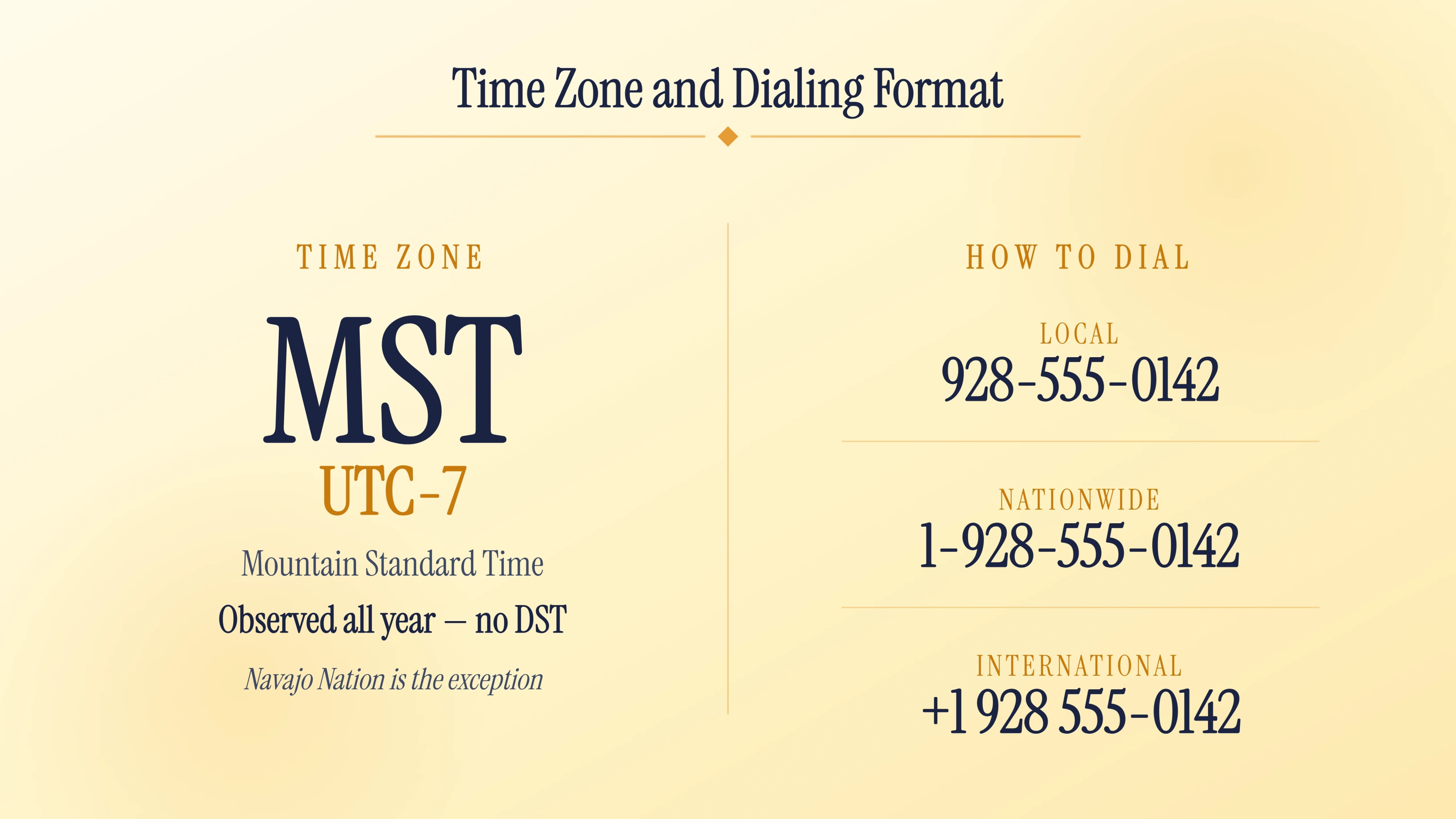
Dialing follows standard North American conventions. A call is placed as 1 + 928 + the seven-digit number (for example, 1-928-555-0142), and international callers dial their exit code followed by +1 928 and the local number. Because the region is a single prefix rather than an overlay, ten-digit dialing has not historically been mandatory for local calls the way it is in overlay markets.
The Split From 520: How 928 Was Born
Before 2001, nearly all of Arizona outside Phoenix used a single prefix — 520. Rapid population growth in Tucson, Yuma and Flagstaff, combined with the surge in pagers, fax lines and early mobile phones, drained the available numbers faster than expected. In February 2001 the Arizona Corporation Commission approved a geographic split, and on June 23, 2001, the new prefix went live. The split kept Pima, Pinal, Cochise and Santa Cruz counties — the Tucson region — on 520, while the northern, eastern and western remainder of the state moved to the new numbering plan.
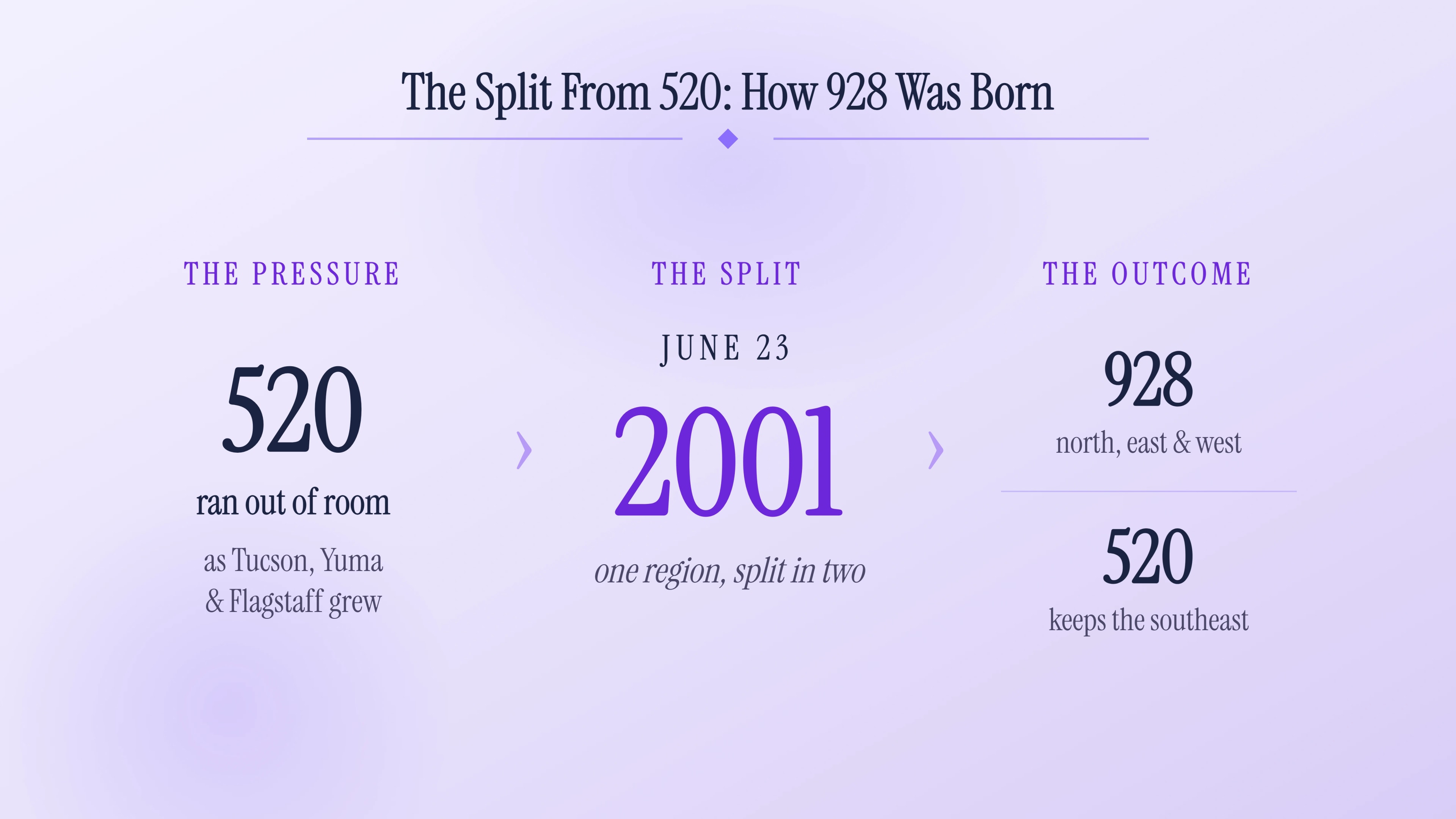
A geographic split like this differs from the overlay approach used in dense urban markets. In big cities such as Los Angeles — home to the 213 area code — regulators tend to layer a second prefix on top of the same territory so existing numbers never change. In wide, less-dense regions, drawing a line on the map is usually the cleaner fix, which is exactly what happened across Arizona.
Benefits of a Local 928 Number for Business
A number tied to northern Arizona does more than route calls — it signals belonging. For businesses serving this region, the advantages are concrete:
- Higher answer rates: people are more likely to pick up a call from a familiar local prefix than an unknown or out-of-state number.
- Regional credibility: a local line tells customers in Flagstaff, Yuma or Prescott that the business understands and serves their community.
- Marketing that fits the market: a local number on ads, vehicles and listings reinforces a genuine regional presence.
- No physical office required: cloud calling means a company anywhere can operate a northern-Arizona line and route it to staff in any location.
Ready to claim your northern Arizona line?
Acepeak's cloud phone system sets up a local number in minutes and routes calls to any device, anywhere — build a real Arizona presence without opening an office.
How to Get a 928 Phone Number
Securing a number on this prefix is straightforward with a cloud calling provider. The process generally looks like this:
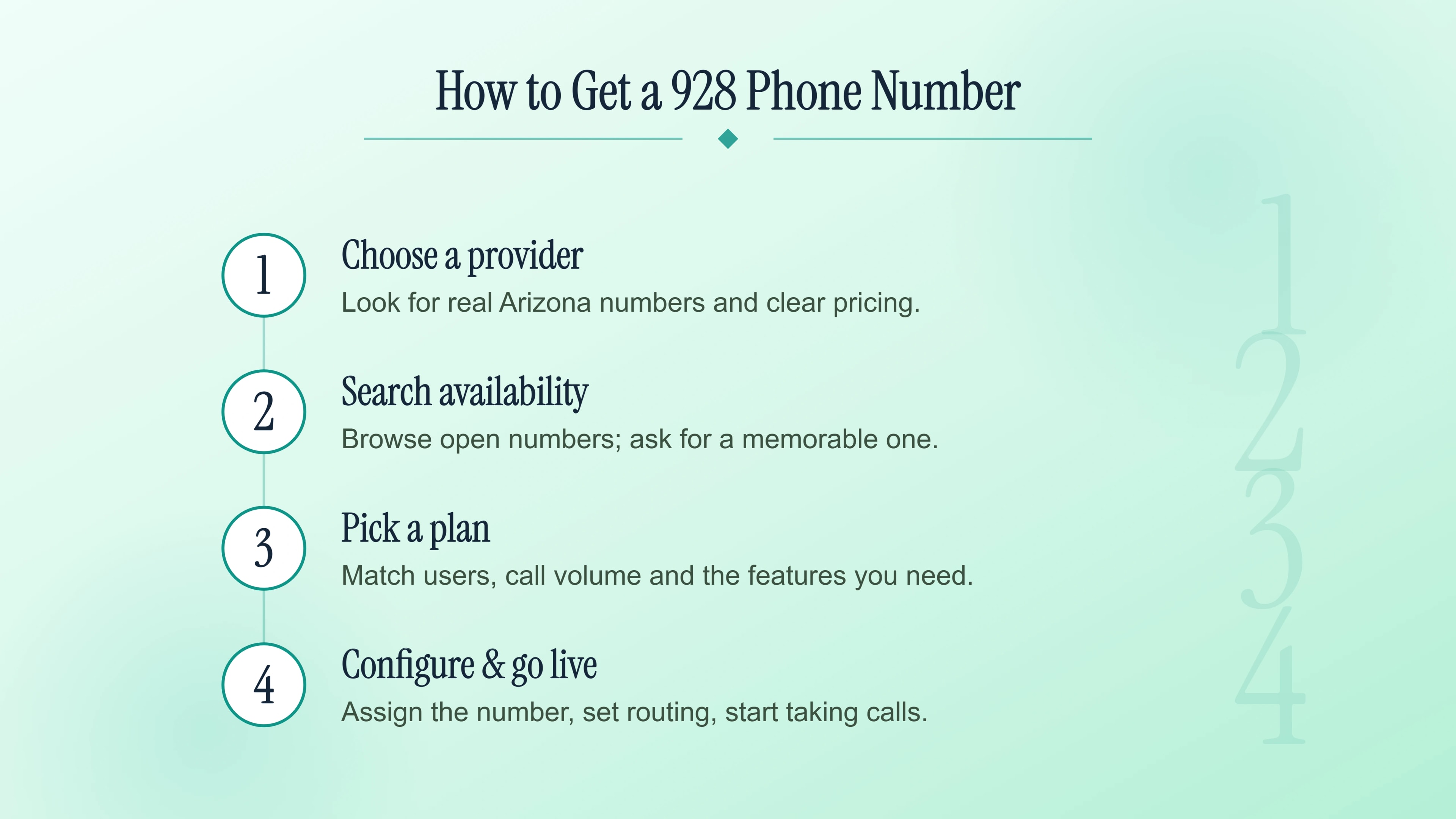
- Choose a provider: look for one with genuine Arizona number inventory, transparent pricing and reliable call quality.
- Search availability: check the provider's inventory for open numbers, and ask about specific or memorable combinations if branding matters.
- Pick a plan: match calling volume, users and features — call routing, voicemail, analytics — to a plan that fits.
- Configure and go live: assign the number to devices or teams, set up routing and greetings, and start taking calls, often the same day.
Unlike buying a traditional landline, there is no wiring, no long installation window and no requirement to be physically located in Arizona.
Scam Awareness: Protecting Yourself on a Northern Arizona Number
Any active prefix attracts unwanted calls, and northern Arizona is no different. Common tactics include neighbor spoofing (faking a local number so the call looks familiar), robocalls impersonating utilities or government agencies, and "one-ring" callback scams. A few habits keep users safe:
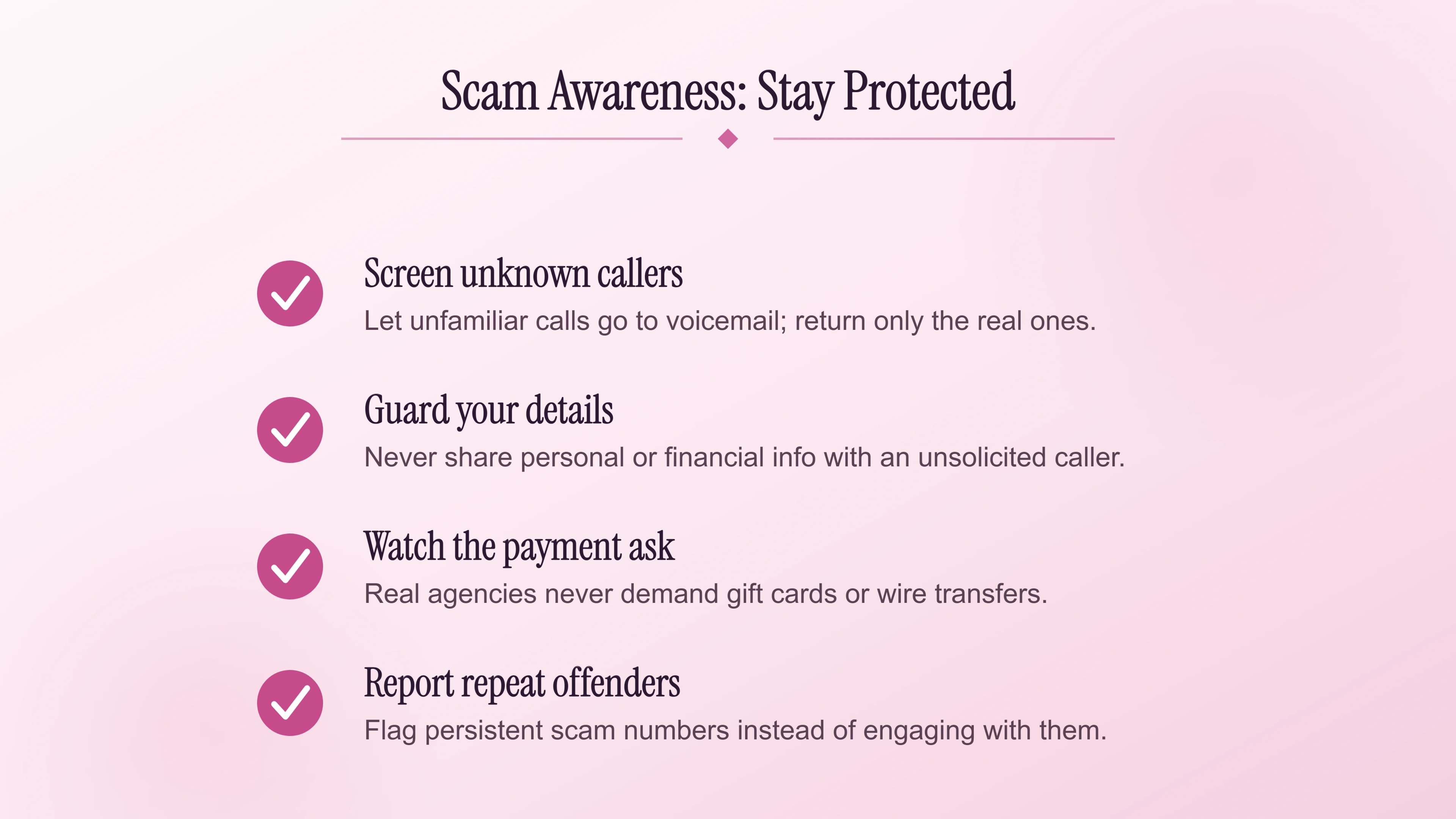
- Let unknown calls go to voicemail and return only the ones that are legitimate.
- Never share personal or financial details with an unsolicited caller.
- Remember that real agencies do not demand payment by gift card or wire transfer.
- Report persistent offenders rather than engaging with them.
The Future of the 928 Area Code
Because the region is largely rural, number exhaustion has been far slower here than in Arizona's metros, and no overlay has been needed since the 2001 split. Steady growth in tourism, healthcare and remote work may increase demand over time, but the single-prefix setup is expected to serve the region comfortably for years. Consumers who want to cut down on unwanted calls in the meantime can register their lines with the National Do Not Call Registry, the FTC program that lets people limit telemarketing contact. For businesses, the takeaway is simple: a northern-Arizona number remains a stable, credible asset well worth claiming now.
Planting a Credible Local Flag Across the High Country
The prefix that serves northern, eastern and western Arizona is more than a set of digits — it is the phone identity of a huge and varied region, from canyon towns to river cities. Created in 2001 to keep Arizona's growing population connected, it now offers any business an easy way to plant a credible local flag across the high country. With cloud calling, claiming a number takes minutes and opens the door to higher answer rates and stronger regional trust.
Take the next step with Acepeak
Set up a northern-Arizona number, route calls anywhere and start building local presence today — no hardware, no office, no waiting.
Questions, answered.
It covers most of northern, eastern and western Arizona — including Flagstaff, Yuma, Prescott, Sedona, Lake Havasu City and Kingman — but not the Phoenix or Tucson metro areas.
It went into service on June 23, 2001, when the statewide 520 numbering plan was split to relieve number exhaustion.
Mountain Standard Time (UTC-7) year-round. Arizona does not observe daylight saving time, except within the Navajo Nation.
No. A cloud calling provider can assign a local number and route calls to any device, anywhere in the world.
It is a standalone geographic prefix created by splitting 520, not an overlay layered on top of another code.
Pricing depends on the provider and plan rather than the prefix itself; cloud providers typically bundle a local number into affordable monthly business plans.
Signing up for a 928 area code number takes minutes with a cloud phone provider — no local office in Northern Arizona required. Pick the number, connect it to your existing phone or app, and calls route in immediately. This keeps the 928 area code presence you already have while adding the local credibility Arizona customers respond to.