Wichita Falls, Denton and the Corridor North of DFW
A 940 number anchors a business in Wichita Falls, Denton, and the fast-growing corridor north of Dallas-Fort Worth. Since the prefix began serving North Texas in 1997, it has become shorthand for the region's mix of small-town roots and expanding metro growth. For a company courting customers across Wichita, Denton, Wise, and Cooke counties, a local line signals genuine presence rather than an out-of-area call center. This guide covers where the prefix reaches, what a number typically costs, and how a business can activate one without new hardware.
Key Takeaways
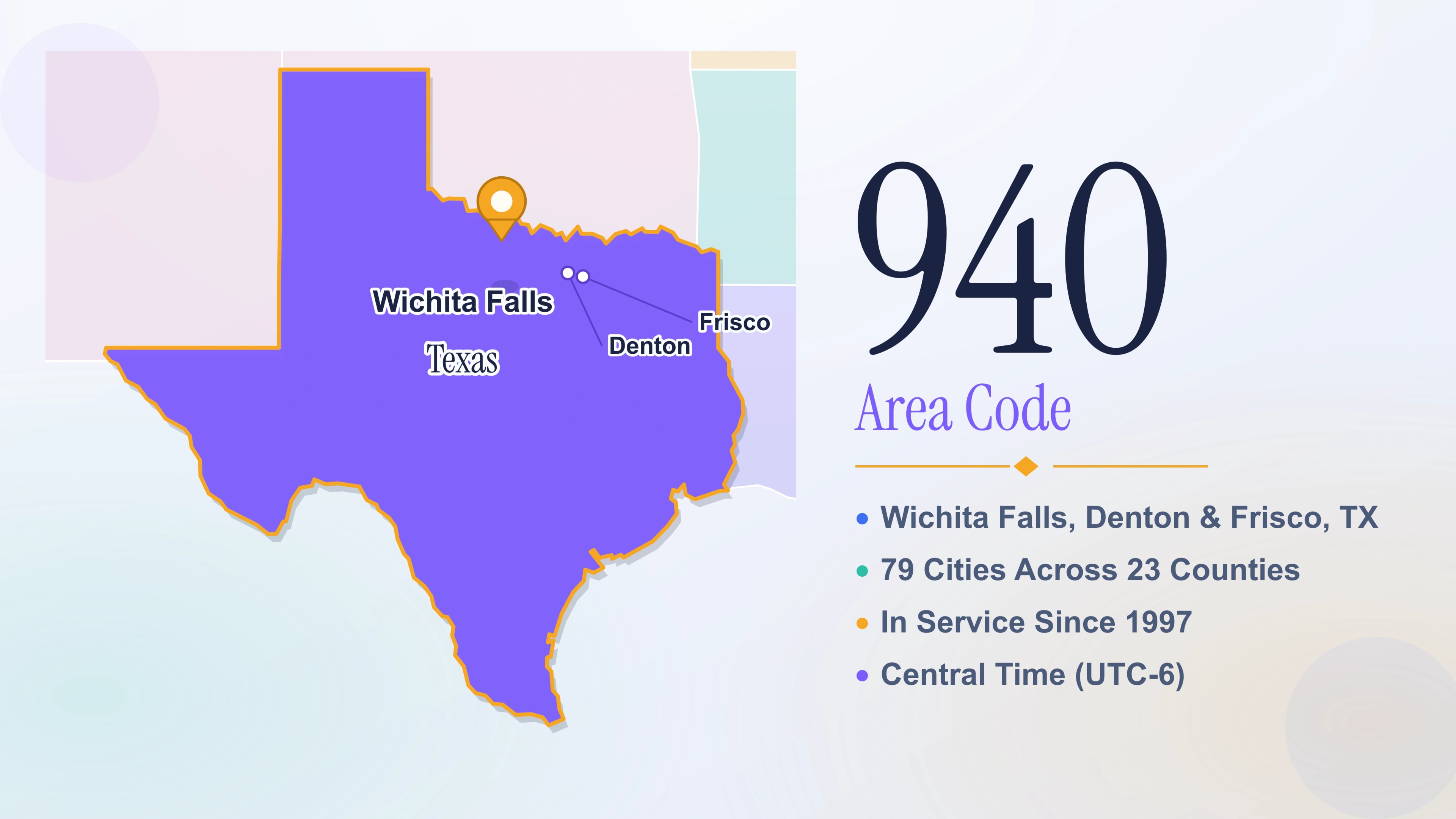
- The 940 prefix has served Wichita Falls, Denton, and surrounding North Texas communities since 1997.
- It spans 79 cities across 23 counties, all within the Central time zone.
- Frisco, Wichita Falls, and Denton are the largest cities carrying the prefix.
- Local numbers typically cost between $150 and a few thousand dollars, depending on desirability and provider.
- A cloud-based phone platform can activate a working 940 number in minutes, without a physical office in the territory.
What Makes the 940 Area Code So Special?
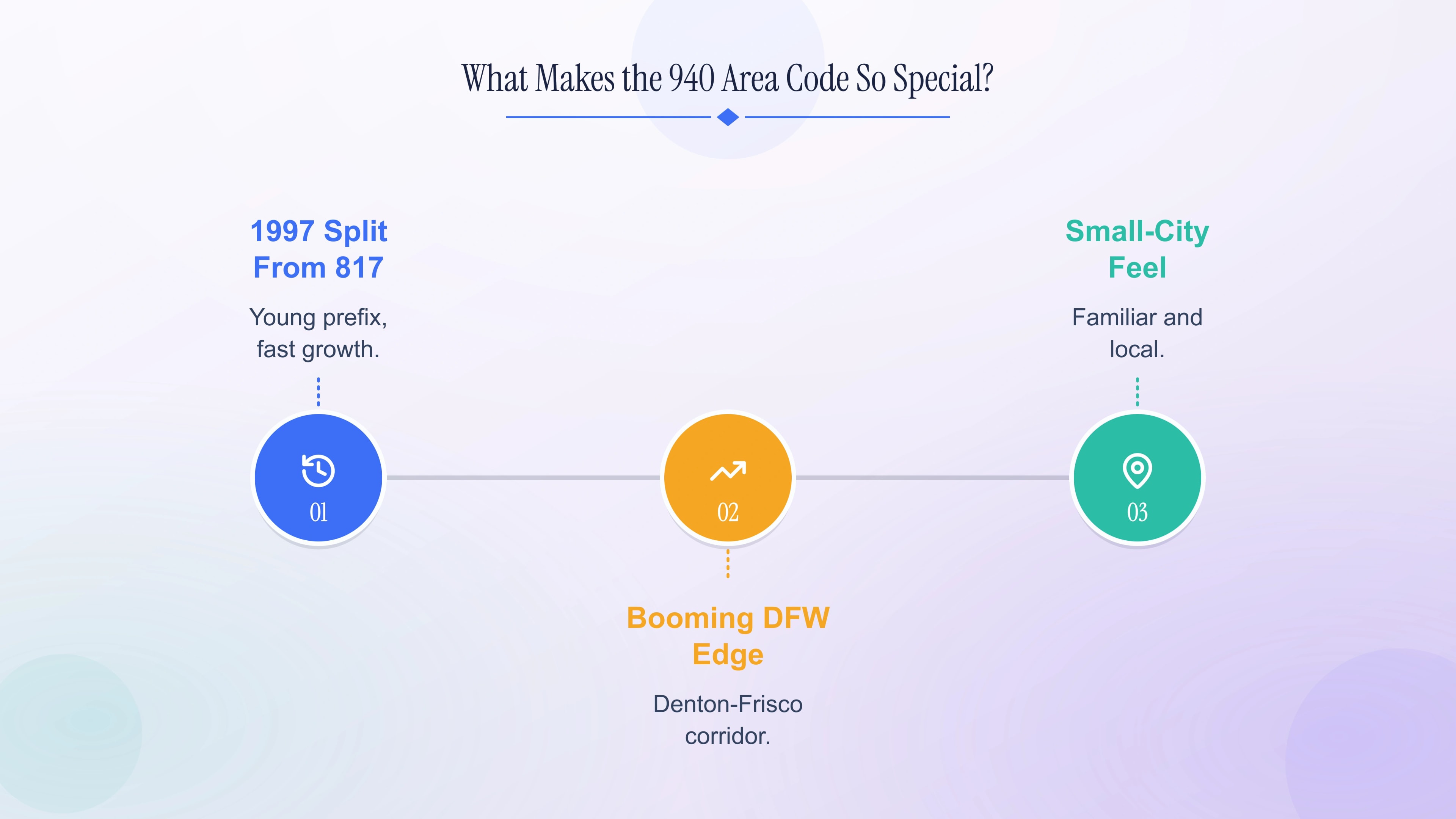
The 940 area code has covered Wichita Falls, Denton, and the surrounding counties since it split from the 817 area code in 1997, easing number exhaustion as North Texas grew. Unlike a handful of legacy prefixes issued in the earliest days of the numbering system, 940 is a relatively young addition, but that hasn't slowed its adoption. The region it serves, anchored by Wichita Falls to the west and the booming Denton-Frisco corridor to the east, has grown steadily for three decades, and the prefix has grown with it. For businesses, that mix of small-city familiarity and metro-adjacent growth is the appeal: a 940 number reads as local to longtime Wichita Falls residents and as part of the expanding DFW footprint to newer Denton County transplants alike.
Cities and Counties in the Coverage Area
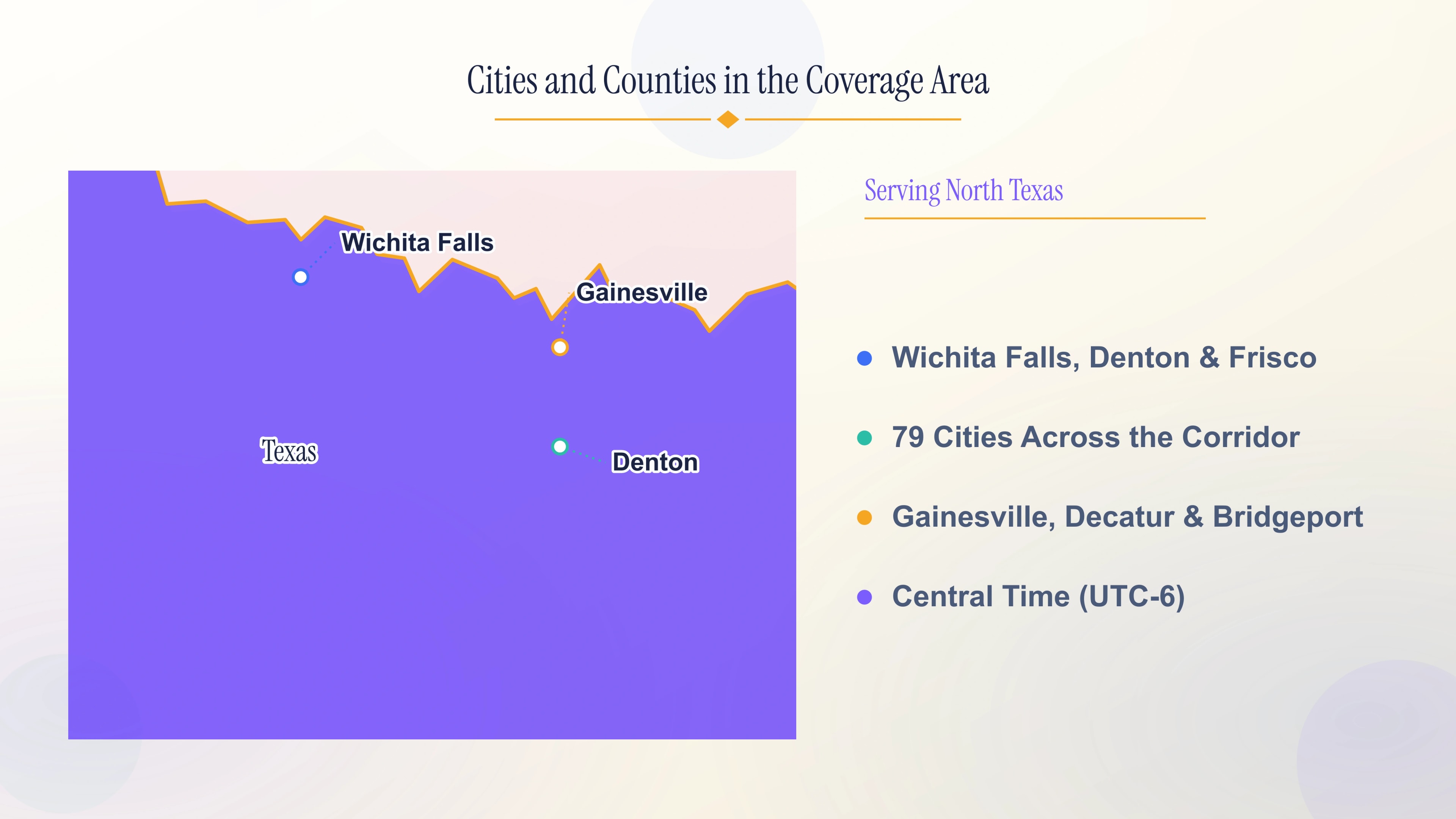
This coverage area spans 79 cities across 23 counties in north-central Texas, entirely within the Central time zone. Its largest population centers are Frisco, Wichita Falls, and Denton, though the territory extends through smaller communities such as Gainesville, Decatur, Bridgeport, Sanger, and Burkburnett. The counties involved include Wichita, Denton, Wise, Cooke, and Montague, among others. Coverage is broad enough that a single number can plausibly represent a business serving customers from the Red River down through the northern edge of the Dallas-Fort Worth metroplex. That range makes the prefix useful for companies that don't want their phone number to imply a narrower footprint than they actually serve, whether they're based in a small county seat or a fast-growing Frisco suburb.
Key Features and Benefits of a 940 Number
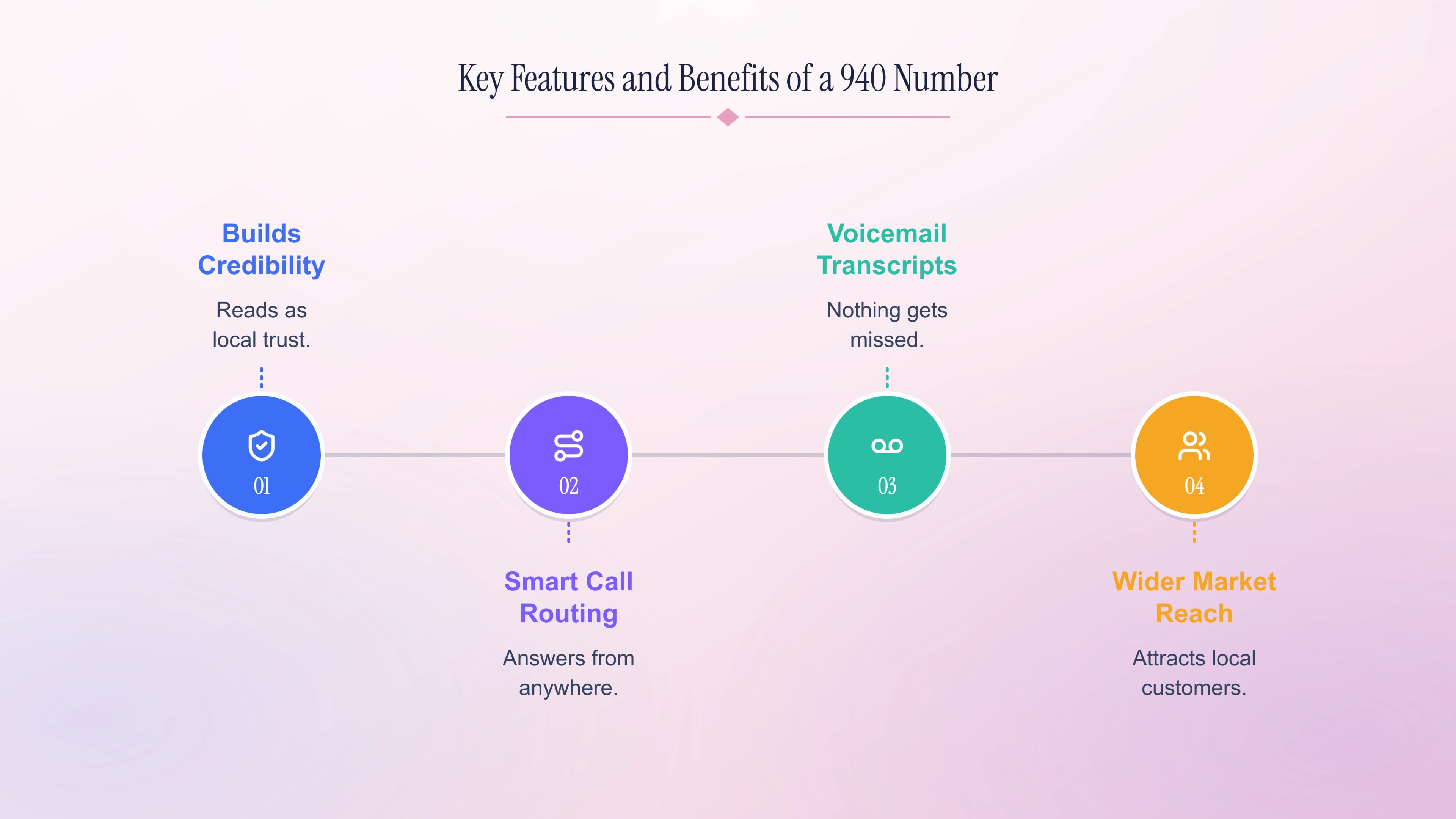
A 940 number does more than route calls; it shapes how a business is perceived before anyone speaks. Customers tend to trust a number that matches their own region, which helps explain why local prefixes consistently outperform out-of-state or toll-free lines on callback rates. Beyond that first impression, a 940 number can carry call routing, voicemail transcription, and text messaging, letting a small team look and sound like an established regional operation. Because the number lives on a cloud platform rather than a desk phone, a company can set up a custom business number in one North Texas city while agents answer from anywhere, and still present a single, consistent local identity to every caller.
Ready to put a 940 number to work?
Acepeak provisions a North Texas line alongside call routing, voicemail transcription, and an AI receptionist, so a growing team can sound local from day one — no new hardware.
The Cost and Availability of a 940 Number
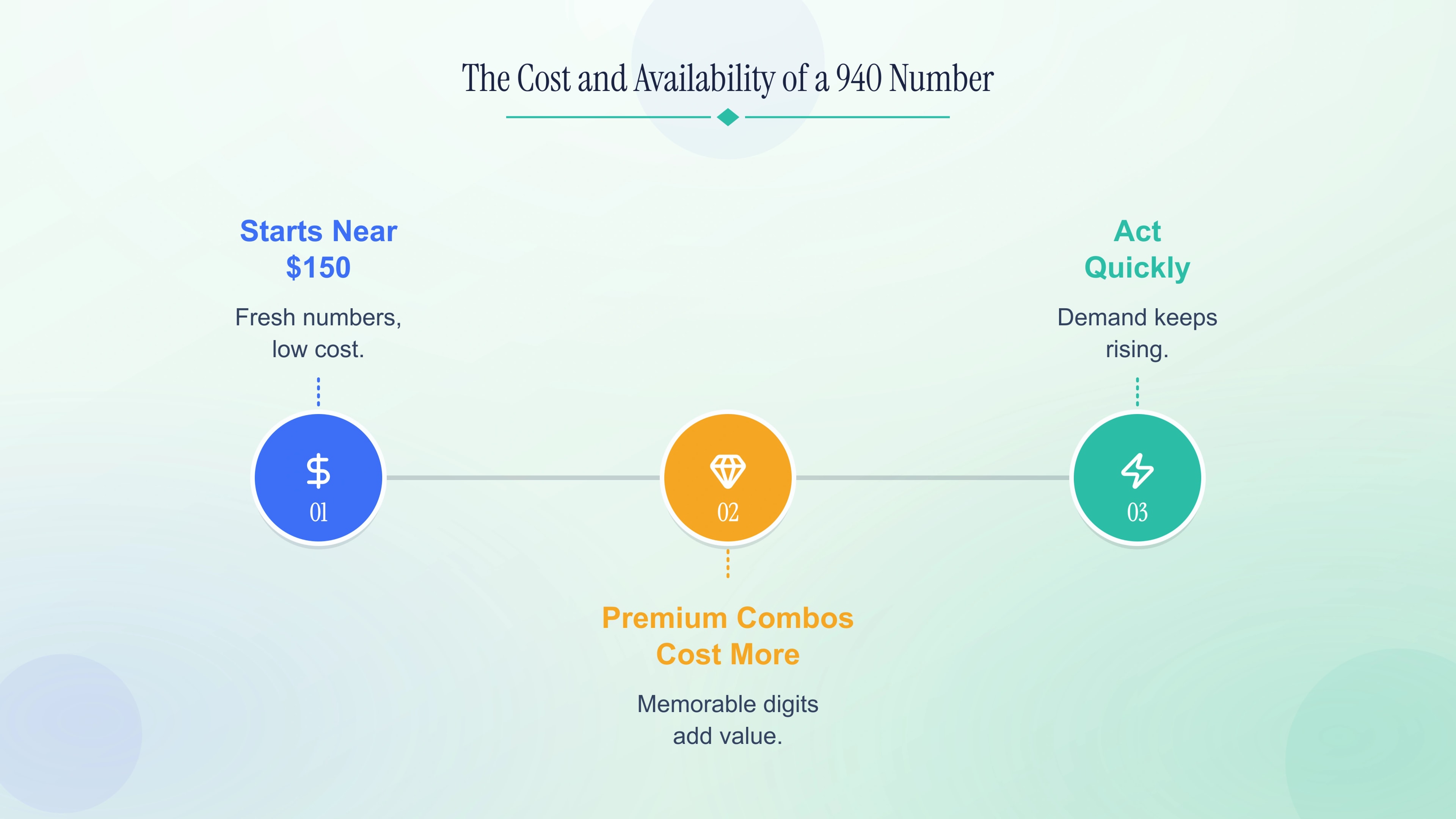
Pricing for a 940 number varies by provider and by how memorable the digits are. Freshly issued numbers with no history typically start around $150, while sought-after combinations or numbers previously tied to an established business can run into the thousands. Because Wichita Falls and Denton County have both grown steadily, desirable numbers don't sit unclaimed for long, and the best strategy is to compare a few providers, stay flexible on the exact digits, and move quickly once a suitable option appears. Weighing the cost against the expected return — more local callbacks, stronger regional trust, better marketing recall — is usually straightforward: even a $300–400 number pays for itself quickly if it measurably improves a business's connection with North Texas customers.
The Prestige and Psychological Impact of a 940 Number
Research on consumer behavior consistently shows that a familiar area code shapes trust before a single word is exchanged; callers unconsciously read a local prefix as a sign of accessibility and accountability. For a 940 number, that psychological lift comes from three decades in North Texas, long enough to feel established without carrying the corporate distance of an 800 number. The effect compounds with professional presentation: a business that pairs its number with a polished voicemail greeting, prompt callbacks, and consistent branding projects the kind of reliability that Texas customers already associate with the region, similar to the trust businesses build with a recognizable 806 area code when reaching the Texas Panhandle.
Getting Started: How to Acquire a 940 Number
Securing a number is a short process:
- Research providers that list inventory across the 79 cities the 940 prefix covers, from Wichita Falls to the Denton-Frisco corridor, and compare their setup fees and monthly rates.
- Check availability regularly — since no overlay code has been assigned, supply stays steady, but the most memorable combinations in fast-growing Denton County still move quickly.
- Compare total cost against expected benefit, factoring in how a genuinely North Texas number, rather than a DFW-core 214, 469, or 972 line, affects local callback rates.
- Stay flexible on the exact digits so a suitable option covering Wichita, Denton, Wise, or Cooke County isn't missed while waiting for one specific sequence.
- Once a number is confirmed, port it into a cloud phone system and pair it with routing rules, voicemail, and any AI answering tools before announcing it to customers.
The Future Outlook for North Texas Numbers
North Texas isn't slowing down. According to the Texas Demographic Center, counties in the Denton and Wichita Falls corridor continue to add residents year over year, and that growth typically brings more businesses competing for the same customers. Number exhaustion isn't an immediate concern for 940 (no overlay code has been assigned), but the supply of memorable combinations will keep tightening as demand rises. For a business weighing whether a local number is still worth pursuing, the growth trend argues for acting sooner rather than later.
Broad Coverage and Reasonable Cost Across North Texas
A 940 number gives a business an authentic foothold across Wichita Falls, Denton, and the rest of North Texas, a region that has grown steadily since the prefix launched in 1997 and shows no sign of slowing. The combination of broad coverage, reasonable cost, and the trust that comes with a local number makes it a practical choice for companies serious about the territory. With a cloud phone platform handling setup, a business can move from research to a working number, complete with routing, voicemail, and AI-assisted answering, in far less time than sourcing a traditional phone line.
Don't wait for the best numbers to disappear
Activate a 940 line with Acepeak today and lock in both the number and the regional trust that comes with it, before North Texas's growth narrows the options further.
Questions, answered.
It covers 79 cities across 23 North Texas counties, including Wichita Falls, Denton, Frisco, Gainesville, and Decatur, all within the Central time zone.
It began serving North Texas in 1997, splitting off from the 817 area code as the region's phone number demand grew.
Prices typically start around $150 for a fresh number and can run into the thousands for a highly memorable combination, depending on the provider.
No. A cloud phone platform can provision a number and route its calls to a team anywhere, without a local address or new hardware.
Not currently. No overlay code has been assigned, though steady population growth in the region means desirable combinations continue to be claimed quickly.
Those codes serve the Dallas-Fort Worth core, while 940 covers the outer North Texas counties, including Wichita Falls and Denton, giving businesses in that corridor a genuinely local-feeling number.
Signing up for a 940 area code number takes minutes with a cloud phone provider — no local office in Wichita Falls required. Pick the number, connect it to your existing phone or app, and calls route in immediately. This keeps the 940 area code presence you already have while adding the local credibility Texas customers respond to.