Sharing 541 Territory from Eugene to Medford
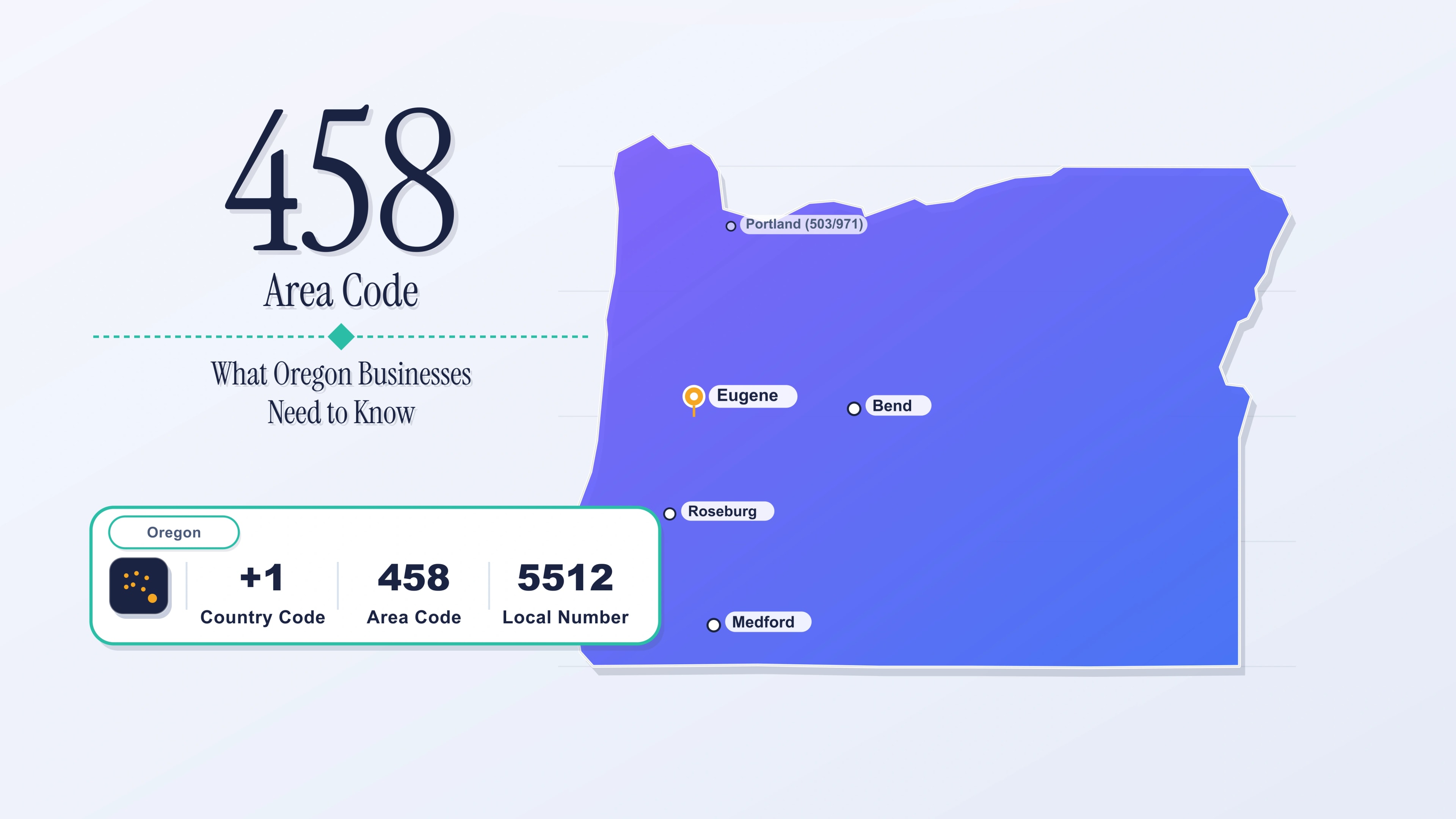
The 458 area code is a telephone prefix covering most of Oregon outside the Portland metro — a 2010 overlay sharing the exact same territory as the state's original 541 area code, from Eugene and Springfield to Bend and Medford.
Choosing a phone number with a recognizable regional prefix is a small decision that can shape how customers see a business before a call is even answered. For companies operating in or selling into Oregon, the 458 area code offers a way to establish a genuine local footprint alongside the state's better-known 541 prefix. This guide covers where the code came from, who it reaches, what it costs, and how to secure one without confusing customers or overspending.
Key Takeaways
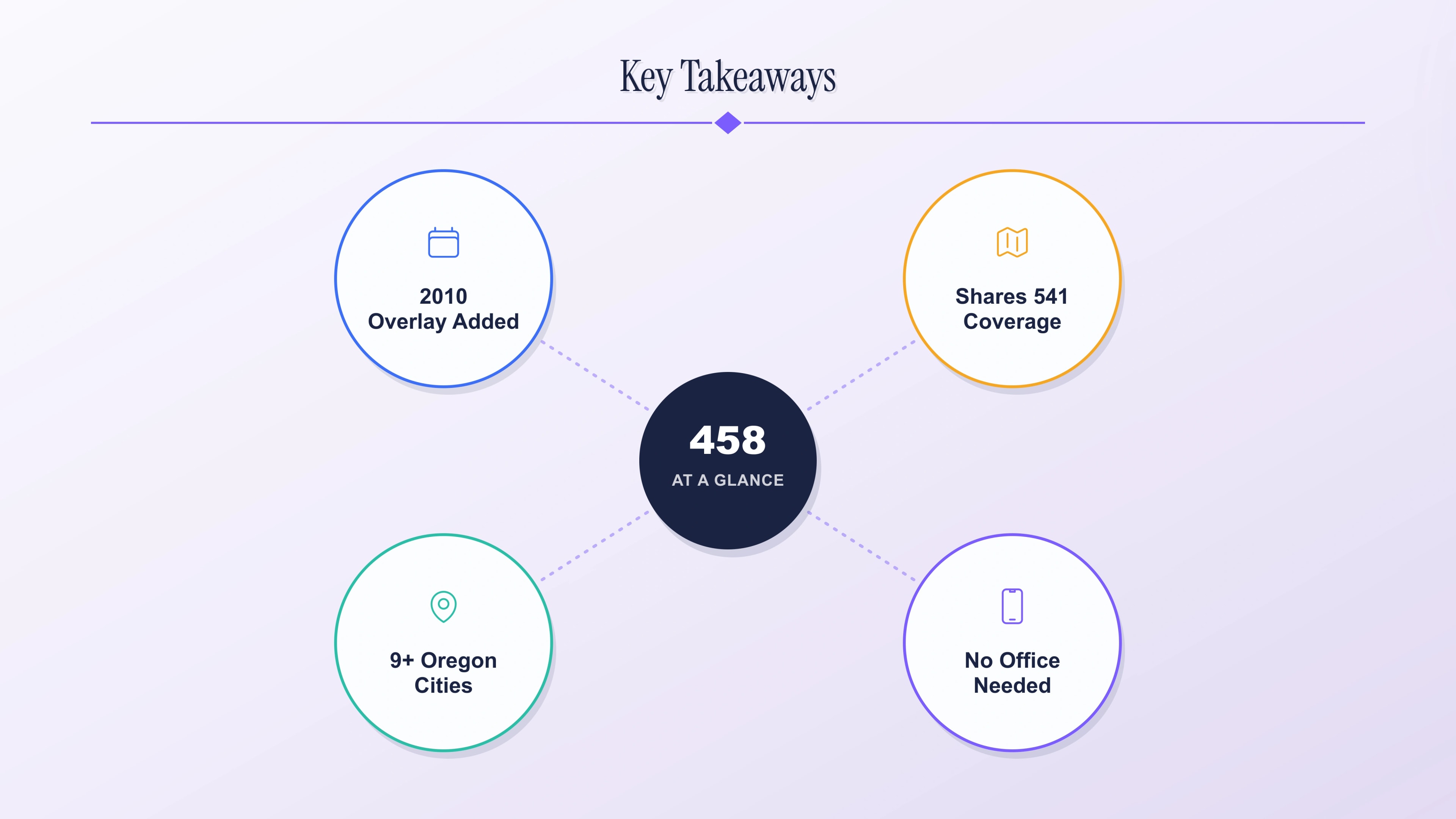
- The 458 area code is a 2010 overlay covering the same Oregon territory as area code 541, not a separate or original code.
- It reaches most of Oregon outside the Portland metro, including Eugene, Bend, Medford, and Roseburg.
- A regional line can improve answer rates and signal local presence for businesses serving Oregon customers.
- Pricing typically ranges from a few dollars a month bundled into a plan to a one-time premium fee for a memorable digit pattern.
- Cloud provisioning makes it possible to activate a local line without ever opening an Oregon office.
Power of a New 458 Area Code
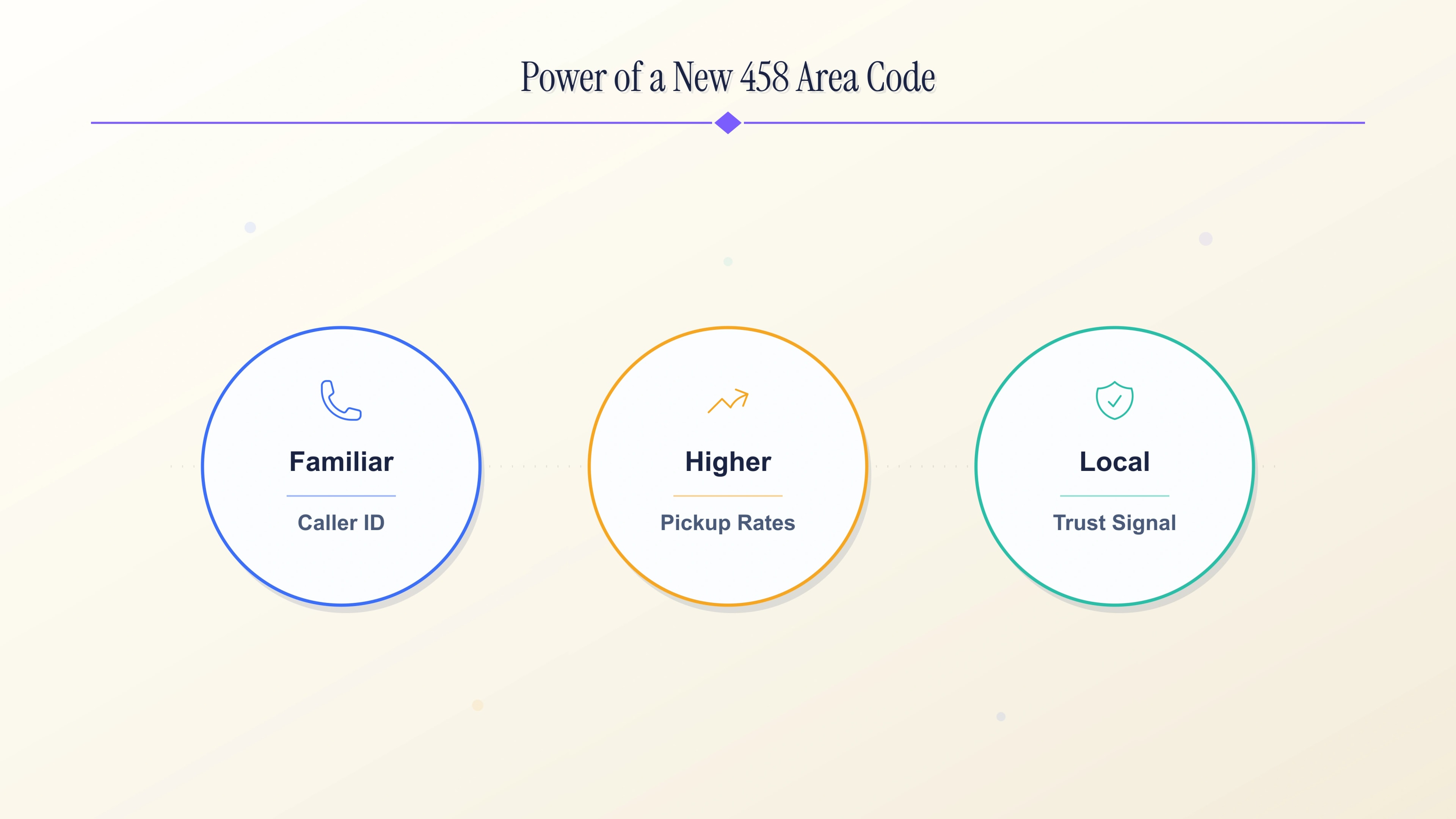
A line in this prefix lets a business show up in caller ID and marketing with digits Oregon customers immediately recognize. That regional signal matters most for service businesses, contractors, and support desks where callers decide whether to pick up based on a familiar area code before they even hear a greeting. It is a small detail, but in markets crowded with spam and out-of-state robocalls, familiarity still counts for something.
What Makes the 458 Area Code Different
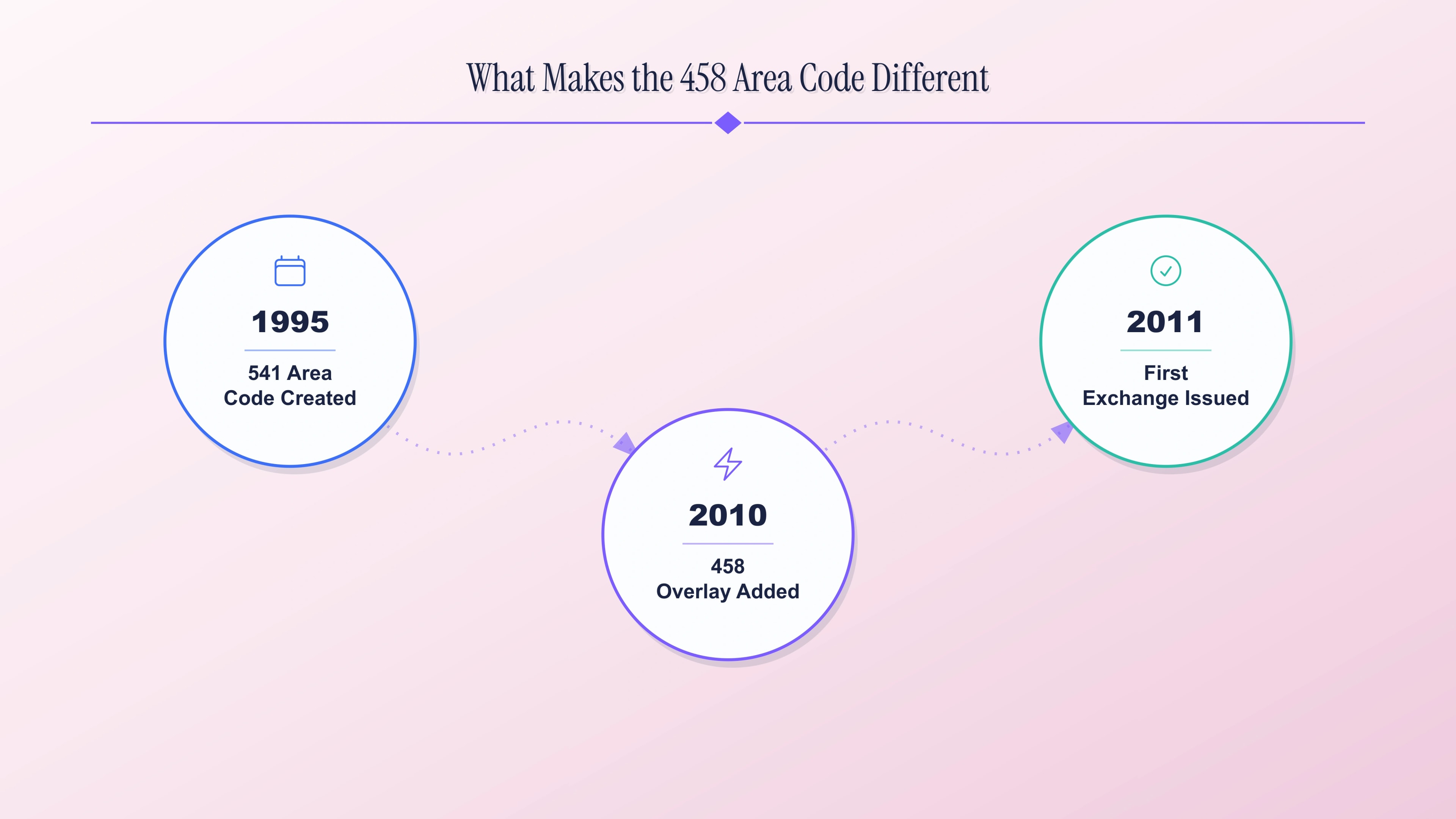
Unlike many prefixes issued decades ago, 458 is a relatively young addition to Oregon's numbering plan. The state's Public Utility Commission approved it as an overlay on February 10, 2010, layered directly on top of area code 541 after central office codes there began running out under pressure from cell phones and pagers. The two prefixes now share the identical service area, and callers within it dial all ten digits regardless of which one they hold, a structure explained in more detail in Acepeak's 541 area code overview. Its value doesn't come from age or rarity; it comes from familiarity with the Oregon communities it overlays, from the Willamette Valley to the high desert around Bend.
Where the 458 Prefix Reaches
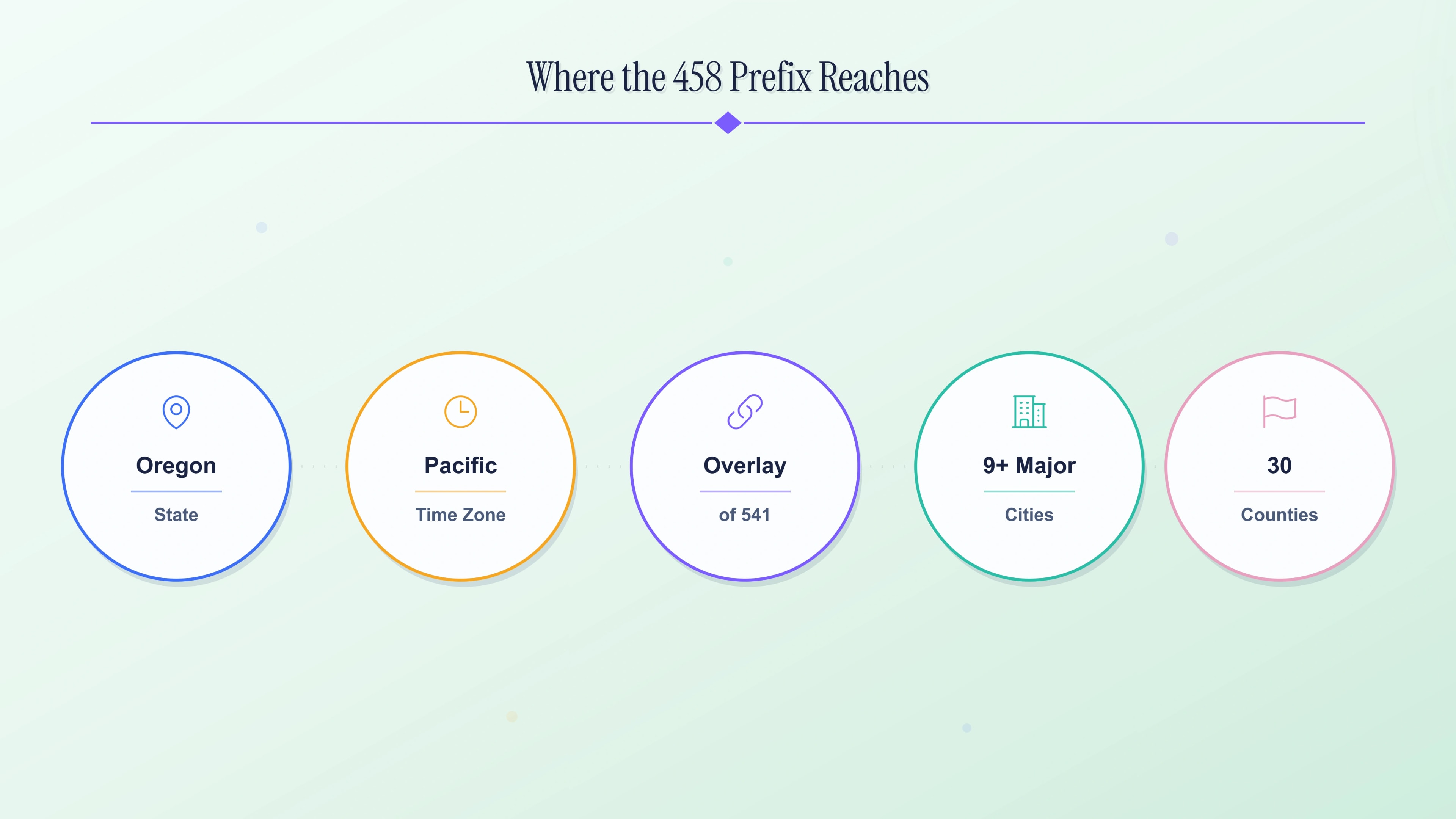
- State: Oregon
- Time zone: Pacific, UTC−8 standard (UTC−7 during daylight saving)
- Overlay partner: Area code 541
- Major cities served: Eugene, Bend, Medford, Springfield, Corvallis, Roseburg, Ashland, Pendleton, and Grants Pass
- Counties touched: roughly 30 counties across central, southern, and eastern Oregon
- First exchange issued: 205, in Eugene, during August 2011
The Portland metro to the north keeps its own 503 area code, so 458 and 541 together cover the rest of the state. Because that shared territory spans dense college towns and wide rural stretches alike, a 458 number reads as authentically local across the Willamette Valley, southern Oregon, and the high desert.
How a Local Line Can Help a Business
A regional number carries a few practical advantages beyond aesthetics. It can raise pickup rates among Oregon callers wary of unfamiliar prefixes, reinforce marketing that leans on local roots, and give remote or multi-location teams a consistent way to reach a specific customer base without relocating staff or leasing office space in the area. For franchises and service networks, it also lets each location present a distinct, locally flavored number while routing calls through the same backend system.
Holding an Oregon line doesn't limit a business to local callers, either. Paired with call forwarding and cloud routing, it lets a company maintain a genuine regional presence for Oregon customers while still handling calls from partners, vendors, or clients anywhere else the business operates, all through the same account.
Is the 458 Area Code Used in Scams?
Like most active area codes, 458 numbers are occasionally spoofed by robocallers and scammers hoping the local prefix will make an unfamiliar call feel safe to answer. Receiving a call from a 458 number doesn't mean it's fraudulent — most are legitimate Oregon businesses and residents — but the same caution that applies to any unsolicited call applies here: never share financial or personal details with a caller you didn't initiate contact with, hang up and call back using a number you look up independently, and report persistent spam to the FCC at fcc.gov/consumers or through your carrier's blocking tools.
Getting One: Three Practical Routes
Three approaches typically work, depending on budget and timeline.
- Buy a listed number from the shared pool. Because 458 and 541 share one numbering pool, marketplaces occasionally list inactive lines from Eugene or Medford that can be ported over.
- Request one directly through a cloud platform. Providers like Acepeak can search current 458 inventory across cities like Bend, Corvallis, and Roseburg and activate a working number the same day, no broker needed.
- Stay flexible between 458 and 541. Since both dial with all ten digits across identical territory, a business indifferent to which one it holds doubles its available inventory.
Add an Oregon line without the wait
A cloud-based setup can have a new 458 number live the same day, already connected to your existing call flows and routing rules.
What It Costs
Pricing varies by provider and digit pattern. Standard options in this prefix are often included in a business phone plan for little to no added fee, while premium or easy-to-remember sequences can run from roughly $150 into the thousands through resellers. Before paying a premium, it's worth weighing whether a specific pattern meaningfully changes recall versus any ordinary number nearby, since the regional signal is identical either way.
Availability Is Getting Tighter
Because 458 shares its numbering pool with 541 across a wide service area, desirable combinations are issued steadily as new businesses and residents sign up. Companies that wait on a specific pattern may find fewer options available each year, so checking availability early and working with a provider that can flag new releases helps avoid a longer search later on.
Steady Growth Outside Portland Keeps Numbers in Demand
Oregon's population growth outside the Portland metro has kept demand for numbers across the shared 541 and 458 service area fairly steady. According to the State of Oregon, the state's population has continued to grow over the past decade, a trend that supports ongoing demand for local business numbers across the communities this overlay serves.
Getting Started: A Four-Step Path
- Step 1 — Confirm your target exchange. Decide whether the number should trace to Eugene, Bend, Medford, or another city among the roughly 30 counties the overlay touches.
- Step 2 — Compare 458 against 541 pricing. Because the two share identical territory and function, pricing rarely differs — weigh only the pattern's premium, not the code itself.
- Step 3 — Confirm ten-digit setup. Verify the provider configures ten-digit dialing correctly, since every call in the shared 541/458 area needs the full code.
- Step 4 — Launch and track pickup rates. Roll the line into marketing across the Willamette Valley and southern Oregon, then monitor whether local callers answer more readily.
A Practical Regional Tool, Not a Badge of Rarity
A number in Oregon's 541/458 overlay is best understood as a practical regional tool rather than a badge tied to age or rarity. Its real value lies in matching a business's marketing to the area it actually serves, whether that's Eugene, Bend, or the broader Oregon market the 541/458 overlay covers together. Businesses weighing one should focus on fit with their customer base and provider setup speed, rather than chasing a specific digit pattern for its own sake.
Ready to add an Oregon number?
Talk to Acepeak about picking and activating a local 458 or 541 line, connected to your call routing from day one.
Questions, answered.
It's an overlay added in 2010 on top of the existing 541 area code, not one of Oregon's original prefixes.
No. Cloud phone providers can activate and route a number in this prefix to any location, with no physical presence required.
It shares the same footprint as 541, including Eugene, Bend, Medford, Springfield, Corvallis, and Roseburg.
Yes. Because 458 overlays 541 in the same region, all local calls require the area code plus the seven-digit number.
Standard options are often bundled into a business phone plan, while rare or sequential patterns can cost more through resellers.
Yes. Most cloud phone systems support multiple numbers on one account, so a new line can run alongside an existing main number.
Yes, occasionally — scammers sometimes spoof 458 numbers because a local prefix is more likely to get answered. The area code itself isn't fraudulent; treat any unsolicited call requesting money or personal information with the same caution you'd apply to a call from any other number, and verify by calling the organization back directly.
Signing up for a 458 area code number takes minutes with a cloud phone provider — no local office in Oregon required. Pick the number, connect it to your existing phone or app, and calls route in immediately. This keeps the 458 area code presence you already have while adding the local credibility Oregon customers respond to.