A Wide, Varied Landscape Under One Oklahoma Prefix
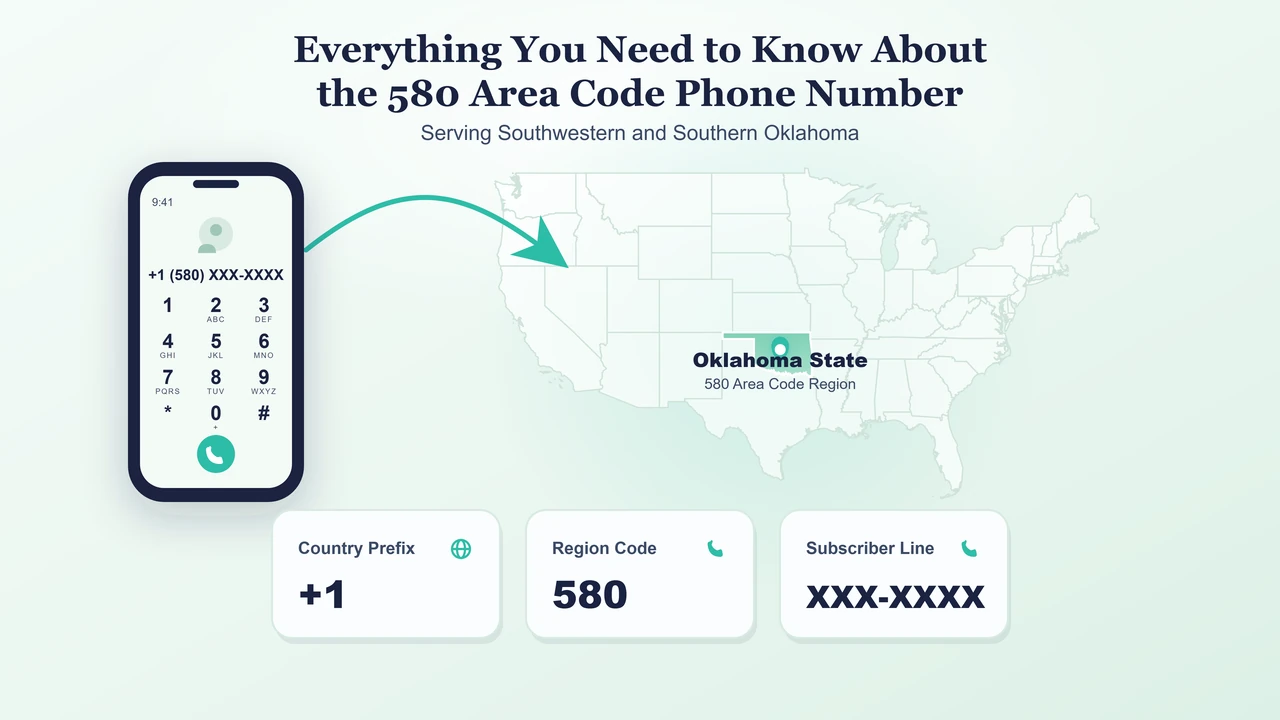
The 580 prefix serves southern and western Oklahoma. It links rural towns and regional cities across a wide, varied landscape. Oklahoma set it up in 1997. It connects communities from the Wichita Mountains to the Panhandle. It gives residents and businesses a recognizable local identity and the customer trust that comes with it. This guide covers the area it serves, the dialing rules, and its advantages. That knowledge helps anyone relocating to Oklahoma, or building a presence there, route calls with confidence.
Key Takeaways
- Area code 580 covers most of southern and western Oklahoma, including Lawton, Enid, Ardmore, Ponca City, Duncan, and the Oklahoma Panhandle.
- The prefix was created on November 1, 1997, in a split from the 405 code to relieve number demand as Oklahoma grew.
- The region sits in the Central Time Zone (CST/CDT) and, unusually, still allows 7-digit local dialing because there is no overlay.
- The 580 code spans roughly 51 counties and more than 200 communities, making it one of the more thinly populated codes in the country.
- Numbering authorities project the prefix will serve the region in its current form through at least 2029.
What Code Serves Lawton, Ardmore, Enid and the Panhandle?
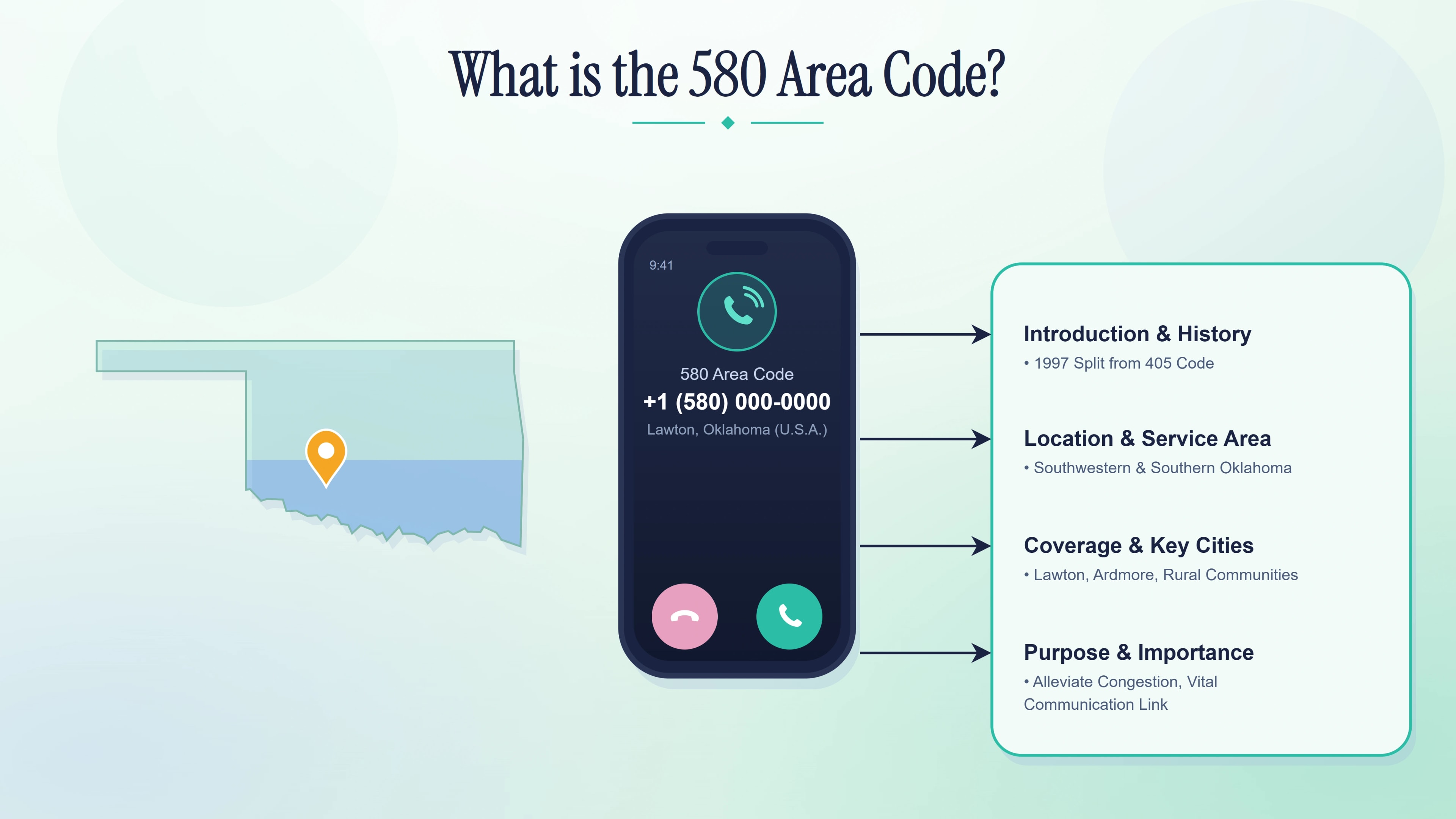
Area code 580 is the three-digit code assigned to a large part of Oklahoma outside the Oklahoma City metro. It covers the southwestern and southern parts of the state — including Lawton, Ardmore, and Enid — plus the Panhandle and dozens of smaller farming communities. Oklahoma split it off from the 405 code in 1997 to relieve congestion. Since then, it has supported essential services, business calls, and economic growth across a region that blends small towns with growing cities.
Most landlines in the old 405 territory were concentrated in the Oklahoma City area. So the 1997 split left the new code covering a lot of geography but comparatively few subscribers, making it one of the most sparsely populated numbering areas in the nation.
Establishment and Interesting Facts
- Introduction Year — Established on November 1, 1997, to ease strain on the 405 code as Oklahoma's telephone demand climbed.
- Geographic Expansion — Now covers a broad stretch of southern, western, and panhandle Oklahoma, spanning roughly 51 counties and more than 200 communities.
- No Overlay Yet — Unlike many modern codes, the region has no overlay. Callers can still use 7-digit local dialing, a feature fewer than 71 U.S. codes retain.
- Continued Growth — The code handles steady telecom demand. Authorities project it will stay in its current form through at least 2029.
- Key Role in Connectivity — It supports personal and business calls and underpins economic activity across rural Oklahoma.
How to Get a 580 Area Code Phone Number for Your Business
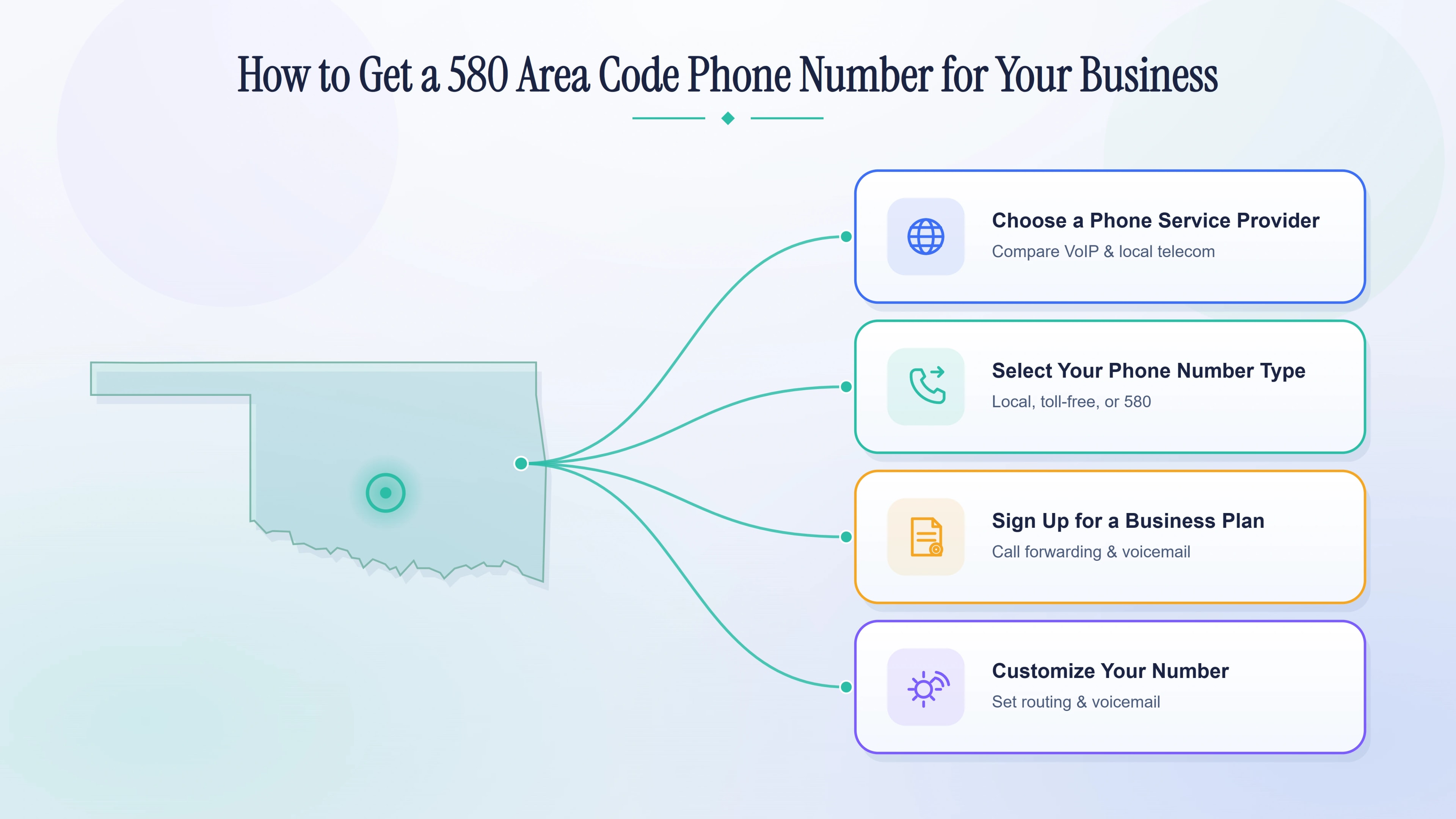
- Choose a provider — Compare cloud calling and telecom options on price, reliability, and features. Pick the one that fits the team.
- Select a number type — Decide between a standard line, a toll-free pairing, or a dedicated business line based on call volume.
- Sign up for a plan — Pick a plan that matches the team's calling needs and growth plans.
- Customize the number — Set up routing, voicemail, and greetings so calls reach the right people automatically.
Businesses serving the wider region sometimes pair a 580 line with a neighboring 785 area code number to cover northern Kansas too. Across these wide footprints, call reliability matters as much as cost when choosing a provider.
Platforms and Services Offering 580 Numbers
Several types of providers offer numbers in this region. Cloud calling platforms like Acepeak deliver flexible, internet-based service with rich call-management features. Traditional local telecom companies still serve many rural exchanges. Because the region covers so much ground, reliability should weigh as heavily as price when choosing among them.
Benefits of a Local Number for Your Business
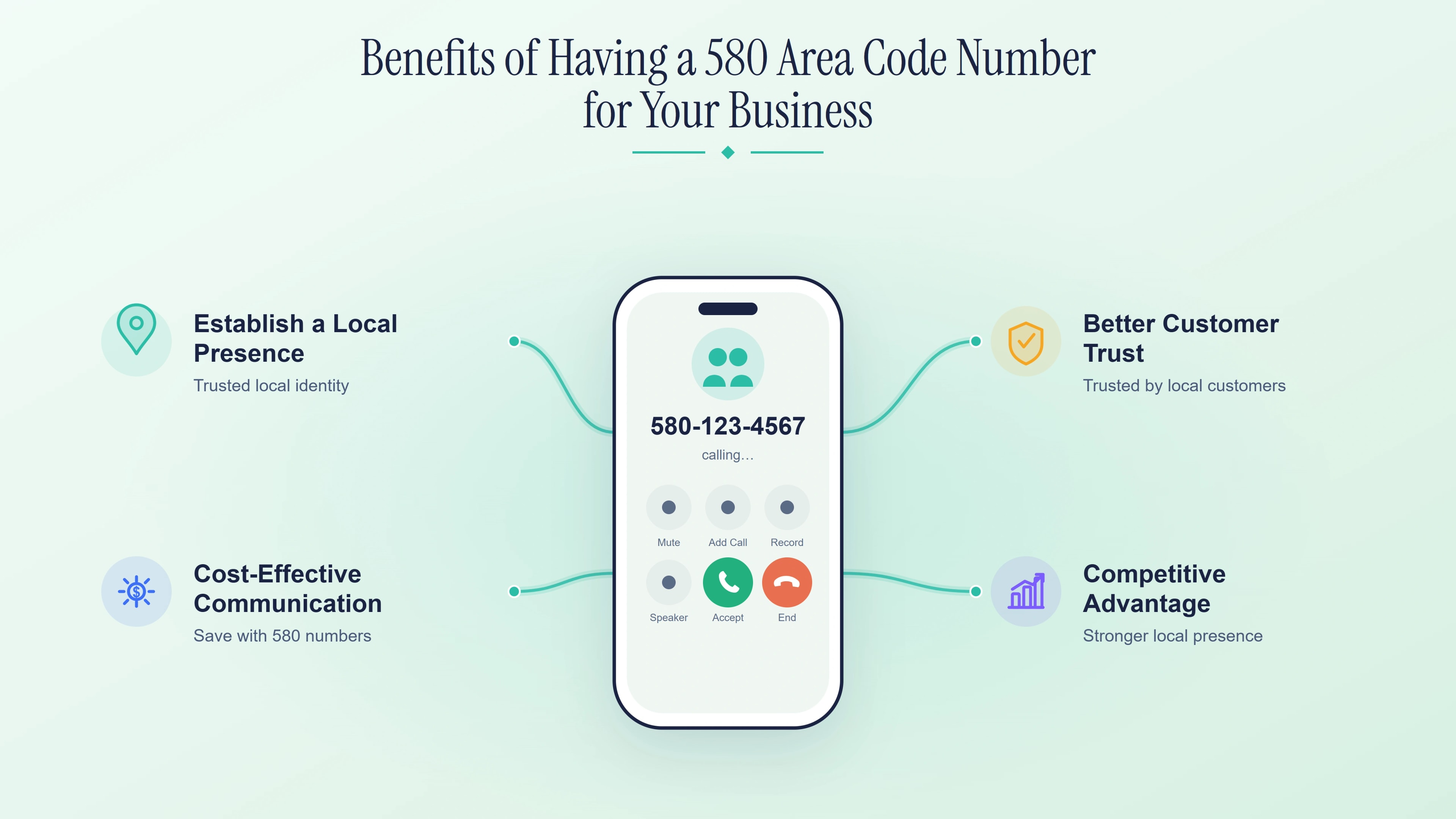
- Local presence — A familiar prefix signals that a business is part of the community, not a distant call center.
- Customer trust — People are more likely to answer and engage with a recognizable local number than an unknown or out-of-state one.
- Cost-effective communication — Cloud calling keeps per-line costs low while adding features that once required expensive equipment.
- Competitive advantage — A regional number helps smaller firms compete with national brands by appearing rooted and accessible.
Companies operating across the Oklahoma–Texas Panhandle corridor often add a 432 area code line for West Texas coverage. That keeps a recognizable local presence on both sides of the state line.
Claim Your Oklahoma 580 Number
Acepeak provisions local Oklahoma numbers backed by carrier-grade routing and instant activation.
The Economic and Business Impact of the 580 Area Code
The prefix does more than route calls — it strengthens regional commerce. A local number makes businesses easier to reach for nearby customers, and it supports cross-regional connections for companies serving the wider state. A recognizable code builds trust, and that trust can decide whether a prospect picks up the phone at all, which helps win and keep customers. Across southern and western Oklahoma, that everyday accessibility helps small businesses, service providers, and regional employers grow and stay connected to their communities.
Key Industries in the 580 Area
- Agriculture and ranching — Wheat, cattle, and livestock operations dominate the rural counties and Panhandle. Towns like Guymon are major livestock and food-processing hubs.
- Energy — Oil, natural gas, and a growing wind-power industry remain central to the regional economy.
- Manufacturing — Production and processing facilities operate throughout the region's larger towns.
- Defense and tourism — Lawton's Fort Sill military post is a cornerstone employer. The Wichita Mountains and other regional attractions draw visitors year-round.
Why Choose a Virtual Local Number for Your Business?
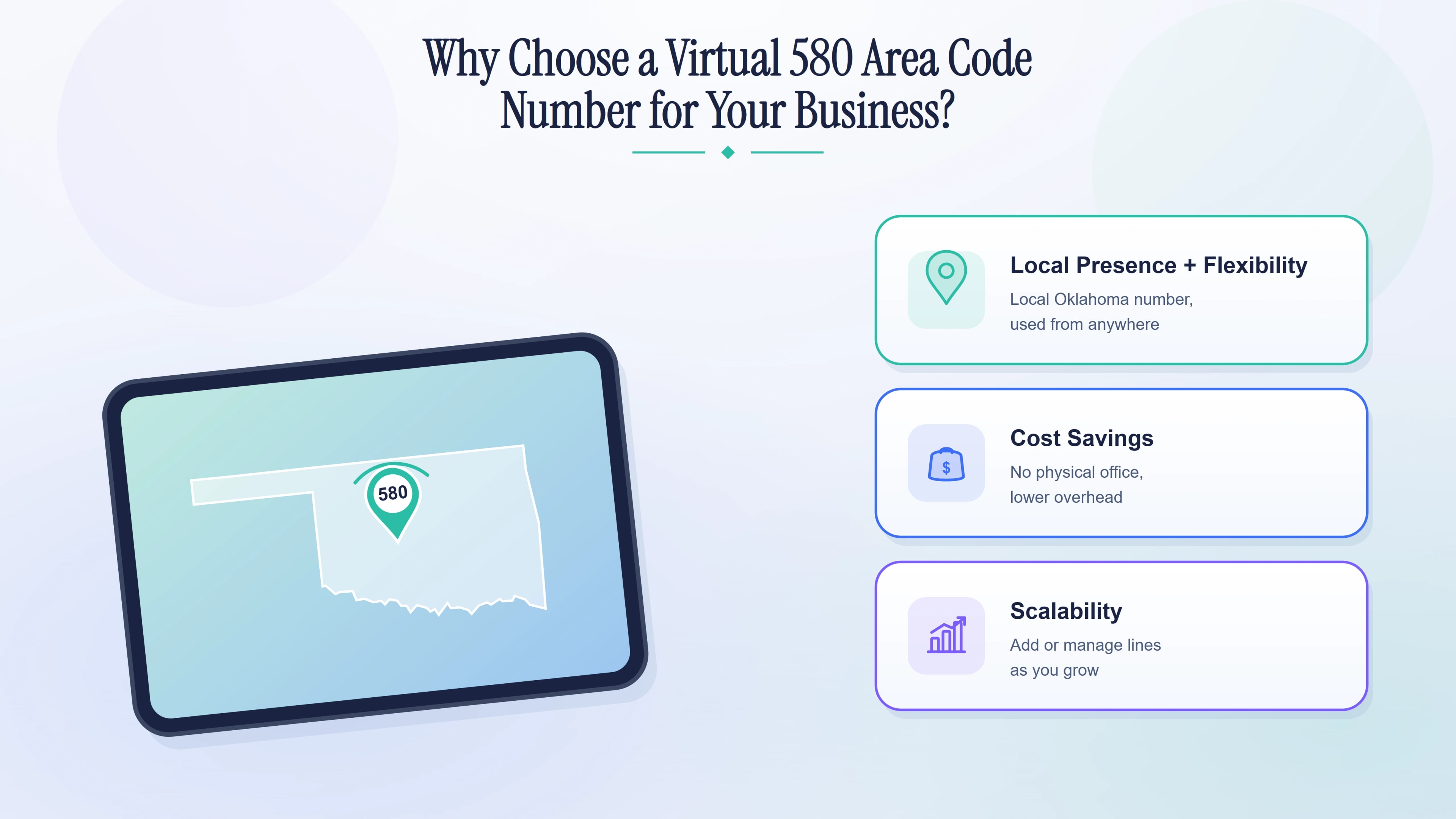
A cloud-based Oklahoma number combines local identity with the flexibility modern teams need. It can be managed entirely online. It scales easily as a company grows. And it lets staff take calls from anywhere while still showing a local prefix. Businesses entering the Oklahoma market should also check the official Oklahoma state portal for licensing, registration, and compliance resources before launch.
- Businesses expanding to Oklahoma — Companies opening a branch or entering the regional market can launch a local number instantly. That builds trust with Oklahoma customers before a physical office even opens.
- Freelancers and remote workers — Independent professionals and distributed teams can keep one portable Oklahoma number across devices and locations, projecting a stable local presence while working from anywhere.
Credibility Across Oklahoma's Farm, Energy and Defense Towns
The 580 prefix is a vital link for southern and western Oklahoma, connecting Lawton, Enid, Ardmore, Ponca City, and dozens of rural communities. This three-digit code routes calls efficiently, builds business credibility, and supports economic activity across a region defined by agriculture, energy, and defense. Once you know how it works — its 1997 origin, Central Time Zone, 7-digit dialing, and broad coverage — you can navigate Oklahoma telecommunications with confidence. Acepeak provides everything needed to get and manage a local number.
Questions, answered.
Area code 580 covers most of southern and western Oklahoma, including Lawton, Enid, Ardmore, Ponca City, Duncan, and the Oklahoma Panhandle — roughly 51 counties outside the Oklahoma City metro.
Area code 580 was created on November 1, 1997, in a split from the 405 area code to relieve number demand as Oklahoma grew.
The 580 area code is in the Central Time Zone (CST/CDT), the same as Oklahoma City, Dallas, and most of the central United States.
No. Area code 580 has no overlay, so the region still allows 7-digit local dialing. Fewer than 71 U.S. area codes still offer that.
Yes. Cloud phone providers like Acepeak provision 580 numbers for businesses and individuals anywhere in the world. No Oklahoma address or residency is required.
Signing up for a 580 area code number takes minutes with a cloud phone provider — no local office in Oklahoma required. Pick the number, connect it to your existing phone or app, and calls route in immediately. This keeps the 580 area code presence you already have while adding the local credibility Oklahoma customers respond to.