Cost-Free Calling for Customers Across the NANP
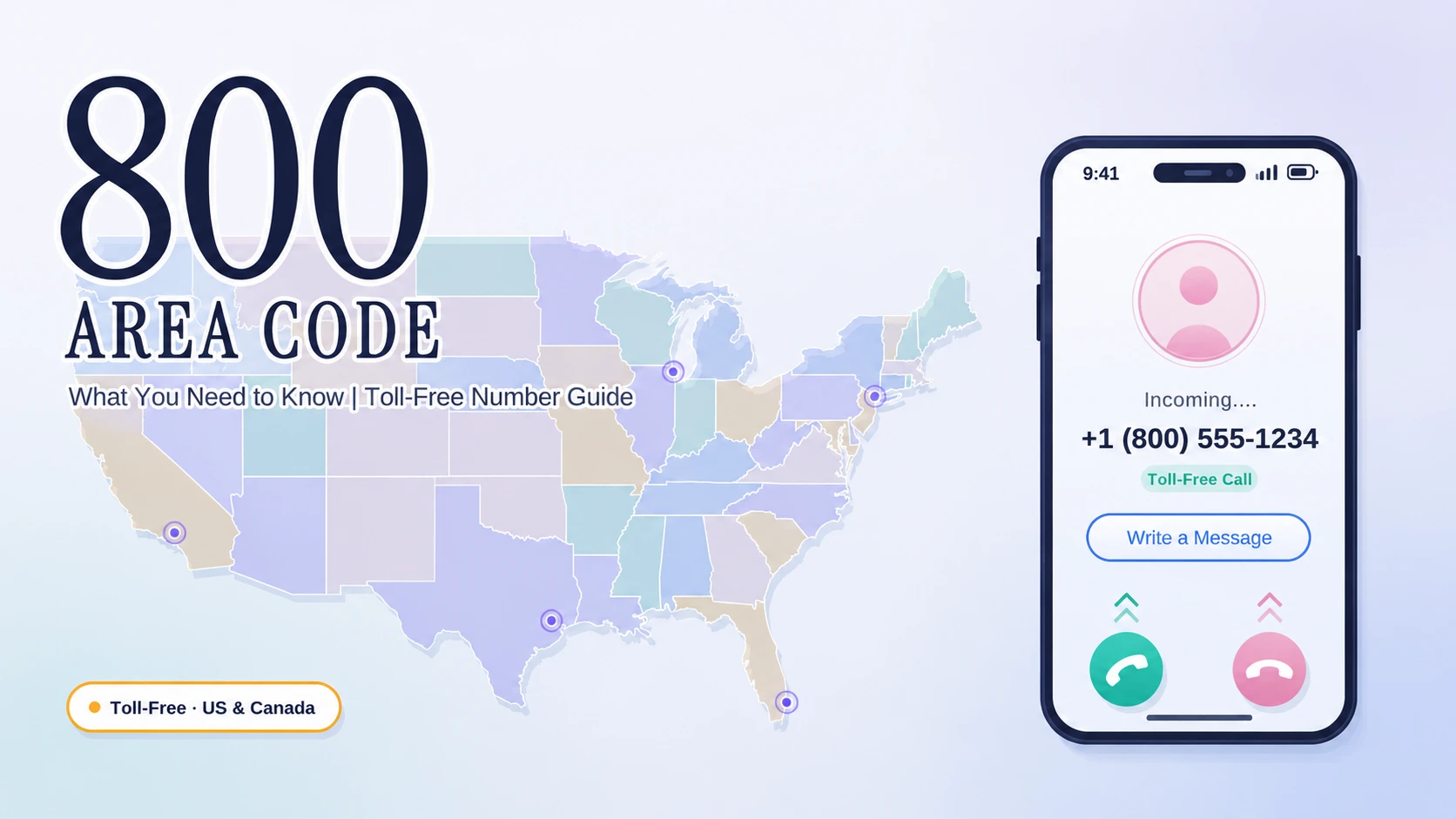
Toll-free numbers have shaped business communication across North America for decades, and the most recognized of them all opens with the digits 8-0-0. As part of the North American Numbering Plan, these numbers give customers in the US, Canada, and other NANP regions a cost-free way to reach a company, strengthening customer service, sales, and professional image. This guide covers the key features, benefits, and best practices of toll-free calling, alongside how the system evolved and where it is heading.
Key Takeaways
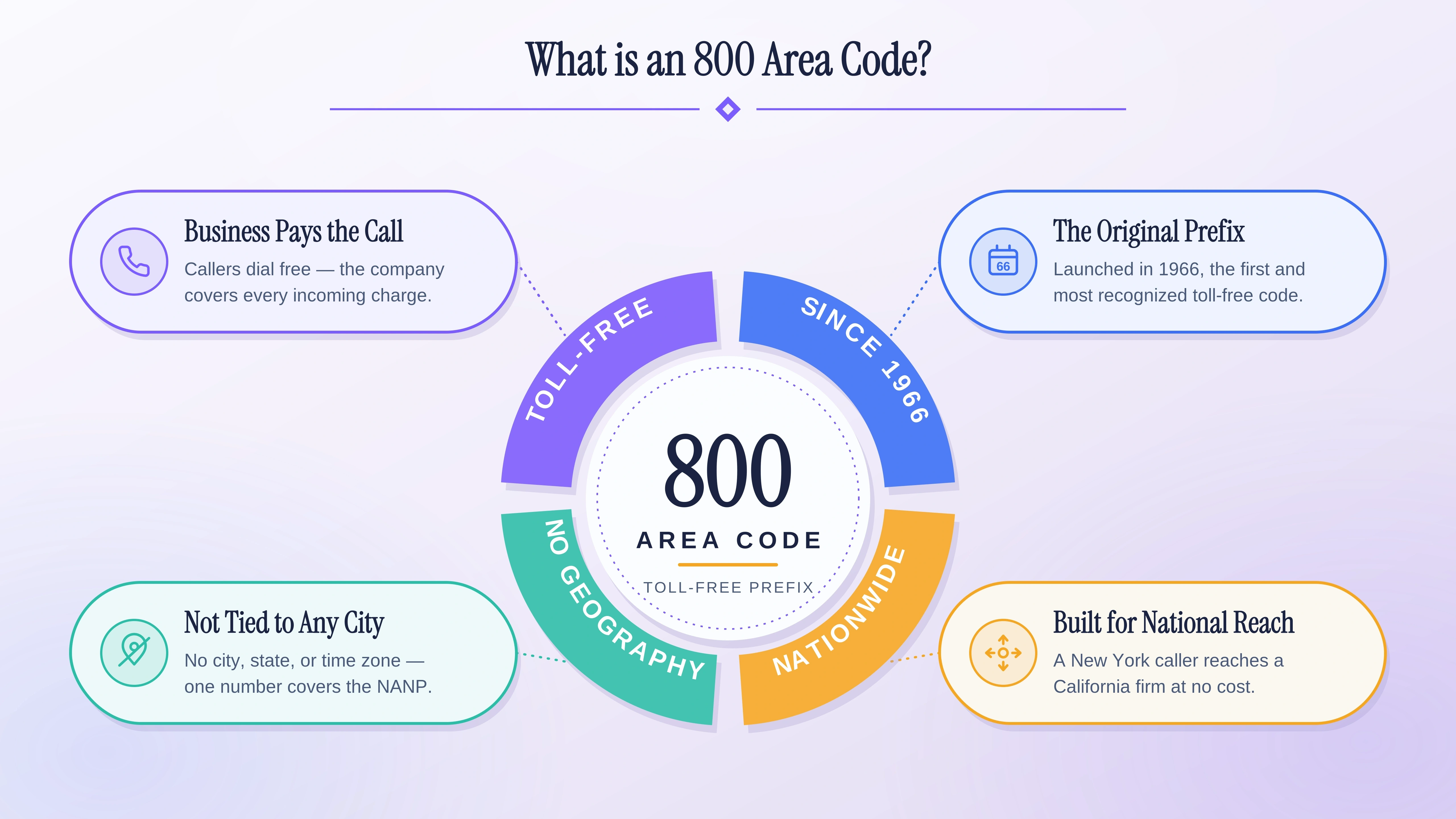
- The 800 area code is the original toll-free prefix, first introduced for intrastate use in 1966 and interstate calling in 1967.
- Calls to 800 numbers are free for the caller; the receiving business absorbs the cost.
- Coverage spans all 50 U.S. states, Canada, and participating Caribbean nations under the NANP.
- The prefix supports advanced features: IVR, time-of-day routing, call recording, and analytics dashboards.
- At ~99% saturation, available number combinations are limited — vanity numbers require early action.
- Numbers are assigned through certified Responsible Organizations (RespOrgs) on a first-come, first-served basis.
What Is a Toll-Free Prefix?
The prefix is a core element of the toll-free system in North America, designed so customers can reach a business without long-distance charges. Introduced for interstate calling in 1967 (and a year earlier for intrastate use), it was the first toll-free code of its kind, which is why it carries the strongest recognition and trust among consumers. A business that adopts a toll-free number projects a professional image and removes the cost barrier for callers — particularly valuable for companies serving a national or international audience.
Because the company pays for incoming calls rather than the customer, a toll-free line tends to lift inquiry volume and sales calls. That accessibility signals a commitment to service, helping a brand appear established and easy to reach. In short, area code 800 combines reach, credibility, and convenience in a single number.
How Toll-Free Numbers Work
The system routes calls through a toll-free service provider that connects the caller to the business. When someone dials the number, the call reaches the provider, which identifies the destination and forwards it — to a call center, department, or individual.
Number Translation and Routing
The number is not tied to a physical location. It is mapped to a standard local or long-distance number, and the provider translates it into the destination, routing the call over the public switched telephone network (PSTN) or an internet protocol (IP) network.
Intelligent Routing Options
Advanced services add time-of-day routing, where calls follow business hours, and geographic routing, where calls are directed by the caller's location. Providers also manage connectivity, call forwarding, IVR menus, billing, and the ability to scale as a business grows, ensuring this area code keeps pace with demand.
Who Uses Toll-Free Numbers (and Why)?
Toll-free lines support a wide range of organizations: customer service teams running support hotlines, sales and telemarketing desks fielding orders, non-profits collecting donations, professional services projecting nationwide credibility, and technical support teams handling troubleshooting. Each benefits from easier access, a stronger image, and room to scale.
Key Benefits of a Toll-Free Number
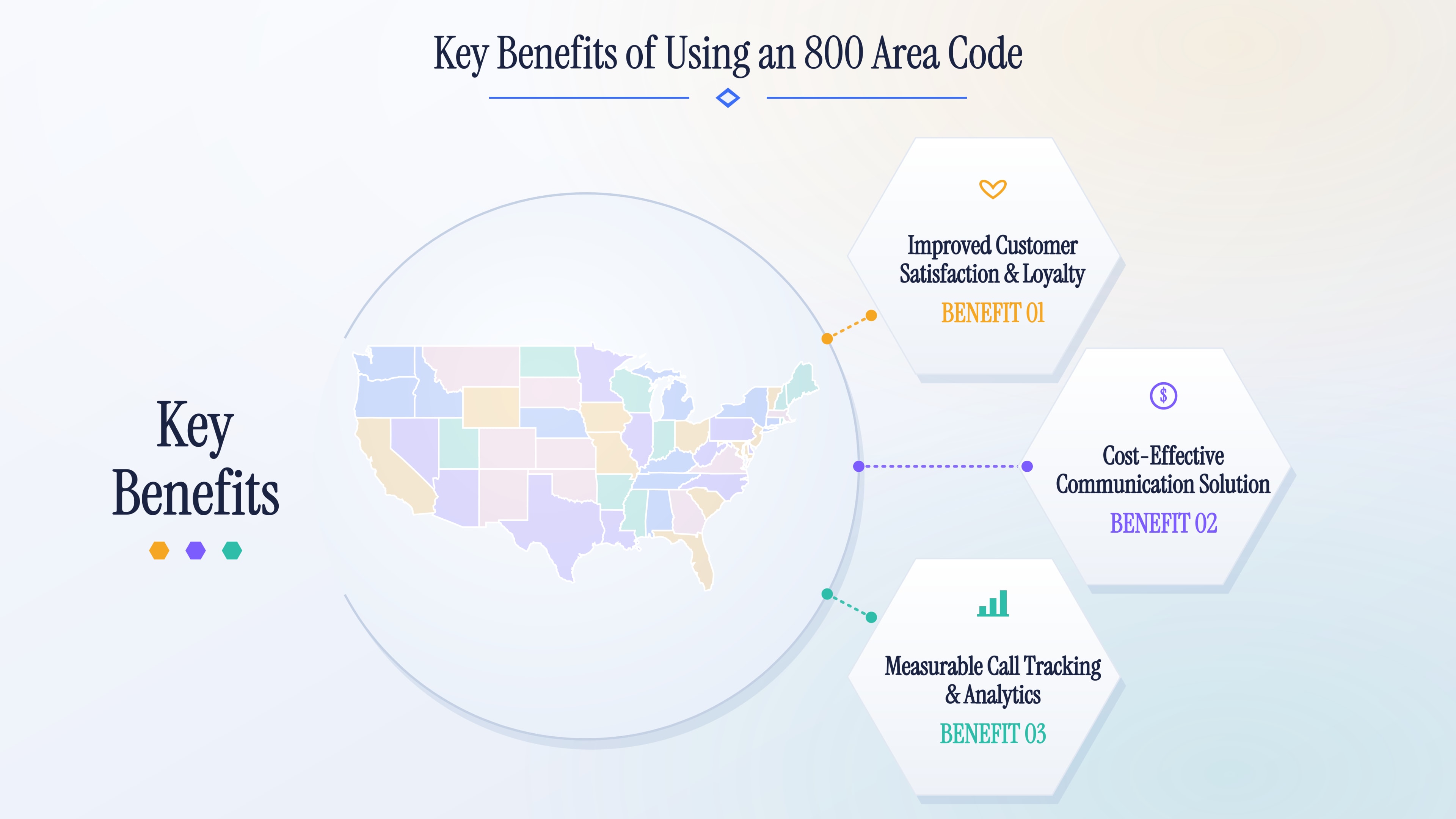
Improved Customer Satisfaction and Loyalty
A cost-free way to call removes hesitation. A retailer with a toll-free support line can resolve issues without callers worrying about charges, which builds a positive experience and repeat business.
Cost-Effective Communication Solution
A single number can serve customers across regions, replacing multiple local lines. Plans commonly run from about $10 to $50 per month depending on features and volume, and the cost is usually offset by stronger engagement and added sales.
Measurable Call Tracking and Analytics
Providers surface call patterns, durations, and caller locations. A marketing team can tie call volume to specific campaigns to gauge response, making this area code a measurable channel rather than a simple phone line.
Vanity Toll-Free Numbers: The Power of Customization
Vanity numbers such as 1-800-FLOWERS or 1-800-CONTACTS spell out a company's name or service, making them easy to remember and reinforcing brand identity. A number like 1-800-PLUMBER sticks in a customer's mind even without their contact list, reducing friction and encouraging repeat calls.
Tips for Choosing a Vanity 800 Number
- Spell out your brand or core service — the most effective vanity numbers directly state what the business does (e.g., 1-800-PLUMBER, 1-800-DENTIST).
- Keep it to 7 characters — matches the standard dial-pad length and avoids confusion over extra digits.
- Check availability early — at ~99% saturation, desirable combinations go fast; use a provider's search tool before committing to a name.
- Test dialability — say the number out loud and have someone unfamiliar with it dial it cold to catch any confusion between letters and digits.
- Use it consistently — feature the vanity number on every channel (website, ads, packaging) so repetition builds recall.
- Have a numeric backup — always display the digit equivalent alongside the letter version for callers on devices without labeled keypads.
How to Get a Toll-Free Number
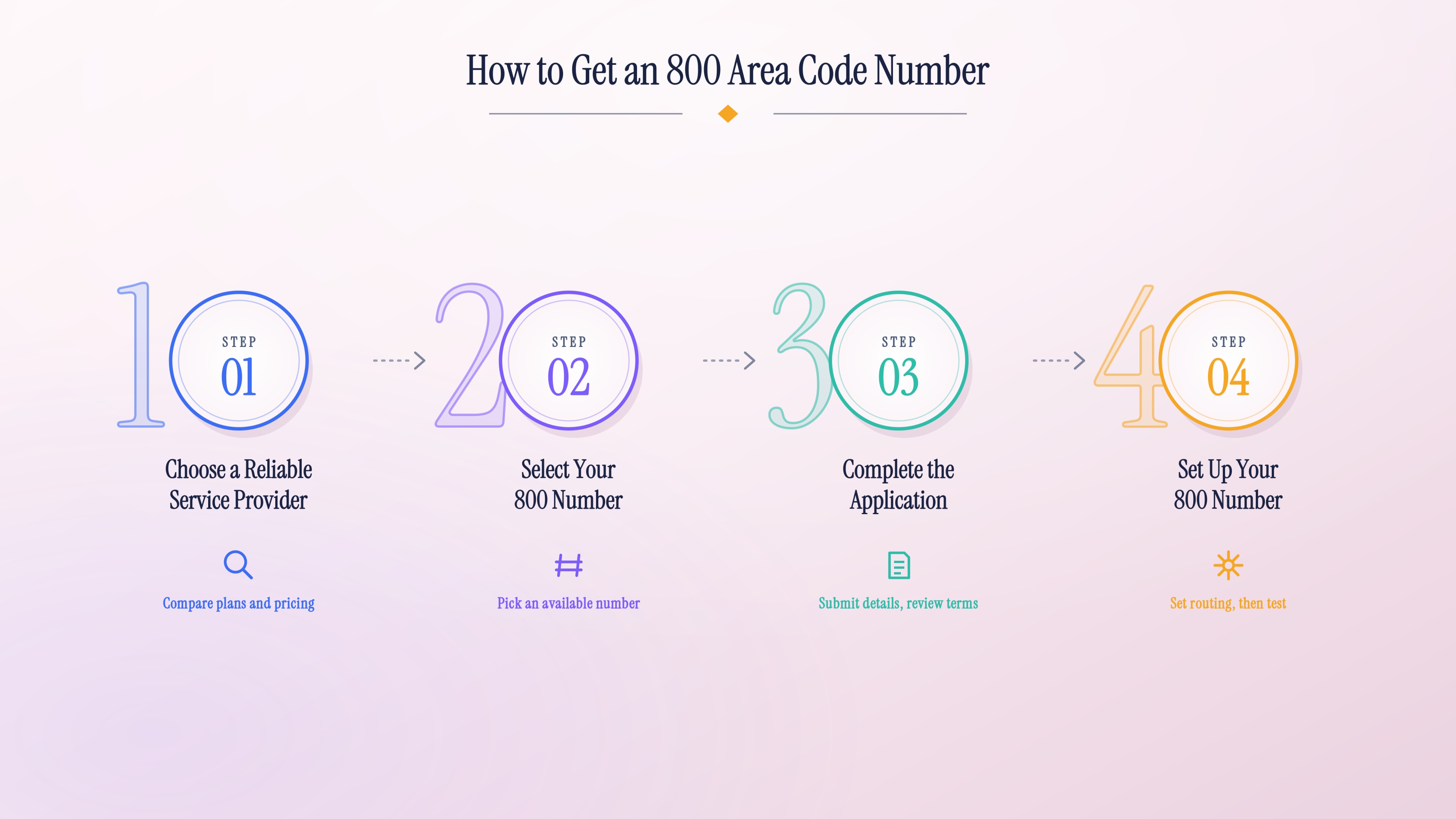
Setting up a toll-free line follows four steps: choose a reliable provider by comparing plans, pricing, and customization; select your number and check availability for a vanity option; complete the application with business details and review the terms; then configure call routing, add features such as voicemail and analytics, and test the line. Callers in the USA do not need to enter a country code from a mobile phone. A reliable provider keeps this area code number simple to launch and manage.
Establish a nationwide presence with the most trusted toll-free prefix
Get a free trial and experience how an 800 number can transform customer communication from day one — with routing, IVR, and analytics included.
Comparing 800 Area Code Providers
Choosing the right provider comes down to three areas. Look for transparent pricing with no hidden setup or activation fees; flexible call routing and management features such as time-of-day routing, IVR, and scalability; and reliable customer service, ideally with 24/7 support and strong reviews. Weighing these together helps a business pick a partner that grows with it, and keeps every area code number performing reliably.
800 vs. Other Toll-Free Area Codes
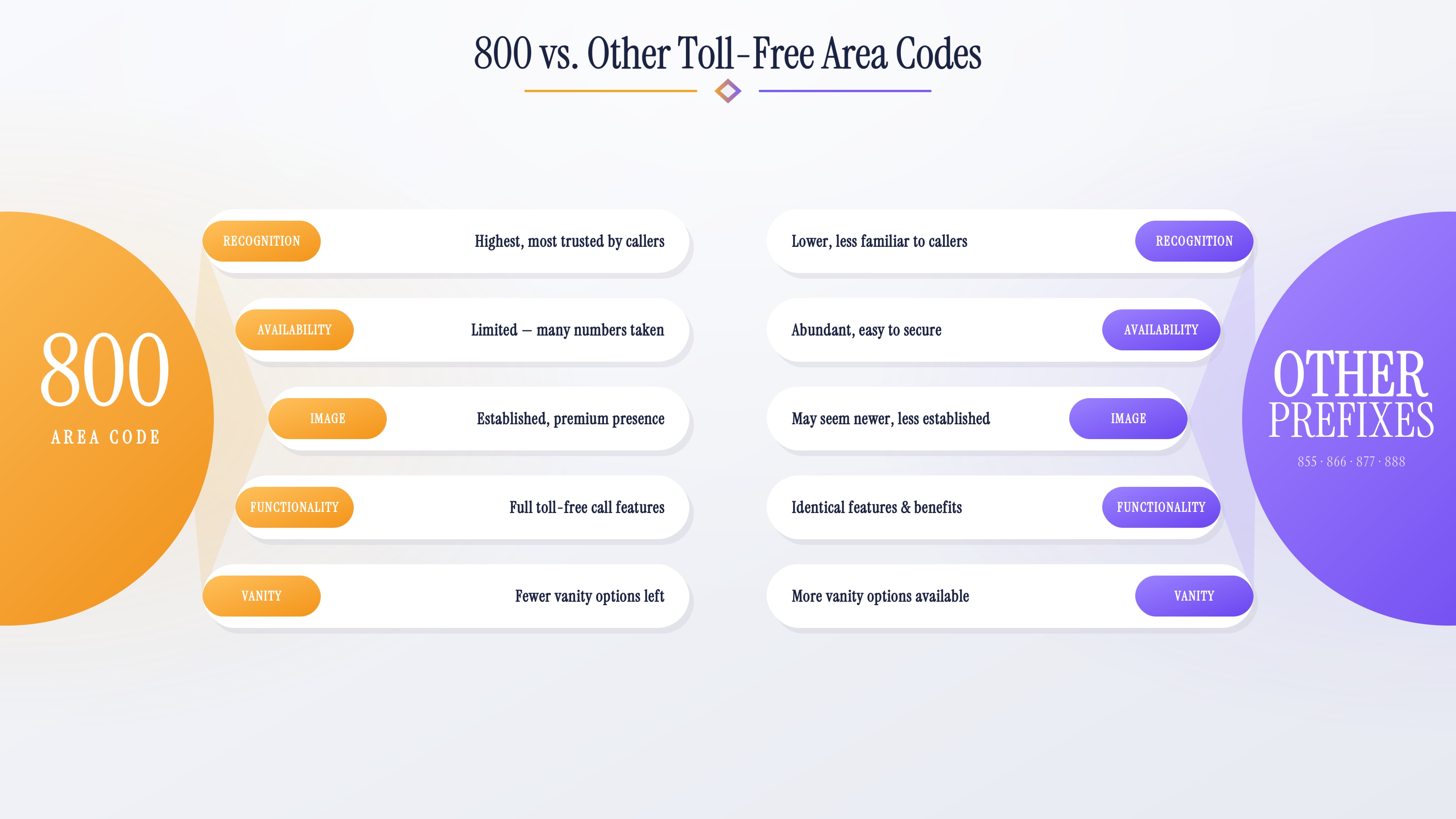
All seven toll-free prefixes — 800, 888, 877, 866, 855, 844, and 833 — are free for the caller and functionally identical; the business pays either way. The differences come down to availability, perception, and age. The original code carries the most recognition but the fewest free numbers, since the most memorable combinations were claimed long ago. Newer prefixes like 877, 866, and 855 offer far more availability with the same features and only slightly lower familiarity.
Busting Toll-Free Myths
Several misconceptions persist. Calls are free for the caller but not the business, which pays the cost. Toll-free lines are not just for large corporations — flexible plans suit businesses of every size. All prefixes share the same functionality, so the choice depends on availability and preference. The format is far from outdated; it integrates cleanly with VoIP and virtual call centers. And vanity numbers are a genuine marketing asset, not a gimmick.
Importance of Accessibility for Callers with Disabilities
Inclusive communication widens reach. Supporting TTY (Text Telephone) devices lets people with hearing or speech impairments connect, provided the carrier offers a TTY-compatible line and staff are trained in protocol. Offering multilingual support — through bilingual representatives or translators — helps non-native English speakers and opens new markets, signaling that a business values every caller.
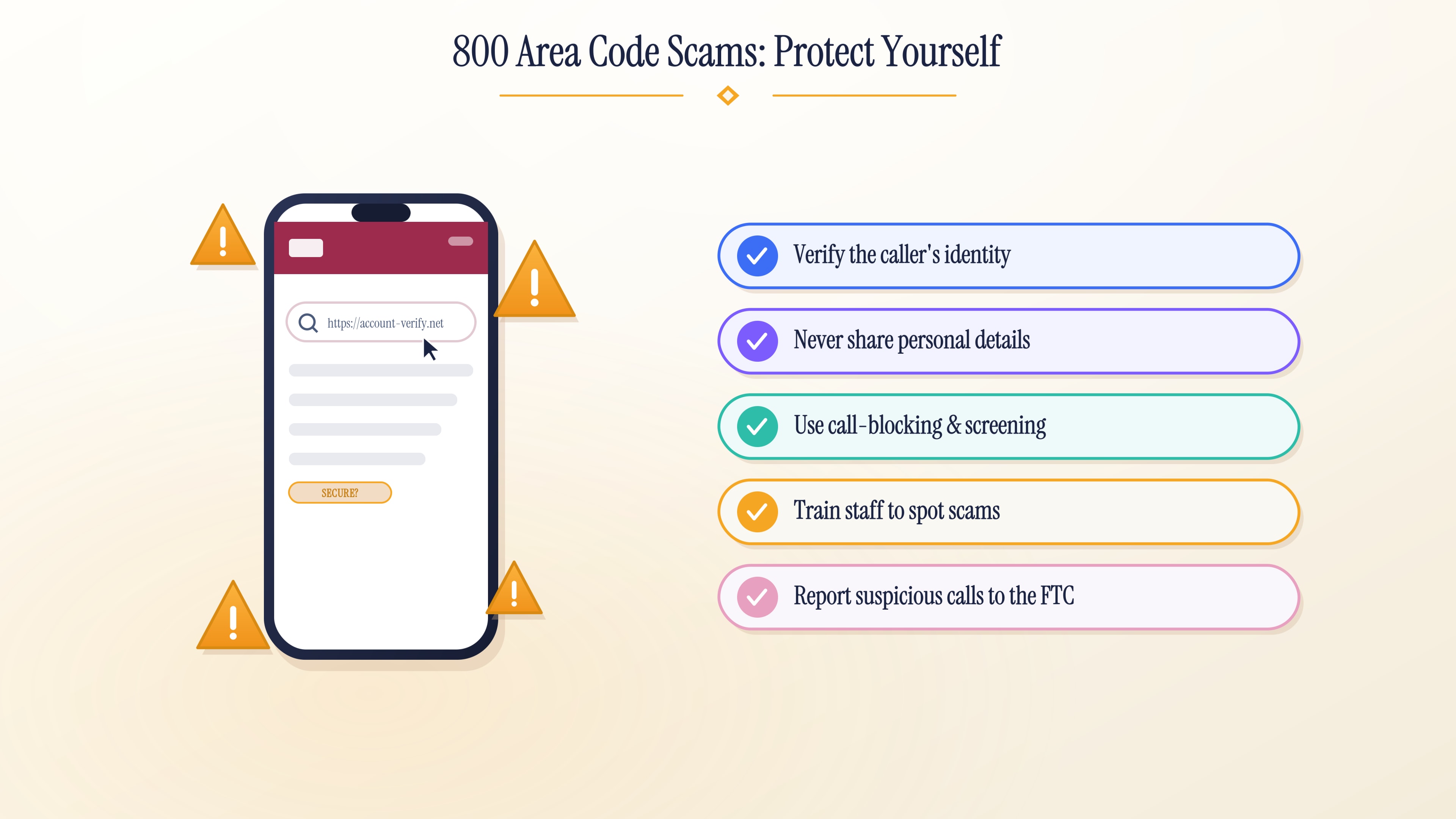
800 Area Code Scams: Protect Yourself
Toll-free numbers can be abused by scammers through phishing, fake tech support, and caller-ID spoofing. Imposter scams remained the top fraud category reported to the FTC, and Americans reported losing $15.9 billion to fraud in 2025, up from $12.5 billion the year before — a reminder to stay cautious. Watch for unsolicited calls, high-pressure tactics, and requests for personal information.
A quick check before sharing anything goes a long way; legitimate businesses will never pressure an immediate decision. When in doubt, hang up and verify the caller through the organization's official published number before responding.
The Evolution (and Future) of Toll-Free Numbers
Introduced in the 1960s, toll-free service revolutionized customer contact, and additional prefixes were added as demand grew. Looking ahead, expect AI-powered virtual assistants and chatbots, deeper integration with digital channels and messaging apps, stronger call encryption and authentication, expanded international toll-free reach, and unified communications that manage calls alongside email, SMS, and video. Each trend builds on the foundation this area code established.
Best Practices for Using 800 Area Codes
To get the most from a toll-free line, route calls intelligently with personalized handling, time-of-day rules, and overflow backup. Tie the number into marketing with memorable vanity options, clear calls to action, and campaign-specific numbers for tracking. Then measure everything — call volume, conversions, and customer feedback — to refine service and prove ROI.
The Future of Customer Communication: Beyond Toll-Free Numbers
Businesses are extending beyond voice toward chatbots, virtual assistants, and omnichannel platforms. AI tools answer instantly around the clock and personalize responses from customer data, while omnichannel systems keep one consistent thread across phone, email, chat, social media, and SMS. Folding toll-free calls into that mix delivers a unified, data-rich experience that meets the expectations of today's digital customers.
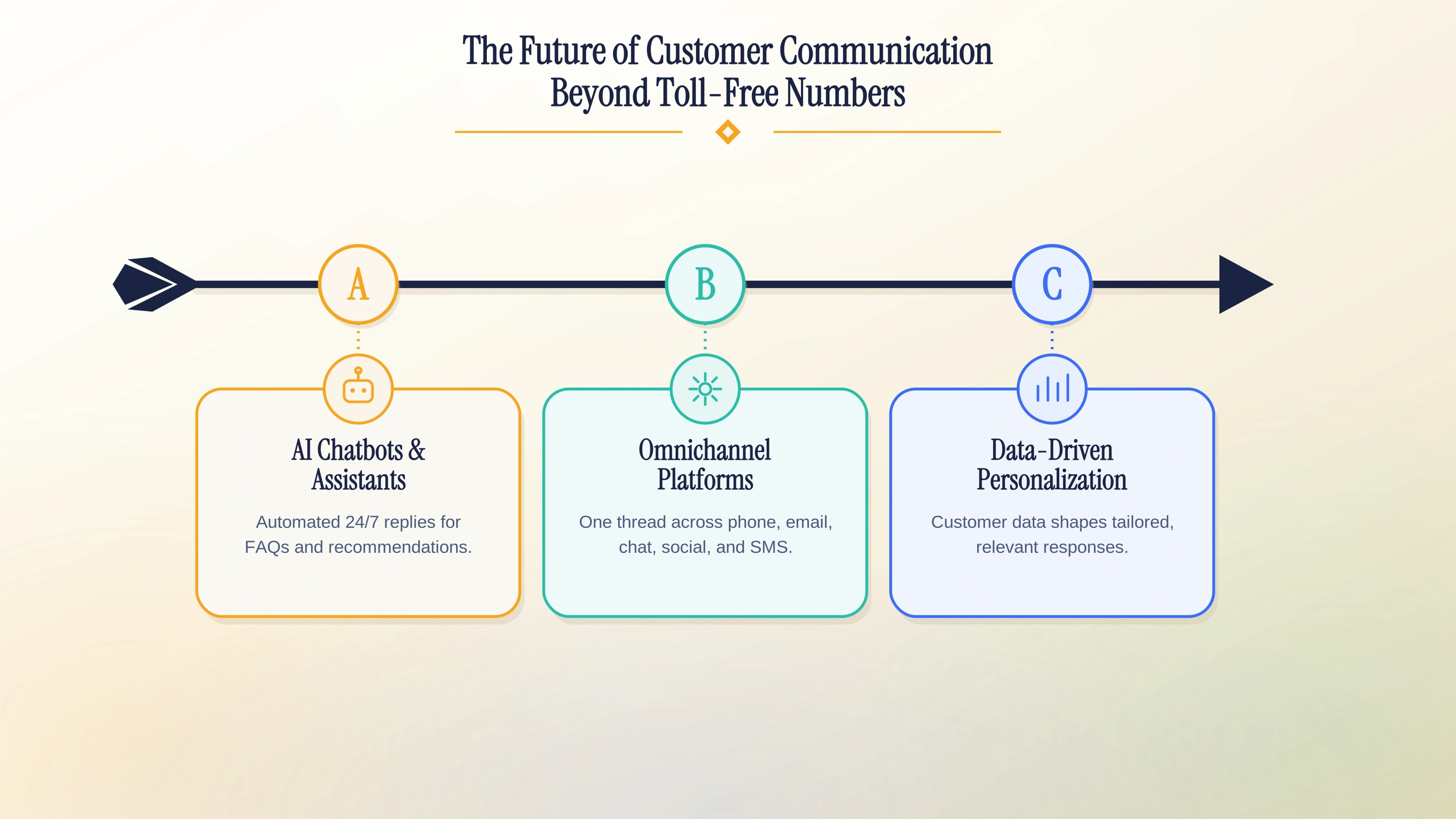
Pairing a Toll-Free Line With AI and Omnichannel Tools
A toll-free line remains a valuable asset — it widens accessibility, projects professionalism, and, with smart routing and analytics, becomes a measurable part of the marketing mix. The differences between prefixes come down to availability and recognition, while the underlying value stays constant.
As communication shifts toward AI and omnichannel platforms, the businesses that integrate toll-free calling with these tools will deliver the most seamless, personalized experiences — and keep a clear edge in customer engagement.
Put the most trusted toll-free prefix to work
Get a free trial and see how an 800 number can lift inbound calls, project nationwide credibility, and integrate cleanly with your existing phone system.
Questions, answered.
The 800 area code is the original toll-free prefix in the North American Numbering Plan, introduced for intrastate use in 1966 and interstate calling in 1967. Calls are free for the caller, and the receiving business absorbs the cost.
Yes — free for the caller. The business that owns the toll-free number pays for inbound calls instead of the person dialing.
It works across the North American Numbering Plan — all 50 U.S. states, Canada, and participating Caribbean nations. Callers from outside the NANP may incur charges or be unable to reach a U.S. toll-free number.
They are functionally identical and all free to the caller. The 800 prefix carries the most recognition but the fewest available numbers due to near-total saturation; newer prefixes such as 888, 877, and 833 offer far more availability with the same features.
Choose a certified RespOrg provider, check availability (including any vanity option), complete the application with your business details, and configure call routing and features. A standard setup typically launches quickly.
Sometimes, but at roughly 99% saturation the most desirable combinations are already taken. Search availability early, keep the vanity name to seven characters, and always display the numeric equivalent as a backup.
Not quite — 800 is one of the toll-free codes (alongside 800, 833, 844, 855, 877, and 888) rather than a geographic area code. An 800 number works nationwide and the caller isn't charged for the call, which is why businesses use it for support and sales lines that reach customers anywhere in the country.