For decades, toll-free numbers have promised three things: nationwide reach, free calls for customers, and a professional image. The 833 area code, launched in 2017, brings those same benefits to today's businesses. It also has far more numbers available than older toll-free codes. It works for any company, from a local clinic to a brand that ships coast to coast. A toll-free number is easy to use, builds trust, and brings customers back.
Key Takeaways
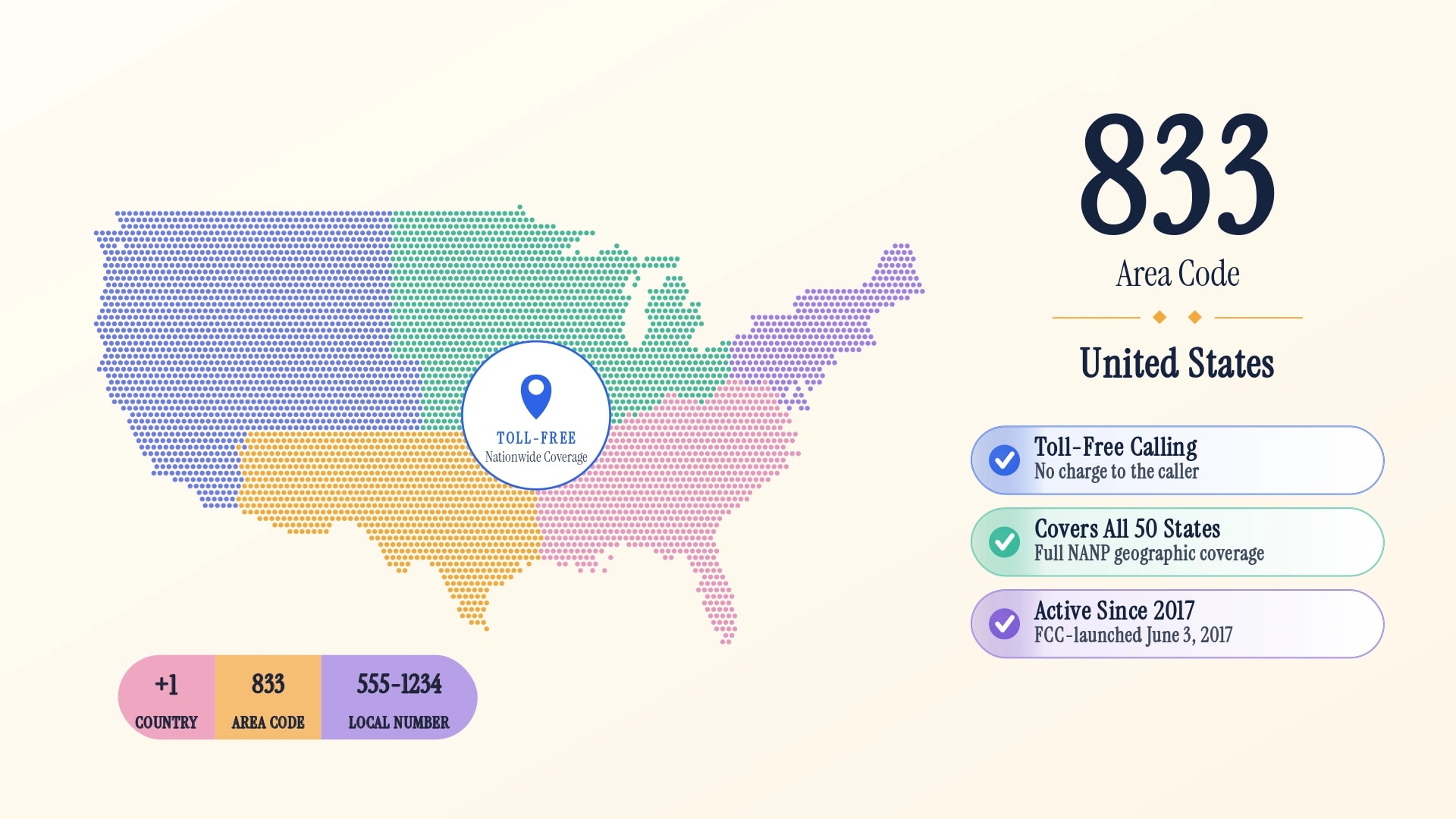
- This toll-free prefix was introduced June 3, 2017, under the North American Numbering Plan (NANP).
- Calls to 833 numbers are free for the caller; the receiving business absorbs the cost.
- Coverage spans all 50 U.S. states, Canada, and participating Caribbean nations.
- The prefix supports advanced features: IVR, real-time call routing, call recording, and analytics dashboards.
- As of 2026, STIR/SHAKEN protocols verify caller identity, giving legitimate businesses a credibility edge over spoofed calls.
- Numbers are assigned through certified Responsible Organizations (RespOrgs) on a first-come, first-served basis.
What Is the 833 Area Code, and Where Is It From?
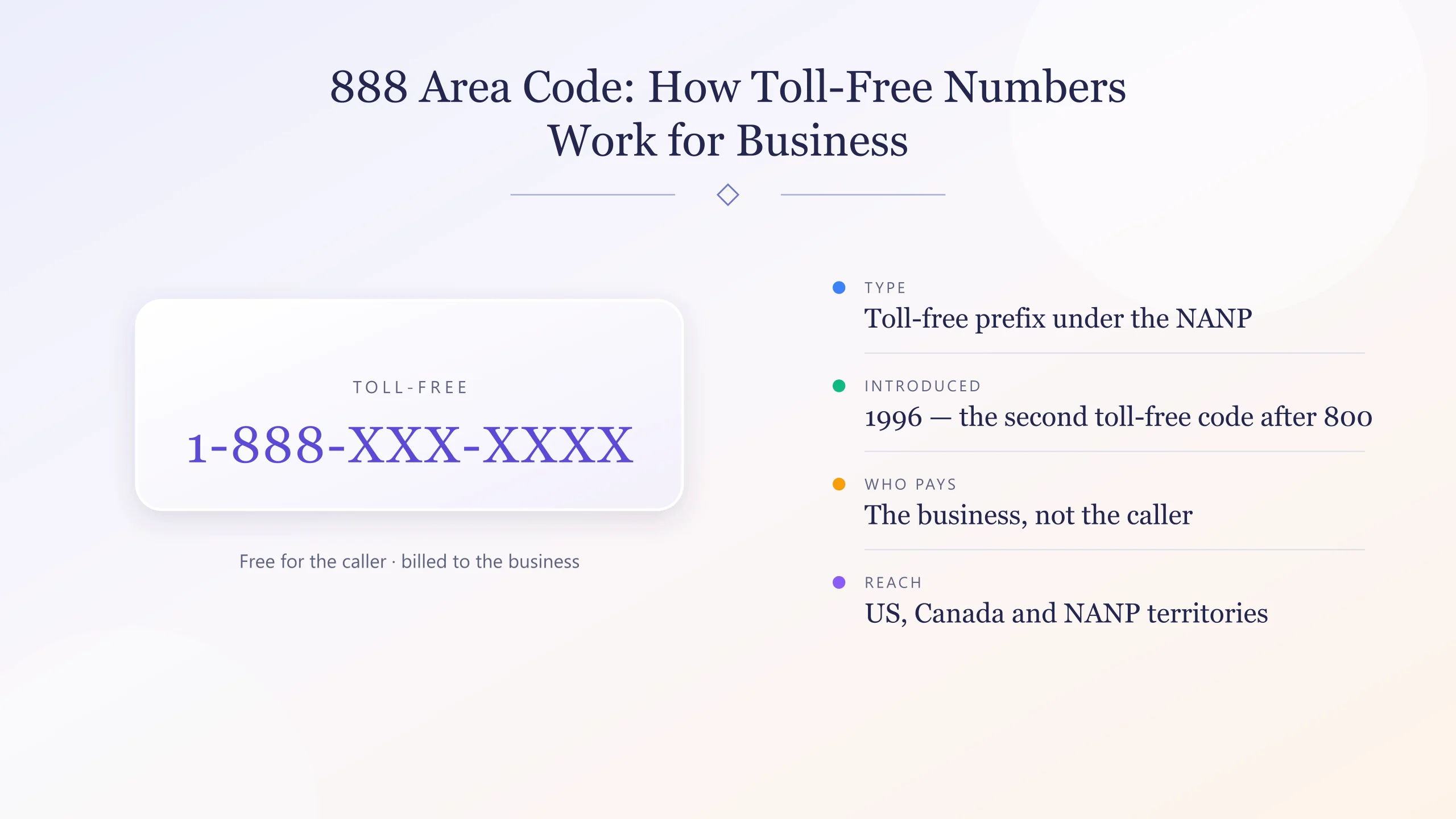
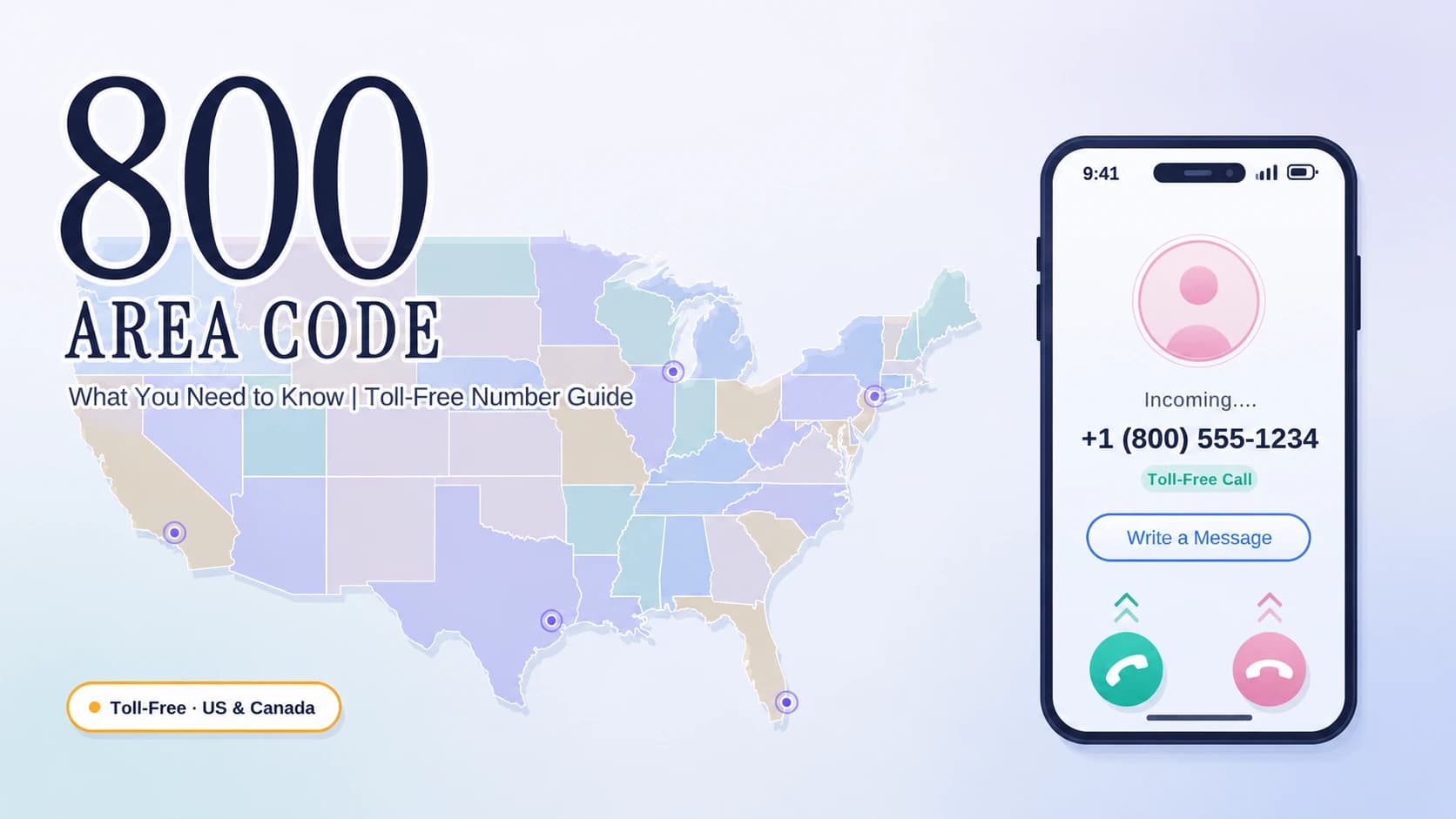
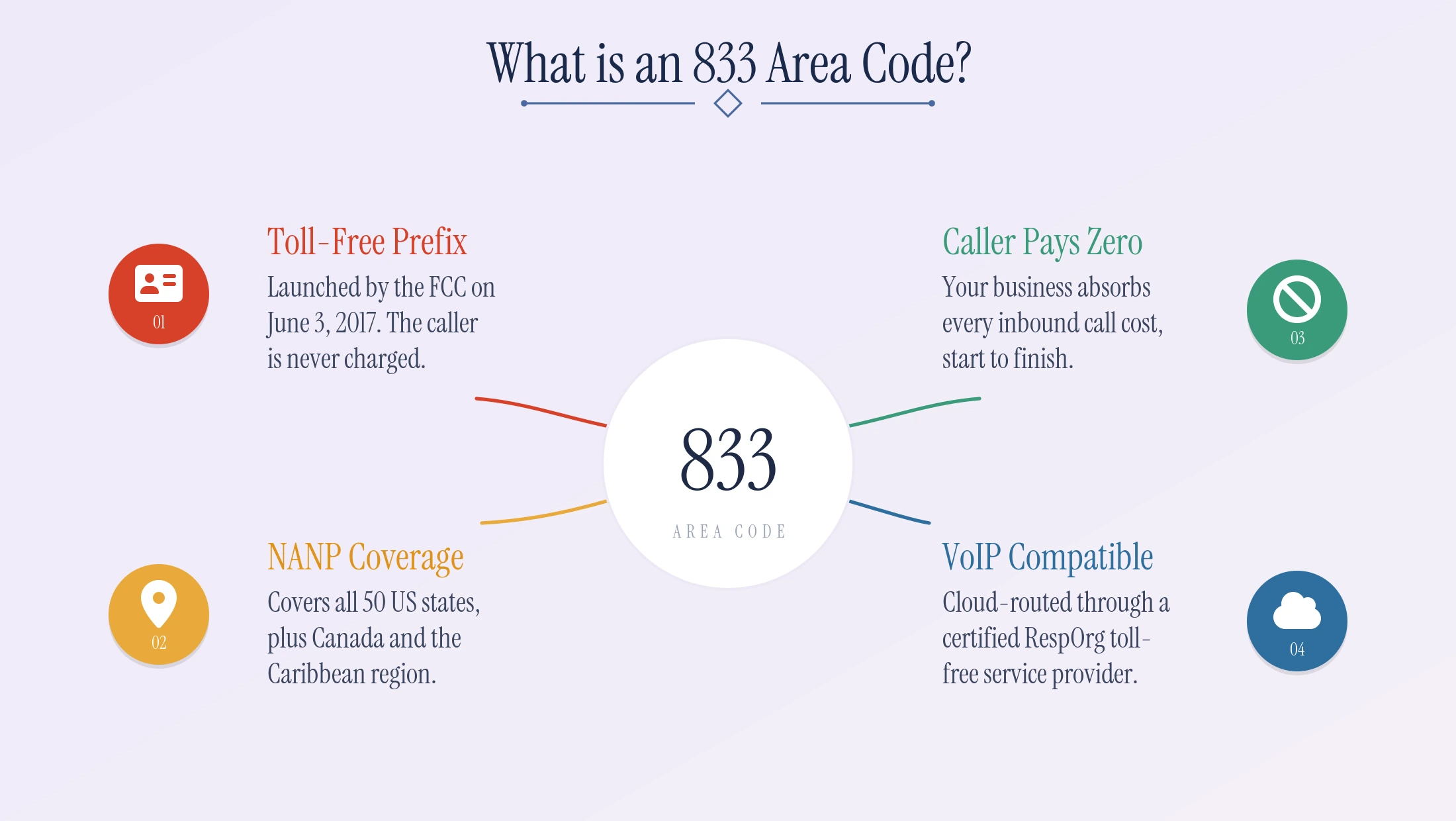
Unlike a city or state area code, 833 isn't tied to any single location — it's one of eight toll-free prefixes that route calls nationwide, so a call from an 833 number could originate anywhere in the NANP. The Federal Communications Commission (FCC) launched it on June 3, 2017, to add more business phone numbers to the North American Numbering Plan (NANP). Like the older toll-free codes — 800, 888, 877, 866, 855, and 844 — calls to an 833 number are free for the caller. The business pays instead. That stays true whether the customer calls from a landline, a mobile, or a VoIP service. The 833 area code works across all 50 U.S. states, Canada, and parts of the Caribbean, including Jamaica, the Dominican Republic, and Barbados.
Who's Calling You From an 833 Number?
If an 833 number just called you, it's a toll-free business line — not a scam by default. Legitimate businesses across healthcare, finance, retail, and customer support use 833 numbers for sales and support lines, and STIR/SHAKEN caller-ID verification, required industry-wide since 2026, makes it harder for scammers to spoof one convincingly. That said, toll-free prefixes are also a favorite disguise for robocalls precisely because they look official. Before sharing any personal or financial information, hang up and call the business back using the number on its official website or your account statement, rather than trusting the number that called you.
Functionality and Similarities
The 833 prefix works just like other toll-free codes. Calls route through a certified Responsible Organization (RespOrg). A RespOrg is a company approved by the 800 Service Management System (SMS/800) to manage toll-free number records. When a customer dials, the system checks a central database, finds the carrier, and sends the call to your chosen phone or call center in milliseconds. It works with both old landlines and modern cloud VoIP systems, so it fits your current setup with no extra work.
Benefits for Businesses and Consumers
A toll-free prefix gives a business something a local area code cannot: instant credibility. It suggests a national operation and real commitment to service. For customers, the call is free, support is easy to reach, and the number looks familiar — the kind big brands use. Both sides win. Companies get more inbound calls, and customers get a more professional experience.
Advantages of Using an 833 Number
A toll-free prefix improves three things you can measure: customer communication, operating costs, and brand image.
Accessibility: Enhancing Customer Communication
Toll-free calling removes the cost barrier that stops customers from reaching out. An 833 number works anywhere in the NANP. So a business in Phoenix can serve callers in Boston or Halifax with no extra setup. One number covers every region at once. That makes multi-state marketing simpler for the business and the customer alike.
Cost-Effectiveness: Reducing Communication Costs
When a business covers the cost of incoming calls, customers notice — and reward it with loyalty. On the cost side, 833 numbers route straight to your existing phone lines or VoIP system, so you need no extra hardware. Monthly plans scale with use, so you pay only for the capacity you need.
Brand Perception: Enhancing Customer Trust
A toll-free number signals professionalism. Customers tend to trust businesses with toll-free numbers more than those using a local or personal mobile line. The prefix also supports vanity numbers, such as 1-833-555-LOAN or 1-833-555-CARE. These let a brand build its name right into the phone number, which makes it easier to remember in ads.
Business Applications of an 833 Number
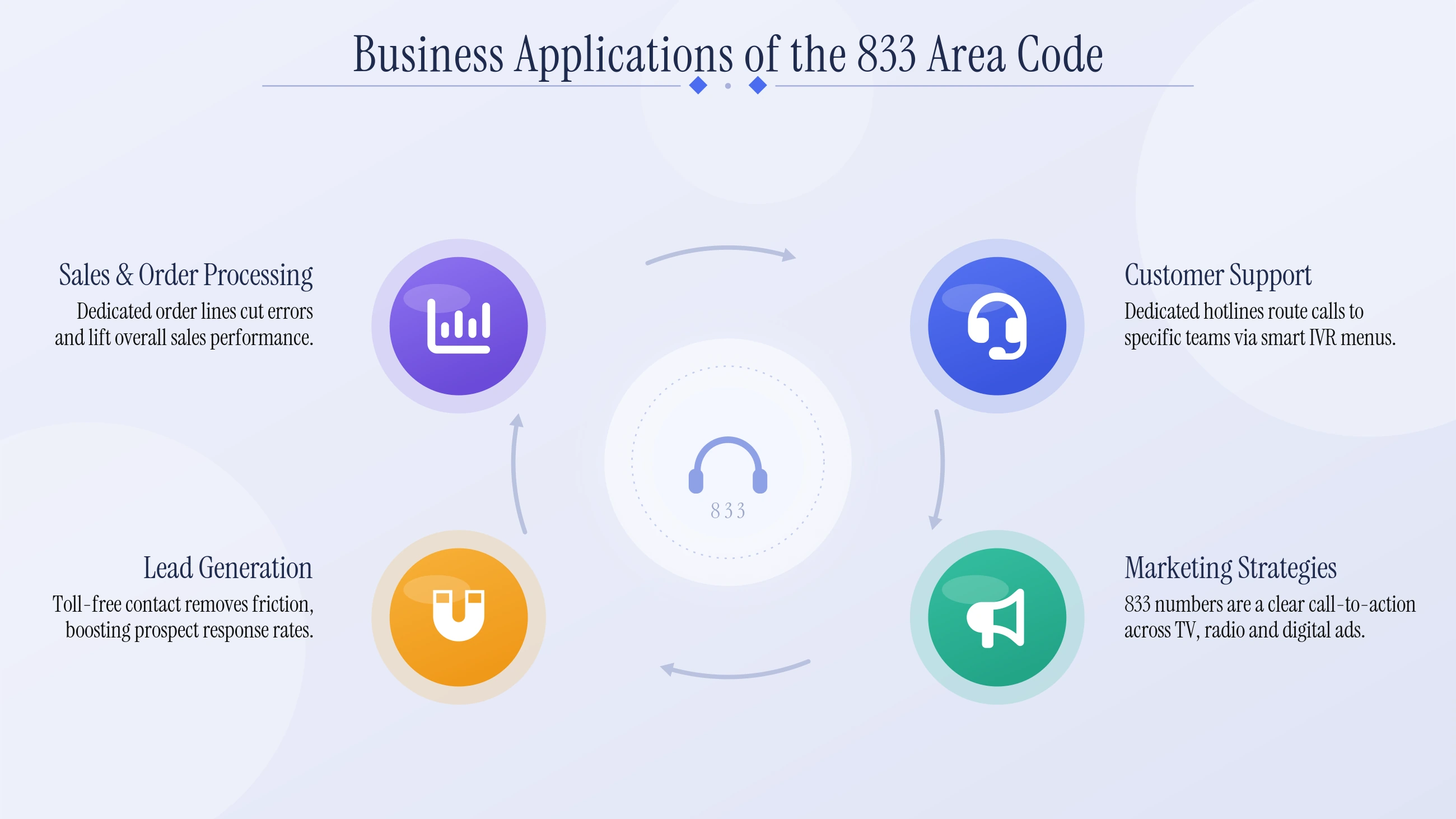
Businesses use toll-free numbers in four main areas, and each one delivers clear returns.
Customer Support: Enhancing Customer Experience
Support lines on an 833 prefix send each call to the right team right away. Interactive Voice Response (IVR) menus guide callers — "Press 1 for Billing, 2 for Technical Support." This cuts wait times and misdirected calls. The platform also tracks call data, so you can see your busiest hours and most common issues. That helps you staff smarter and improve your support scripts over time.
Marketing Strategies: Effective Promotions
A toll-free number gives prospects a clear, free way to respond to a TV spot, print ad, or social campaign. You can give each channel its own 833 number — one for digital ads, another for radio. Then you compare the calls from each to see which channel pays off best. This makes it easy to track which ads work and measure each campaign.
Lead Generation: Attracting New Customers
People respond more often to ads that offer a free way to call. With no charge to dial, reaching out feels low-risk. Toll-free tracking ties every call to a specific ad, so your marketing team knows what works. That data helps you sharpen your targeting and message — and follow up fast to win more leads.
Sales and Order Processing: Streamlined Transactions
Busy sales teams gain from dedicated lines for product hotlines, automated ordering, and live reps. Smart routing means fewer prospects hit voicemail during business hours. Call recording supports quality checks and coaching. Used for order lines, product hotlines, and sales numbers, this approach cuts errors, improves service, and lifts sales.
Key Benefits of 833 Numbers for Businesses
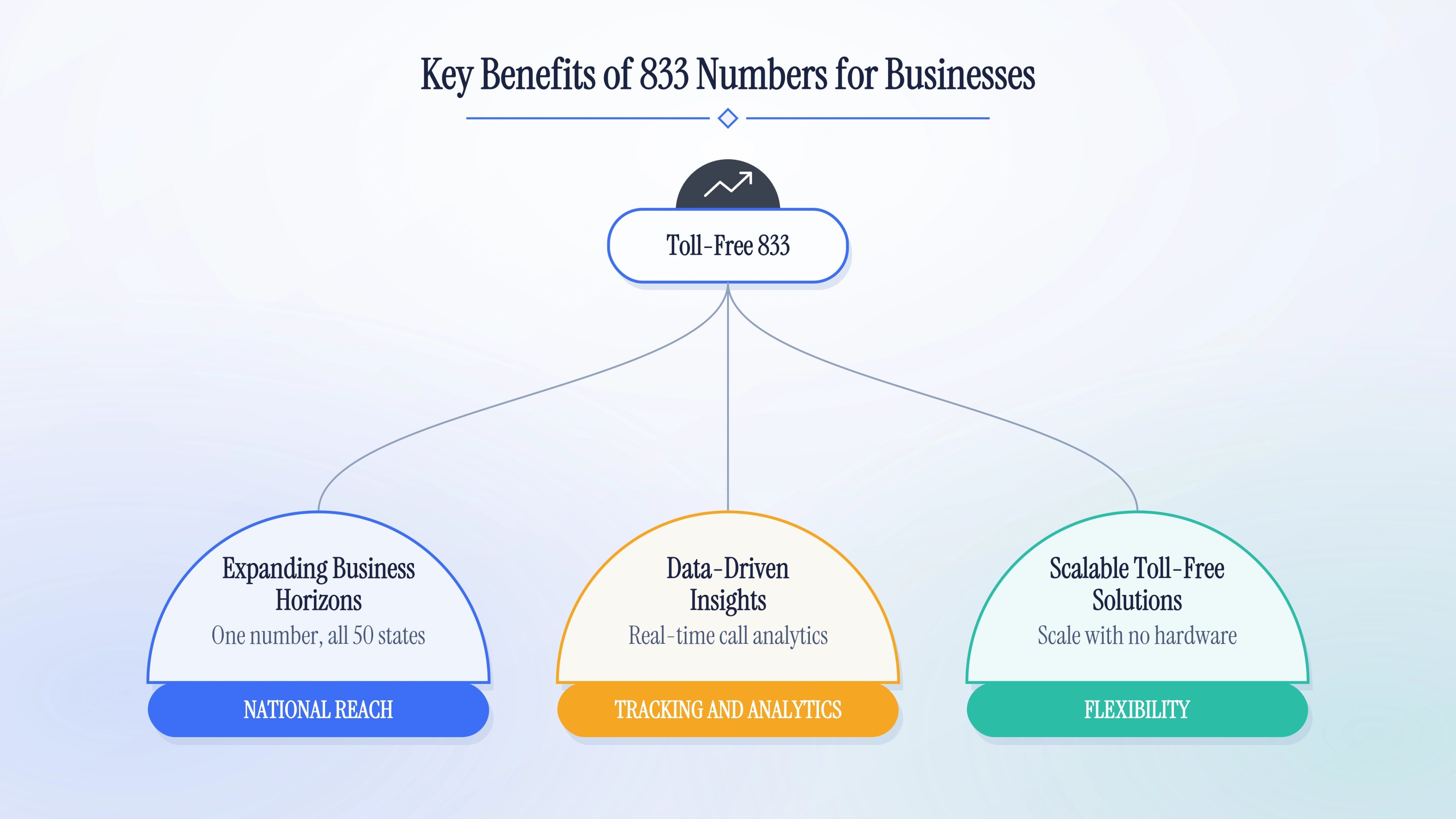
Three big advantages stand out when a business adds a toll-free prefix.
National Reach: Expanding Business Horizons
One toll-free number pulls calls from all 50 states into a single point of contact. There is no geographic limit. A business in one state can serve customers in another with no extra local numbers. Customers reach you easily wherever they are. And the national feel of the prefix strengthens your professional image with customers and partners.
Tracking and Analytics: Data-Driven Insights
Modern toll-free platforms link to dashboards that show call volume, average handle time, hold time, and missed calls in real time. These numbers help managers spot slow periods and move staff where they are needed. You can also track each agent's performance. That gives you clear feedback for coaching and lifts customer satisfaction over time.
Flexibility: Scalable Toll-Free Solutions
A toll-free number can start as one line for a small team and grow into multi-department routing as you scale. You add or remove lines with no hardware changes. Custom rules route calls by time of day, caller location, or IVR choice, so the right person is always reachable. It also plugs into your current phone system, so rollout causes little disruption.
Best Practices for Implementing an 833 Number
A toll-free number works best with clear promotion across your channels, smooth integration with your phone system, and solid call management. When you choose a provider, weigh these practices:
| Best Practice | Description | Benefit | Tip |
|---|---|---|---|
| Research reputation | Evaluate provider reliability and customer support record | Reliable service, faster resolution | Check reviews, ask for referrals |
| Compare pricing | Analyze plans and total cost of ownership | Optimized budget allocation | Calculate per-minute vs. flat-rate costs |
| Check features | Confirm IVR, analytics, and recording are included | Enhanced functionality | List requirements before evaluating |
| Verify certifications | Confirm the provider is a certified RespOrg | Regulatory compliance | Check FCC certification status |
| Evaluate support | Assess response time and channel availability | Timely issue resolution | Contact support before committing |
A strong toll-free setup gets the most from this investment. That means a certified provider, smart routing, and steady promotion across digital and print channels.
Establish a nationwide presence for your business
Get a free trial and experience how a toll-free 833 number can transform customer communication from day one — with call routing, analytics, and IVR built in.
Common Misconceptions About 833 Numbers
A few myths keep businesses from using toll-free calling fully. And one customer worry — fraud — deserves a clear answer.
Debunking Misconceptions Related to Toll-Free Numbers
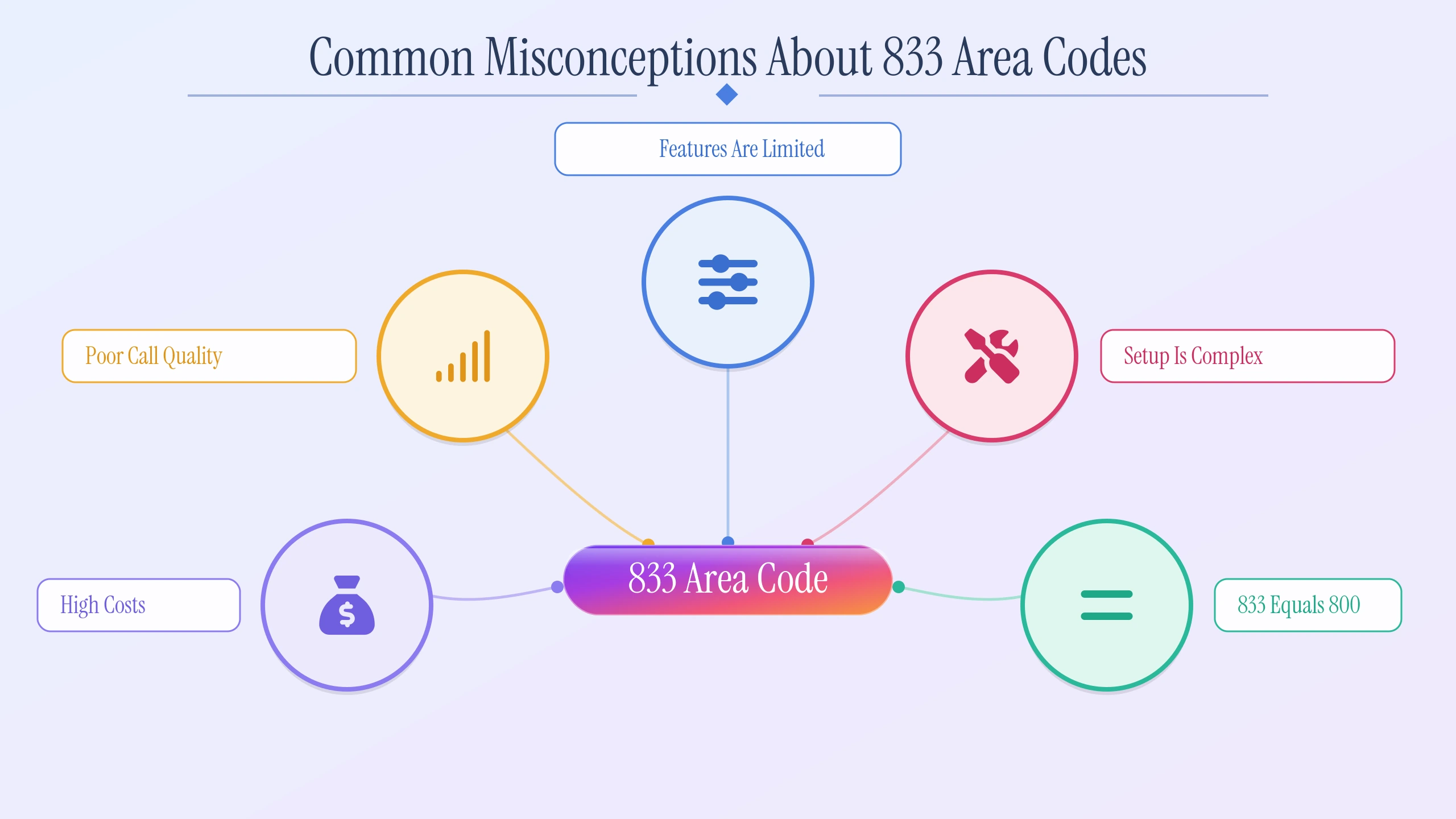
- High costs — scalable plans make toll-free service accessible to businesses of any size. Monthly fees vary with usage, and entry-level plans are competitive with standard business line costs.
- Poor call quality — VoIP technology has matured significantly. RespOrg-certified providers route calls through redundant servers, delivering clear audio on every connection.
- Limited features — modern platforms include call tracking, IVR menus, real-time analytics, and voicemail-to-email transcription — a far more comprehensive toolkit than older perceptions suggest.
- Complexity — most providers offer user-friendly dashboards and guided onboarding. Configuration typically takes less than one business day for a standard setup.
A note on scams: fraudsters sometimes spoof toll-free prefixes to fake bank or government alerts. As of 2026, the STIR/SHAKEN framework — now required for major U.S. carriers — makes carriers verify caller ID before a call goes through. Real businesses registered with a certified RespOrg gain from this check. It lowers the chance their calls get flagged as "Spam Likely" to new prospects.
Toll-Free vs. Local Numbers
Toll-free numbers differ from local numbers in four key ways. They are not tied to any location. The business, not the caller, pays for inbound calls. They signal national scale, not a neighborhood presence. And they grow with call volume without changing the number customers see. The two types work together rather than compete. Using both gives you local trust and national reach.
| Area Code | Availability | Features | Popularity | Usability |
|---|---|---|---|---|
| 833 | High | Advanced call tracking, analytics | High | Easy setup, user-friendly interface |
| 800 | Limited | Basic call tracking | Medium | Standard setup process |
| 877 | Medium | Call tracking, some analytics | Medium | Easy setup, some limitations |
| 888 | Medium | Call tracking, basic analytics | Low | Standard setup process |
| 866 | Medium | Enhanced call routing, analytics | Medium | Intuitive interface, scalable |
| 855 | Medium | Call tracking, basic analytics | Low | Standard setup process |
| 844 | Medium | Advanced call routing, analytics | Medium | Easy setup, customizable |
The 833 prefix stands out for high availability, advanced features, and easy setup. That makes it the most practical way to start with toll-free calling in 2026. About 35% of 833 numbers are taken, versus the near-empty 800 pool. So good vanity numbers are still easy to find.
Future of Toll-Free Numbers
Toll-free calling is changing fast as cloud systems, AI, and new networks reshape how businesses handle inbound calls.
Trends in the Digital Age
Cloud phone systems have replaced the on-site PBX hardware that once ran business phones. With CRM integration, every call can show the caller's purchase history and past support notes to the agent. That makes service feel personal at scale. Omnichannel support — where one journey spans voice, chat, and SMS — uses a stable, familiar toll-free number as its anchor.
Impact of Technology Advancements
AI-powered IVR systems now understand normal speech, so callers no longer have to press keys. This cuts friction and improves first-call resolution. Real-time sentiment analysis flags upset callers before things escalate. The STIR/SHAKEN framework — already required for major U.S. carriers — keeps improving. That makes verified toll-free calls more trustworthy and less likely to be filtered as spam.
Growth of the 833 Area Code
Demand for toll-free numbers keeps rising as businesses of all sizes move to cloud-first phone systems. Because the 833 prefix is still young, vanity numbers remain easy to get — unlike the near-empty 800 pool. That gives newer businesses a real shot at a memorable, on-brand number. Ties to 5G and IoT devices will add even more uses over the next decade.
A Nationwide Line Backed by 2026's Caller Verification
This prefix gives businesses a proven, low-cost, and capable way to reach customers nationwide. It removes the cost for callers, projects a professional image, and unlocks data-driven insights. It also benefits from 2026's stronger caller verification. A toll-free number is more than a phone line — it is a tool for winning and keeping customers. With numbers still available and features always improving, now is a great time to get a toll-free presence.
Take your customer communication to the next level
Get a free trial and discover how a toll-free 833 solution can drive growth and build lasting customer trust.
Questions, answered.
The 833 area code is a toll-free dialing prefix introduced by the FCC on June 3, 2017. It operates within the North American Numbering Plan and allows businesses to offer cost-free inbound calling for customers across the U.S., Canada, and participating Caribbean nations.
Nowhere in particular — 833 is a toll-free prefix, not a geographic area code, so it isn't assigned to any city, state, or country region. A call from an 833 number could be routed from a business call center anywhere in the U.S., Canada, or the participating Caribbean territories.
Most 833 calls come from legitimate businesses running toll-free support or sales lines — the prefix itself isn't a sign of fraud. Since STIR/SHAKEN verification became standard for major carriers in 2026, spoofing an 833 number convincingly is harder than it used to be. Still, treat any unexpected 833 call that asks for payment or personal details with caution, and verify the business independently before responding.
Not quite — 833 is one of the toll-free codes (alongside 800, 844, 855, 877, and 888) rather than a geographic area code. An 833 number works nationwide and the caller isn't charged for the call, which is why businesses use it for support and sales lines that reach customers anywhere in the country.
Yes. The prefix is non-geographic and available across all 50 U.S. states, Canada, and participating Caribbean territories, making it suitable for any business with a national or cross-border customer base.
A toll-free prefix increases inbound call volume by removing the cost barrier for callers, signals national-scale credibility, enables detailed call analytics, and supports advanced features such as IVR, call routing, and recording — all contributing to improved customer satisfaction and conversion rates.
Contact a reputable service provider that holds certified RespOrg status, select an available number (standard or vanity), configure routing and IVR settings, and deploy the number across marketing and customer-service channels. The process typically takes less than one business day.
Yes. Lines can be added or removed on demand without hardware changes. Routing rules adapt to new departments, time zones, and call volumes, making the infrastructure as flexible as the business that uses it.
Any business — regardless of size or industry — benefits from a toll-free presence. Customer service centers, marketing agencies, healthcare providers, financial institutions, legal firms, and e-commerce platforms all use toll-free numbers to enhance accessibility and project professionalism.