Taking the Cost of a Call Off the Customer
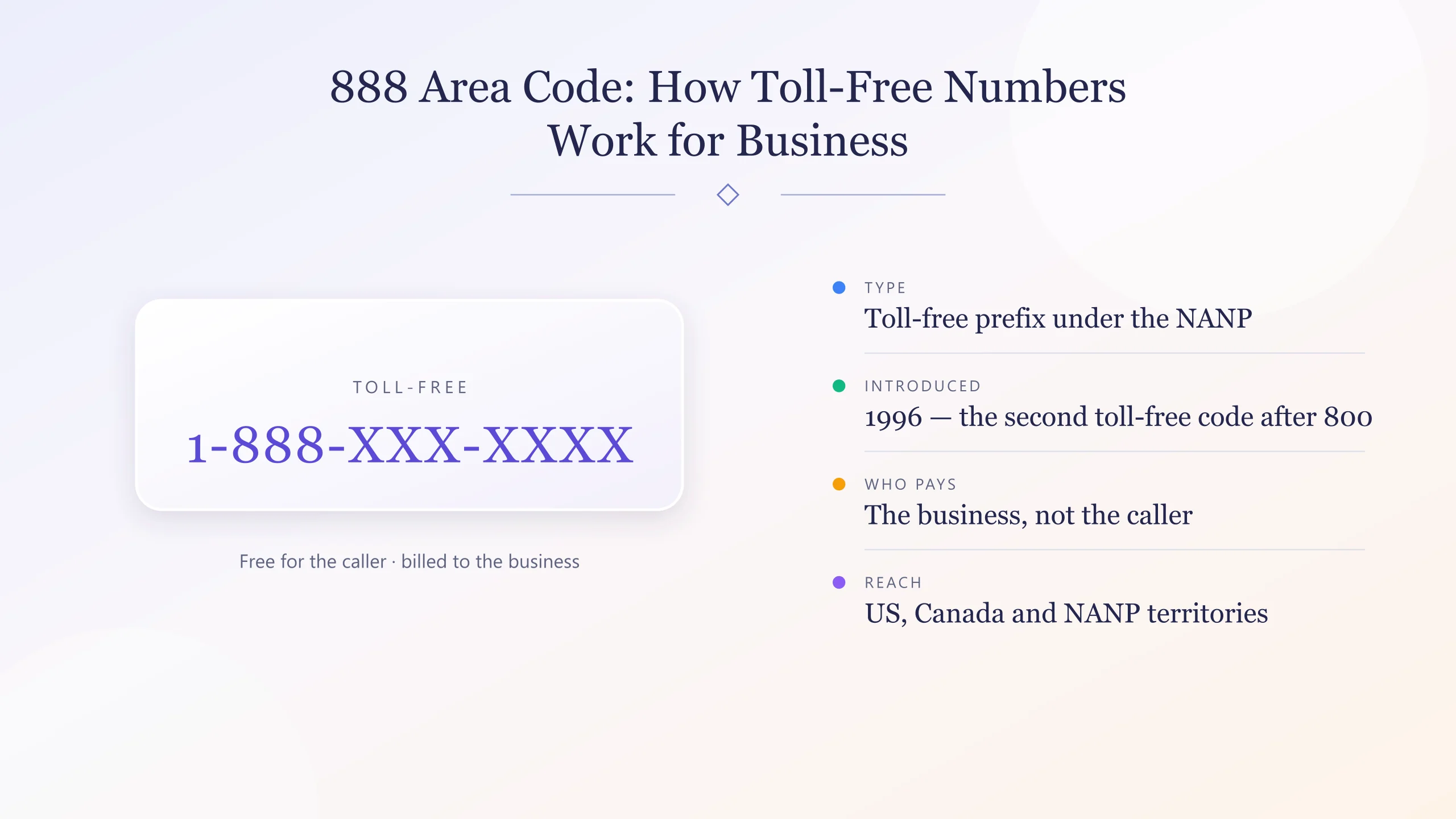
Being easy to reach is no longer optional. Customers expect a quick, free way to contact a business, and the 888 prefix gives them one. It belongs to the North American Numbering Plan, and a call to it costs the caller nothing.
That removes a real barrier. People ask more questions and raise more issues when the call is free. This guide covers how 888 works, what it costs you, how it compares with the other toll-free codes, and how to get a number.
Key Takeaways
- 888 is a toll-free prefix, not a place. It carries no geographic meaning at all.
- It arrived in 1996 as the second toll-free code, once 800 began running short of numbers.
- Billing is reversed: the caller pays nothing and the business is charged for the call.
- It reaches the US, Canada and other NANP territories. Callers outside that system usually cannot reach it toll-free.
- Numbers come from certified RespOrgs on a first-come basis, so good vanity combinations go quickly.
What Is an 888 Area Code?
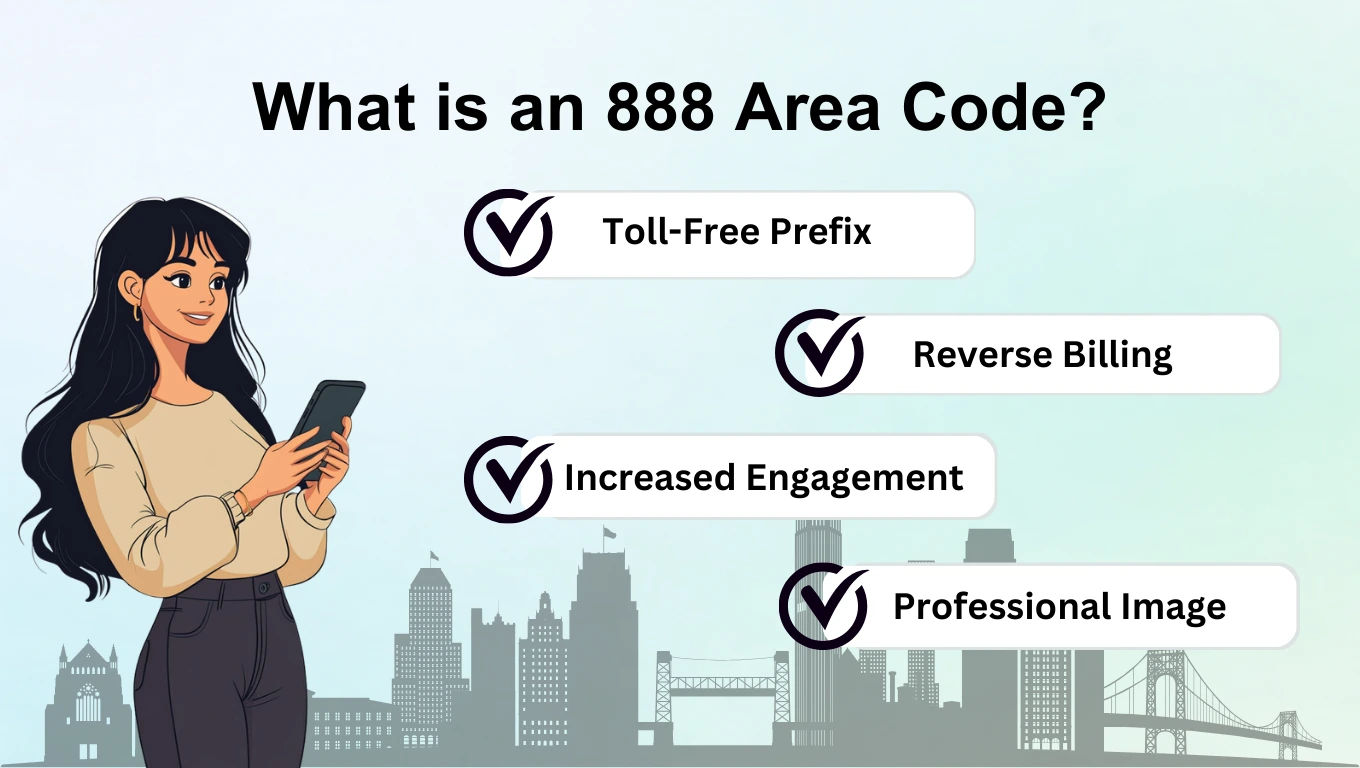
The 888 code is a toll-free prefix. A caller dials it and pays nothing. Unlike a normal area code, it is not tied to a city or a state, so it works across the whole NANP.
The mechanism is reverse billing. When someone dials your 888 number, the charge lands on your account instead of theirs. That small shift makes people far more willing to pick up the phone.
Key Characteristics of 888 Numbers
- Geographic neutrality. The code points at no particular place, so you can work from anywhere and still look national.
- Professional credibility. A toll-free line reads as an established business, and customers tend to trust it.
- Call flexibility. Route calls to an office, a mobile, a remote team, or a virtual phone system.
- Availability. The 800 prefix is close to exhausted. 888 offers the same benefits with far more numbers left.
Why Businesses Choose 888 Numbers
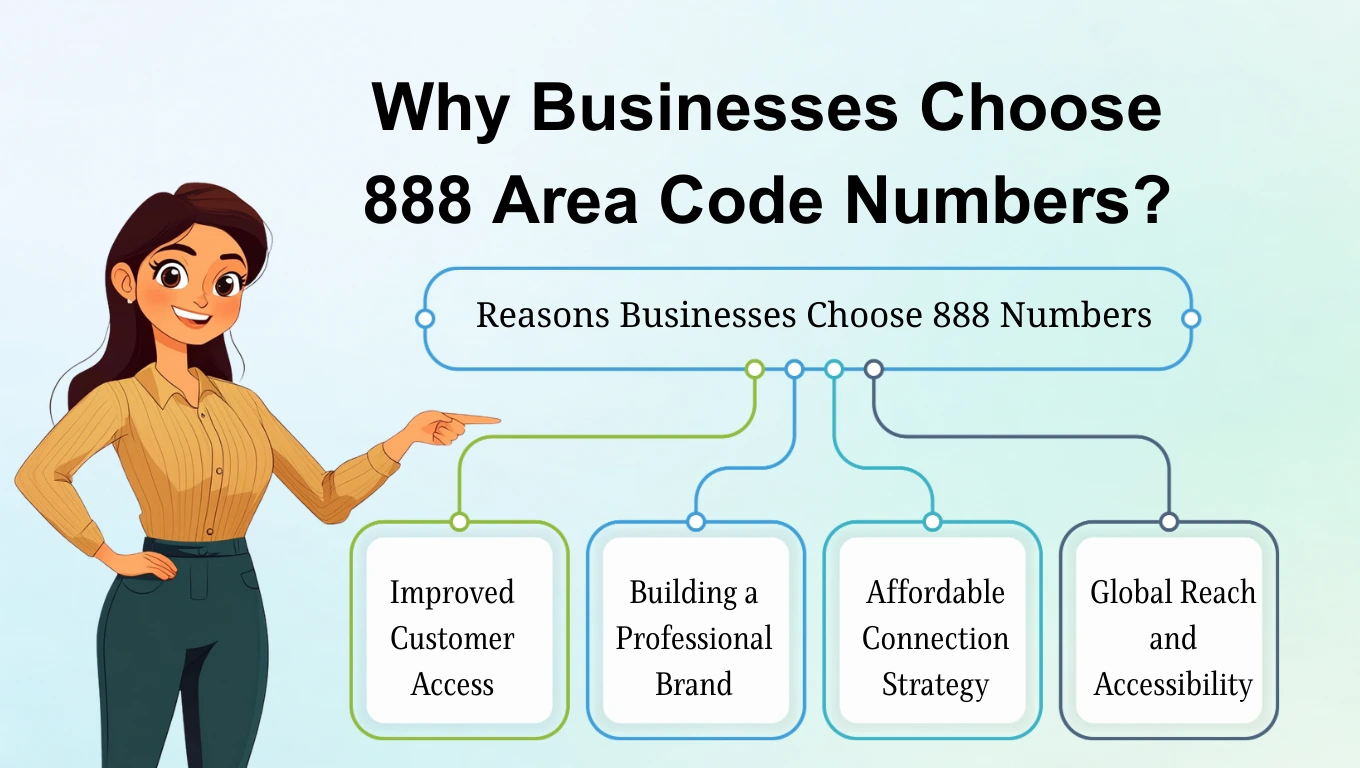
Better Reach for Customers
A free call is an easy call. Remove the cost and more people get in touch, which lifts both enquiries and satisfaction.
A More Established Image
A toll-free number signals that a business is serious and set up to serve customers. That matters most for young companies still building trust.
Sensible Economics
You do pay for inbound calls. The trade is usually worth it, because the extra conversations tend to cover the cost.
National Reach
One number serves customers anywhere in the NANP. Nothing about it ties you to a single town.
How 888 Numbers Work
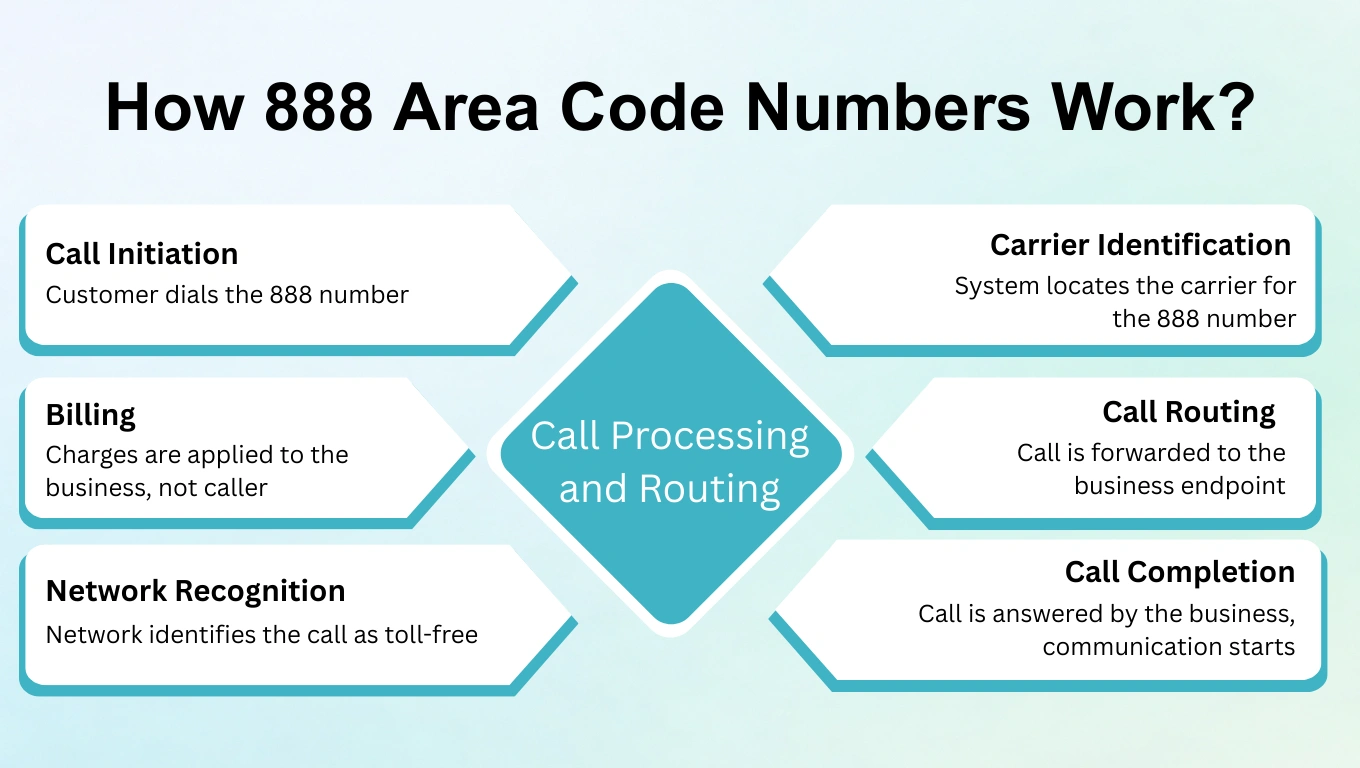
The network spots the toll-free prefix, finds the carrier that holds the number, and passes the call on. Your provider then routes it to whoever should answer.
| Step | What happens |
|---|---|
| Call initiation | The customer dials the 888 number from any phone. |
| Network recognition | The network identifies the call as toll-free. |
| Carrier lookup | The system finds the carrier assigned to that number. |
| Routing | The call is forwarded to the endpoint you nominated. |
| Billing | The charge is applied to the business account, not the caller. |
| Completion | Someone answers and the conversation starts. |
The Role of Your Provider
- Number assignment. They obtain the number and keep it registered and active.
- Routing. They run the systems that put each call in front of the right person.
- Billing and reporting. They bill the calls and show you what happened on them.
- Support. They fix faults on the line when something breaks.
Key Benefits of an 888 Number
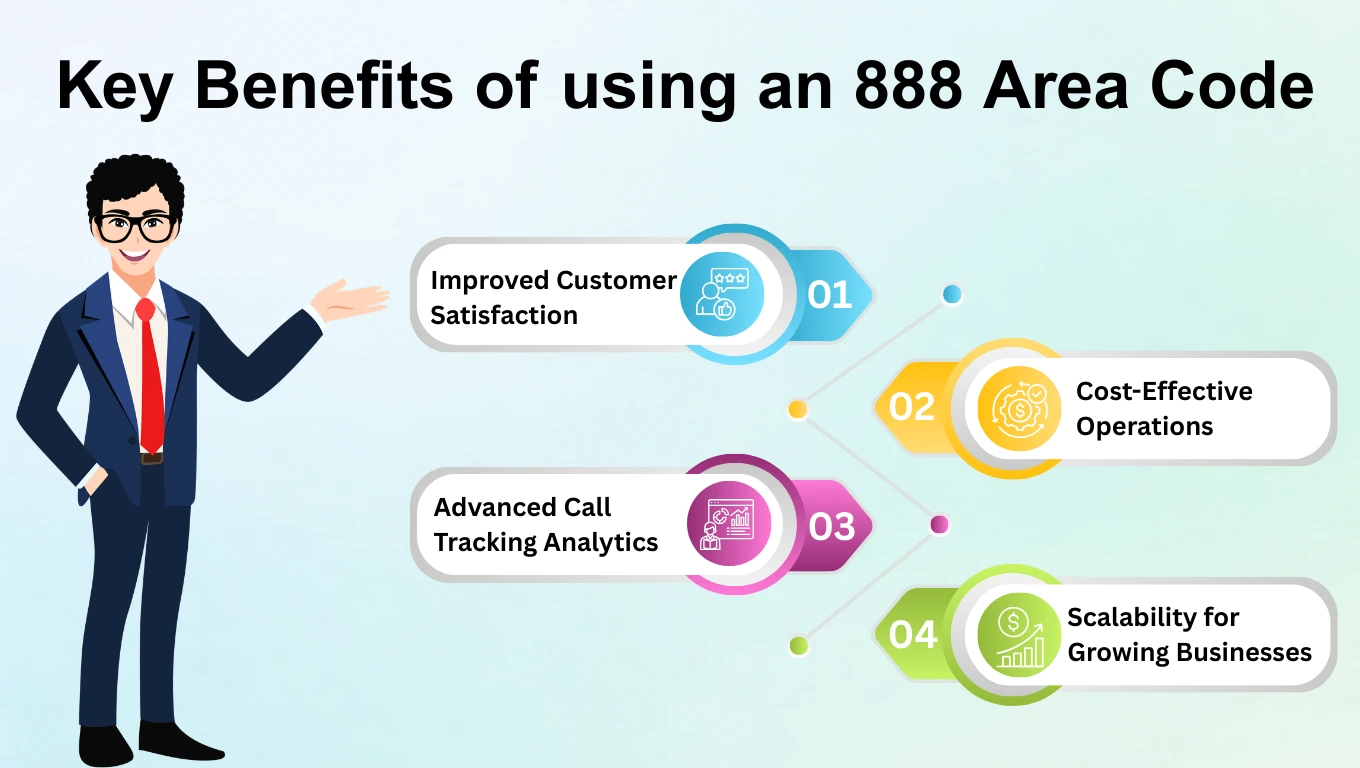
- Happier customers. A free call is a low-friction call.
- Modest cost. The bill is small next to the value of the conversations it buys.
- Call tracking. Good providers show call volumes, sources and outcomes.
- Room to grow. The number stays put as you expand into new markets.
How to Get an 888 Number
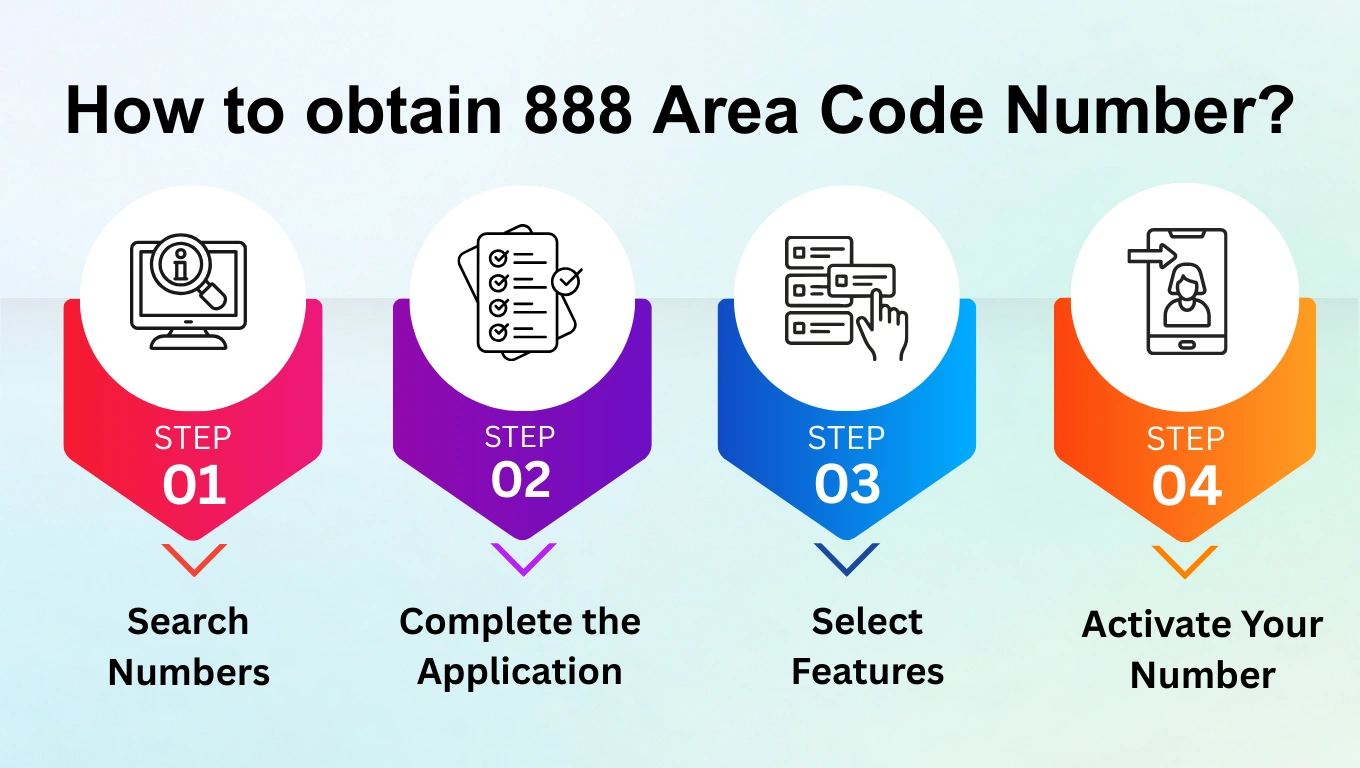
- Pick a provider. Look for fair pricing, real support, and reviews you trust.
- Search what is free. Use their lookup to find an available number, or a vanity one that spells something.
- Apply. Submit your company name, address and contact details.
- Choose features. Add forwarding, voicemail, recording and analytics as needed.
- Activate. Once approved, the number goes live and you can publish it.
How 888 Compares with Other Toll-Free Prefixes
| Prefix | Introduced | What to know |
|---|---|---|
| 800 | 1966 | The original, and the best recognised. Effectively full, so availability is scarce and vanity numbers cost more. |
| 888 | 1996 | The first expansion code. Widely available and reads as established. |
| 877 | 1998 | A solid alternative with good availability. |
| 866 | 2000 | Plenty of numbers left, slightly less familiar to callers. |
| 855 | 2010 | Modern, with wide availability. |
| 844 | 2013 | Newer still, and easy to get. |
| 833 | 2017 | The newest toll-free code, so the widest choice of combinations. |
Every one of them is free for the caller and works the same way. Recognition falls as you move down the list, while availability rises. The 800 guide and the 833 guide cover the two ends of that range.
Common Misconceptions
- "Toll-free means free for everyone." It is free for the caller only. The business pays.
- "Only big companies use them." Small firms use toll-free lines constantly.
- "Every provider offers the same features." They do not. Routing, analytics and recording vary widely.
- "An 888 number works worldwide." It works across the NANP. From outside that system a caller often cannot reach it at all, or pays international rates to try.
Protecting Your Business from Toll-Free Scams
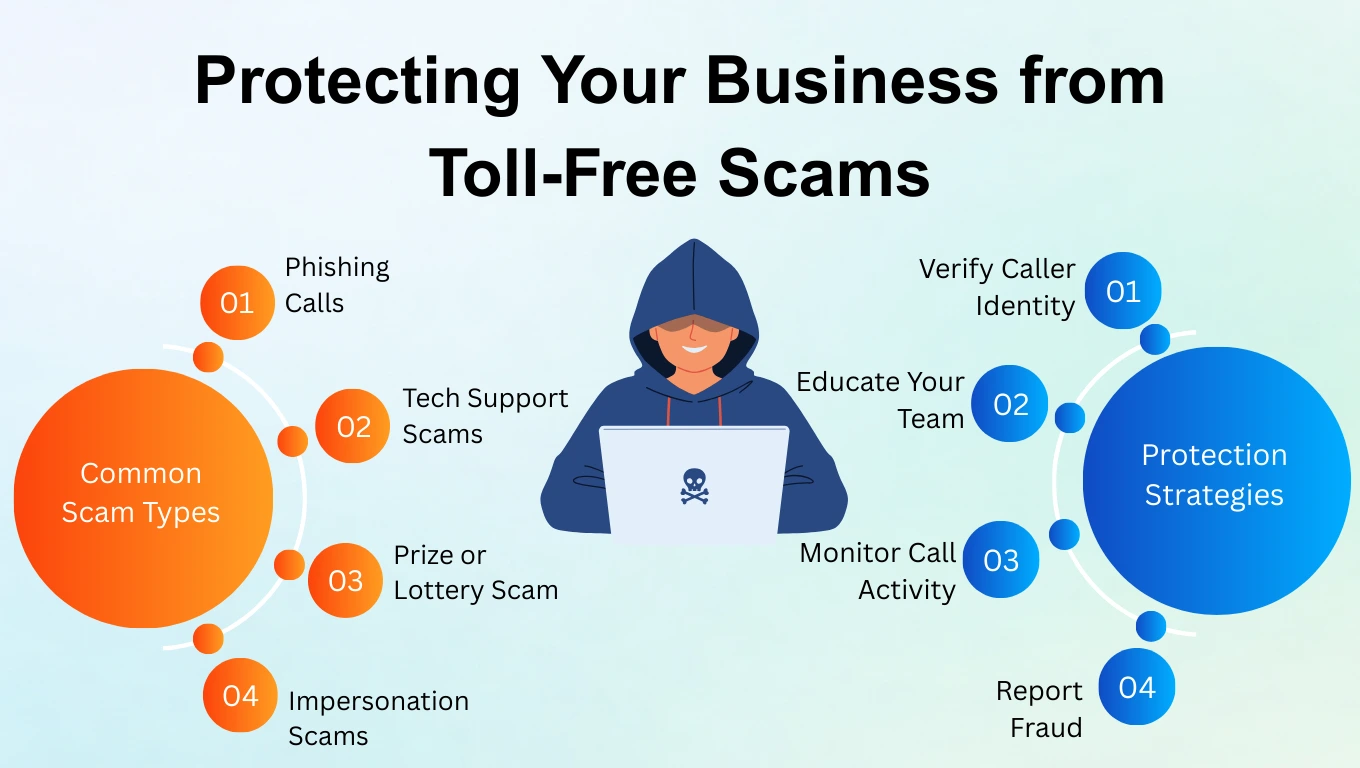
Common Scam Types
- Phishing calls. Someone poses as a real company to get passwords, one-time codes or bank details.
- Fake tech support. A caller offers help, then asks for access to your systems.
- Prize scams. A caller says you have won something, then asks for a fee to release it.
How to Protect Yourself
- Confirm who is calling and why before you share anything.
- Train the team to spot a suspicious call and report it.
- Review call logs for odd patterns and unfamiliar numbers.
- Report fraud to the Federal Trade Commission.
Put an 888 number to work
Acepeak provisions toll-free numbers with the routing, forwarding, and call reporting your team needs from day one.
The Future of 888 Numbers
- AI call handling. Routine calls get answered without a person, so staff pick up the harder ones.
- Omnichannel. The number sits alongside chat, email and SMS instead of apart from them.
- Better analytics. Clearer reporting on where calls come from and what they are worth.
A National Look Without a National Footprint
An 888 number is a small piece of plumbing that changes behaviour. It takes the cost off the caller, which makes people more willing to ring, and it gives a business a national look without a national footprint.
Pick a provider you trust, choose a number worth printing, and set the routing up properly. Do that and the line pays for itself in conversations you would not otherwise have had.
Questions, answered.
It is a toll-free prefix under the North American Numbering Plan, introduced in 1996. Customers dial it without paying long-distance charges, and the business covers the cost instead.
The network recognises the prefix as toll-free, looks up the carrier holding that number, and routes the call to the endpoint you nominated. The charge lands on the business account rather than the caller.
It removes the cost barrier for customers, gives a national presence with no geographic tie, and supports call tracking and analytics. It is also far easier to obtain than an 800 number.
Verify who is calling before sharing anything, train staff to recognise phishing and fake support calls, review call logs for unusual patterns, and report fraud to the Federal Trade Commission.
For most businesses, yes. A toll-free line over VoIP costs far less than a traditional landline arrangement, and the extra enquiries a free call generates usually outweigh the per-minute charge.
Not quite — 888 is one of the toll-free codes (alongside 800, 833, 844, 855, 877, and 888) rather than a geographic area code. An 888 number works nationwide and the caller isn't charged for the call, which is why businesses use it for support and sales lines that reach customers anywhere in the country.