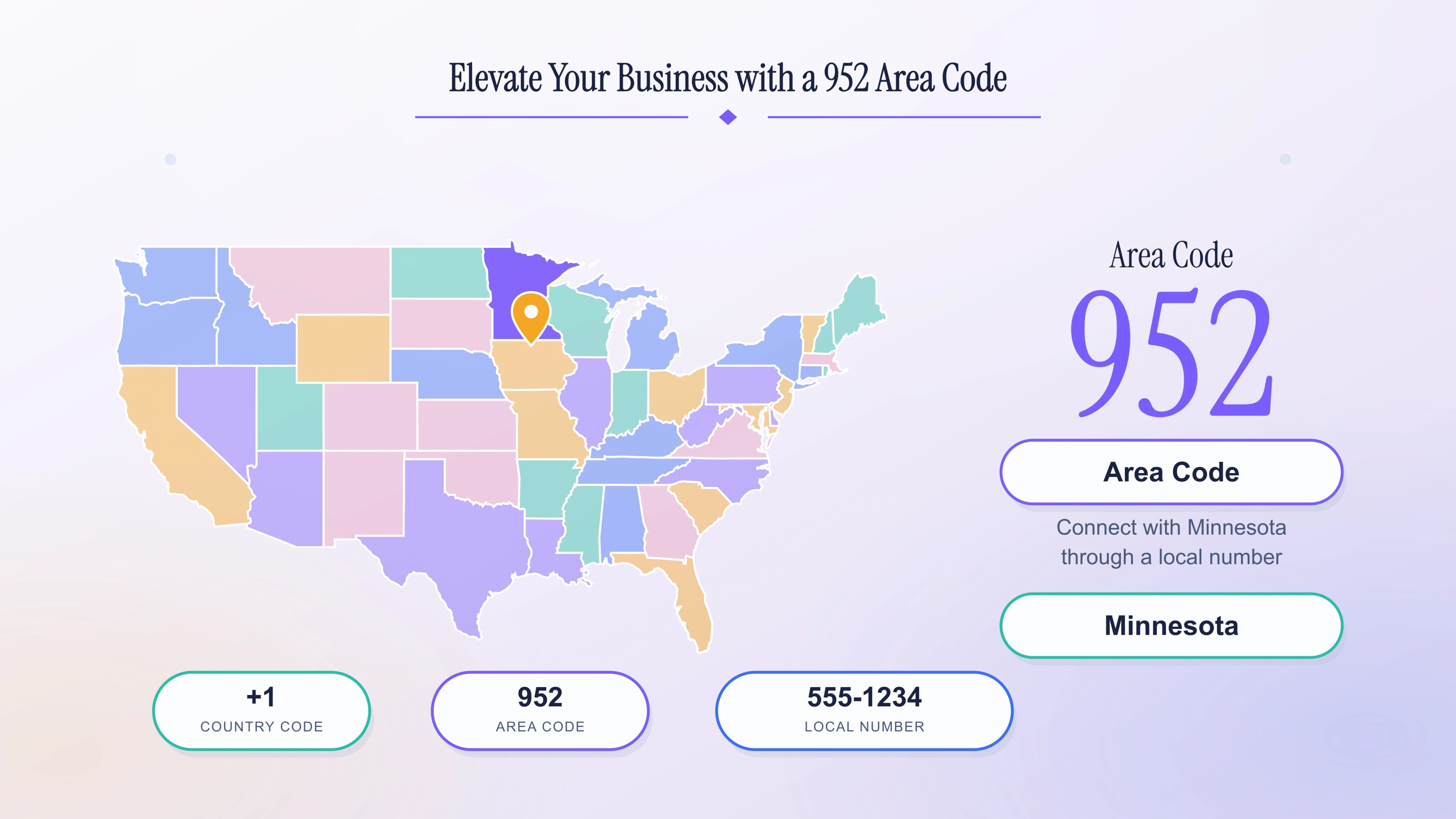
First Impressions in the Southwestern Twin Cities Suburbs
A local phone prefix does more than route calls. It is often the first thing a customer notices about where a business is based. For companies selling into the southwestern Twin Cities suburbs, a familiar local prefix can shape a first impression before anyone speaks. This guide covers what the code represents, where it reaches, what it costs, and how to put one to work.
Key Takeaways
- Origin — 952 went into service on February 27, 2000. It split from the original 612 prefix, alongside 763, to ease numbering exhaustion in the Twin Cities.
- Coverage — the territory centers on the fast-growing southwestern suburbs of Minneapolis-Saint Paul. It spans Carver, Scott, Dakota, and Hennepin counties.
- Time zone — Central Time (CST, UTC−6 / CDT, UTC−5).
- Typical cost — a standard local number runs a few dollars a month with a cloud provider. A premium vanity pattern can cost several hundred dollars or more.
- Demand — availability keeps tightening for short, memorable digit patterns as the region's population and business base keep growing.
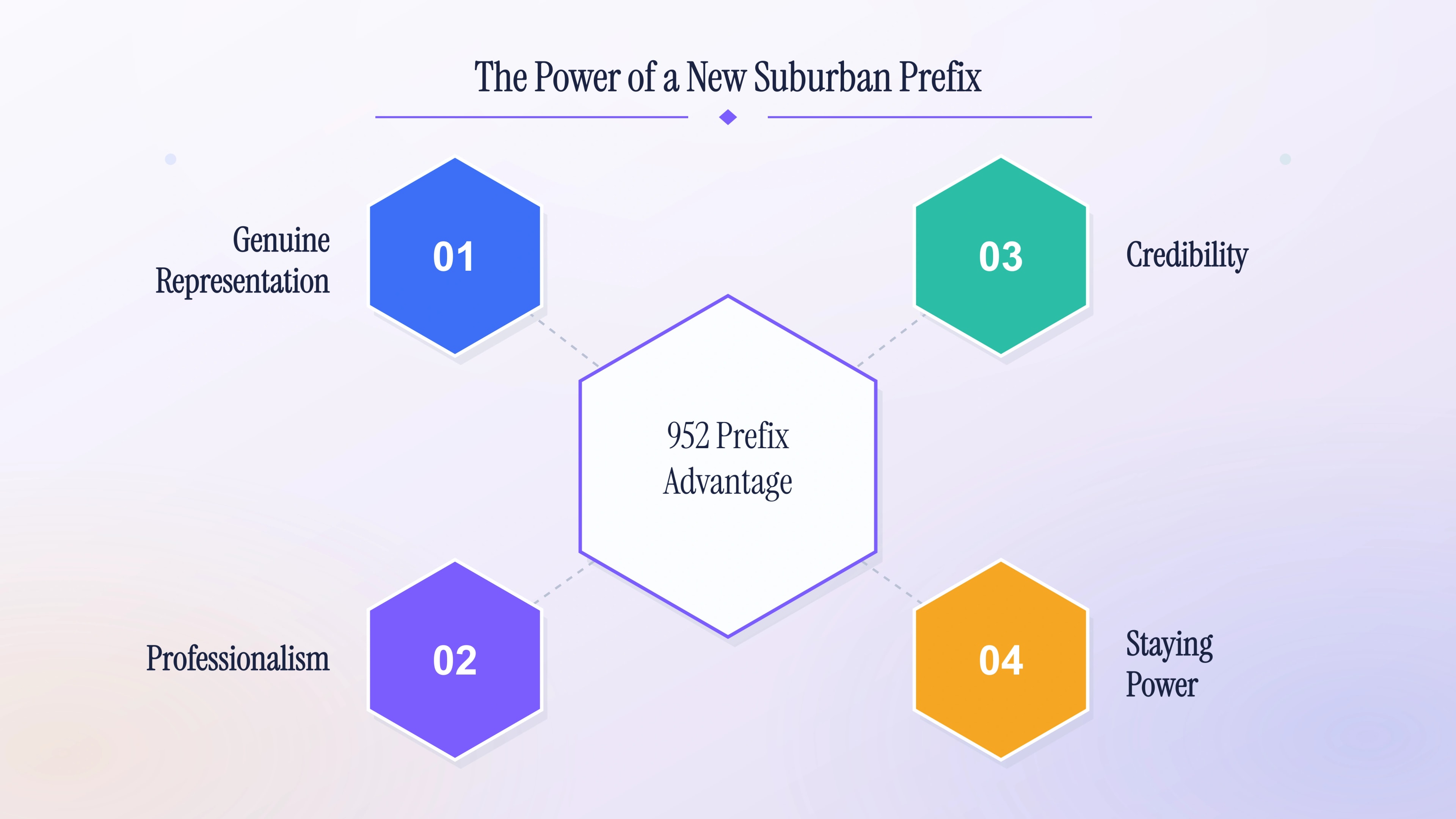
The Power of a New Suburban Prefix
A local number in this territory gives a business a real presence in one of Minnesota's fastest-growing metro corridors. Pair a recognizable regional prefix with consistent branding, and a company projects professionalism, credibility, and staying power. Customers tend to trust a familiar local number more than an unfamiliar out-of-state one.
How Did One 612 Split Produce Three Metro Codes?
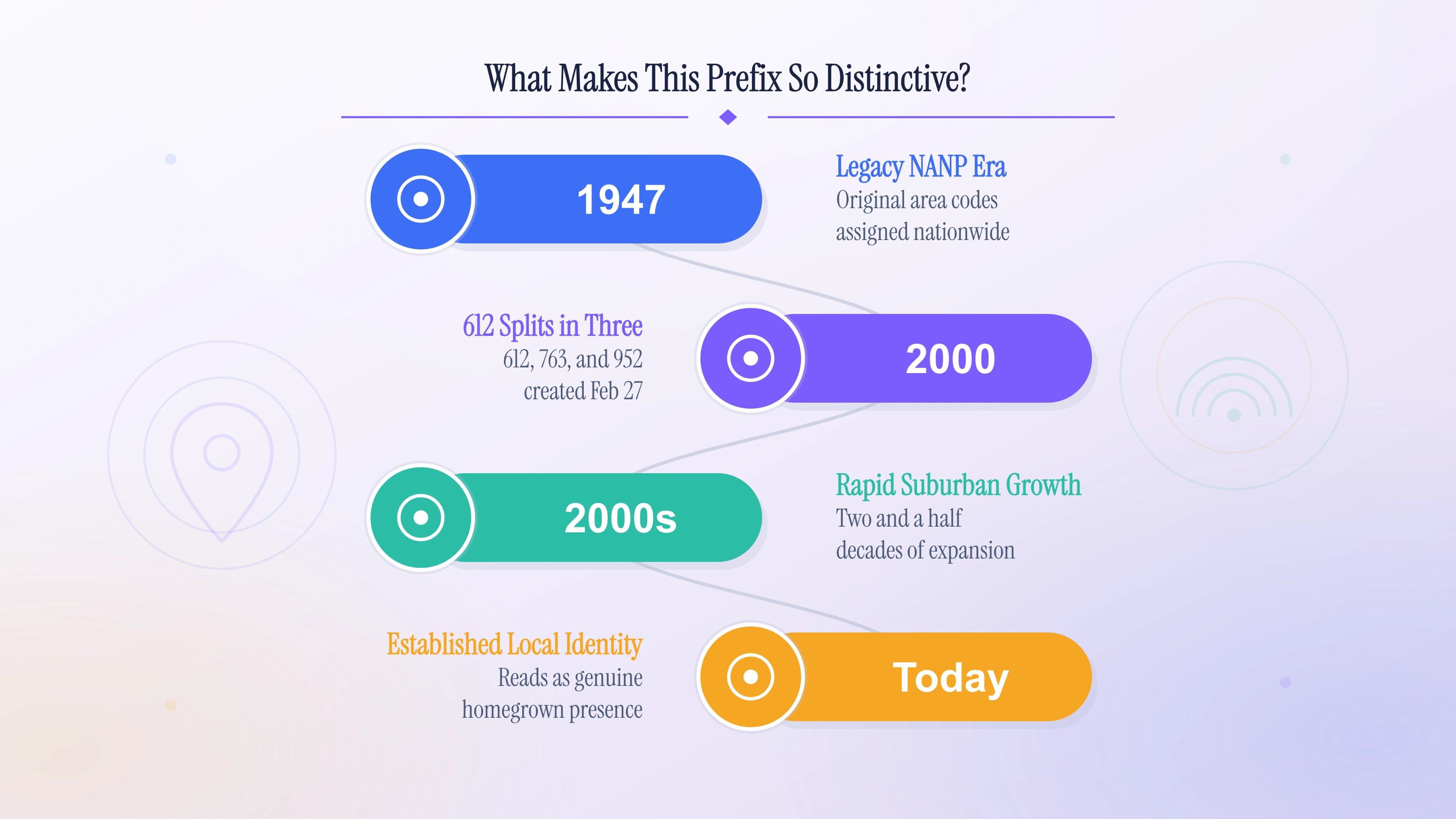
This is a newer code, not one of the legacy codes that trace back to the original 1947 numbering plan. It was created on February 27, 2000, when regulators split the aging 612 prefix into three pieces. The 612 code kept Minneapolis and a few inner-ring suburbs, 763 took the northwest suburbs, and 952 took the southwest. The split happened to keep pace with rapid suburban growth. A quarter-century later, it still reads as an established, homegrown presence, not a recent overlay.
Carver, Dakota, Hennepin, Rice and Scott Counties
The territory sits entirely in the Central Time zone. It reaches across five counties: Carver, Dakota, Hennepin, Rice, and Scott. Cities and communities in the footprint include Mound, Prior Lake, Chaska, Hopkins, Elko New Market, Wayzata, New Prague, Norwood Young America, Carver, Jordan, Belle Plaine, Waconia, Farmington, Lakeville, Webster, Cologne, Mayer, Eden Prairie, and Watertown.
Suburban Roots From Eden Prairie to Lakeville
Businesses cite four consistent advantages to carrying a local southwestern-suburb number:
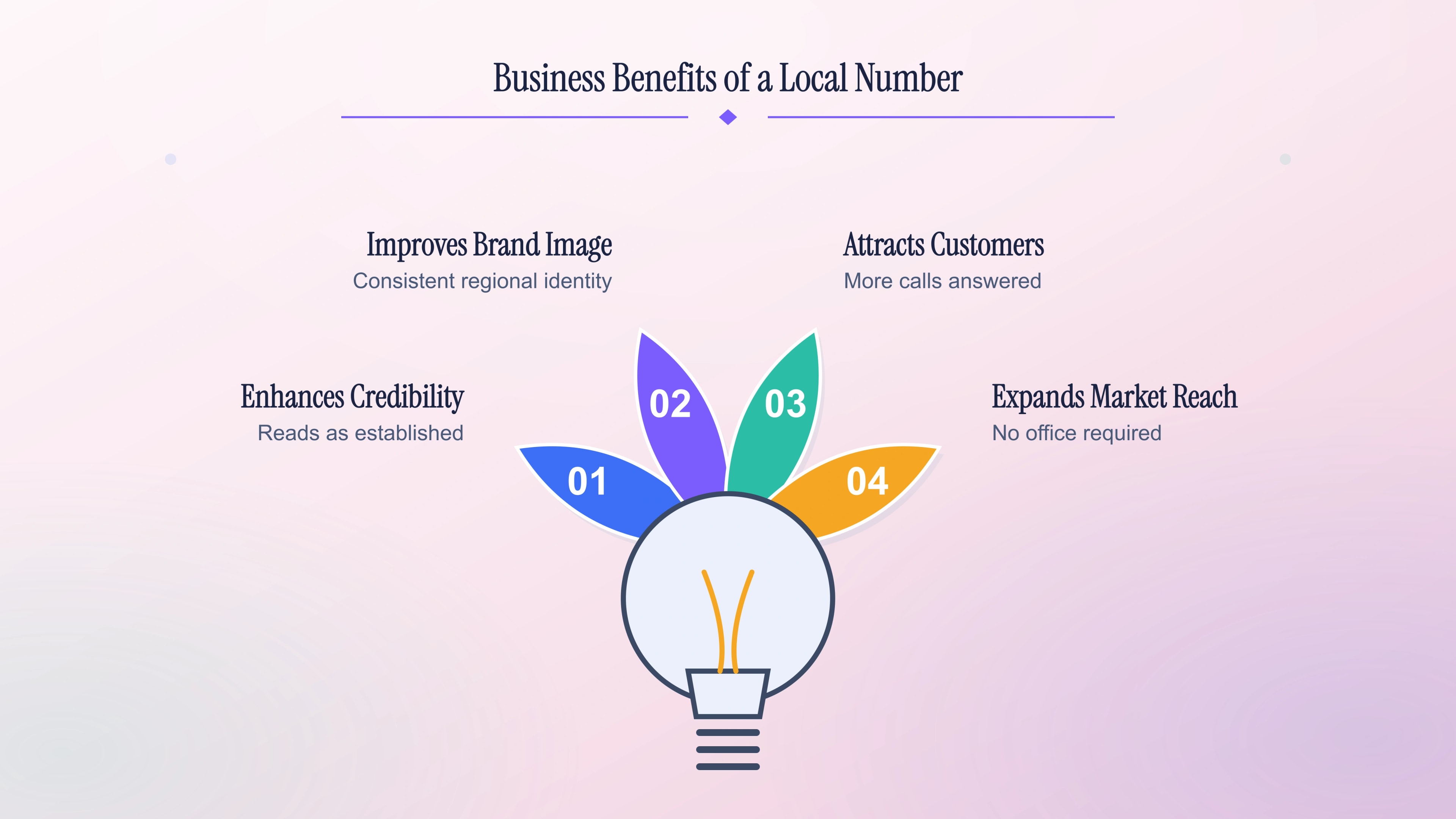
- Signals established suburban roots — a 952 number reads as an established southwestern Twin Cities presence rather than a newer overlay code or an out-of-state line, even though the prefix itself only dates to 2000.
- Reinforces a fast-growth address — pairing a 952 number with listings in Eden Prairie, Chaska, or Lakeville ties a business to one of Minnesota's fastest-expanding suburban corridors, not just a Minneapolis mailing address.
- Better pickup on outbound calls — households and businesses across Carver, Scott, Dakota, and Hennepin counties answer a familiar 952 prefix more often than an unfamiliar 612 or 763 number from elsewhere in the metro.
- Extends reach across five counties — a virtual 952 line lets a team based anywhere serve Carver, Dakota, Hennepin, Rice, and Scott counties without leasing suburban office space.
Finding Inventory as Old Carver and Scott Lines Cycle Back
Availability shifts constantly. Numbers get released, ported, or reassigned all the time. A practical plan matters more than chasing one specific digit pattern.
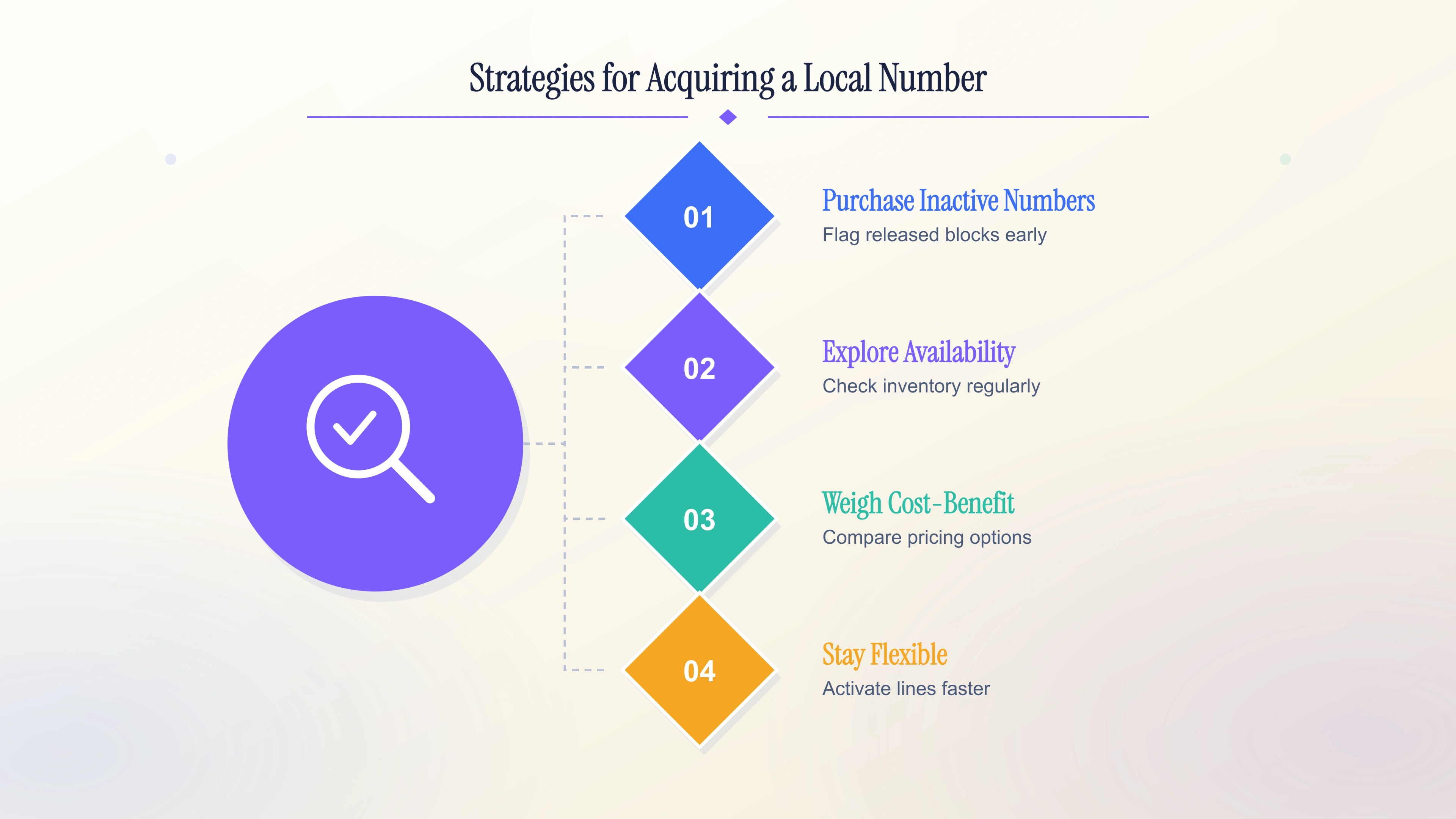
- Watch for numbers cycling back from the 612 split — since 952 carved off in 2000 alongside 763, released blocks trickle back into inventory as older accounts in Carver and Scott counties close.
- Check availability across the five-county footprint — Eden Prairie and Chaska patterns clear faster than smaller communities like Norwood Young America or Watertown, so inventory varies block by block.
- Weigh a sequential number against a vanity pattern — a plain 952 number bundled into a phone plan covers most of the credibility benefit a premium sequence would add.
- Stay flexible on the exchange — businesses open to any prefix from Hopkins to Lakeville typically activate a line faster than those holding out for one specific block.
From Vehicle Wraps to Email Signatures
A number earns its value only once customers see it. Show it consistently on the website header, Google Business Profile, email signatures, vehicle wraps, and print materials. That builds recognition and sets a company apart from competitors relying on generic or out-of-area contact details.
Comparing Call Volume Against the Old Number
After rollout, most businesses track three signals: incoming call volume, lead generation, and any shift in customer perception. Compare performance against the prior number over a few months, and the switch's payoff becomes clear. The same approach works just as well for a business rolling out a number in another Midwest metro, such as the one covered in Acepeak's 816 area code guide.
Ready for a local southwestern Twin Cities number?
Acepeak activates 952-area numbers in minutes on a cloud platform — no suburban office required. Explore plans and route calls to any device.
Bundled Plans Versus Broker-Sourced Vanity Numbers
Costs for a 952 number fall into two tiers, and exact prices vary by provider. The usual choice is a standard line from a cloud communications platform, priced at only a few dollars per month as part of a business phone plan. The other is a vanity sequence bought from a broker, a one-time cost that starts near $150 and can climb into the thousands when the pattern is especially memorable. For most firms in Eden Prairie or Lakeville, the standard line does the job.
Availability Today
High demand from the region's growing business base means limited availability, especially for short or memorable sequences. A business that needs a specific pattern should work with a provider that can flag inventory as it opens up.
One Piece of the Impression, Not a Fix for Weak Service
A local number is one small piece of the impression a business makes on a prospective customer. Paired with a professional website and consistent branding, it reinforces reliability and expertise in a competitive suburban market. On its own, though, it will not make up for weak service elsewhere.
Reach Beyond Minnesota: The Global Angle
The underlying numbers route over standard telecom infrastructure. That means a business anywhere in the world can activate a line in this territory and present a Twin Cities-suburb identity to callers, no matter where staff are based. That flexibility helps companies test the southwestern Minneapolis-Saint Paul market before opening a physical office there.
Why Callers Pick Up a Number From Their Own Region
Recognition settles a lot of calls before they start. A resident of Chaska or Prior Lake is far readier to pick up when the digits match the code on their own phone, and far less so for a toll-free block or a code from some unfamiliar part of the country. Familiar numbers look relevant, while strange ones look like cold calls. For outbound sales and outreach teams covering the five-county footprint, that difference repeats across an entire call list, and Acepeak's 937 area code guide looks at the same effect in another Midwest market.
Job Growth and a Possible Companion Overlay
The southwestern Twin Cities suburbs remain among Minnesota's fastest-growing regions. State labor-market data projects the metro area will add tens of thousands of new jobs over the coming decade. As long as that growth continues, demand for a recognizable local number here should stay high. Regulators may eventually need to add a companion overlay if growth outpaces the current numbering pool.
Recognition Across a Fast-Expanding Suburban Corridor
- Regional significance — tied to one of Minnesota's most economically active suburban corridors.
- Association with growth — linked to a metro area consistently ranked among the state's fastest-expanding.
- Brand enhancement — reinforces a polished, established impression alongside other branding efforts.
- Wide recognition — familiar to the hundreds of thousands of residents and businesses across its five-county footprint.
Setting Alerts and Moving Fast on a 952 Pattern
Getting a number generally follows four steps. Research providers with good reviews that offer numbers in this territory. Check live availability regularly and set up alerts. Compare costs across available options, including upfront and ongoing fees. Secure the chosen number quickly once found — desirable patterns disappear fast.
A Quarter-Century Signal Worth Its Modest Cost
The 952 area code has represented the southwestern Twin Cities suburbs since its creation in 2000. A quarter-century of steady regional growth has only reinforced its recognition. It started out relieving pressure on the aging 612 prefix. Today it covers one of Minnesota's most active business corridors. It functions as a genuine signal of local roots, not a generic or out-of-area contact detail. For a business choosing between a local number and an unfamiliar one, the modest cost of the former is a small price for the credibility it buys with customers across this expanding market.
According to the Minnesota Department of Employment and Economic Development's regional labor market data, the metro region is projected to add well over 100,000 net new jobs by 2030. That is why a recognizable local presence in this corridor carries lasting value for growing businesses.
Add a local Twin Cities-suburb number to your business
Explore virtual number options through Acepeak and get a line activated today.
Questions, answered.
The territory covers the southwestern suburbs of Minneapolis-Saint Paul, including Eden Prairie, Chaska, Prior Lake, Lakeville, Waconia, and the surrounding communities across Carver, Dakota, Hennepin, Rice, and Scott counties.
It went into service on February 27, 2000, when the original 612 prefix split into three codes: 612, 763, and 952. The split relieved numbering exhaustion as the Twin Cities grew.
Central Time — CST (UTC−6) in winter, shifting to CDT (UTC−5) during daylight saving.
Yes. Cloud communications providers issue virtual numbers in this territory to businesses located anywhere. Calls route through standard telecom infrastructure while presenting a local identity to callers.
A standard number typically costs a few dollars a month through a business phone plan. A distinctive vanity sequence sourced through a number broker can cost anywhere from roughly $150 to several thousand dollars as a one-time fee, depending on demand.
Not currently. This prefix remains the sole code for its footprint, though continued suburban growth means an eventual overlay is possible.
Signing up for a 952 area code number takes minutes with a cloud phone provider — no local office in Twin Cities required. Pick the number, connect it to your existing phone or app, and calls route in immediately. This keeps the 952 area code presence you already have while adding the local credibility Minnesota customers respond to.