How Oklahoma Callers Size Up a Business Before Answering
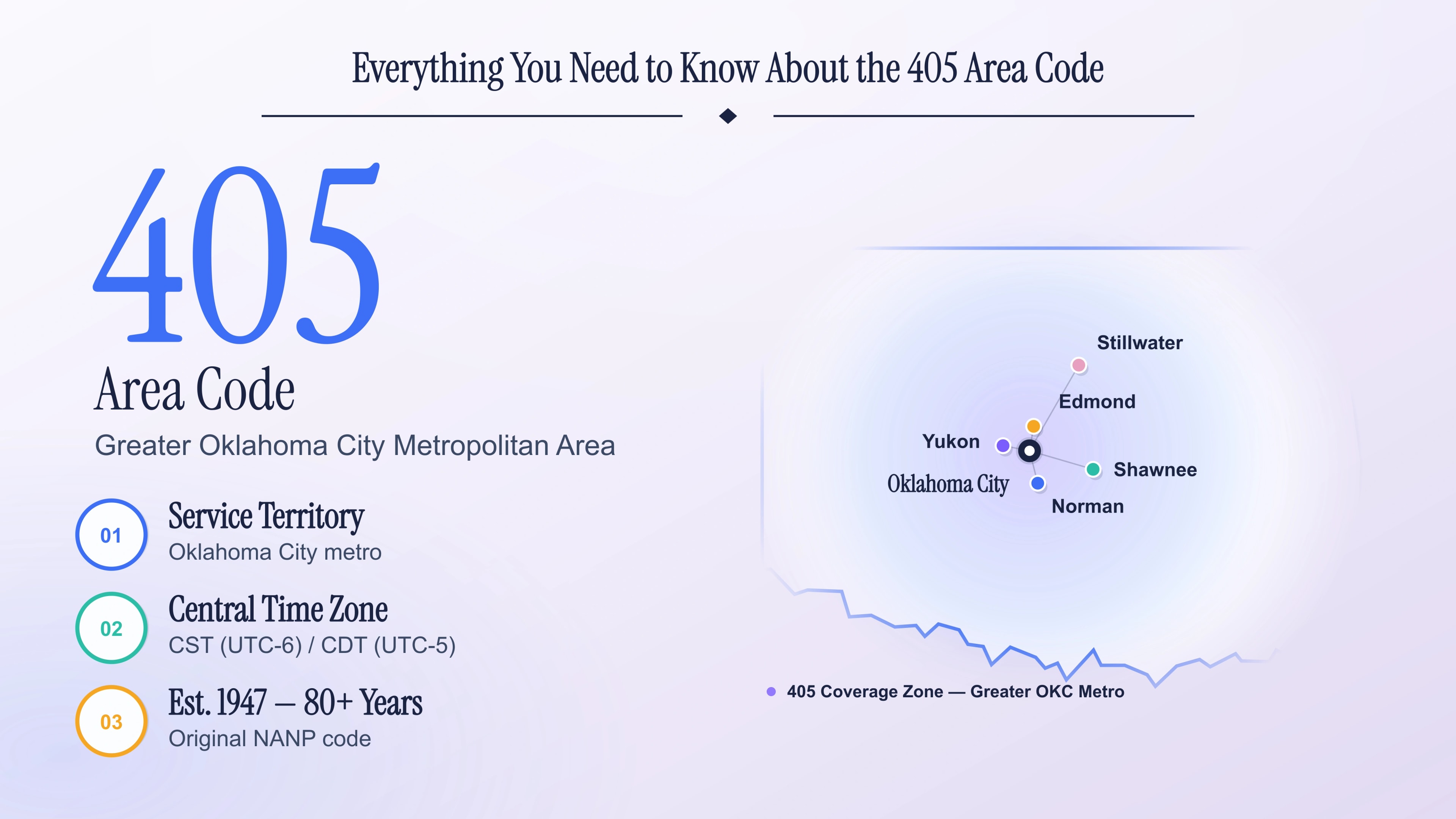
The 405 area code is central Oklahoma's original telephone prefix. It has represented the region since the earliest days of the North American Numbering Plan, and it remains one of the most recognizable three-digit codes in the state. A business choosing between a local number and an out-of-state one is really choosing how customers see the brand before the call is even answered. This guide covers what the code means today, where it reaches, what it costs, and how a business gets one working.
Key Takeaways
- Original assignment — the 405 area code dates to 1947. It originally covered all of Oklahoma before later splits.
- Coverage — central Oklahoma, anchored by Oklahoma City. It also includes Norman, Edmond, Shawnee, Moore, and dozens of surrounding communities.
- Overlay partner — the 572 code was added in 2021, so both prefixes now share the same territory.
- Time zone — Central Time (CST, UTC−6 / CDT, UTC−5).
- Typical cost — a standard local number runs a few dollars a month with a cloud provider. A premium vanity pattern can cost several hundred dollars.
The Value of an Original Oklahoma City Prefix
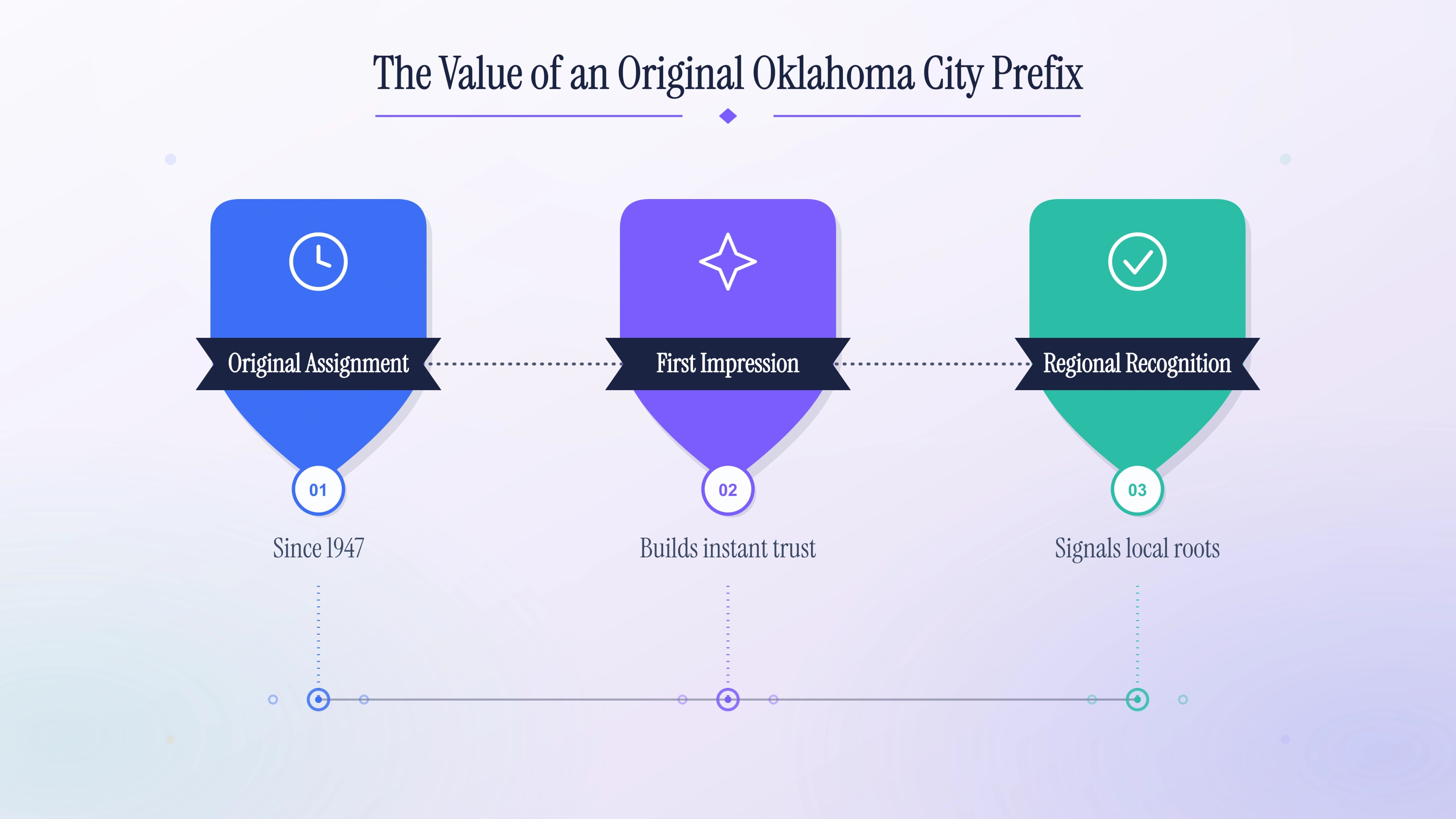
A local prefix does more than route calls. It is often the first signal a customer reads about where a business is based. Central Oklahoma's code is one of the earliest in the state. It was assigned before Oklahoma City grew into the metro it is today, and it still carries strong regional recognition among residents and businesses. For companies courting customers in Oklahoma City, Norman, or Edmond, a familiar area code next to an out-of-state one can shape a first impression before a single word is spoken.
How Did the 918 and 580 Splits Shape Central Oklahoma?
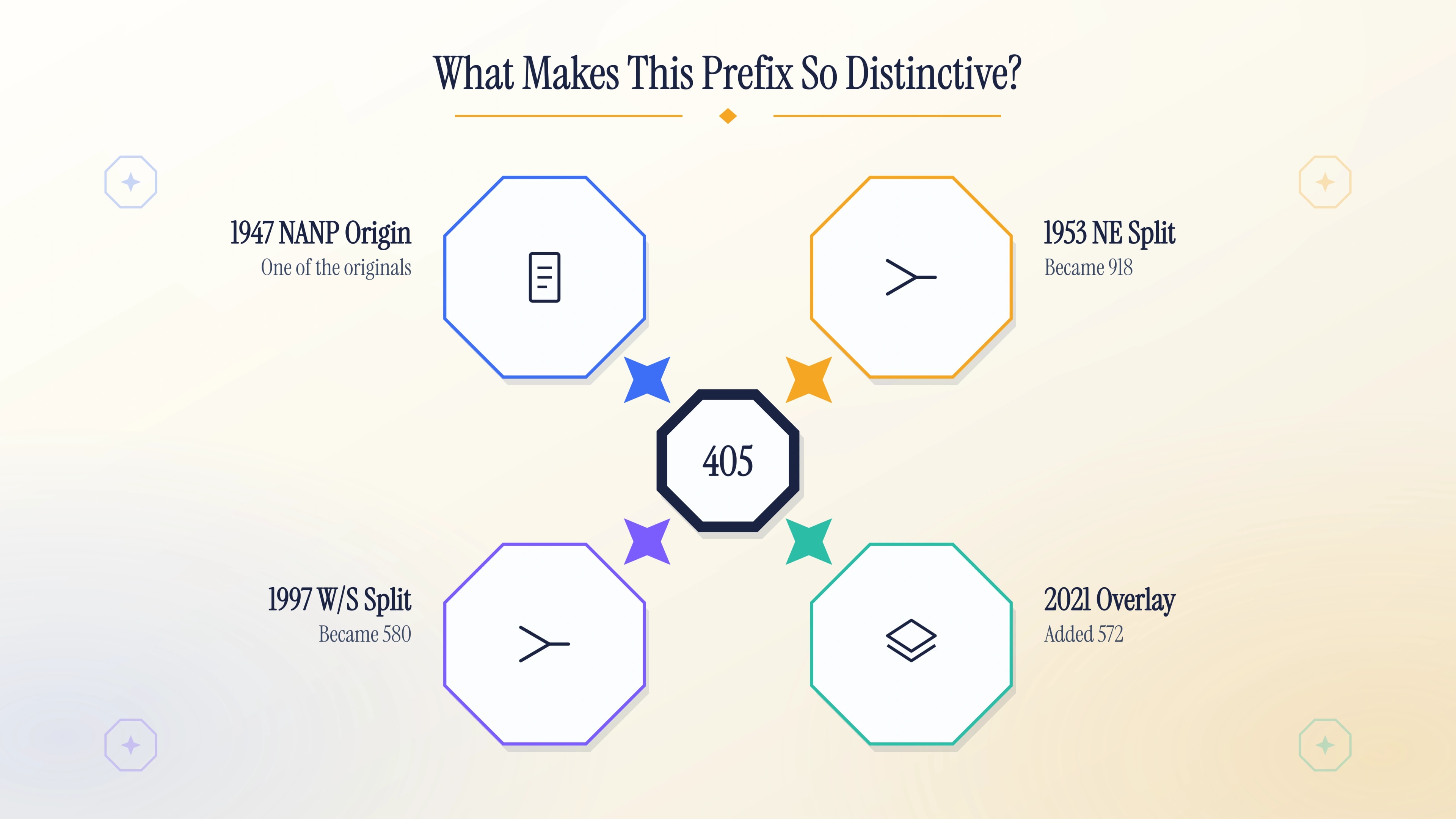
AT&T assigned the code under the original North American Numbering Plan. In its early years it covered the entire state of Oklahoma, before later splits narrowed its territory. Northeastern Oklahoma became area code 918 in 1953. The southern and western parts split off as area code 580 in 1997, leaving 405 to cover central Oklahoma alone. That long history, paired with Oklahoma City's rise as a government, energy, and aerospace hub, is part of why the prefix still reads as an established, homegrown presence rather than a newly issued one.
Norman, Edmond, Yukon and the 572 Overlay Since 2021
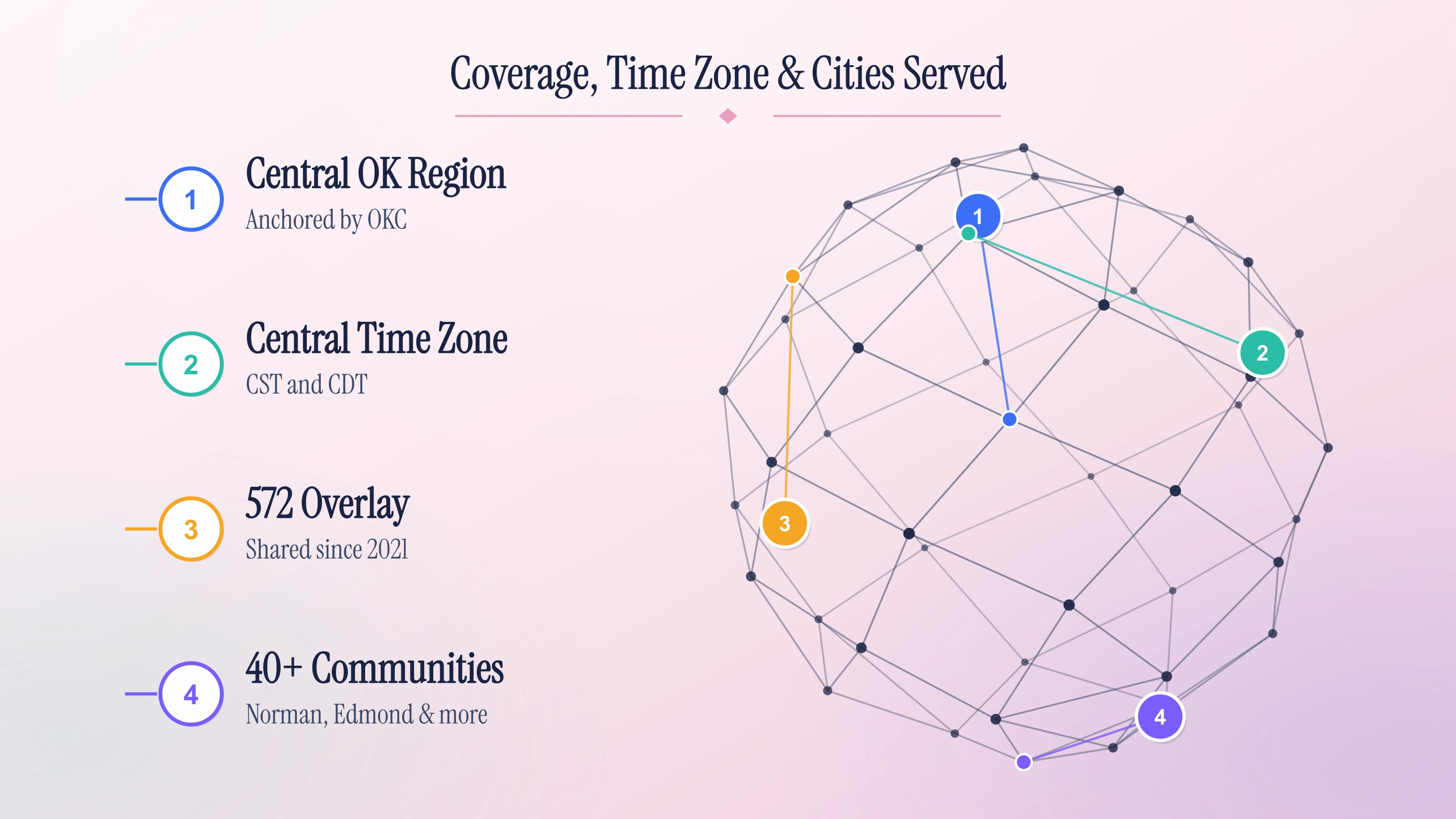
The service territory centers on central Oklahoma, anchored by Oklahoma City and its suburbs. It includes Norman, Edmond, Shawnee, Moore, Chickasha, Guthrie, El Reno, Yukon, Mustang, and dozens of smaller communities across the metro. The whole footprint sits in the Central Time zone, observing CST in winter and CDT during daylight saving. Since 2021, the area has shared its territory with the 572 overlay. Both prefixes require ten-digit dialing for every local call.
Business Benefits of a Local Oklahoma Number
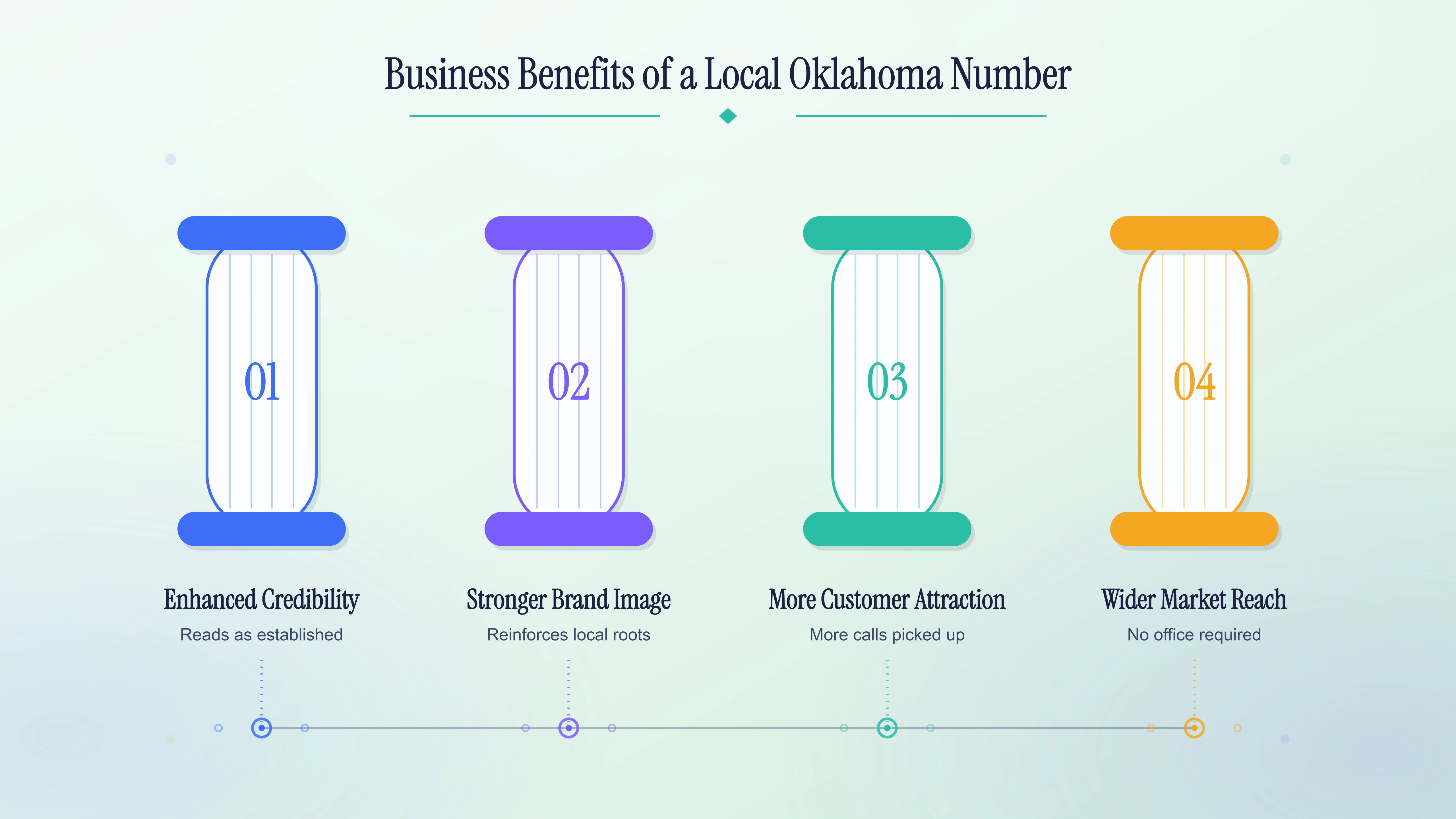
Businesses cite four consistent advantages to carrying a recognizable Oklahoma City number:
- State-capital credibility — a 405 prefix reads as a genuine Oklahoma City presence rooted in the state's government and energy sectors, not an out-of-state caller.
- Consistent identity across the overlay — pairing a 405 number with listings in Norman, Edmond, and Moore keeps a business recognizable now that the 572 overlay shares the same territory.
- Higher answer rates in a fast-growing metro — with the metro past 1,037,000 residents, outbound calls on a familiar 405 number get picked up more often than an unfamiliar out-of-area or toll-free line.
- Reach across central Oklahoma without added rent — a virtual 405 line lets a team based anywhere keep an Oklahoma City identity. Acepeak covers the neighboring territory in its 580 area code guide.
Sequential or Vanity: Picking Digits Without the Wait
Availability shifts constantly, as existing numbers get released, ported, or reassigned. A practical acquisition plan matters more than chasing one specific digit pattern. Businesses typically start by checking what a provider has in stock, weighing a plain sequential number against a memorable vanity pattern, and confirming the number can go live without a long wait. Staying flexible on the exact digits usually speeds things up a lot.
Putting the Line on Vehicle Wraps and Email Signatures
A number only earns its value once customers actually see it. Businesses that list it everywhere — the website header, Google Business Profile, email signatures, vehicle wraps, and print materials — get more benefit than those that treat it as a back-office detail. Staying consistent across every channel also keeps call-tracking data clean for later, when a company wants to measure results.
Comparing a Few Months of Calls Against the Old Number
After rollout, most businesses track three signals: incoming call volume, lead conversion from those calls, and any change in how fast customers respond to outreach. Comparing a few months of data against the old number's performance gives a clear read on whether the switch is paying off. Call-tracking software can usually isolate the new line's contribution on its own.
Ready for a local Oklahoma City number?
Acepeak activates 405-area numbers in minutes on a cloud platform — no Oklahoma office required. Explore plans and route calls to any device.
A Few Dollars a Month or a Broker's Vanity Premium
In central Oklahoma, number pricing falls into two tiers. A standard 405 line from a cloud provider is usually billed as part of a business phone plan, costing a few dollars each month. A memorable vanity pattern from a broker is a one-time purchase instead, and its price can climb into the hundreds or low thousands of dollars. Because an ordinary Oklahoma City number already delivers most of the local credibility, most businesses find the recurring cost of a standard line is the better value.
Why Memorable Oklahoma City Patterns Go Quickly
Demand for Oklahoma City-area numbers has stayed high, given the metro's steady population growth. Popular sequential blocks and easy-to-remember patterns are often claimed quickly. Businesses that need a specific pattern should work with a provider that can flag inventory as it opens up; those flexible on the exact digits will rarely wait long. Neighboring Oklahoma markets, covered in Acepeak's 539 area code guide, follow a similar availability pattern.
A Local Number Can't Rescue Weak Service
Oklahoma City customers judge a company on far more than its caller ID. A 405 number reinforces an impression that a polished website, uniform branding, and fast follow-up have already started to build. Without that support, a local prefix will not make up for slow callbacks or weak service. The strongest results come when the number is woven into a coherent brand across Norman, Edmond, and the wider metro instead of standing in as a shortcut.
Reach Beyond Oklahoma: The Global Angle
The underlying numbers route over standard telecom and cloud telephony infrastructure. Because of that, a business anywhere in the world can activate an Oklahoma City-area line and present a local identity to callers, no matter where staff are physically located. That flexibility is especially useful for companies expanding into the Oklahoma City market before opening a physical office there.
Why People Pick Up When the Area Code Matches Theirs
Caller ID has a measurable effect on whether people in central Oklahoma answer at all. A resident of Moore or Shawnee is considerably more likely to pick up a 405 or 572 number than an unfamiliar out-of-state code or a toll-free line, since a local number suggests a relevant contact rather than a cold call from a stranger. Outbound sales and customer-outreach teams covering the Oklahoma City metro feel that difference most, because it compounds across every call they place.
A Metro Past One Million and Still Adding Suburbs
Oklahoma City — home to civic landmarks such as the Oklahoma City National Memorial — has grown to roughly 709,000 residents as of a 2025 population estimate. The broader metro area has surpassed 1,037,000, and growth has been especially strong in the southern and western suburbs. As long as that growth continues, demand for recognizable local numbers in the 405/572 territory is likely to stay high rather than fade.
Why Energy, Aerospace and Government Firms Keep 405
Its age and history give it a layer of credibility that newer overlay codes have not built up yet. Businesses in government, energy, aerospace, and healthcare lean on it especially, as a signal of genuine local roots. That matters most when competing for customers who default to trusting a recognizable regional number over an unfamiliar one.
Four Steps from Provider Research to Activation
The process generally follows four steps: research providers that offer numbers in this territory, check live availability for the pattern you want, compare pricing across a standard versus vanity option, and confirm the number before final activation. Businesses porting an existing number from another carrier should allow several business days for the transfer to complete.
Porting Rights and a Line Live Within a Business Week
An Oklahoma City company moving an existing number from another carrier is federally protected in taking it along, and a valid port request cannot be held up without documented cause. Once that is settled, the remaining steps are short: request a quote, review the 405 and 572 numbers on offer, and expect the new line to be working well within a business week.
Two Splits Later, a Modest Price for Oklahoma City Trust
Central Oklahoma's original telephone prefix has outlasted two waves of Oklahoma numbering changes. It still works as shorthand for a genuine Oklahoma City presence. From its 1947 origins to today's ten-digit dialing alongside the 572 overlay, it has adapted to a metro that has grown past one million residents. For a business choosing between a local number and an unfamiliar one, the modest cost of the former is a small price for the credibility it buys with Oklahoma City-area customers.
Add a local Oklahoma number to your business
Explore virtual number options through Acepeak and get an Oklahoma City line activated today.
Questions, answered.
The territory covers Oklahoma City and its surrounding metro. That includes Norman, Edmond, Shawnee, Moore, Chickasha, Guthrie, El Reno, Yukon, and Mustang.
No, but the two share the exact same geography through an overlay introduced in 2021. Both can be dialed and received anywhere within the shared territory, and every local call needs all ten digits.
Central Time. That is CST (UTC−6) in winter, shifting to CDT (UTC−5) during daylight saving, which runs from the second Sunday in March to the first Sunday in November.
Yes. Cloud communications providers issue virtual numbers in this territory to businesses located anywhere. Calls route through the standard telecom network while showing callers a local Oklahoma City identity.
A standard number typically costs a few dollars a month through a business phone plan. A distinctive vanity sequence sourced through a number broker can cost anywhere from roughly $150 to several thousand dollars as a one-time fee, depending on demand.
Consumers can report suspected scam or spoofed calls directly to the FCC and FTC. Both track patterns of abuse tied to specific number ranges and can direct carriers to block confirmed offenders.
Signing up for a 405 area code number takes minutes with a cloud phone provider — no local office in Oklahoma City required. Pick the number, connect it to your existing phone or app, and calls route in immediately. This keeps the 405 area code presence you already have while adding the local credibility Oklahoma customers respond to.