Introduction
Starting a phone company used to mean building a network from scratch. Not anymore. A VoIP reseller can launch a fully branded communications business by partnering with a provider that already owns the infrastructure. This guide covers what the model involves, how the programs work, and how to tell a good reseller setup from one that will cause headaches later.
Key Takeaways
- A VoIP reseller buys services at wholesale rates — and resells them under its own brand, without owning the underlying network.
- Reseller, wholesale, and white-label are related but distinct models — the difference is how much infrastructure and branding control a business takes on.
- Infrastructure reliability, transparent margins, and white-label branding — are the top criteria for choosing a program.
- Getting started typically takes five steps — pick a partner, sign the agreement, set up the branded platform, price the plans, and launch.
- Compliance — especially number portability and 911 obligations — is a responsibility resellers inherit, not something to overlook.
The Reseller Model, Explained
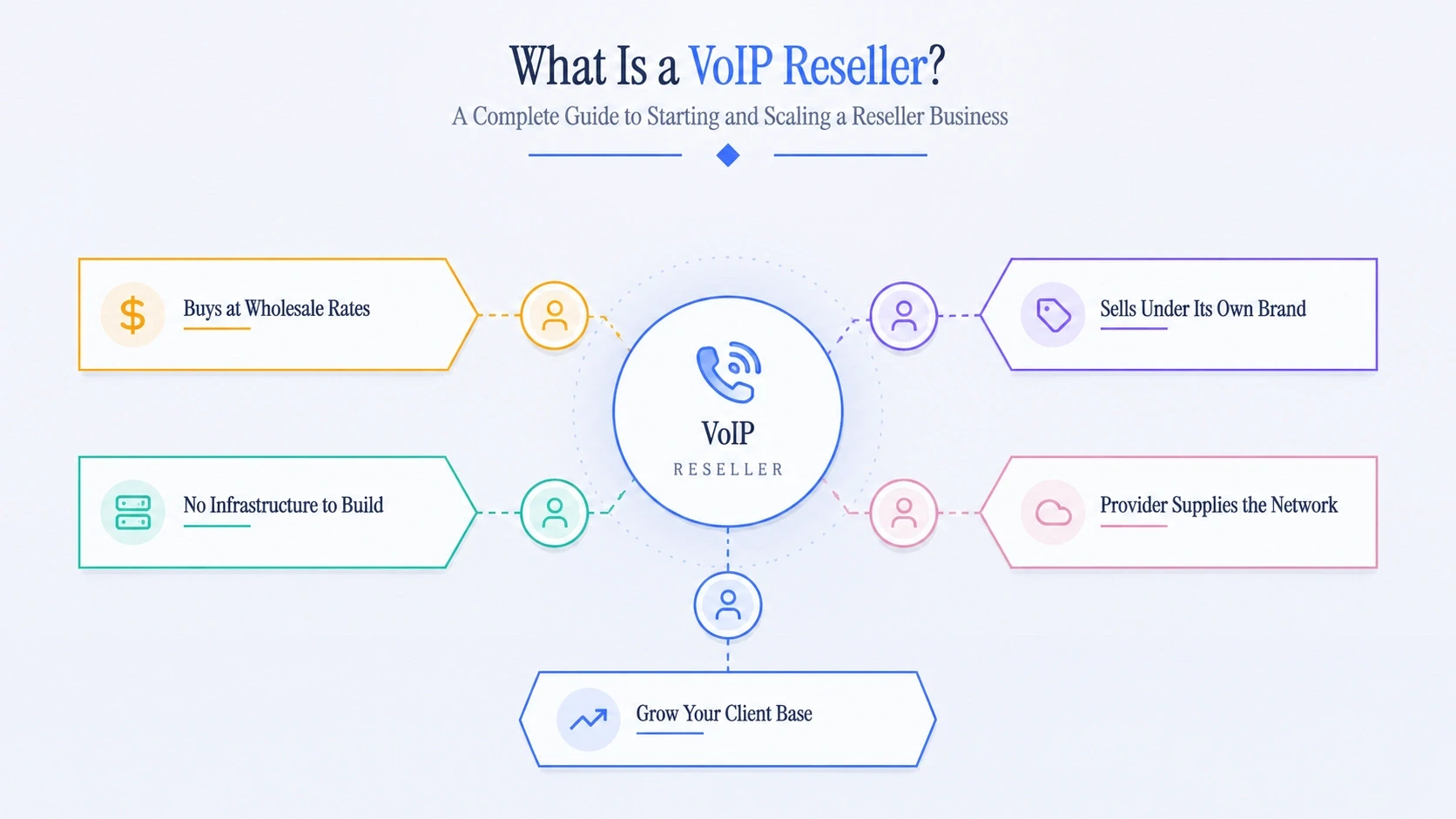
A reseller buys voice and messaging services in bulk from a larger provider, marks them up, and sells them under its own name. The provider supplies the network, the billing engine, and often 24/7 support. The reseller supplies the brand, the sales relationships, and the customer experience.
That split is what makes the model work. A small team can compete with big carriers without ever owning a switch or a data center.
How Reseller Programs Work
The mechanics are simple. The partner program sets wholesale VoIP rates for minutes, numbers, and features. The reseller sets its own retail prices on top and keeps the margin. Most of the rest runs in the background:
- Cloud-hosted and managed — onboarding a customer is a setup task, not a build project.
- The provider stays behind the scenes — it handles provisioning, uptime, and escalations.
- Your brand is all the customer sees — the logo, domain, and invoices are yours.
Reseller vs. Wholesale vs. White-Label
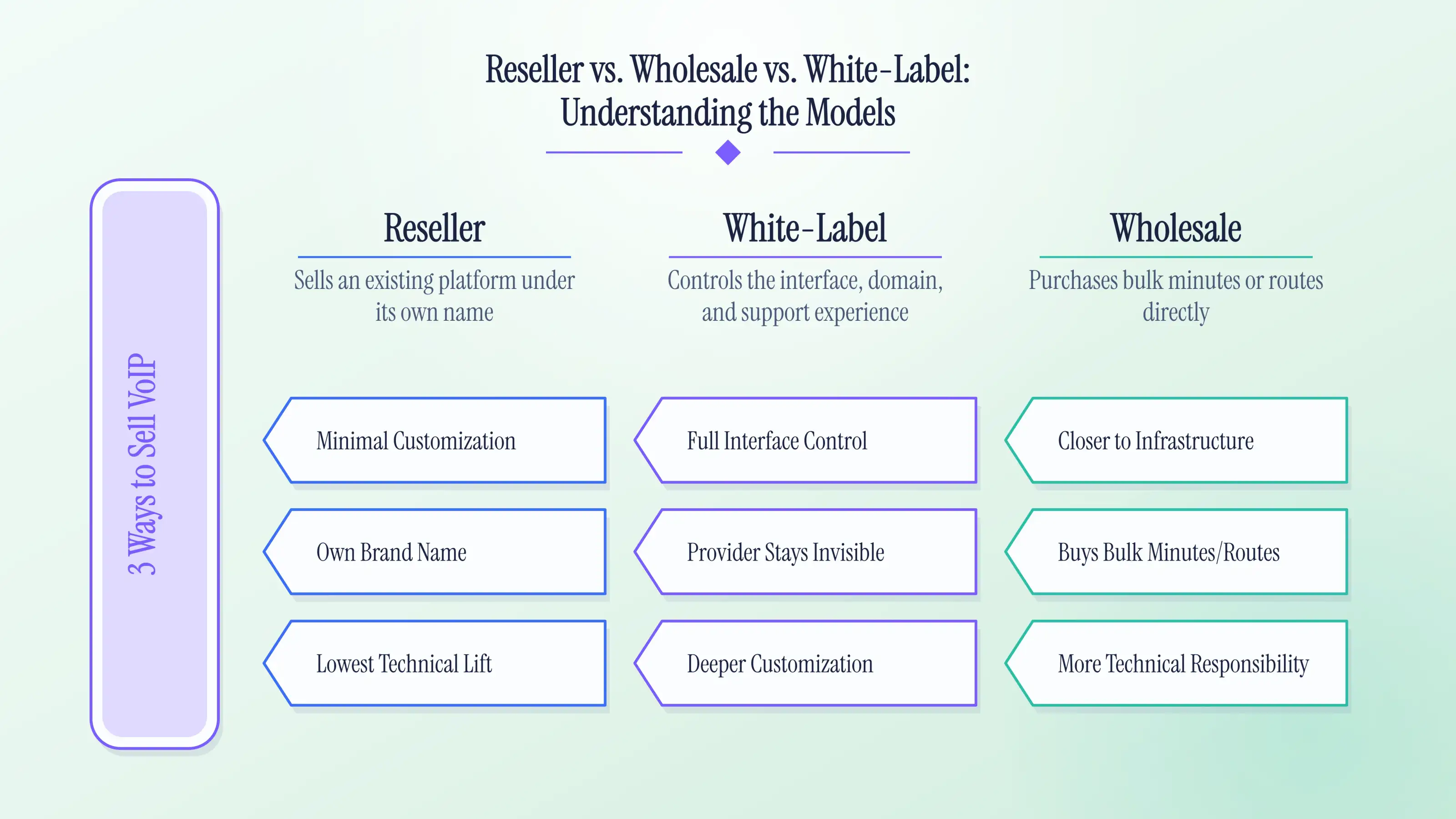
These three terms often get mixed up, but they mean different things. Each is a different level of investment and control:
- Reseller — sells an existing platform under its own name, with little customization.
- White-label — goes further, controlling the interface, domain, and support so the provider stays invisible.
- Wholesale — sits closest to the infrastructure, buying bulk minutes or routes to resell or to power its own platform, in exchange for tighter margins and more technical work.
Businesses weighing scale often start with the numbering side — for example, how to source wholesale DID numbers — before deciding how much infrastructure to take on.
Benefits of Becoming a Reseller
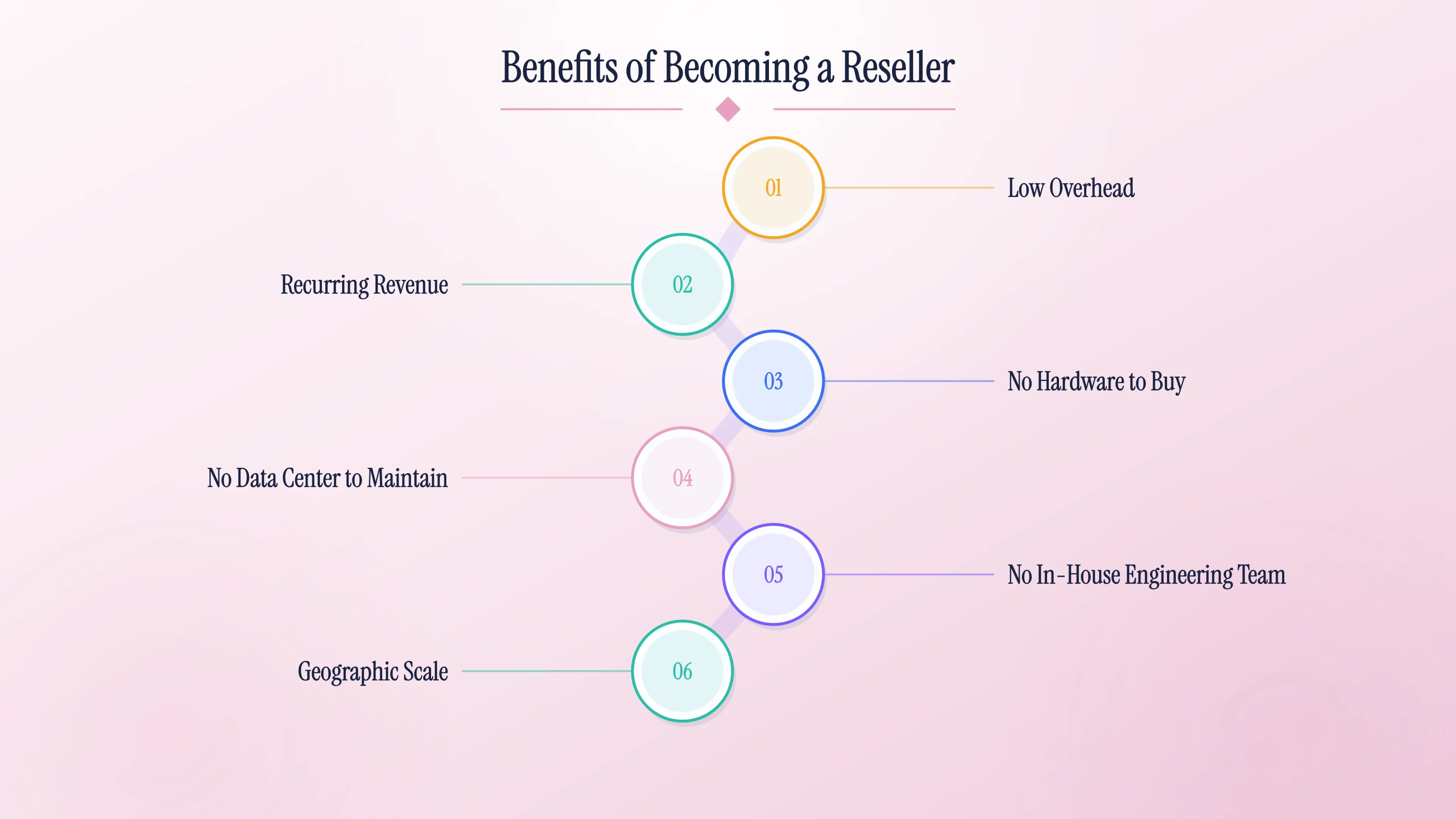
The appeal is low overhead with recurring revenue. There is no telecom hardware to buy, no data center to run, and no engineering team needed to keep calls connected.
- Recurring revenue — most plans bill monthly per seat or line, so income compounds as you grow.
- No buildout to scale — you can serve customers anywhere the provider's network already reaches.
- Local to national, fast — a local sales relationship can go national with no extra infrastructure.
What to Look for in a Reseller Program
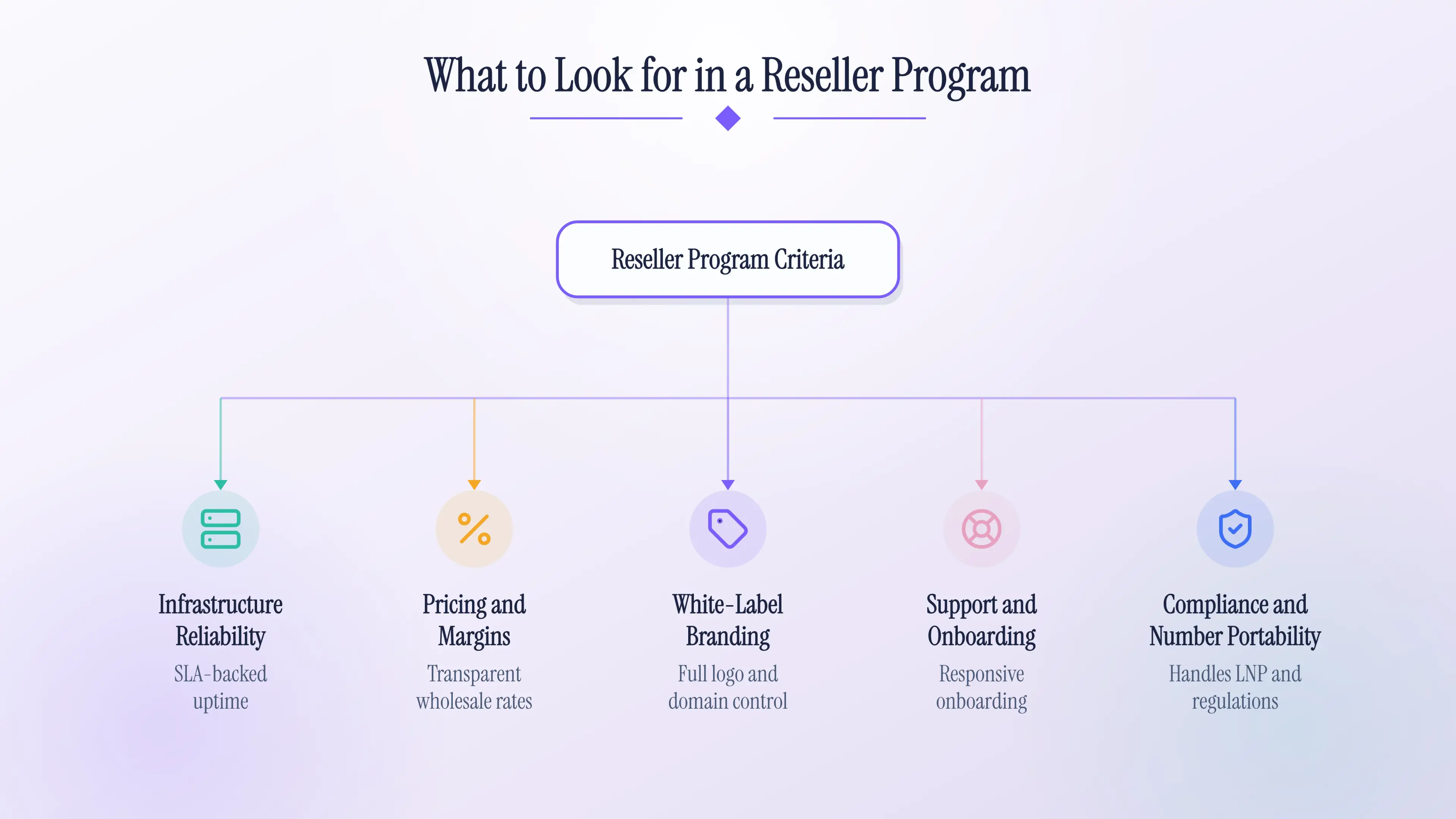
Not every partner program is worth building a business on. Five criteria separate the strong ones from the rest.
1. Infrastructure Reliability
Look for geo-redundant data centers and a published uptime guarantee — the reseller's reputation depends entirely on a network it does not control directly.
2. Pricing and Margins
Transparent wholesale rates with no hidden per-seat or overage fees make it possible to price competitively while protecting margin.
3. White-Label Branding
Full control over logo, domain, and invoicing keeps the underlying provider invisible, which matters for building independent brand equity.
4. Support and Onboarding
Responsive technical support and a structured onboarding process shorten the time between signing a customer and getting them live.
5. Compliance and Number Portability
A program that handles Local Number Portability and regulatory obligations correctly protects the reseller from compliance exposure it did not create.
Steps to Become a Reseller
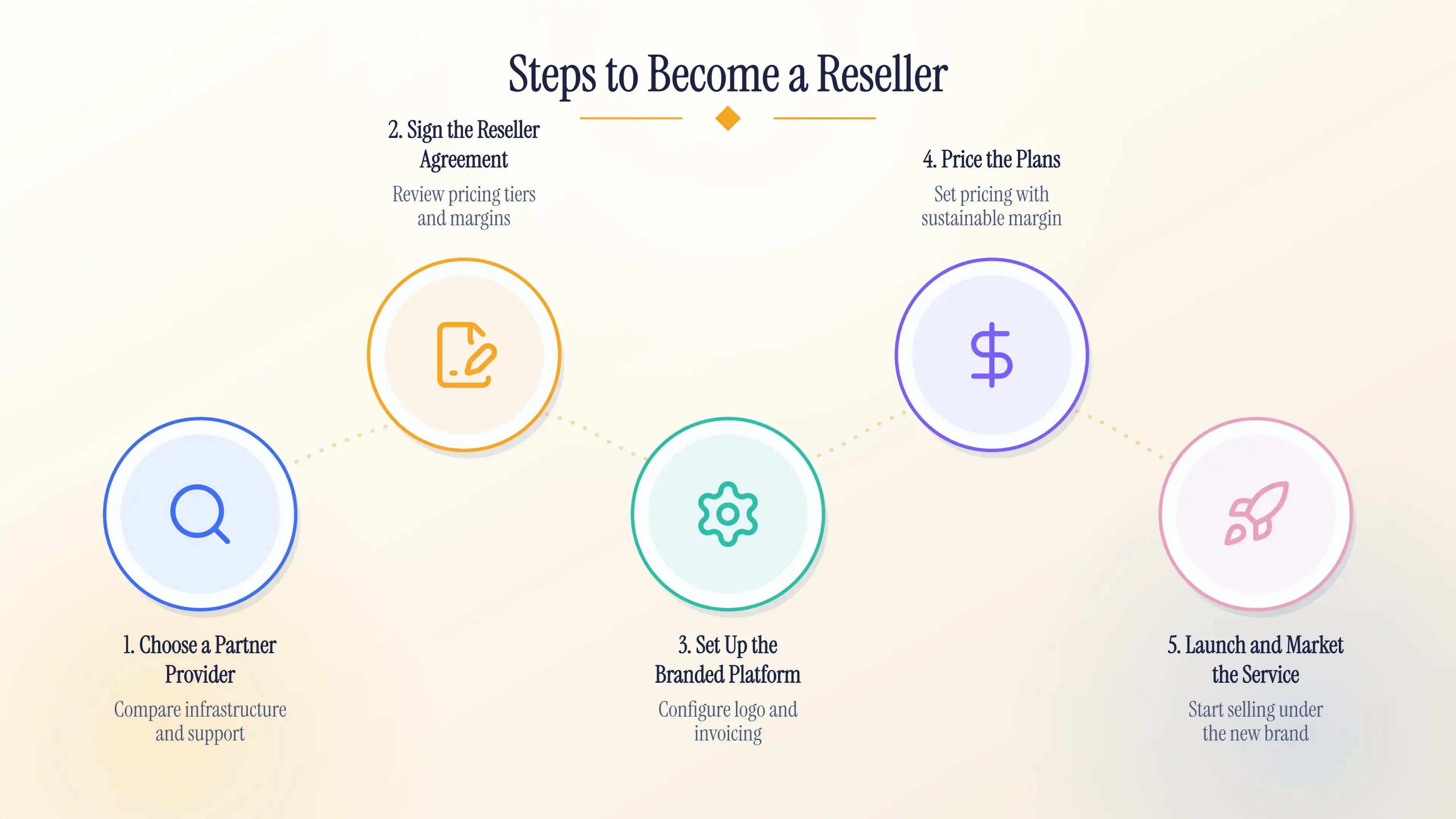
Getting started follows a fairly consistent path across providers.
1. Choose a Partner Provider
Compare infrastructure, pricing, and support quality before committing — this decision shapes the business for years.
2. Sign the Reseller Agreement
Review pricing tiers, margin structure, and any exclusivity terms carefully before signing.
3. Set Up the Branded Platform
Configure the logo, domain, and customer-facing invoicing so the underlying provider stays invisible.
4. Price the Plans
Set retail pricing that covers wholesale cost, support overhead, and a sustainable margin.
5. Launch and Market the Service
Start selling under the new brand, using the provider's infrastructure and support behind the scenes.
See What a White-Label Platform Looks Like
Explore branded onboarding, transparent pricing, and reseller support built into one platform.
Pricing Models and Profit Margins
Most programs bill wholesale rates per minute, per seat, or as a flat monthly allotment. The reseller sets its own retail price on top. Per-seat pricing is the most common choice for business customers, because it scales with headcount and is easy to understand.
Margins vary by provider and volume. The economics favor resellers who keep support costs low. Most of the value — uptime, call quality, infrastructure — comes from the wholesale partner, not from the reseller's own overhead.
Common Challenges and How to Avoid Them
The biggest risk is picking a partner on price alone, then finding reliability problems after customers are live. Compliance is the other common trap. Interconnected voice providers carry obligations around 911 service and number portability, and those flow down to the reseller's customers even though the reseller does not own the network.
The FCC's consumer guide lays out these rules, including the Local Number Portability rules that apply whenever a reseller moves customer numbers between providers. Choosing a partner that already handles this removes the risk before it becomes a problem.
Conclusion
The reseller model turns a capital-heavy business into an operational one. The provider carries the infrastructure risk. The reseller focuses on sales, support, and brand.
Choosing well means weighing reliability, transparent margins, white-label control, and compliance before you sign — not after your first customer goes live. Done right, it is one of the most accessible ways to build a recurring-revenue business without owning a single server.
Ready to Launch Your Reseller Business?
Get wholesale pricing, white-label branding, and 24/7 support built in.
Questions, answered.
A business that buys communication services at wholesale rates from a provider and sells them to its own customers under its own brand, without owning the underlying network infrastructure.
Costs vary by provider, but many programs use prepaid, no-contract structures, so the main investment is in marketing and business setup rather than infrastructure or inventory.
A reseller typically sells an existing platform under its own brand with limited technical overhead, while a wholesale buyer purchases bulk minutes or routes and takes on more infrastructure responsibility in exchange for tighter margins.
Deep technical knowledge is not required, since the partner provider handles the underlying network, but a basic understanding of how calls route and how numbers are provisioned makes day-to-day management easier.
By marking up wholesale rates — per seat, per minute, or as bundled plans — and keeping the difference as recurring monthly revenue as the customer base grows.
Yes. Interconnected VoIP providers, including the platforms resellers sell under their own brand, must comply with FCC Local Number Portability rules whenever a customer moves an existing number to the service.
Most white label VoIP reseller programs let you start by signing a partner agreement, picking which plans to resell under your own brand, and onboarding your first customers on the provider's infrastructure — no network build-out needed. Acepeak's wholesale reseller program follows this model.