Introduction
Wholesale VoIP termination quietly powers most global calling. This guide covers how it works, what it costs, and how to judge a provider before you commit volume.
You will also find the quality benchmarks worth testing, the rules that apply once calls cross a border, and the questions buyers ask most. Use it to weigh a vendor pitch against what your team actually needs.
Key Takeaways
- Wholesale voice termination routes calls worldwide at low cost and high quality.
- A strong network and many carrier links keep calls clear and keep you within the rules.
- Clear metrics show whether a rollout works, and where to fix it.
Understanding the Basics
The idea is simple. A provider takes your voice traffic and sends each call to the right place. Good routing keeps calls flowing and cuts wasted spend. The provider owns the network and the support behind it.
Tools such as automatic call distribution (ACD), interactive voice response (IVR), and smart routing help large teams handle heavy call volume. Together they blend the network and the service layer that businesses lean on.
What is Wholesale VoIP Termination?
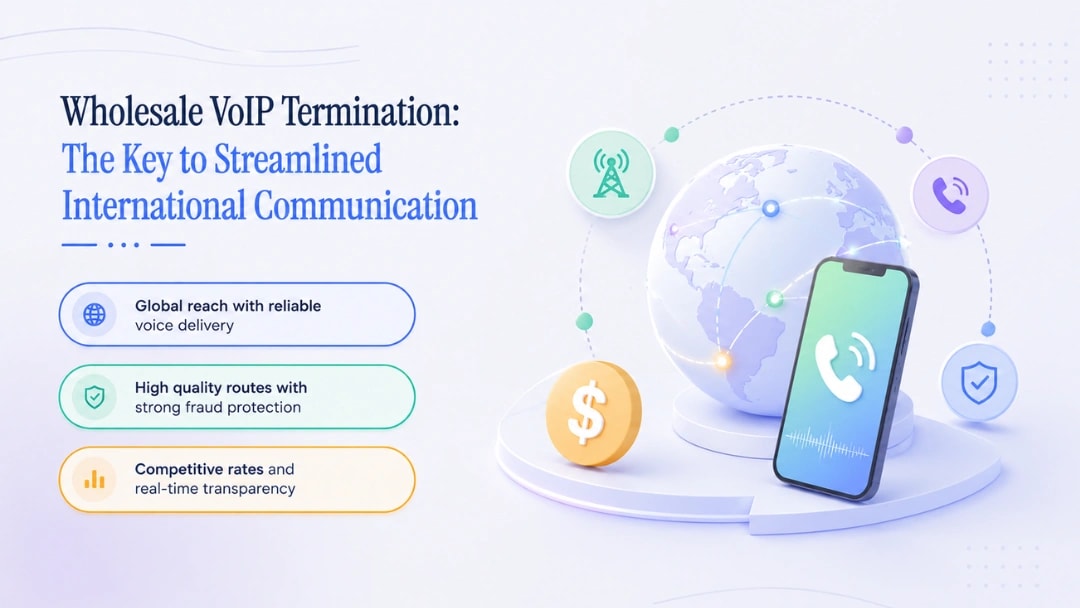
It is a low-cost, high-quality way to place calls abroad. Firms use it to reach customers in other countries at sharp rates. So how does it work?
A provider links up with a large pool of carriers. That network moves big volumes of voice traffic across borders. By skipping legacy phone firms and buying at bulk rates, the provider passes the savings on. Wholesale rates sit well below retail. US domestic minutes often run $0.001 to $0.004. Western Europe ranges from about $0.005 to $0.025 per minute. Harder-to-reach markets cost more.
Take a firm with many clients abroad. Carrier-grade termination reaches them without heavy long-distance bills. Instead of leaning on one carrier, the service picks the best path for each call. The trade calls this A-Z termination: the provider keeps rate cards for hundreds of country routes. That is how quality stays high while costs stay low.
Key Technologies in Wholesale VoIP Termination
A few network protocols do the heavy lifting. SIP (Session Initiation Protocol) leads the list. Codecs then shrink the audio so it travels well.
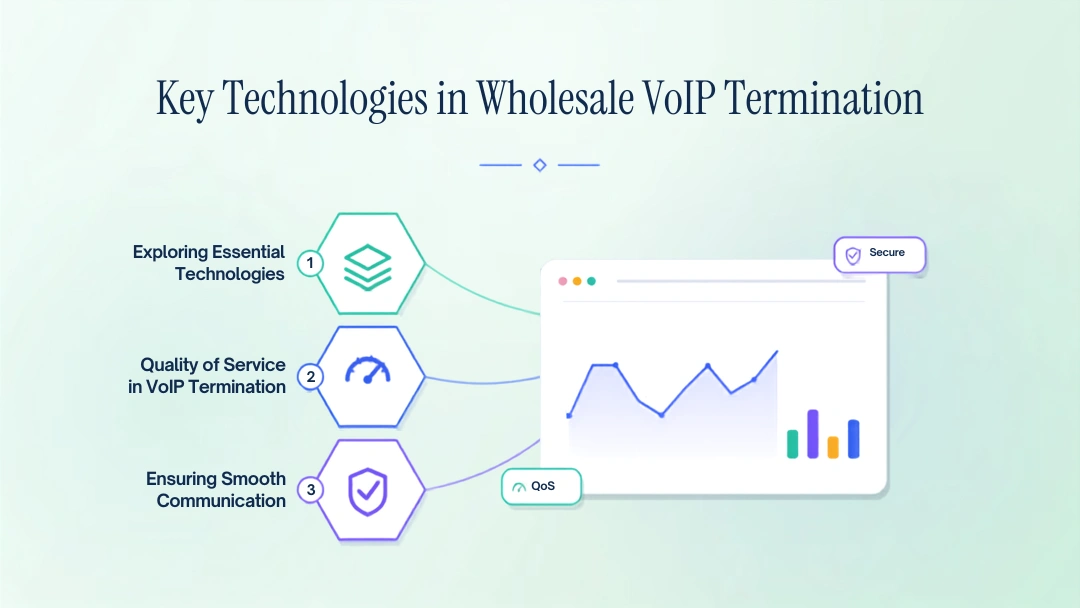
Exploring Essential Technologies
Three protocols keep calls working:
- RTP (Real-time Transport Protocol). Moves audio and video across IP networks in the right order and on time.
- SIP (Session Initiation Protocol). Starts a call, changes it mid-stream, and ends it.
- H.323. An older standard that governs multimedia sessions.
Together they set up the link, guide the traffic, and hold call quality steady.
Quality of Service in VoIP Termination
Quality of Service (QoS) keeps voice clear. It also keeps the network steady when call volume spikes.
Ensuring Smooth Communication
Providers lean on a few tactics. QoS rules give voice packets priority, so they arrive in order. Echo cancellation strips feedback and hiss. Network monitors catch faults early, often before a caller hears them.
Choosing the Right Provider
The right provider shapes your price, your features, and the help you get when a route breaks.
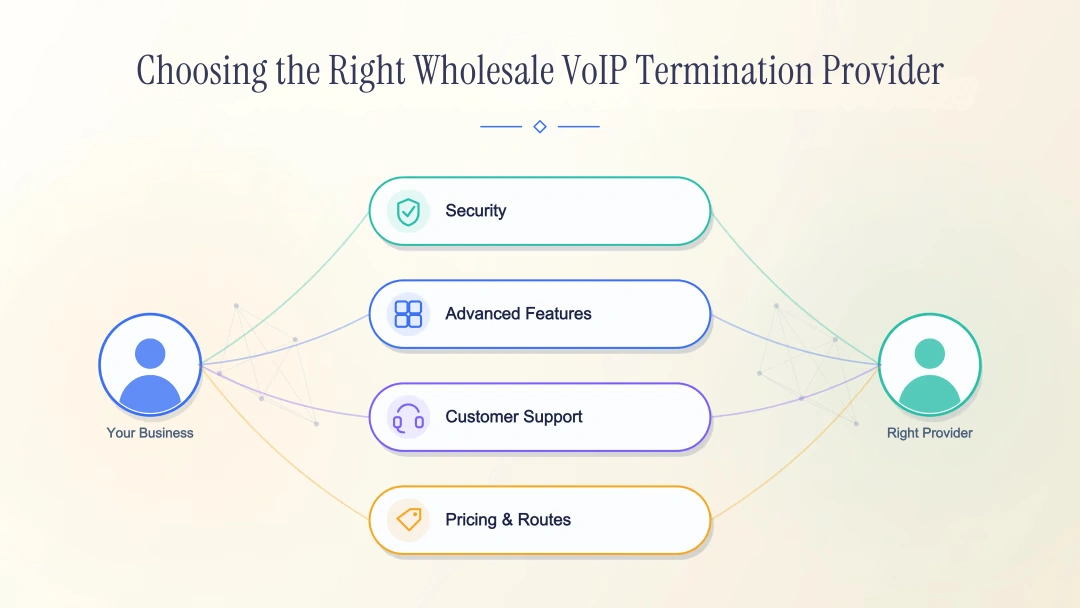
Factors to Consider
- Security. Your calls and data need real protection. Threats keep rising, so strong safeguards are a must.
- Features. Look for smart call routing, conference calling, and voicemail transcription.
- Customer support. Round-the-clock help fixes faults fast and keeps your lines up.
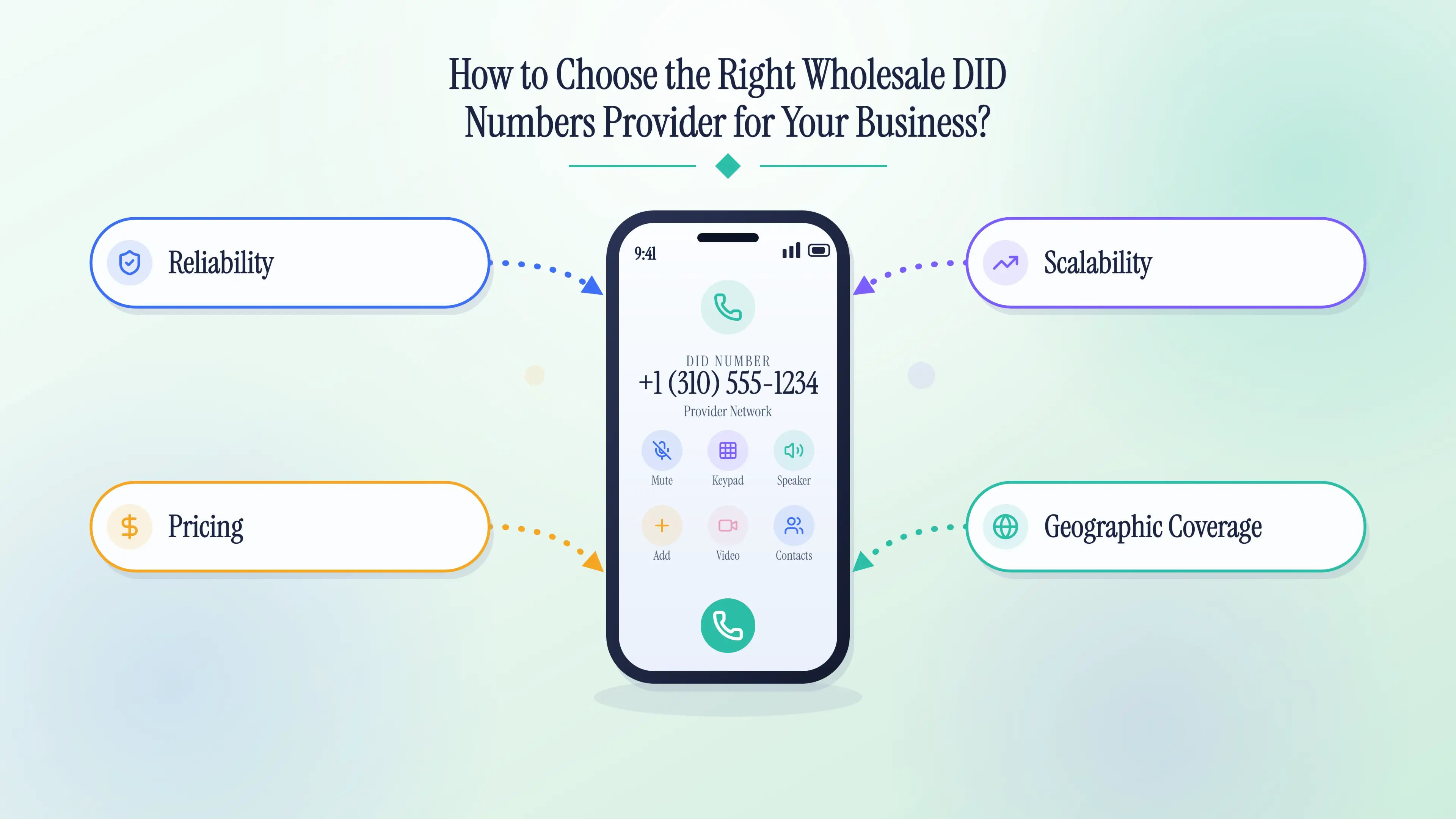
- Pricing and route quality. Look past headline rates. Check answer-seizure ratio (ASR) and post-dial delay (PDD). A healthy ASR sits above 60%. A PDD past six seconds points to a routing fault. A provider that owns its network usually holds quality better than a reseller — Acepeak's wholesale voice network shows what clear per-route pricing looks like. The same two figures decide inbound quality, which is why they head the checklist for buying wholesale DID numbers, alongside published DID coverage and rates.
Business Applications of VoIP Termination
Many industries lean on this service to handle voice well and keep calls steady.
Utilizing VoIP in Various Industries
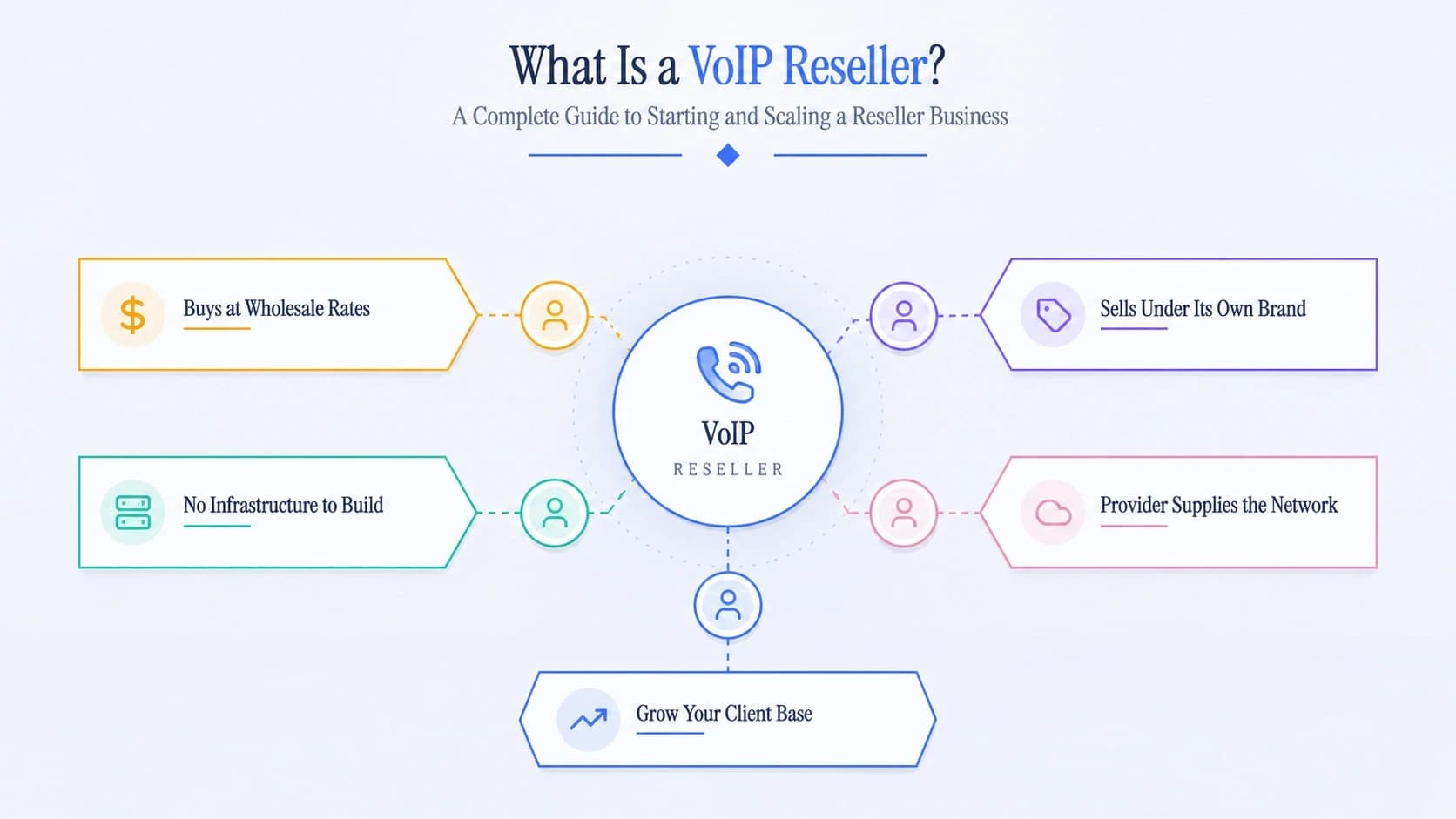
The tech routes calls to the right desk. In health care it links doctors, patients, and staff. Schools use it to reach students and parents. Hotels handle bookings and guest calls with it, and drop the cost of old phone lines. Some firms go further and resell that capacity — see what a VoIP reseller does and how the math works.
Benefits of Wholesale VoIP Termination
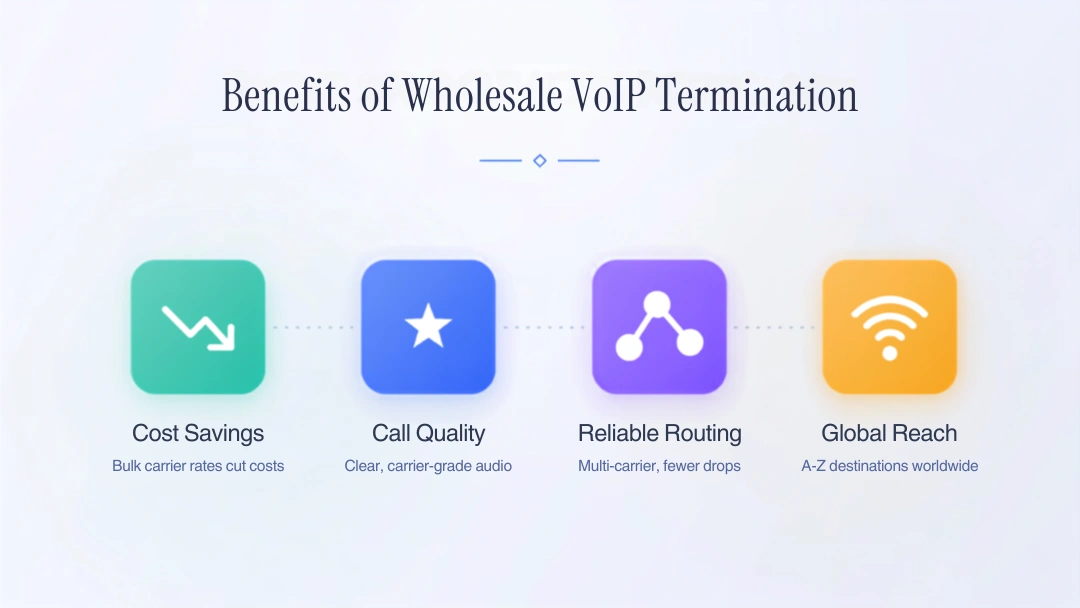
Cost is the headline gain. Bulk buying beats old phone-line pricing. Clearer audio builds trust with clients and partners. Steady routing means fewer dropped calls. Put together, teams work faster and spend less.
Route more voice traffic for less
Acepeak connects your calls across global destinations on a carrier-grade network — with the routing quality and support that scale with you.
Security Measures in VoIP Termination
Solid security protects your data and your network.
Protecting Your Communications
Most providers layer several defenses:
- Encryption. SRTP (Secure Real-time Transport Protocol) shields voice data in transit.
- Authentication. SIP Digest Authentication limits access to approved users.
- Firewalls and intrusion detection. These watch for and block unwanted access.
- Audits and updates. Routine checks close new gaps early.
- AI fraud detection. Good providers spot odd traffic before it inflates a bill.
Regulatory Compliance in VoIP
Rules differ by country, and providers must meet each one. Getting this right protects both the service and the business behind it.
Navigating Legal Requirements
In the US, the Federal Communications Commission (FCC) sets the rules. They cover emergency calls, network security, and consumer rights. STIR/SHAKEN caller-ID checks also apply, and third-party attestation rules widened in 2025 to curb illegal robocalls. In the EU, the General Data Protection Regulation (GDPR) governs user data. Buyers should also avoid grey routes. They look cheap, but they skip proper interconnects and carry real legal and quality risk.
Future Trends and What Is Next
The field keeps moving, and new tools keep raising what voice can do.
Adapting to Technological Advancements
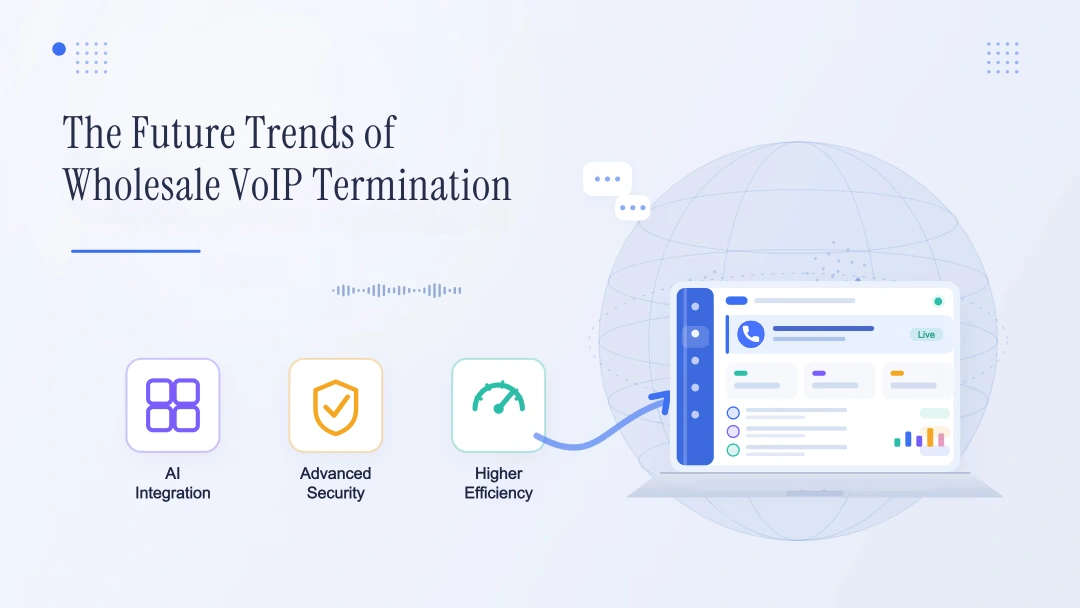
Providers have to keep pace or lose ground. Buyers now expect faster, steadier service. New tools help on several fronts. AI picks the cheapest working route in real time. AI also flags fraud sooner. Analytics get richer, and security keeps tightening.
VoIP Implementation Success Metrics
Judge a rollout on hard numbers: call quality, route performance, and the support you actually receive.
Measuring Performance
Track five numbers:
- Latency. Delay on the line. It matters most for live voice.
- Jitter. Uneven packet arrival, which makes audio choppy.
- Packet loss. The share of data that never lands. It cuts straight into audio.
- Bandwidth. How much voice traffic the network can carry.
- MOS (Mean Opinion Score). Scores how clear a call sounds. Above 4.0 counts as carrier grade — see the Mean Opinion Score scale.
Watch these over time and you catch faults early.
Put these benchmarks to work
See how Acepeak delivers high-ASR routing, transparent rates, and compliant global coverage on a single platform.
Conclusion
Wholesale voice termination remains a strong answer for firms that call abroad at scale. Many carrier links and a solid network keep calls landing and costs down. Global teams gain the most.
A good rollout comes down to three choices. Check call quality. Confirm the legal side. Pick the right provider for your routes. Weigh those, watch what is coming next, and the service pays off for years.
Questions, answered.
It is a service that routes large volumes of voice traffic abroad at low rates. A strong network and many carrier links deliver clear calls worldwide. Most deals use A-Z termination, which covers hundreds of country routes at once.
The provider links to many carriers and moves large call volumes across borders. Each call takes the best path open at that moment. You reach global numbers reliably and pay far less than old long-distance rates.
You gain lower cost, clear calls, and broad reach. Bulk rates beat old phone pricing. Many carrier links mean you never lean on just one. Metrics such as a strong ASR and low PDD keep the line steady.
Any firm placing lots of calls abroad. That includes call centers, large enterprises, and companies with customers worldwide. It also suits any team that wants to cut call costs without losing quality.
Quality comes from a strong network, backup carriers, and active monitoring. Providers give voice priority, cancel echo, and track latency, jitter, packet loss, and MOS so routes stay clean.
Start with a provider you trust. You can also ask your current voice vendor whether they offer it, or ask for a referral. Test route quality first, then commit volume.
Wholesale voice termination rates vary by destination and volume, typically quoted per minute and lowest on high-volume domestic and Tier-1 international routes. Ask any wholesale voip termination provider for a rate deck by country/prefix rather than a single blended number.