A wholesale DID order is one of the few telecom purchases where the headline price tells you almost nothing. Two providers can quote the same per-number rate and deliver completely different service: one answers 45% of calls on a Tier-1 corridor, the other 30%, and the difference never appears on the rate card. This guide covers the figures that do decide it — answer-seizure ratio, post-dial delay, latency, porting terms — and what to ask for in writing before you commit to a bulk order.
Key Takeaways
- Answer-seizure ratio (ASR) and post-dial delay (PDD) predict DID performance far better than the per-number price does.
- Ask how many hops separate the provider from the PSTN — 1–2 is direct, 3–5+ means you are buying resold traffic.
- A published per-route rate card and a blended A-Z rate are not comparable offers, whatever the headline number says.
- Porting in bulk lives or dies on LOA handling; confirm the process before you move a single number.
- Uptime figures are meaningless without the P1 response time and the service-credit clause that back them.
What a Wholesale DID Actually Buys You
A Direct Inward Dialing number is an inbound telephone number that terminates to your infrastructure over SIP rather than to a physical line. Bought at wholesale volume, it comes with properties retail numbers usually do not expose: E.164 normalization so every number arrives in a consistent international format, geo-routing so calls can be steered by origin, CNAM support so your caller name renders on US handsets, and portability with formal LOA handling so the number is yours to move later.
Those four properties are the practical difference between a number you rent and a number you control. A provider that cannot normalize to E.164 pushes that work into your application layer. One that will not process an LOA has effectively locked you in, whatever the contract says about notice periods. Acepeak provisions local, mobile, toll-free and CNAM-enabled DIDs across 185+ countries through either the portal or a REST API, and the same wholesale VoIP platform carries the termination side of the traffic. Current coverage, per-minute rates and the rate-deck request sit on the wholesale DID numbers page.
The Four Metrics That Separate Carriers
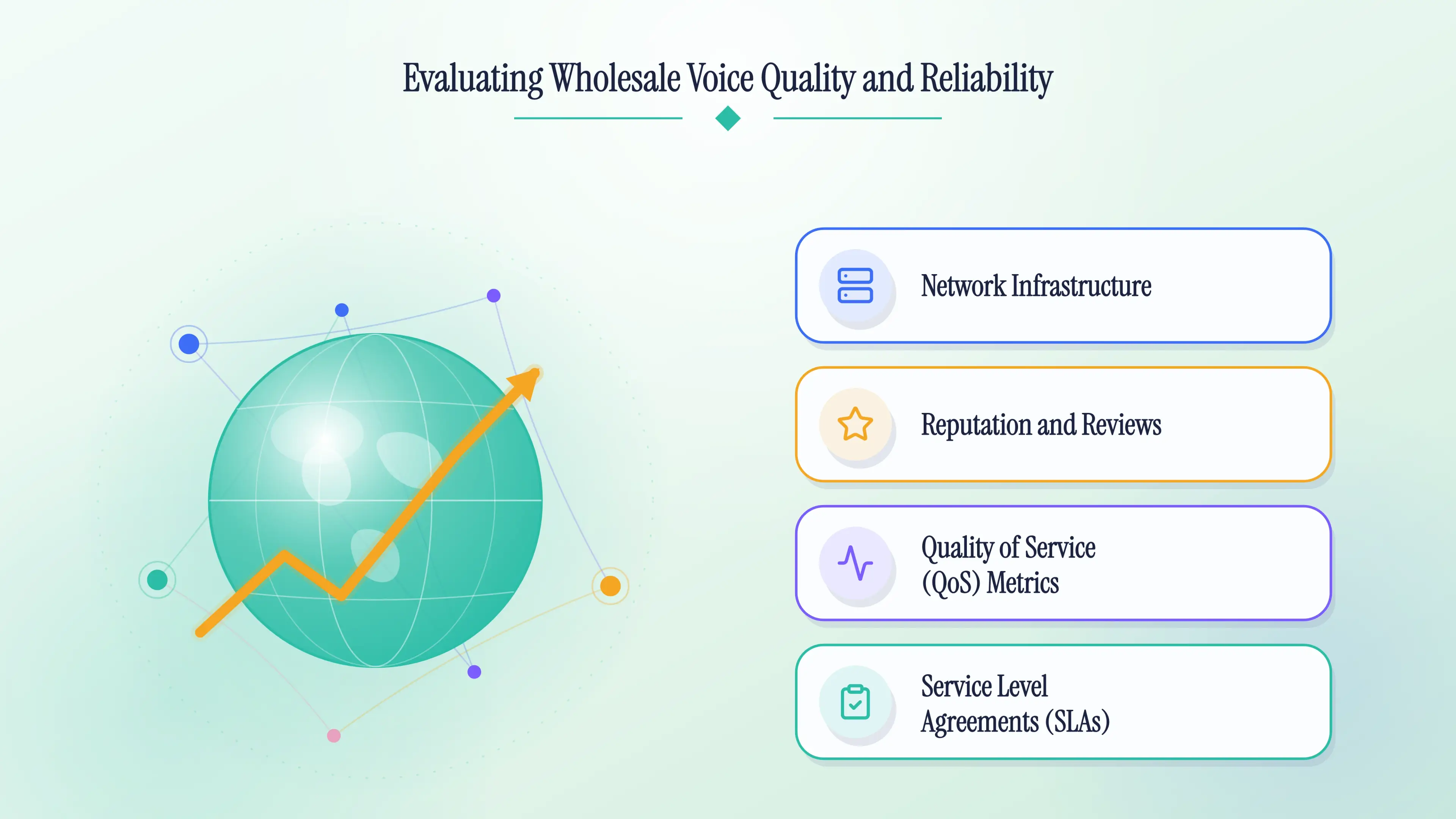
Ask any wholesale provider for these four figures, by corridor, in writing. A provider that will not supply them either does not measure its own network or does not like the answer. Both are useful to know before you sign.
| Metric | What it measures | Direct Tier-1 | Typical resold route |
|---|---|---|---|
| ASR (answer-seizure ratio) | Share of call attempts that connect | 45%+ | 28-35% |
| PDD (post-dial delay) | Silence between dialling and ringback | Under 800ms | 1.2-2.5s |
| Median latency | One-way audio delay | Sub-45ms | 80-150ms |
| Hops to PSTN | Intermediaries between you and the network | 1-2 | 3-5+ |
The right-hand columns are Acepeak's published figures for its Tier-1 routes set against what blended wholesale traffic typically delivers. Read them as a shape rather than a promise from any one vendor: the gap between a direct interconnect and a route that has been resold three times is consistently this wide, and it is the single most reliable predictor of whether your DIDs will perform.
One caveat on ASR. It is destination-sensitive — a 30% ASR on a corridor with heavy invalid-number traffic can be entirely healthy, while 45% on a clean corridor may be poor. Always compare like for like, on the specific country pairs you actually send traffic to, and ask for a rolling 30-day figure rather than a best-day snapshot.
For mean opinion score, the ITU-T P.800 scale is the reference: 4.3 and above is toll quality, 4.0 to 4.3 is acceptable for business voice, and anything below 3.6 will generate complaints. Any provider quoting MOS should say which codec the figure assumes, since G.711 and G.729 do not score comparably.
Porting and LOA: Where Bulk Orders Go Wrong
Porting is the step that turns a trial into a migration, and it is where bulk DID projects most often stall. A Letter of Authorization is the document that instructs the losing carrier to release the numbers. In bulk, small inconsistencies scale badly: a service address that does not match the CSR on file, an account name abbreviated differently, or a partial-port request that strays across billing accounts will each reject the batch rather than the individual number.
Before committing, establish three things. Who prepares the LOA — you or the provider. Whether partial ports are supported, or whether the whole account must move at once. And what happens to numbers that reject: are they re-submitted automatically, or do they silently drop out of the batch. Providers that handle LOA processing on your behalf, as Acepeak does, remove most of the failure modes, but the questions are worth asking of anyone.
Tier-1, Tier-2 and What "A-Z Coverage" Hides
Almost every wholesale provider advertises A-Z coverage. The phrase describes reach, not quality, and it is compatible with routing your traffic through three or four upstream aggregators before it reaches the destination network. Each hop adds latency, adds a point where the route can be swapped, and adds someone whose margin comes out of your call quality.
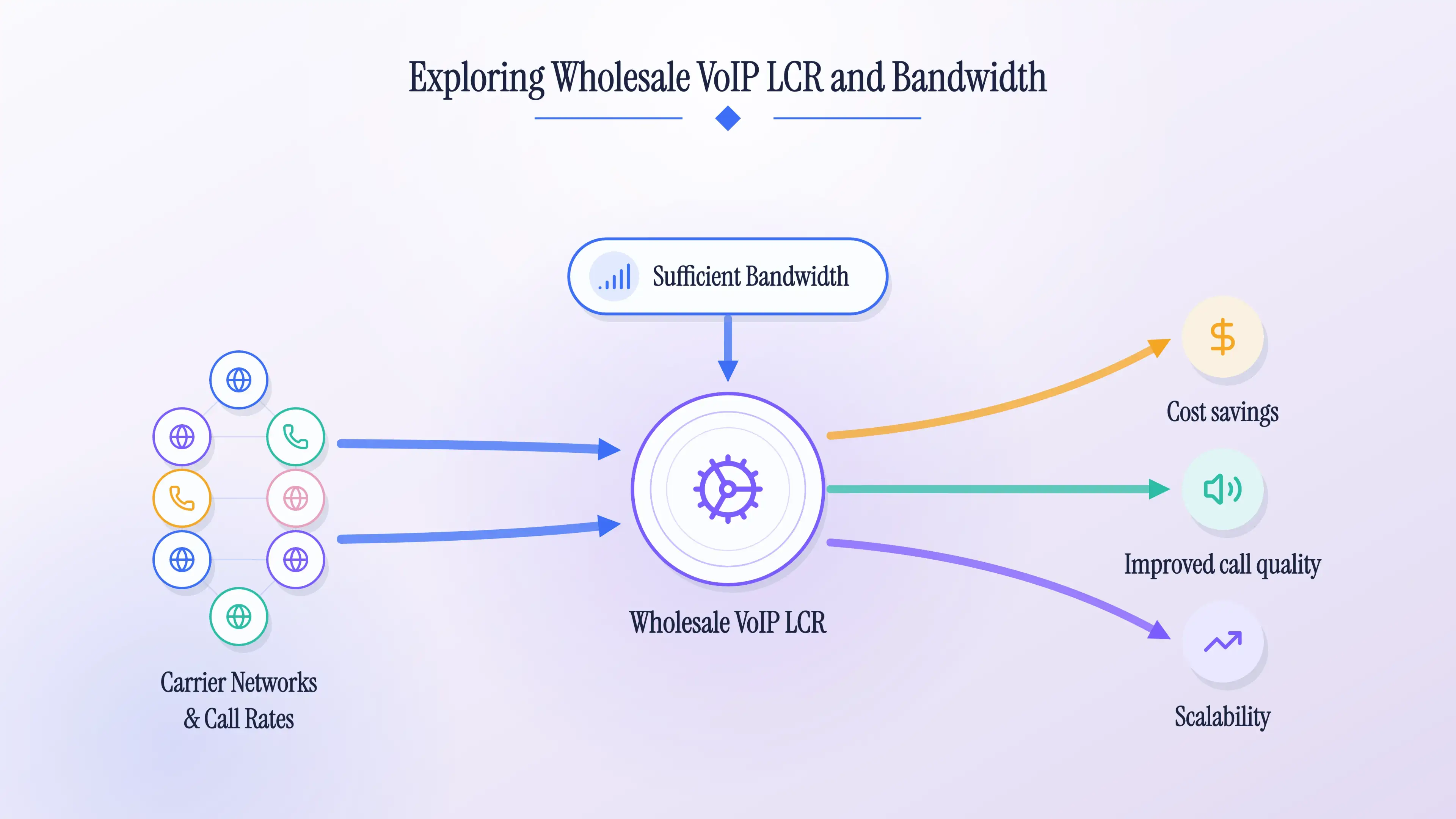
Least-cost routing is the mechanism underneath. An LCR engine scores available carriers per destination on price and quality, then sends each call down the winning route. Used well it lowers cost without touching quality. Used badly — optimizing on price alone — it is how a corridor quietly degrades from one week to the next.
The question that actually matters is whether route changes require your consent. Silent route swaps are standard practice across much of the wholesale market: the route you tested is not necessarily the route you are on a month later. Acepeak publishes rates per route rather than as a blended A-Z figure and changes routes only with buyer consent, which is the arrangement to look for regardless of vendor. The full detail sits on the wholesale voice termination side of the platform.
Reading a Wholesale DID Rate Card
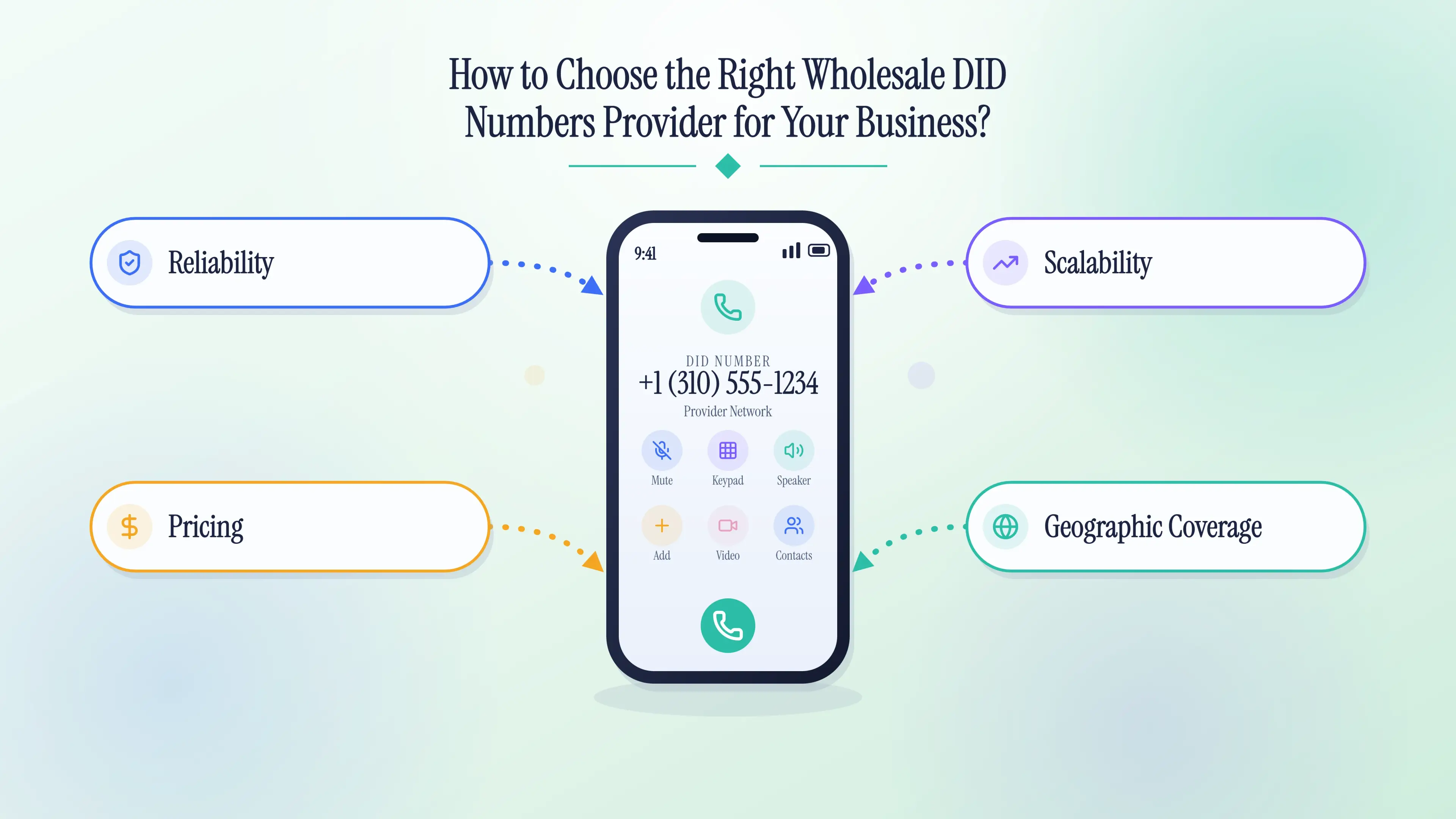
Wholesale DID pricing has two components that are easy to conflate: a recurring charge per number, and a usage charge per minute of inbound traffic. A cheap monthly number attached to an expensive per-minute rate is a worse deal than the reverse for any business with real call volume, and the headline figure quoted in sales material is almost always the one that flatters the vendor.
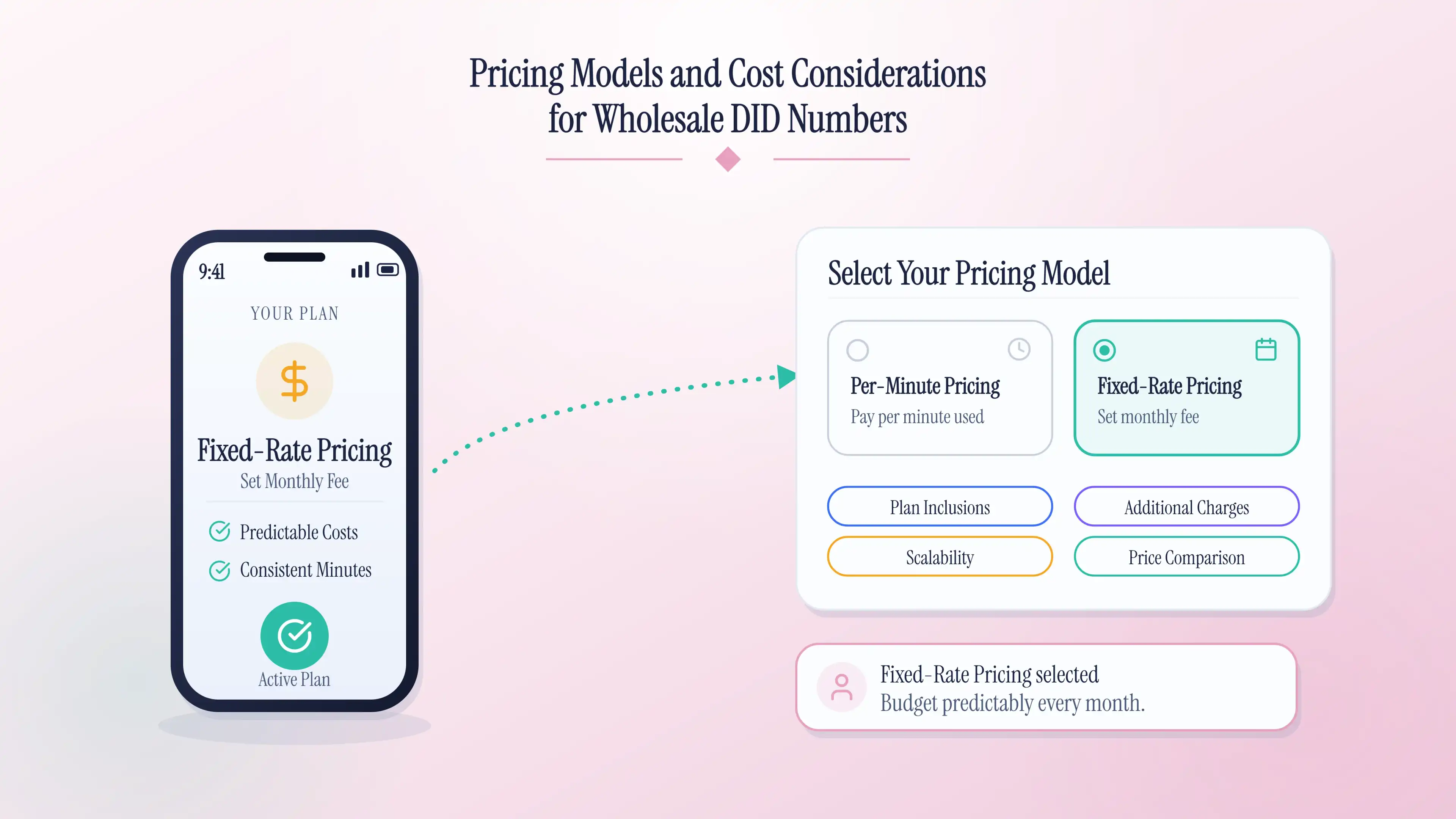
For orientation, Acepeak publishes termination from $0.003 per minute on hybrid A-Z routing and $0.005 per minute on Tier-1-only Platinum routes, with CLI corridors quoted per case. The spread between those two tiers — roughly 60% — is a fair picture of what carrier-grade routing costs relative to budget routing across the market. If a quote sits well below the low end, the question to ask is which of ASR, PDD or route stability is paying for the discount.
Then check what the rate excludes. Setup and porting fees, per-channel charges, CNAM dips billed separately, minimum monthly commitments, and overage bands are all common and none of them appear in a headline per-minute number. Ask for a sample invoice at your projected volume rather than a rate card; the invoice is where the real cost structure becomes visible.
Coverage: Local, Mobile, Toll-Free and CNAM
Coverage claims need two qualifiers before they mean anything: which number types, and whether the inventory is in stock or ordered on demand. A provider with 185+ countries of local DIDs but no mobile ranges in your target market has not solved your problem, and lead times on out-of-stock ranges can run to weeks.
Number type matters more than most buyers expect. Local numbers build regional presence. Mobile ranges matter in markets where landlines read as untrustworthy. Toll-free numbers shift the call cost to you and carry their own routing and portability rules. CNAM-enabled numbers render your business name on US caller ID, which measurably affects answer rates on outbound follow-up.
Also confirm regulatory requirements per market before you order. Several countries require in-country address proof, a local entity, or documented end-user records for local ranges, and a provider that skips this at order time tends to be the one reclaiming your numbers later when the regulator audits.
See Every DID Feature in Action
Local, mobile, toll-free and CNAM-enabled numbers across 185+ countries, provisioned by portal or REST API.
The SLA Clauses That Matter
An uptime percentage on its own commits a provider to nothing. What gives it force is the response time attached to it and the remedy when it is missed. Acepeak's published tiers illustrate the structure worth looking for: 99.9% uptime with a 30-minute P1 response on the entry tier, 99.99% with a 15-minute P1 and a named account manager on Platinum, and 99.99%+ with a 10-minute P1 and a dedicated NOC engineer on custom CLI arrangements.
Read the definitions rather than the numbers. How is an outage defined, and does partial degradation on one corridor count? Does the clock start when you raise the ticket or when the provider acknowledges it? Are service credits applied automatically against the next invoice, or only on written request within a claim window that most customers miss? The last of those quietly voids a large share of the SLAs in this market.
Two security clauses belong in the same review. Confirm STIR/SHAKEN attestation support if you terminate US traffic, and confirm what fraud controls exist on your account — IRSF detection and automatic rate-limiting are the standard protections, and their absence can turn a compromised credential into a five-figure invoice overnight.
A Buyer's Checklist Before You Commit
Run this list against any shortlist, and require written answers rather than sales-call assurances.
- Rolling 30-day ASR, PDD and latency figures for your specific corridors — not a global average.
- Number of hops to the PSTN on the routes you will actually use.
- Whether rates are published per route or blended A-Z, and whether route changes require your consent.
- Who prepares the LOA, whether partial ports are supported, and how rejected numbers are handled.
- A sample invoice at your projected volume, showing setup, per-channel, CNAM and overage charges.
- In-country regulatory requirements for every market you are ordering local ranges in.
- P1 response time, the outage definition, and whether service credits apply automatically.
- STIR/SHAKEN attestation level and the fraud controls active on the account.
A provider that answers all eight in writing is, by the standards of this market, already unusual. The ones that hesitate on hops, route consent, or the sample invoice are telling you something specific about where their margin comes from — and that is worth more than any figure on the rate card.
Wholesale DID Numbers, Priced Per Route
Published rates, buyer-consented routing, and LOA handling included. Free test credits, no contract.
Questions, answered.
On clean Tier-1 corridors, 45% or better is a reasonable expectation; blended or resold routes commonly land between 28% and 35%. ASR is destination-sensitive, so always compare figures for the specific country pairs you send traffic to, and ask for a rolling 30-day average rather than a single best-day snapshot.
PDD is the silence between the caller finishing dialling and hearing ringback. Under 800ms is typical of a direct interconnect; 1.2 to 2.5 seconds usually indicates the call is crossing several intermediaries. High PDD drives abandoned calls before the phone even rings, which is why it belongs alongside ASR in any evaluation.
One to two hops indicates a direct or near-direct interconnect. Three to five or more means the traffic is being resold through aggregators, with each hop adding latency and another party who can swap your route. Ask the question explicitly — it is rarely volunteered, and it explains most quality differences that price alone does not.
Usually yes, via a Letter of Authorization instructing the losing carrier to release them. In bulk, the practical risks are mismatched service addresses, inconsistent account names, and partial ports that cross billing accounts — any of which reject the batch. Confirm who prepares the LOA, whether partial ports are supported, and how rejected numbers are re-submitted.
A published per-route card prices each destination separately, so you can see exactly what you pay per corridor. A blended A-Z rate averages across destinations, which obscures both the expensive routes and any quality trade-off being made on your behalf. The two are not comparable offers even when the headline figure looks similar.
It depends on the provider and the market. CNAM renders your business name on US caller ID and is normally billed per dip. Toll-free ranges shift the call cost to you and follow separate routing and portability rules. Confirm both are available in your target markets before ordering, along with whether the inventory is in stock or ordered on demand.
An uptime figure paired with a P1 response time and an automatic remedy. Look for how an outage is defined, whether partial corridor degradation counts, when the response clock starts, and whether service credits are applied automatically against the next invoice or only on written claim within a window. That last clause voids a large share of SLAs in practice.