A Mid-1990s Code and Why It Still Matters
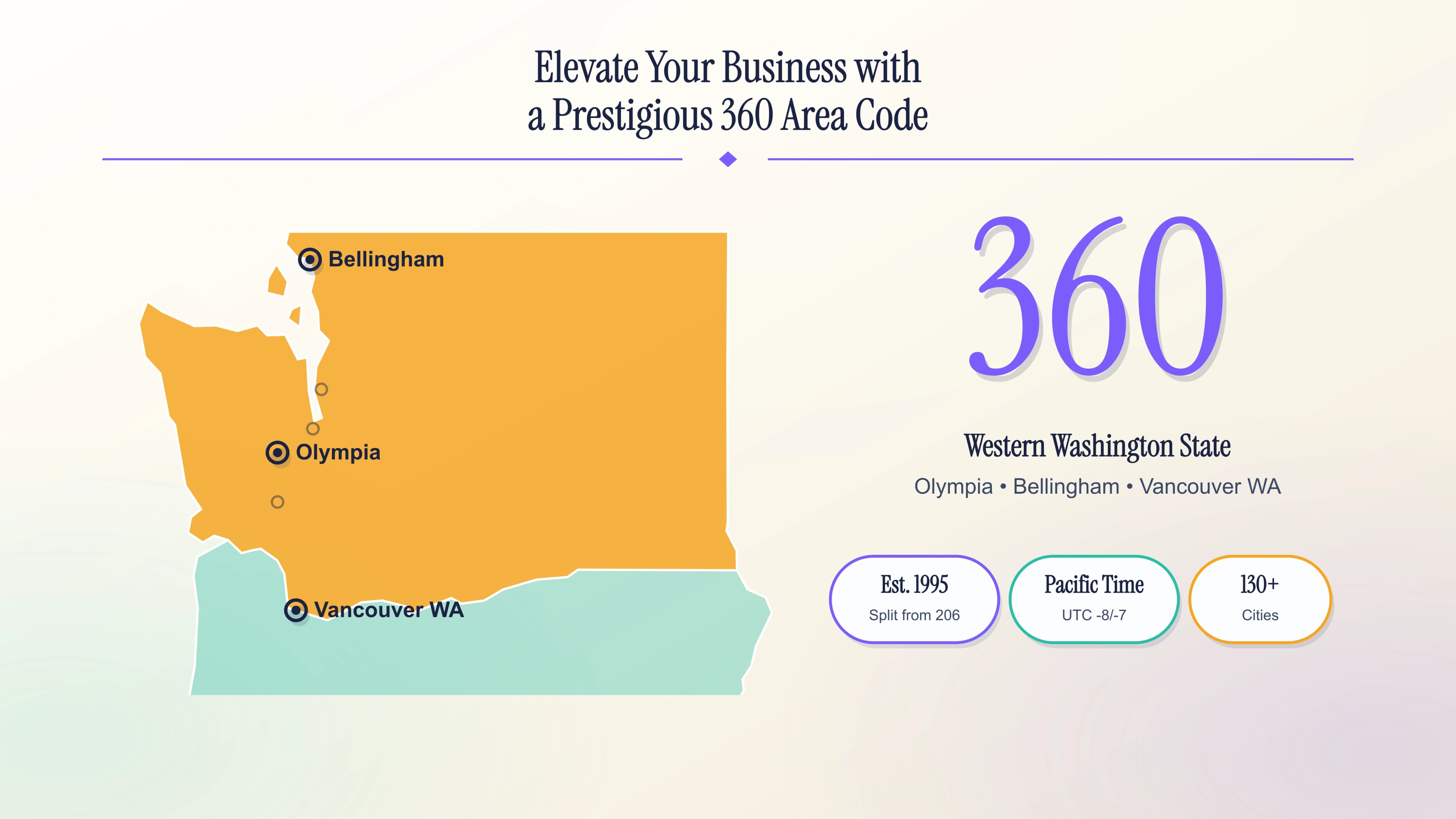
When Seattle and Tacoma kept 206 in 1995, the rest of Western Washington took the 360 prefix, and it still stretches from the Canadian border to the Oregon line. Customers in Olympia, Vancouver, and Bellingham judge an incoming call partly by those digits, which makes the choice between a regional number and an out-of-state one a real business decision. This guide walks through the territory 360 covers, its 564 overlay, what a line costs, and how to get one working.
Key Takeaways
- Origin — the 360 area code launched in 1995 when the original 206 area code split, giving Seattle-Tacoma its own code and creating 360 for the surrounding region.
- Coverage — roughly 20 counties and more than 130 cities across Western Washington outside the core Seattle-Tacoma metro, including Olympia, Vancouver, and Bellingham.
- Overlay partner — the 564 code was added in 2017 so both prefixes now share the same territory.
- Time zone — Pacific Time (PST, UTC−8 / PDT, UTC−7).
- Typical cost — a standard local number runs from a few dollars a month with a cloud provider up to several hundred dollars for a premium vanity pattern.
The Value of a Western Washington Prefix
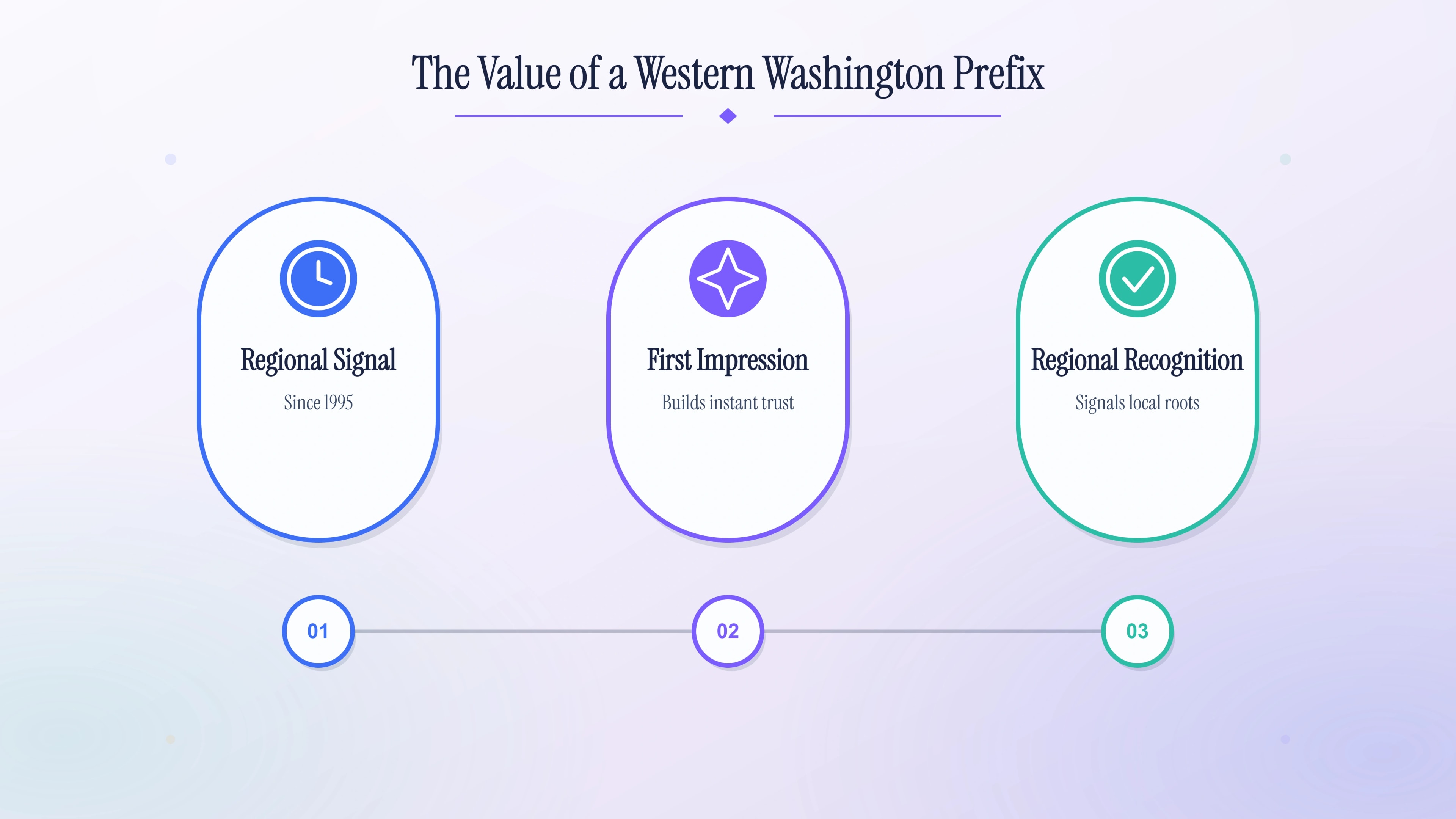
A local prefix does more than route calls — it is often the first signal a customer reads about where a business is based. Western Washington's designation has represented the Puget Sound region and the I-5 corridor since the mid-1990s, and it still carries strong recognition among residents and businesses across the state. For companies courting customers in Olympia, Vancouver, or Bellingham, listing a familiar area code alongside an out-of-state one can shape a first impression before a single word is spoken.
A 1995 Split That Broke the Old Numbering Pattern
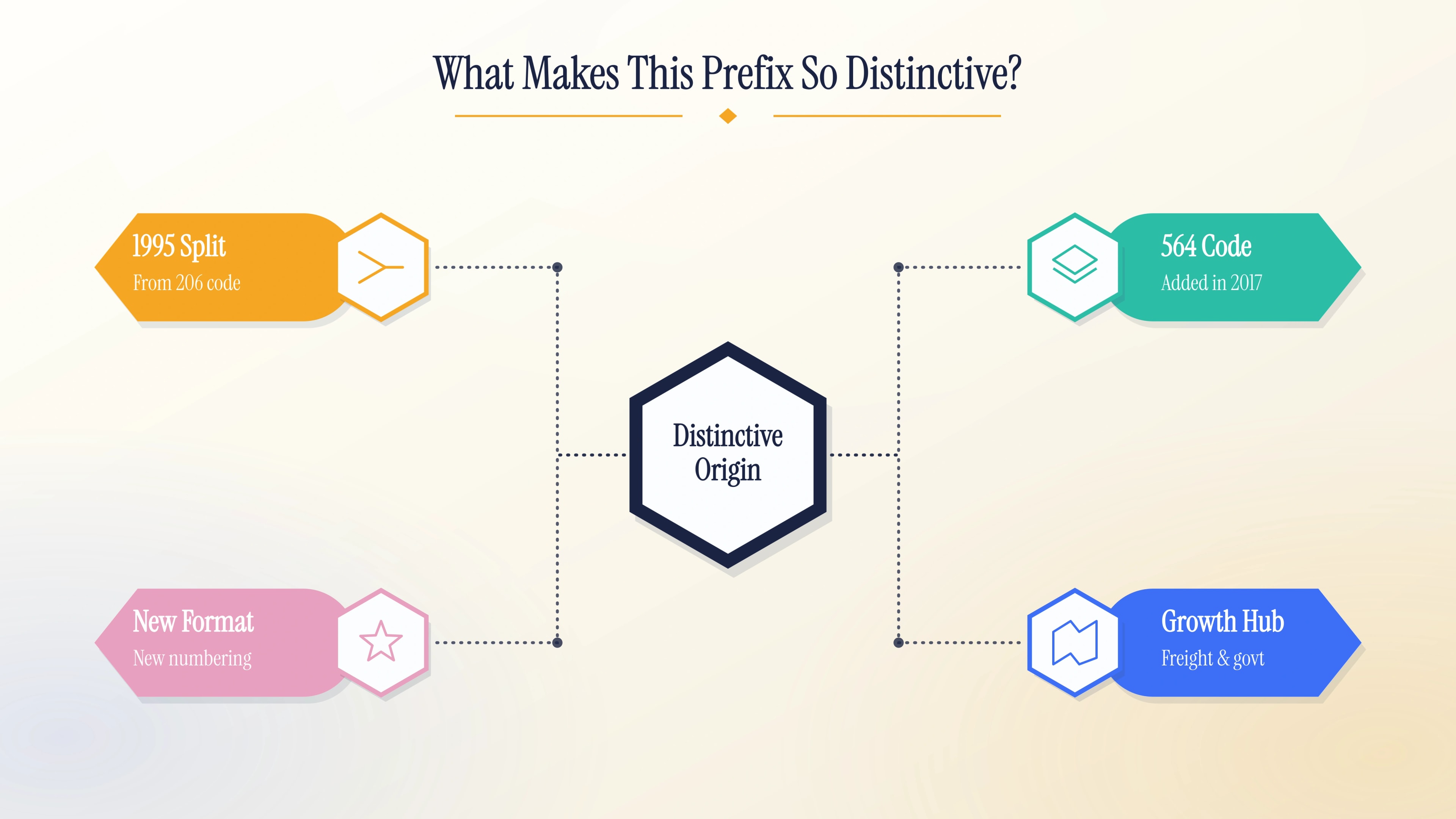
The code was created in 1995 when regulators split the original 206 area code, carving out a new numbering plan area for the fast-growing territory outside Seattle and Tacoma. It was one of the first splits in the country to use a format that broke from the traditional "N0N/N1N" area code pattern, a technical milestone in North American numbering. That history, paired with the corridor's rise as a logistics, government, and manufacturing hub, is part of why the prefix still reads as a marker of an established, homegrown presence.
Footprint, Pacific Time and Ten-Digit Dialing
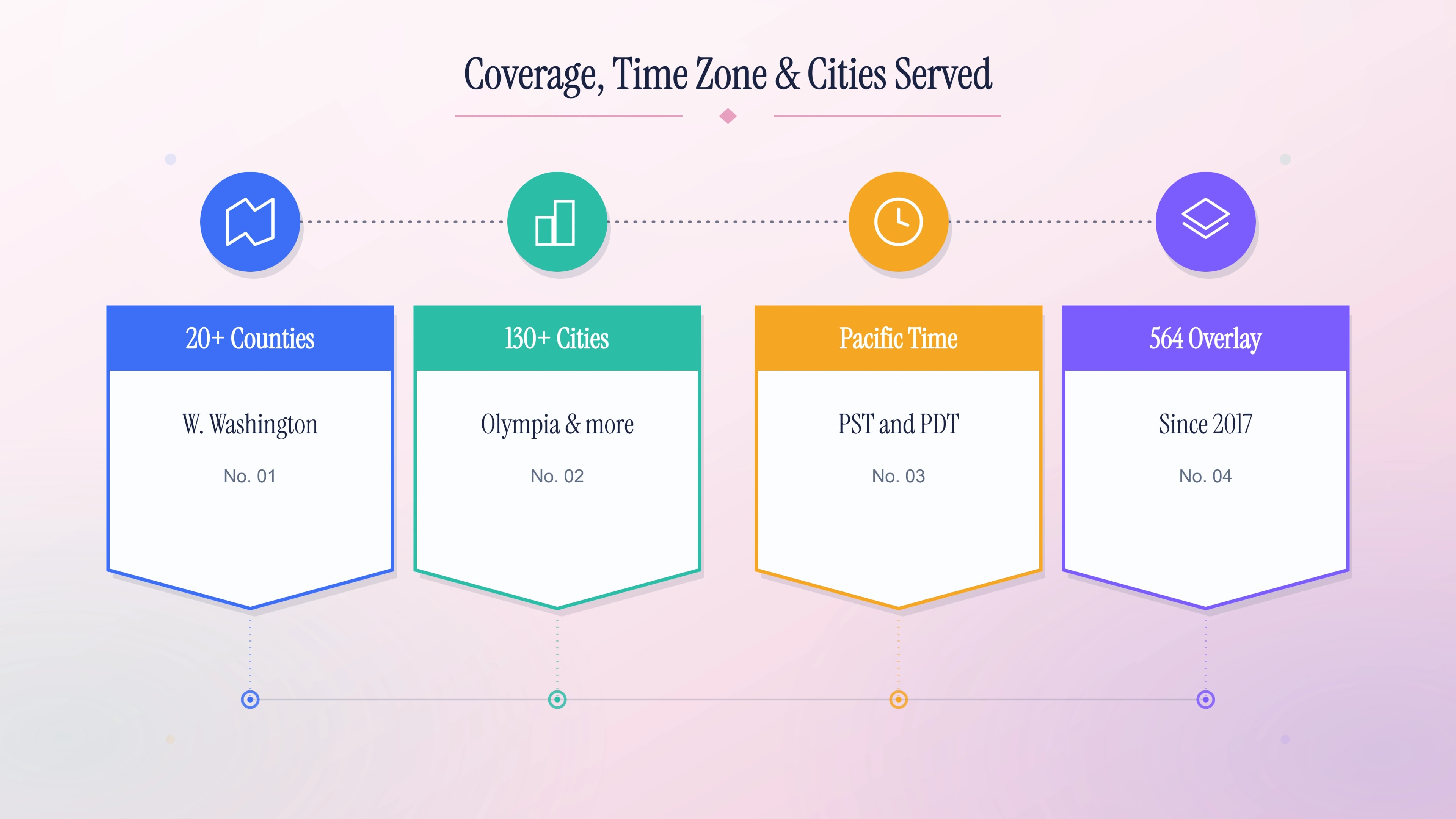
The service territory spans roughly 20 counties and more than 130 cities across Western Washington, stretching from the Canadian border to the Oregon border but excluding the core Seattle-Tacoma metro area. Major cities include Olympia (the state capital), Vancouver, Bellingham, Bremerton, Longview, and Mount Vernon. The entire footprint sits in the Pacific Time zone, observing PST in winter and PDT during daylight saving. Since 2017, the area has shared its territory with the 564 overlay, and both prefixes require ten-digit dialing for every local call.
Business Benefits of a Local Washington Number
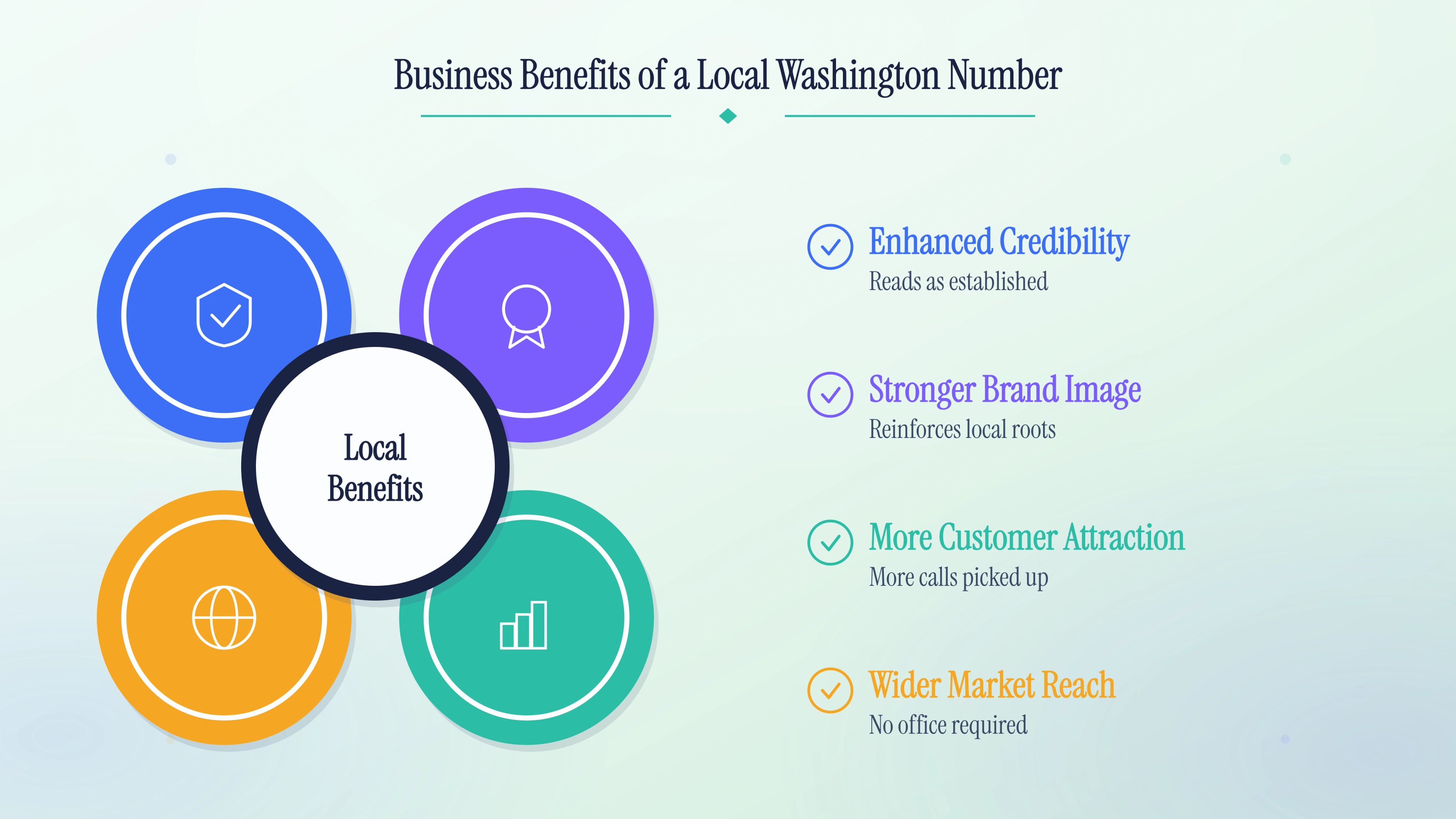
Businesses cite four consistent advantages to carrying a recognizable Western Washington number:
- Outlasts the 564 overlay comparison — 360 has covered this territory since splitting from Seattle's 206 in 1995, well before the newer 564 alternative existed.
- Fits the state-capital and I-5 corridor — a listing in Olympia, Vancouver, or Bellingham shows you serve that stretch, not just the Seattle-Tacoma core.
- Wins over government and logistics callers — outbound calls to the region's public-sector and logistics contacts get answered more often with a familiar prefix.
- Grows with Clark County without an office lease — hold a 360 line anywhere and keep pace with Clark County's population, which topped 542,400 residents in 2025.
Securing a Number While Inventory Keeps Moving
Open inventory across Western Washington never sits still. Numbers are regularly released, ported, or reassigned, so a workable plan beats a fixed wish list of digits. Start with what a provider can activate right away, decide whether a plain sequential number is good enough or a vanity pattern is worth the hunt, and settle early on whether the business needs a 360 number specifically or would accept one from the 564 overlay that shares the territory. A shop in Bremerton or Mount Vernon that stays flexible on the final digits is usually live soonest.
Putting the Line Everywhere Customers Look
A new line only earns its keep once customers in Olympia, Vancouver, and Bellingham actually run into it. Put the same number at the top of the website, on the Google Business Profile, in every email signature, on printed materials, and on the wraps of trucks that work the I-5 corridor. Leaving it in the back office wastes the local signal, and listing it identically everywhere also keeps call-tracking data tidy for the day the business wants to see what the number is producing.
Three Signals That Show Whether the Switch Paid Off
Three signals tell you if the new line is earning its place: the volume of inbound calls from Vancouver, Olympia, and the rest of the territory, the share of those callers who become paying customers, and whether public-sector, logistics, and manufacturing contacts answer outreach sooner than before. After a few months, line those figures up against the old number's record for a comparable period. Most call-tracking tools separate the new line's results automatically, so a Clark County office can read its contribution at a glance.
Ready for a local Washington number?
Acepeak activates 360-area numbers in minutes on a cloud platform — no Washington office required. Explore plans and route calls to any device.
Standard Lines Versus Broker-Sourced Vanity Numbers
The everyday option is a standard 360 line from a cloud phone platform, typically folded into a business plan at a few dollars a month. A vanity sequence bought through a broker sits at the other end of the scale and can cost anywhere from the hundreds of dollars into the low thousands as a one-time purchase, with exact pricing varying by provider. For a logistics company in Longview or a retailer in Olympia, the ordinary local number usually supplies most of the credibility without that premium.
Popular Digit Patterns Get Claimed Quickly
Growth in Clark County and along I-5 means repeating or sequential 360 numbers around Vancouver and Olympia tend to be taken soon after they open up. A business holding out for a specific pattern does best with a provider that sends a notice when one frees up; a business that accepts whatever ending is available is typically set up with little delay. For the neighboring Washington territory, see Acepeak's 509 area code guide, where availability follows much the same pattern.
A Number Cannot Carry Weak Service on Its Own
A buyer at a state office in Olympia or a manufacturer along the I-5 corridor forms a view of a business from much more than its prefix. They look at the website, check whether the branding holds together, and notice how fast someone calls back. If those pieces are strong, a long-established 360 number reinforces the picture of a dependable local operation; if they are weak, the prefix cannot rescue poor service. It does its best work as one part of a well-presented brand, never as a replacement for one.
Reach Beyond Washington: The Global Angle
Cloud routing means a 360 number is not tied to a building in Olympia or Bellingham. A team working from another country can take calls on it and still show Western Washington caller ID to the people it phones. That makes it a practical first step for a company entering the Puget Sound market, which can line up local customers before committing to office space anywhere along the I-5 corridor.
Why Familiar Caller IDs Get Picked Up
Recognition often decides whether the phone gets picked up. Someone in Bellingham or Bremerton who sees the long-established 360 prefix on caller ID is considerably likelier to pick up than when the screen shows an unrecognized region or a toll-free number, since a nearby number looks relevant instead of like a cold contact from nowhere. For sales and outreach teams working the territory between the Oregon and Canadian borders, that difference builds with every dial.
Clark County Growth Keeps Demand High
Clark County, anchored by Vancouver, reached roughly 542,400 residents as of the Washington State Office of Financial Management's 2025 estimate, with the City of Vancouver itself adding about 2,500 residents in a single year. As long as that growth along the I-5 corridor continues, demand for recognizable local numbers in the 360/564 territory is likely to stay elevated rather than fade.
A Head Start Over the Newer Overlay
The 360 prefix had been in use for more than two decades when 564 appeared in 2017, and residents have had that long to associate it with their own towns. Government-services firms, logistics operators, manufacturers, and retailers around Olympia and Longview use it to show they are rooted in the region, which helps with callers who naturally favor a number they recognize over one they do not.
Four Steps From Provider Search to Activation
Getting a line in this territory usually takes four steps. Shortlist providers that actually hold 360 numbers, check their live inventory for the pattern you have in mind, price a standard number against a vanity option, and confirm the exact number before it is switched on. If an existing number is coming over from another carrier, plan on several business days before that port is finished.
Keeping Your Number and Going Live Within a Week
Moving to a new provider does not cost a Vancouver or Bellingham business the number its customers already recognize. Federal protections cover the port, and a provider needs a documented cause before it can delay a valid transfer. A Clark County firm ready to proceed can request pricing, choose from the 360 lines still open, and expect service to be running inside a single business week.
Still Worth the Price After Three Decades
Western Washington's primary telephone prefix has grown alongside the I-5 corridor since splitting from Seattle's original code three decades ago, and it still functions as shorthand for a genuine regional presence. From its 1995 origins to today's ten-digit dialing alongside the 564 overlay, it has adapted to a territory anchored by growing communities like Vancouver and Olympia. For a business deciding between a local number and an unfamiliar one, the modest cost of the former is a small price for the credibility it buys with Western Washington customers.
Add a local Washington number to your business
Explore virtual number options through Acepeak and get a Western Washington line activated today.
Questions, answered.
The territory covers more than 130 cities across roughly 20 counties in Western Washington, including Olympia, Vancouver, Bellingham, Bremerton, Longview, and Mount Vernon.
No, but the two share identical geography through an overlay introduced in 2017. Both can be dialed and received anywhere within the shared territory, and every local call requires all ten digits.
Pacific Time — PST (UTC−8) in winter, shifting to PDT (UTC−7) during daylight saving, which runs from the second Sunday in March to the first Sunday in November.
Yes. Cloud communications providers issue virtual numbers in this territory to businesses located anywhere, and calls route through the standard telecom network while presenting a local Western Washington identity to callers.
A standard number typically costs a few dollars monthly through a business phone plan, while a distinctive vanity sequence sourced through a number broker can cost anywhere from roughly $150 to several thousand dollars as a one-time fee, depending on demand.
Consumers can report suspected scam or spoofed calls directly to the FCC and FTC, both of which track patterns of abuse tied to specific number ranges and can direct carriers to block confirmed offenders.
Signing up for a 360 area code number takes minutes with a cloud phone provider — no local office in Western Washington required. Pick the number, connect it to your existing phone or app, and calls route in immediately. This keeps the 360 area code presence you already have while adding the local credibility Washington customers respond to.