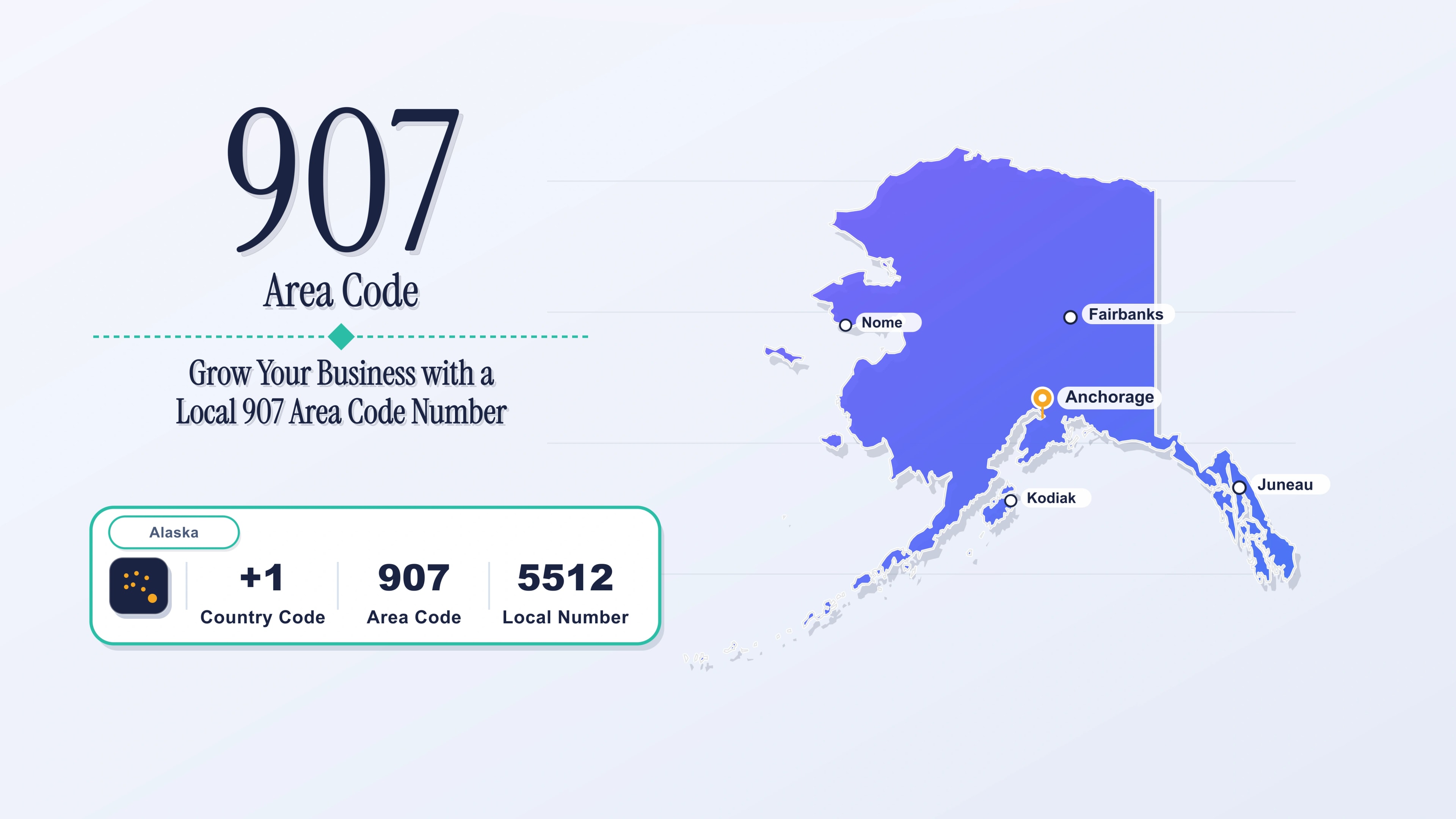
The Only Area Code Alaska Has Ever Had
A 907 area code number signals that a business is genuinely part of Alaska, not an out-of-state operation routing calls through a distant office. Because it is the only area code the entire state has ever used, one line reads as authentically local from Anchorage to the most remote village. This guide covers what makes the prefix unique, the statewide territory it serves, what a number costs, and how any business can secure one.
Key Takeaways
- The 907 area code is the sole area code serving all of Alaska since 1957, with no overlay in place.
- A local prefix builds credibility and trust with Alaska-based customers and partners.
- Costs vary by number type; most providers bundle it into a broader phone system plan.
- Availability of standout sequences can be limited, so checking inventory regularly helps.
- It supports statewide reach without requiring a physical office in every city.
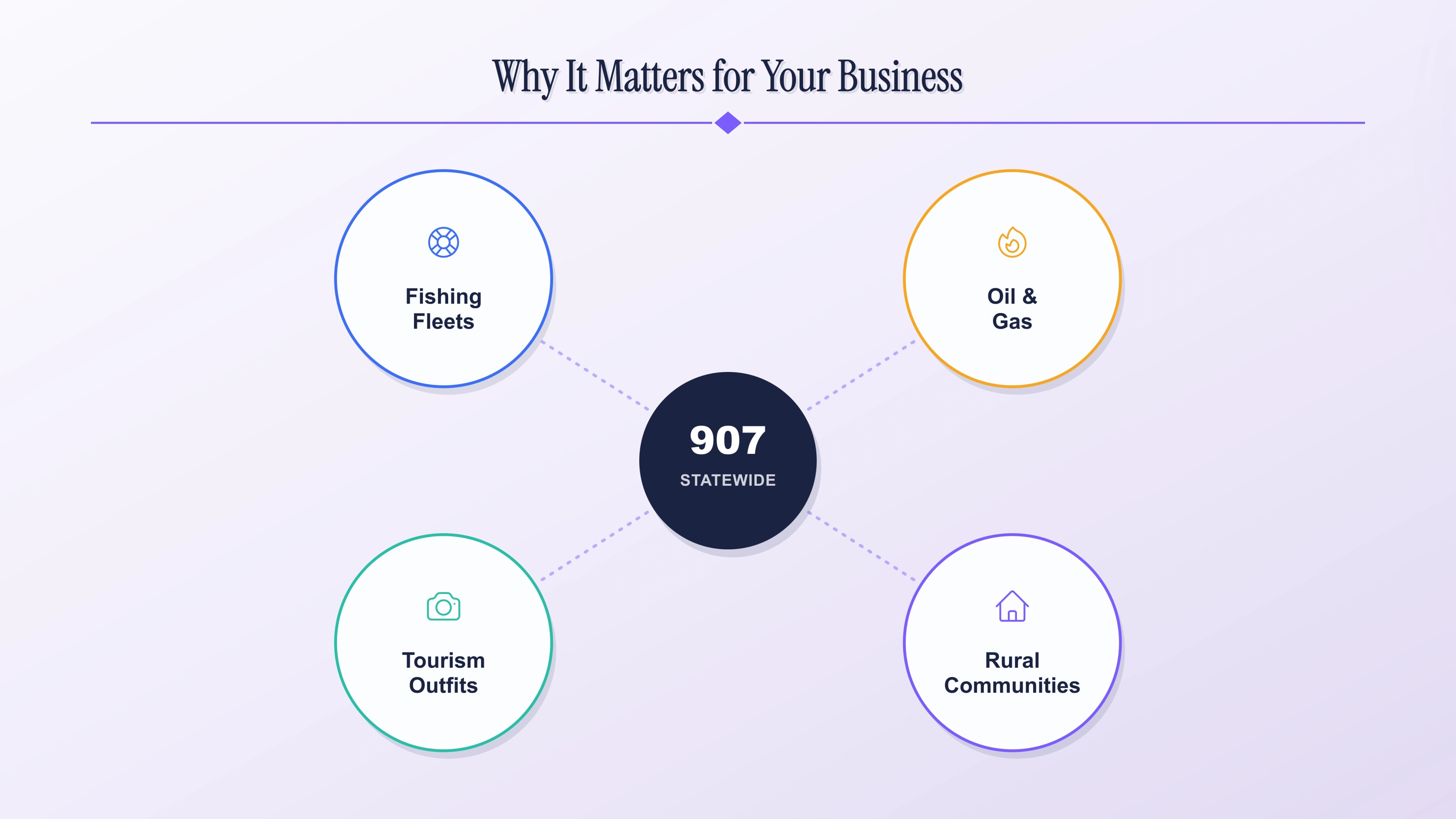
Why It Matters for Your Business
A 907 area code number signals that a business is genuinely part of Alaska, not an out-of-state operation routing calls through a distant office. For companies serving fishing fleets, oil and gas operations, tourism outfits, or rural communities spread across the state, that local identity often decides whether a call gets answered. A recognizable prefix gives customers an immediate, low-friction reason to trust the business on the other end of the line.
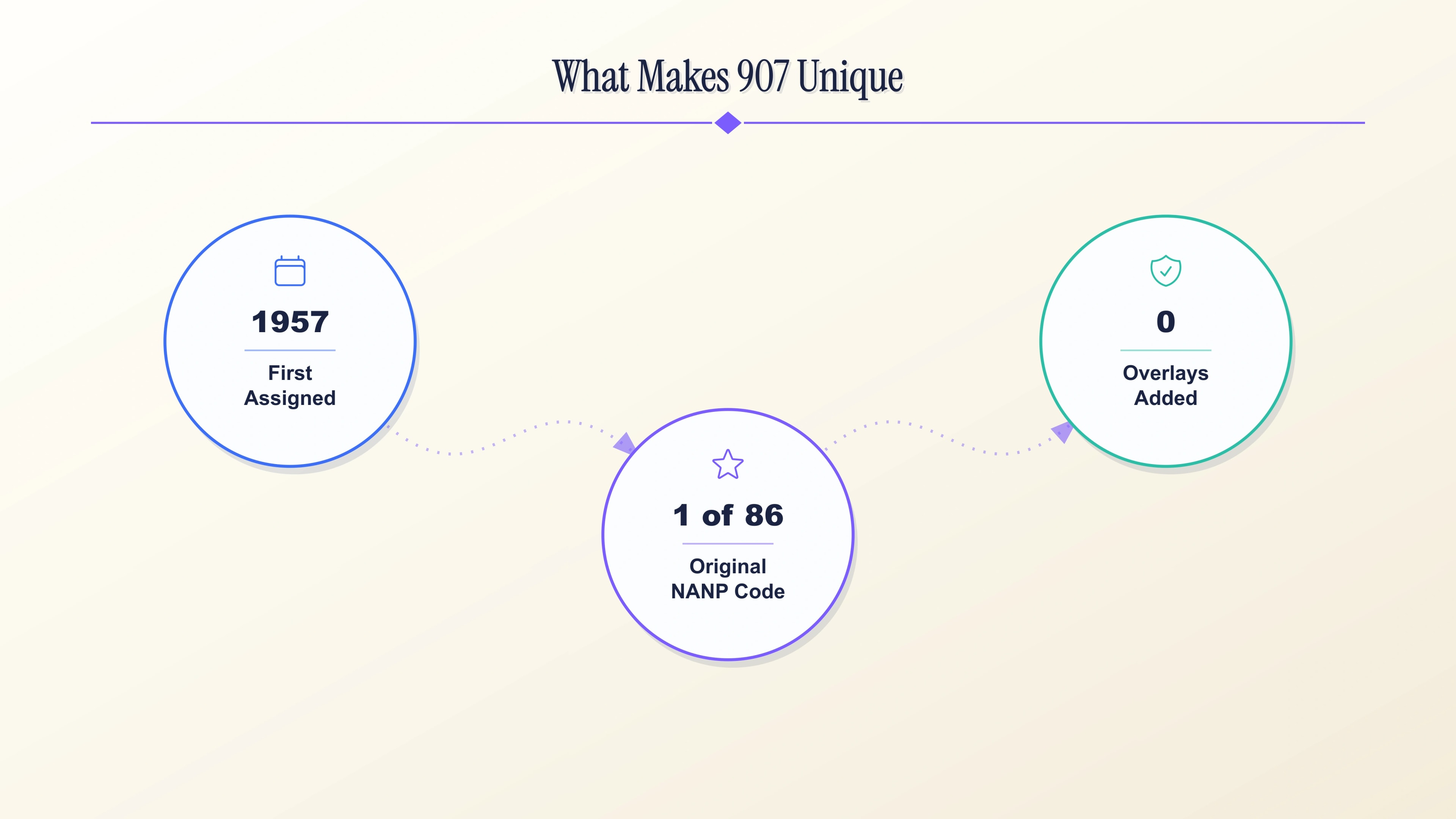
What Makes 907 Unique
Assigned by AT&T in 1957, 907 is one of the original North American area codes and is still the only one covering the entire state of Alaska — no overlay has ever been introduced. That single-code coverage is unusual: most states with similar land area or population growth have split into multiple codes over the decades. A handful of low-population states keep the same arrangement — Wyoming's 307 area code is another single-code example — but few cover as much ground on one prefix. For a business, this means one prefix reads as authentically local anywhere from Juneau to Utqiagvik, without needing a second line for a different region.
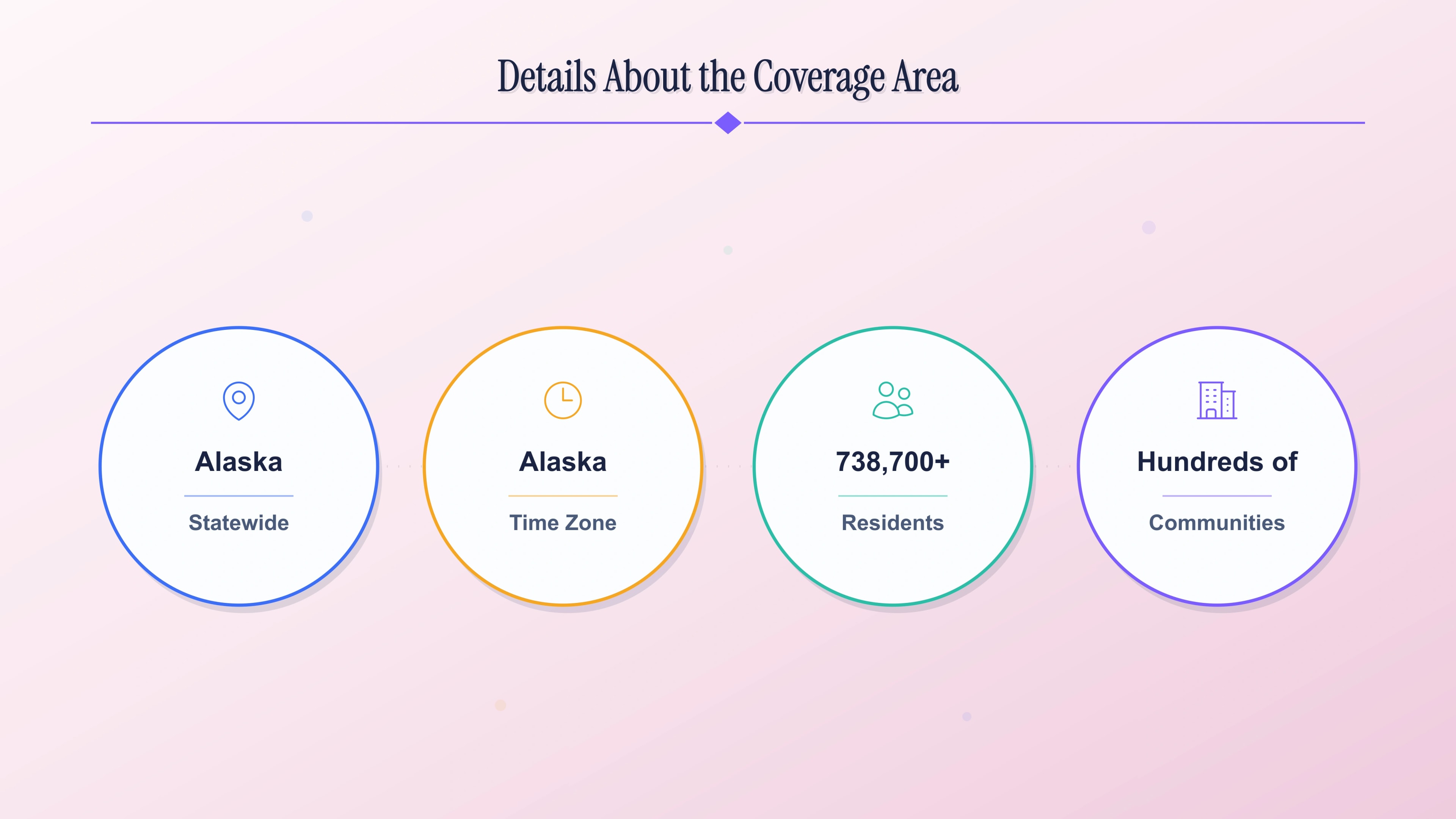
Alaska Time, 738,700 Residents and Hundreds of Towns
- State: Alaska
- Time zone: Alaska Time (AKST, UTC-9 / AKDT, UTC-8)
- Population served: approximately 738,700 residents as of 2025
- Cities served: Anchorage, Fairbanks, Juneau, Wasilla, Kenai, Kodiak, Sitka, Ketchikan, Homer, Valdez, Nome, Bethel, and hundreds of smaller communities statewide
How This Prefix Can Benefit Your Business
Choosing this option is less about the digits themselves and more about what they signal to a customer deciding whether to pick up the phone or place an order.
Enhances Credibility
A 907 line signals a business understands the fishing, oil and gas, and tourism seasons that drive Alaska's economy — details that matter more here than in most markets.
Improves Brand Image
Pairing a 907 number with consistent branding puts a newer business in the same frame as the fishing cooperatives and logistics firms that have run on this prefix since 1957.
Attracts More Customers
Customers from Anchorage to Bethel are more likely to answer or return a call from the state's one familiar prefix than from an unfamiliar long-distance number.
Expands Market Reach
It lets a company serve all of Alaska's roughly 738,700 residents, from Fairbanks to Ketchikan, without opening a second office in any single community.

Strategies for Acquiring a 907 Area Code
Businesses have a few practical paths to secure one, each with different tradeoffs in speed and cost.
Purchase an Available Number
Work with a phone provider that carries an active inventory of 907 numbers and can port it to a chosen service without downtime, often as part of a broader business phone plan.
Check Availability Regularly
Demand for standout combinations can outpace supply, so checking a provider's inventory on a regular cadence improves the odds of finding a strong match.
Weigh the Cost Against the Benefit
Pricing typically ranges from a nominal monthly fee to a higher one-time cost for a premium or vanity sequence — worth comparing against the credibility gained.
Stay Flexible on the Exact Digits
If a specific sequence isn't available, staying open to alternate combinations keeps the search moving instead of stalling a launch.
Integrating It into Marketing
A local prefix earns the most value when it's visible everywhere a customer might look — the website header, email signatures, print materials, and local directory listings. Featuring it prominently, alongside Alaska-specific messaging, reinforces that the business understands the state's seasonal rhythms and regional differences, from the interior to the coastal communities.
Measuring the Impact
Tracking call volume, inbound lead sources, and customer feedback after adopting a local line shows whether the presence is paying off. Businesses that review these metrics quarterly can adjust marketing spend toward the channels driving the most local engagement.
The Cost of Getting One
Pricing depends on whether it's a standard line or a memorable, premium sequence. Providers typically bundle it into a broader cloud phone system plan rather than charging for the digits alone, which keeps the total cost predictable for a growing team.
The Availability Challenge
Because 907 is the only area code for the entire state, easy-to-remember sequences can be scarce, particularly for Anchorage-area prefixes. Businesses that check availability often and stay flexible on format have the best chance of locking one in before a competitor does.
Sounding Like an Established Alaska Operation
A local prefix is one of the simplest ways to project professionalism before a customer even reaches a live person. Combined with a clean voicemail greeting and consistent hold messaging, it helps a small team sound like an established Alaska operation.
The Statewide Reach It Offers
Because Alaska's communities are spread across a vast, sparsely connected geography, a single line lets a business appear equally local to a customer in Anchorage and one in a remote village hundreds of miles away — a reach few other regional prefixes can offer.
The Practical Impact on Customer Trust
Callers tend to answer and re-engage more readily with numbers that match their own region. A recognizable local prefix removes a small but real hesitation that an out-of-state number can create, especially for first-time callers.
The Future Outlook
As Alaska's population edges upward and its resource, tourism, and logistics sectors continue evolving, demand for these numbers is expected to hold steady. Unlike many faster-growing states, Alaska has not needed an overlay code, and current projections don't point to one arriving soon — much like North Dakota's 701 area code, another statewide prefix that has stayed a single code for decades. That is a rare degree of stability for businesses planning long term.
The Statewide Standing of the 907 Area Code
Few area codes cover as much geography and as many distinct industries as this one.
- Historical Roots: As one of the original area code assignments activated in 1957, it carries decades of continuous use tied directly to Alaska's identity.
- Tied to Established Businesses: Long-standing Alaska businesses, from fishing cooperatives to logistics firms, commonly operate on this prefix, giving newer businesses a familiar frame of reference.
- A Signal of Regional Commitment: Adopting a local line tells partners and customers that a business is genuinely invested in serving Alaska, not just passing through.
- Recognized Beyond the State: Because 907 maps to the entire state rather than a single city, it's widely recognized as shorthand for "Alaska" in a way few three-city-split codes are.
Cities and Communities Served
The footprint covers Alaska's major hubs — Anchorage, Fairbanks, Juneau, Wasilla, and Kenai — along with hundreds of smaller communities across the interior, the coast, and the Aleutians, giving one line reach across nearly the entire state.
Securing a Line From a Single Statewide Pool
- Research providers. Confirm the provider actually holds Anchorage-area 907 inventory, since that's where standout sequences run scarcest statewide.
- Check availability. Revisit listings regularly — with no overlay ever introduced, the entire state draws from one shared numbering pool.
- Evaluate costs. Compare a nominal monthly fee for a standard line against the higher one-time cost of a premium sequence bundled into a broader plan.
- Secure it. Once a suitable option is found, complete porting or activation promptly, since a single statewide code leaves less inventory to fall back on.
The State of Alaska serves a population of roughly 738,700 residents spread across the entire state — a reminder that even a modestly sized state can support a single, statewide prefix that still feels genuinely local to every community it touches.
Ready to establish an Alaska presence?
Compare providers, confirm availability, and get a 907 number routing calls statewide from a modern cloud phone setup.
A Small Change With an Outsized Effect in Alaska
A 907 area code number is a small change with an outsized effect on how Alaska customers perceive a business. It signals local commitment, supports statewide reach across a famously spread-out geography, and pairs naturally with a modern cloud phone setup that keeps costs predictable as a team grows. Businesses ready to establish that local presence should compare providers, confirm availability, and move quickly once the right sequence is found.
Questions, answered.
It's the only area code assigned to the entire state of Alaska, in use since 1957.
No — Alaska has used 907 as its sole area code since it was introduced, with no overlay added.
Costs vary from a modest monthly fee for a standard line to a higher price for a premium or vanity sequence, often bundled into a broader phone plan.
Yes, most providers can assign and port a local number to any business, regardless of physical location, though local presence adds credibility.
Activation timelines vary by provider, but many can provision a number within a few business days, with full porting sometimes taking longer.
A local prefix signals Alaska-based presence, while a toll-free number signals broader national reach — many businesses use both together.
Signing up for a 907 area code number takes minutes with a cloud phone provider — no local office in Alaska required. Pick the number, connect it to your existing phone or app, and calls route in immediately. This keeps the 907 area code presence you already have while adding the local credibility Alaska customers respond to.