One Code for the Port, the Campus and the Tech Parks
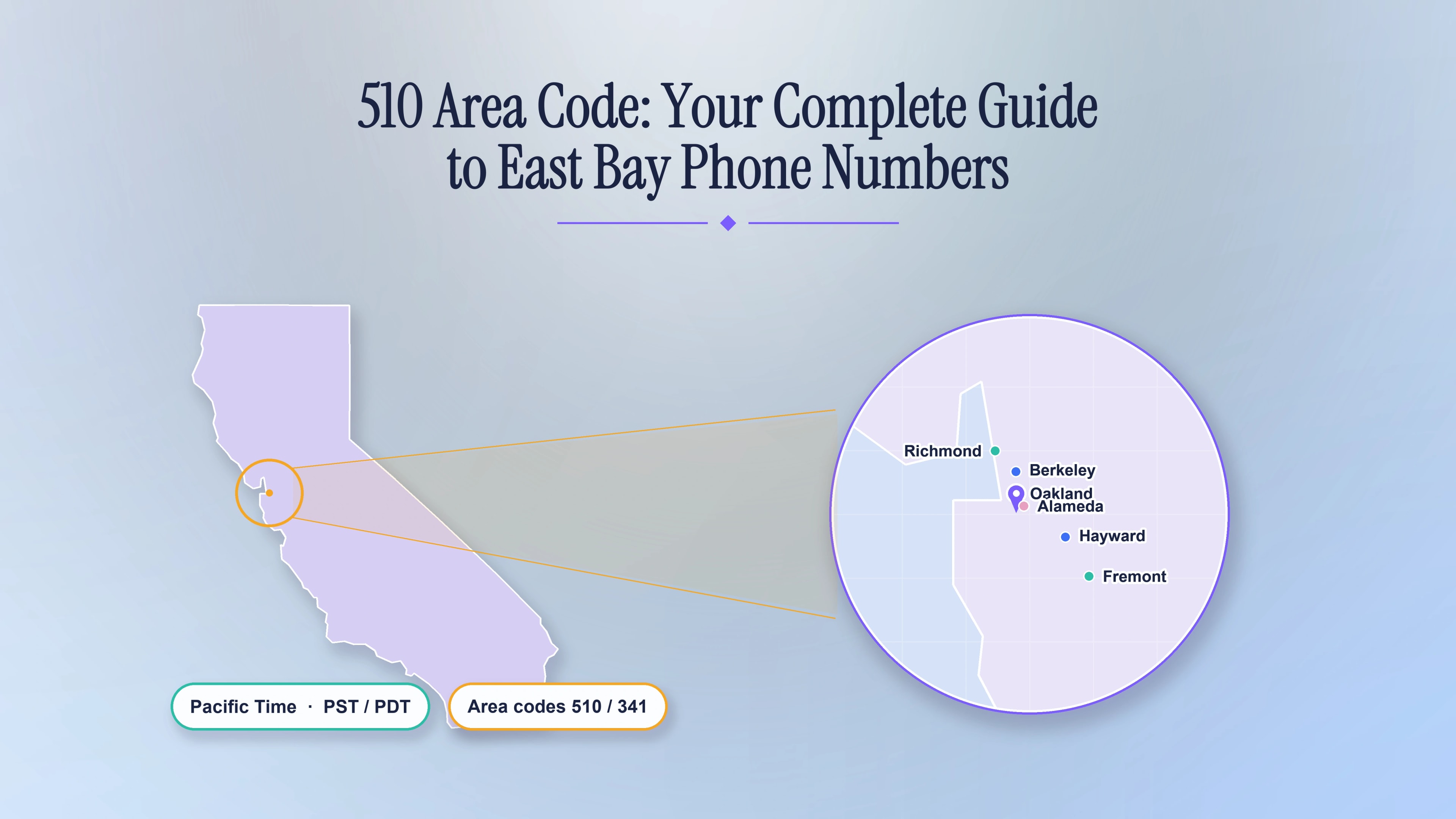
Few Northern California prefixes carry the cultural weight of the one stamped across Oakland murals, Berkeley bookshops and Fremont tech parks. It reaches the port city of Oakland, the university town of Berkeley and a dense band of cities along the eastern shore of San Francisco Bay. Born in the early 1990s, the prefix has weathered a major split, an overlay and the mobile era, and it remains one of the most recognizable local identities in the Bay Area. This guide explains where it truly reaches, how it has changed, why it still matters for business, and what is coming next.
Key Takeaways
- The 510 prefix serves the western East Bay — Oakland, Berkeley, Fremont, Hayward, Alameda and more — and was created on September 2, 1991 as a split from San Francisco's 415.
- In 1998 the inland East Bay split away as 925 along the Berkeley Hills, so cities such as Walnut Creek, Concord and Pleasanton belong to 925, not this prefix.
- The 341 overlay arrived in July 2019, sharing the same geography and making ten-digit dialing mandatory across the region.
- The entire area sits in the Pacific Time Zone (PST/PDT) and observes daylight saving time.
- A local East Bay number still lifts answer rates and signals neighborhood trust for businesses across Oakland and the wider region.
What Is the 510 Area Code?
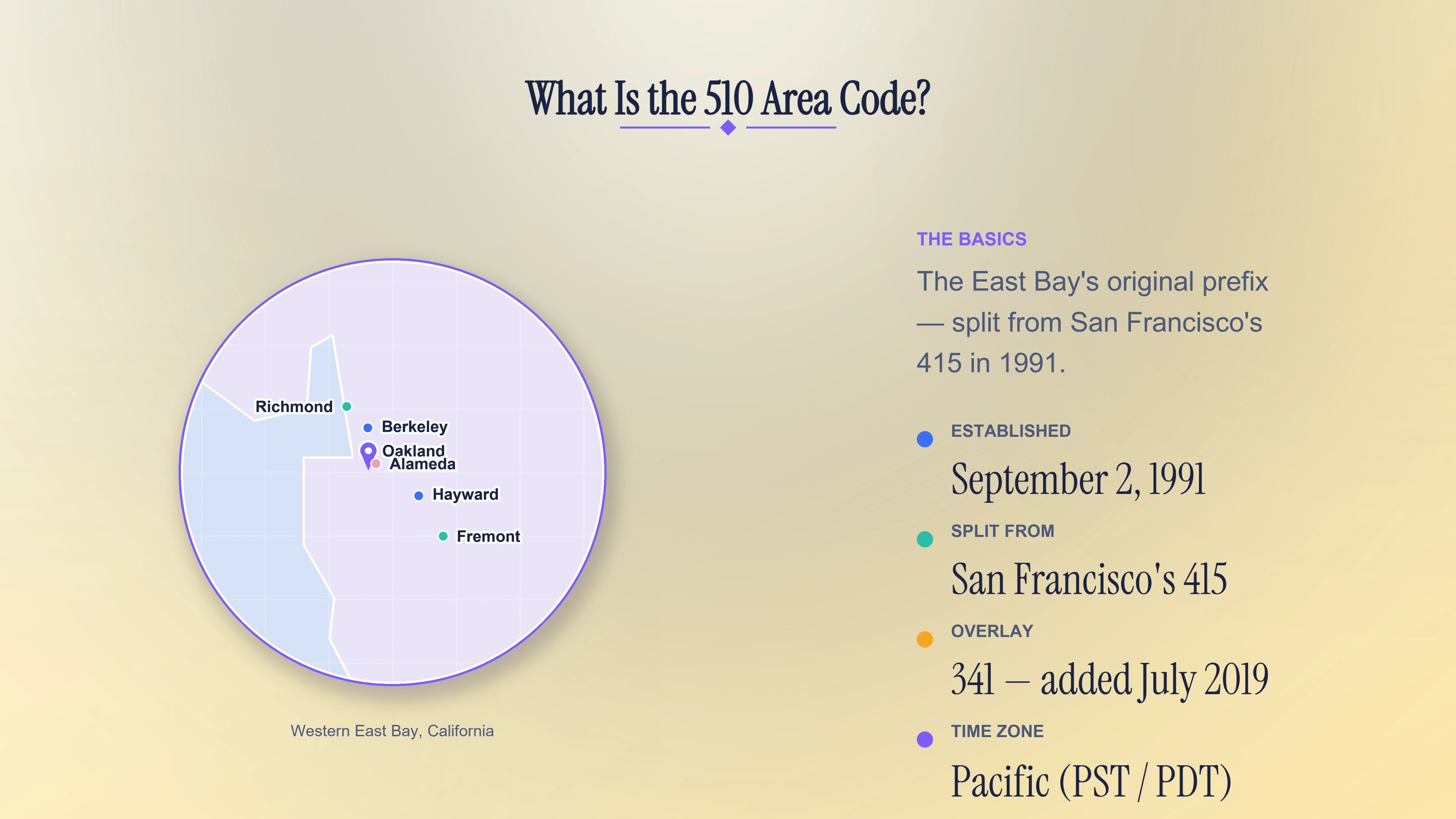
The prefix is a child of the Bay Area's busiest code. It was carved out on September 2, 1991, when it split from San Francisco's original 415 code — the same parent that later spun off the Peninsula's 650 area code — to relieve a region that was running out of numbers. At first it covered the entire East Bay, from the Richmond shoreline down through Fremont and out across the inland valleys, before later growth trimmed that territory to its modern footprint.
Today the code is firmly tied to the western East Bay. It identifies a caller as part of the Oakland–Berkeley community — a quiet but real credibility signal in a region where local presence carries weight.
The Shoreline Cities and the Ones Lookup Sites Misplace
The prefix covers western Alameda County and the western edge of Contra Costa County, along the bay side of the Berkeley Hills. The major cities include:
- Oakland, Berkeley and Alameda
- Fremont, Hayward and San Leandro
- Richmond, San Pablo and El Cerrito
- Union City, Newark, Castro Valley, Emeryville, Albany, Piedmont, Pinole and Hercules
One common mix-up is worth clearing up: several cities often listed with this prefix are not part of it. San Francisco sits in the 415/628 region, San Jose and Sunnyvale belong to Silicon Valley's 408/669 codes, and the inland East Bay — Walnut Creek, Concord, Dublin, Livermore and Pleasanton — moved to 925 in 1998. Many phone-lookup sites still list those cities incorrectly, so anyone choosing a number for a specific city should confirm the boundary first.
The Splits and Overlay of 510
The original territory shrank in one decisive step. On March 14, 1998, the inland East Bay was split off as area code 925, with the Berkeley Hills serving as the dividing line — almost everything west of the hills stayed put, while everything east of the ridge took the new code. Rather than carve the map again, regulators later chose an overlay, the same approach the South Bay used when it layered the San Jose 669 code over 408.
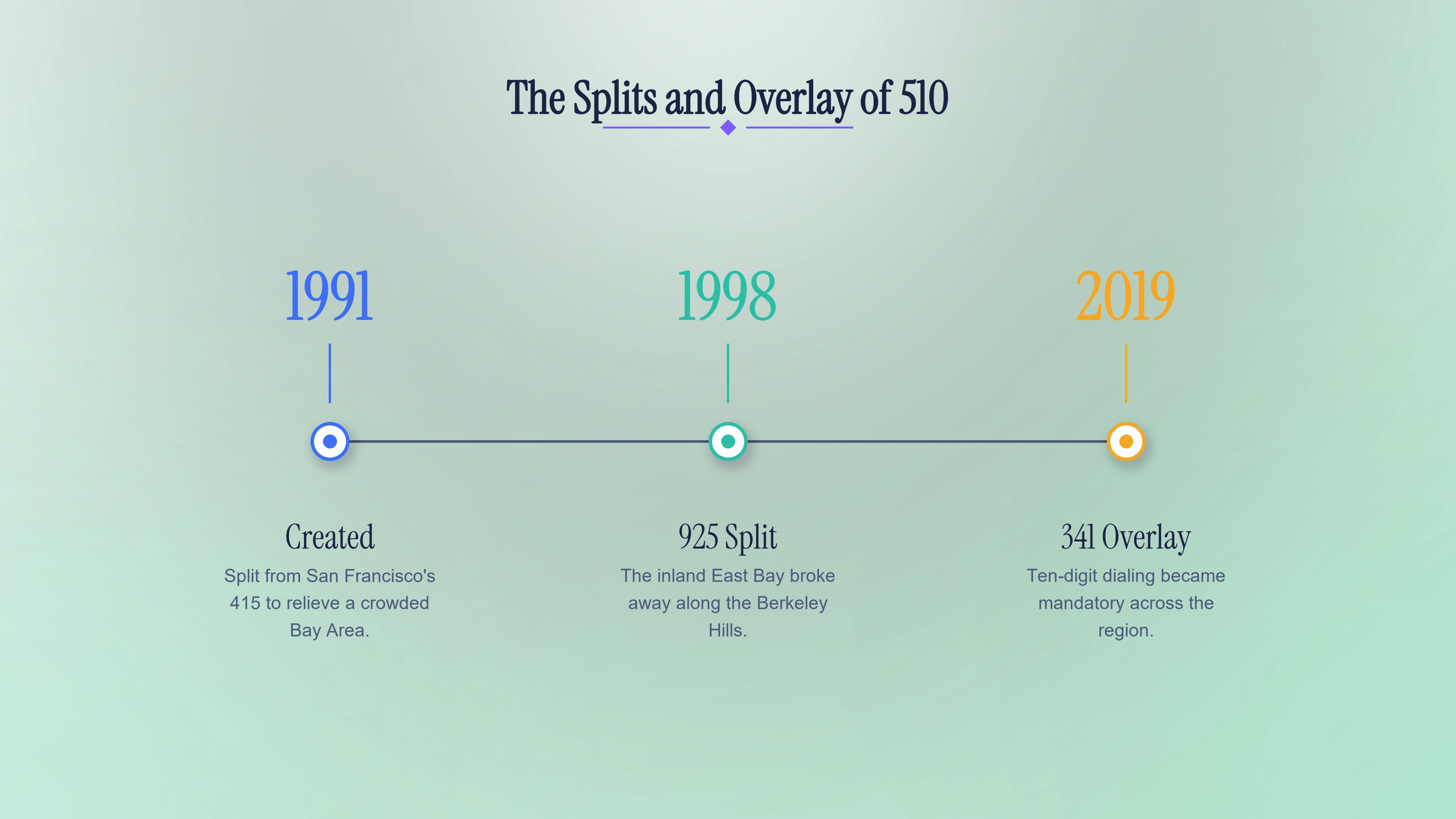
That overlay is 341, which began covering the same western East Bay ground as 510 in July 2019. Two codes on one map meant the end of seven-digit local calls: since June 22, 2019, East Bay callers have put the area code in front of every local number, even for a call across the street. Existing 510 numbers stayed exactly as they were.
Three Hours Behind the East Coast, Ten Digits Every Call
From Richmond to Fremont, the East Bay keeps Pacific Time: UTC-8 (PST) in winter and UTC-7 (PDT) from March to November. An eastern office wrapping up its day, three hours ahead, can still reach Oakland businesses in the early afternoon. Since the 341 overlay arrived, even local calls need all ten digits:
- Local and regional calls: dial all ten digits — 510-555-1234.
- Long-distance from elsewhere in the U.S.: add a leading 1 — 1-510-555-1234.
- International: dial the exit code, then +1, then the number — +1 (510) 555-1234.
Benefits of a 510 Number for Business
Customers in Hayward, San Leandro or Richmond tend to read a 510 caller ID as someone from their own side of the bay. For an East Bay business, that recognition is an easy way to earn trust before anyone speaks, and it keeps the call from looking like a far-off call center.
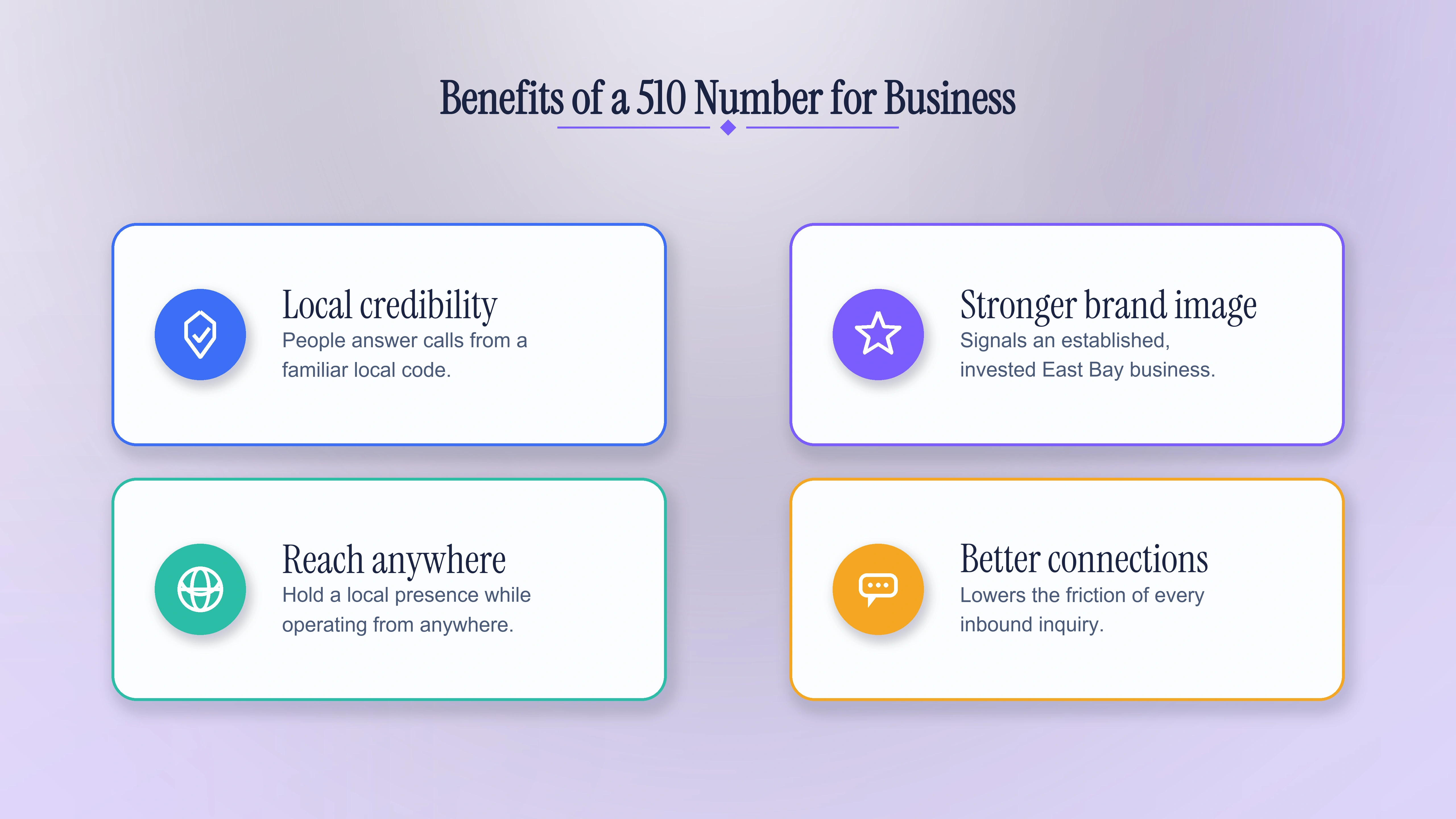
- Local credibility: an Oakland or Berkeley customer answers a 510 call faster than one from an unfamiliar prefix.
- East Bay-specific reach: a 510 number ties a business to Fremont and Hayward, not the pricier 415 city core or the inland 925 suburbs across the hills.
- Reach anywhere: cloud calling lets a company hold a 510 line while operating from anywhere, no Oakland office required.
- Overlay-proof presence: because 341 shares the same East Bay ground as 510, either digit string still reads as fully local.
Ready to claim an East Bay presence?
Acepeak provisions local numbers with carrier-grade routing and instant activation, so a business can sound local from day one.
How to Get a 510 Phone Number
New numbers for Oakland, Berkeley and Fremont come from both 510 and 341, and one desk or a full team is set up the same way:
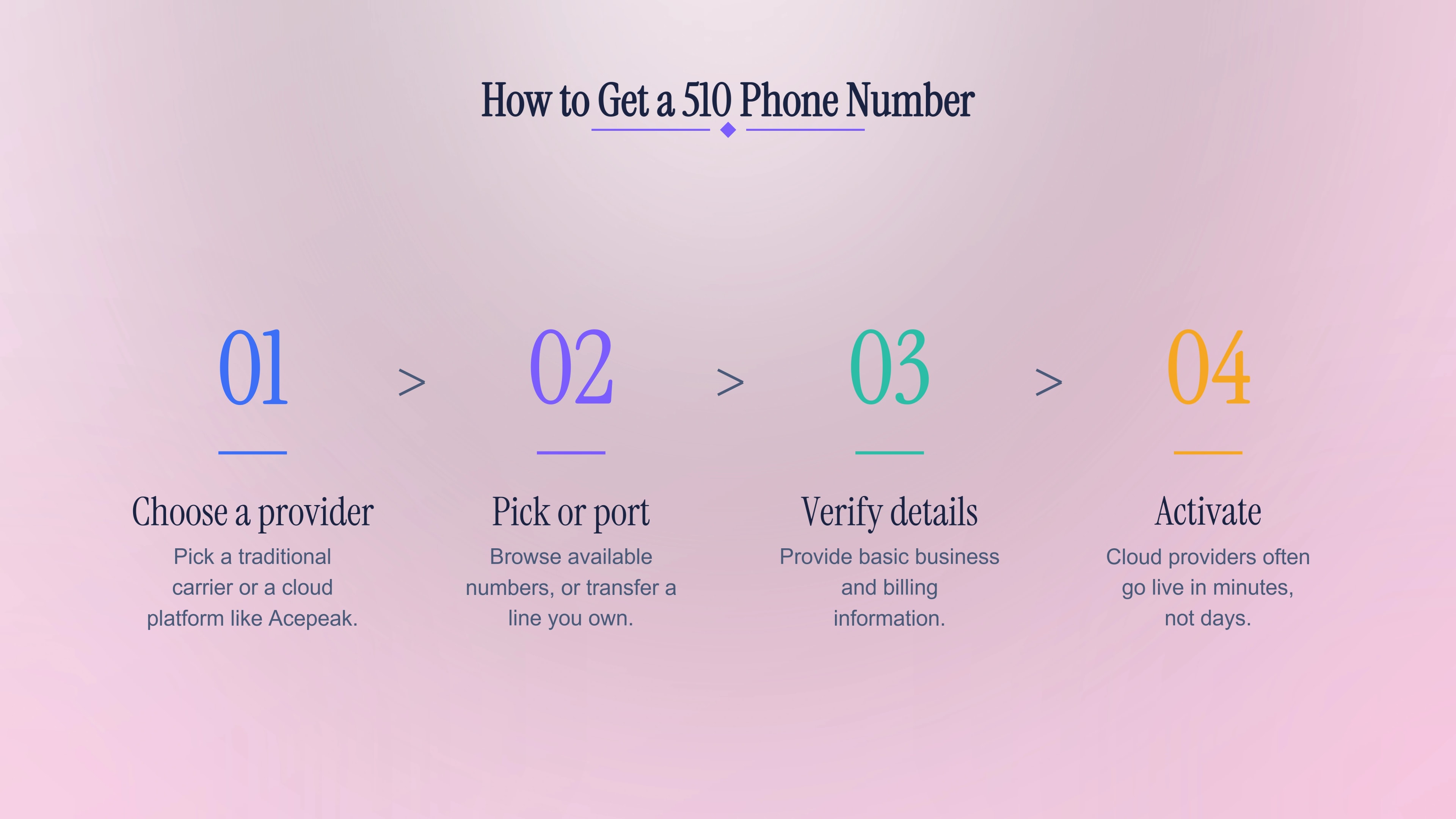
- Choose a provider: pick a cloud platform like Acepeak or a traditional carrier that can provision a number inside the 510/341 overlay footprint.
- Pick or port a number: browse East Bay inventory across Oakland, Berkeley and Fremont, or transfer an existing local line.
- Verify details: provide basic business and billing information.
- Activate: cloud providers often go live within minutes, well ahead of a traditional carrier's turnaround.
Spoofed Calls That Borrow Both Local Codes
A faked 510 or 341 caller ID can make a stranger look like an Oakland or Berkeley neighbor, and since the overlay made both codes local, neither proves who is calling. Before responding:
- Never share sensitive details — bank information or a Social Security number — with an unexpected caller.
- Verify urgent requests by hanging up and calling back on an official, published number.
- Use call-blocking and spam-filtering tools to screen unknown numbers.
- Report suspicious calls to the provider or the relevant authorities so others are protected.
The Future of the 510 Prefix
With the 341 overlay now in place, the East Bay has room to grow without another disruptive split, and existing numbers stay exactly as they are. The California Public Utilities Commission oversees how new numbers are released across the state's overlays and keeps a close watch on supply. For residents and businesses the takeaway is simple: the local identity is secure, and demand for a recognized East Bay number is only growing.
Local Credibility That Survived a Split and an Overlay
The East Bay's code signals a place as clearly as it connects a call, tying a business to one of California's most creative and entrepreneurial regions. Since splitting from 415 in 1991, 510 has handed its inland cities to 925, gained the 341 overlay in 2019 and kept its standing through the mobile era. For a company, an Oakland-area number is a low-cost, convincing sign of local roots, and cloud calling puts that presence within reach of a business based anywhere.
Put a trusted East Bay number to work today.
Acepeak delivers local lines with smart routing, voicemail and 24/7 support — everything a business needs to stay reachable.
Questions, answered.
It covers the western East Bay of California — western Alameda County and part of Contra Costa County — including Oakland, Berkeley, Fremont and Hayward.
The inland East Bay (Walnut Creek, Concord, Dublin, Livermore, Pleasanton) uses 925, San Francisco uses 415, and San Jose and Sunnyvale use 408/669 — not this prefix.
Yes. Since the 341 overlay made it mandatory on June 22, 2019, every local call in the region needs all ten digits.
It is an overlay added in July 2019 that covers the same East Bay geography as 510, issuing new numbers while existing ones stay unchanged.
Yes. Cloud and hosted phone services let a business or individual hold a local East Bay number from anywhere while keeping a local identity.
Signing up for a 510 area code number takes minutes with a cloud phone provider — no local office in Oakland required. Pick the number, connect it to your existing phone or app, and calls route in immediately. This keeps the 510 area code presence you already have while adding the local credibility California customers respond to.