Bellevue, Redmond and the Answer-or-Voicemail Moment
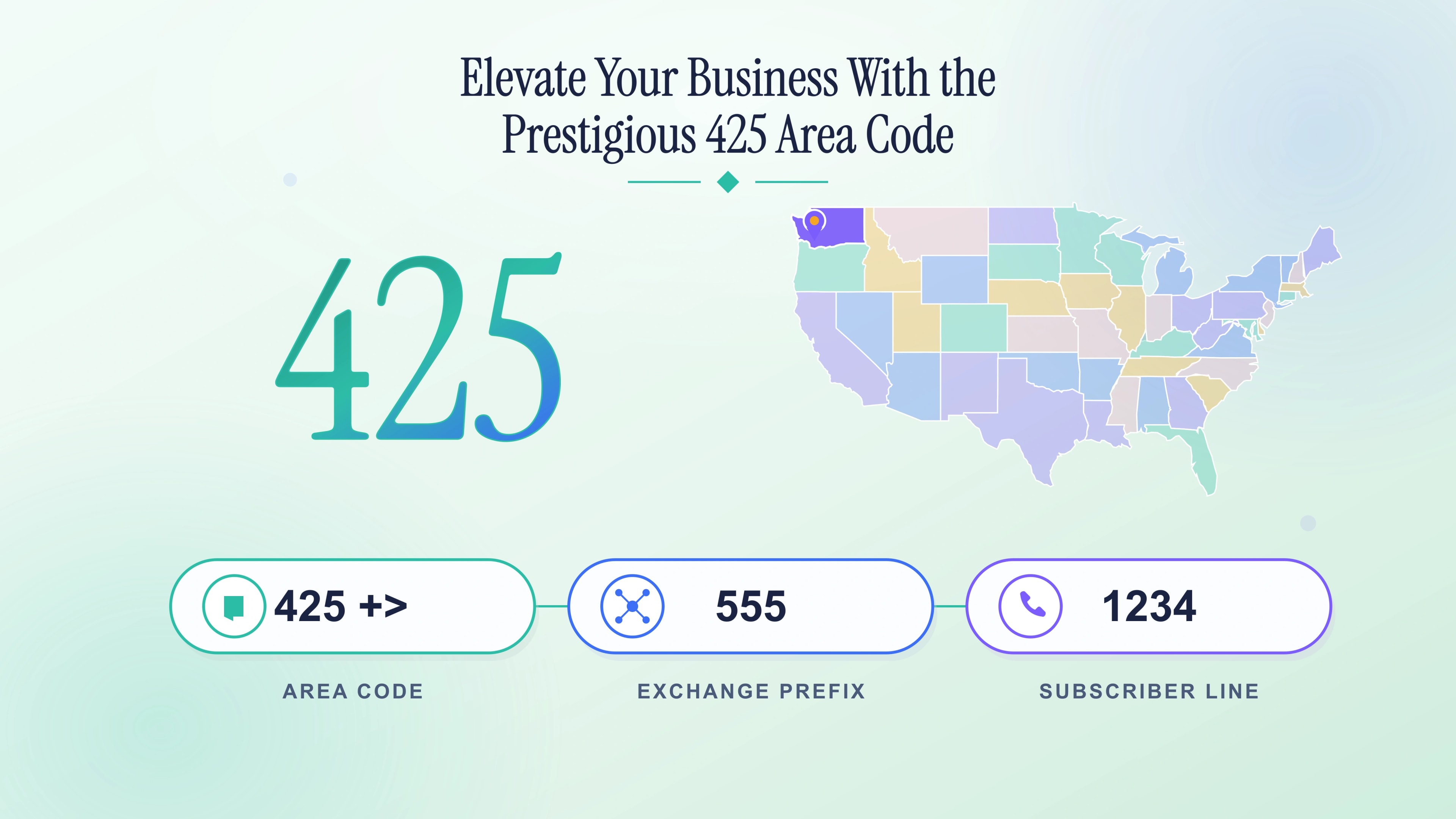
For any company building a presence east of Seattle, the 425 area code is one of the most valuable three-digit assets in Washington State. It covers the fast-growing Eastside — home to Bellevue, Redmond, Kirkland and Everett — a corridor packed with technology employers, established firms and affluent consumers. A local number in this region tells customers that a brand belongs to the Puget Sound community, and that single impression often decides whether a call gets answered or sent to voicemail. This guide covers where the prefix reaches, how it began, why it carries weight, and how to keep a line safe.
Key Takeaways
- The 425 prefix serves Seattle's Eastside and South Snohomish County, including Bellevue, Redmond, Kirkland, Renton and Everett.
- It went into service on April 27, 1997 in a three-way split of 206 — not in the 1947 origins of the numbering plan, a common misconception.
- The region sits in the Pacific Time Zone, and 564 is designated as its eventual overlay.
- A local line builds trust and lifts answer rates without the cost of a physical Eastside office.
- Cloud phone platforms make it simple to get, port and manage a number from anywhere.
What Makes the 425 Area Code So Special?
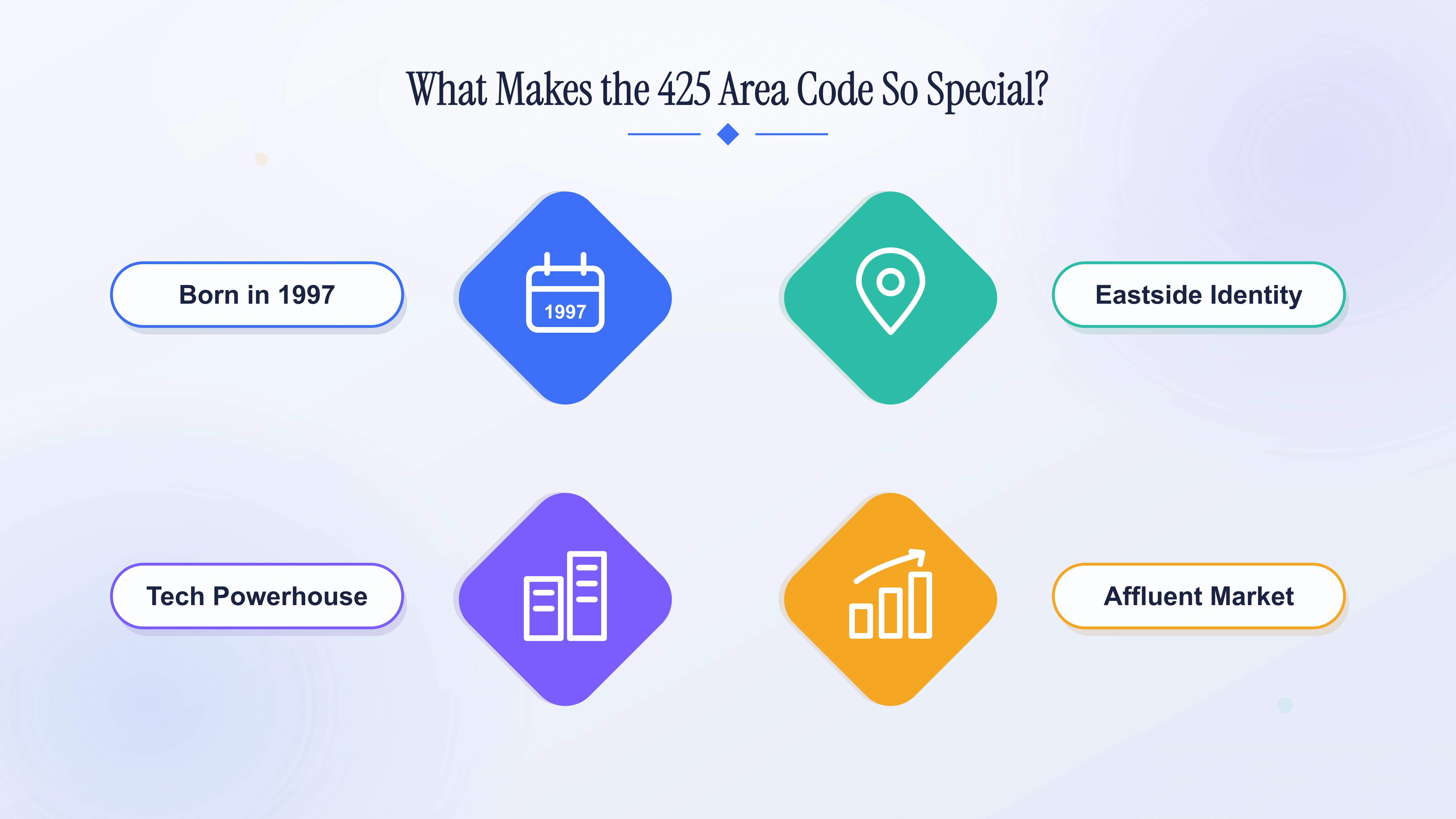
The prefix owes its cachet to geography rather than age. It was introduced on April 27, 1997, when the booming Puget Sound region ran short of numbers and regulators split area code 206 three ways: 206 stayed with Seattle, 253 went south to Tacoma, and the new code landed on the Eastside and the southern Snohomish County suburbs. The split was driven by explosive demand from cell phones, pagers and fax machines, and a permissive-dialing period ran until November 16, 1997, after which the new code became mandatory.
That timeline matters, because the prefix is often marketed as an original code assigned by AT&T. In reality, Washington's true 1947 code was 206, which once covered the entire state before decades of splits carved it down. The Eastside identity, not any 1940s heritage, is what gives this newer prefix its pull — much as the 310 area code anchors West Coast prestige in Los Angeles. With Microsoft in Redmond, T-Mobile in Bellevue and Amazon just across the water in Seattle, the territory carries a median household income above $100,000, making it one of the wealthier calling regions in the country and a magnet for businesses that want to look at home among them.
Key Details About the 425 Area Code
A quick reference for anyone weighing a number in this region:
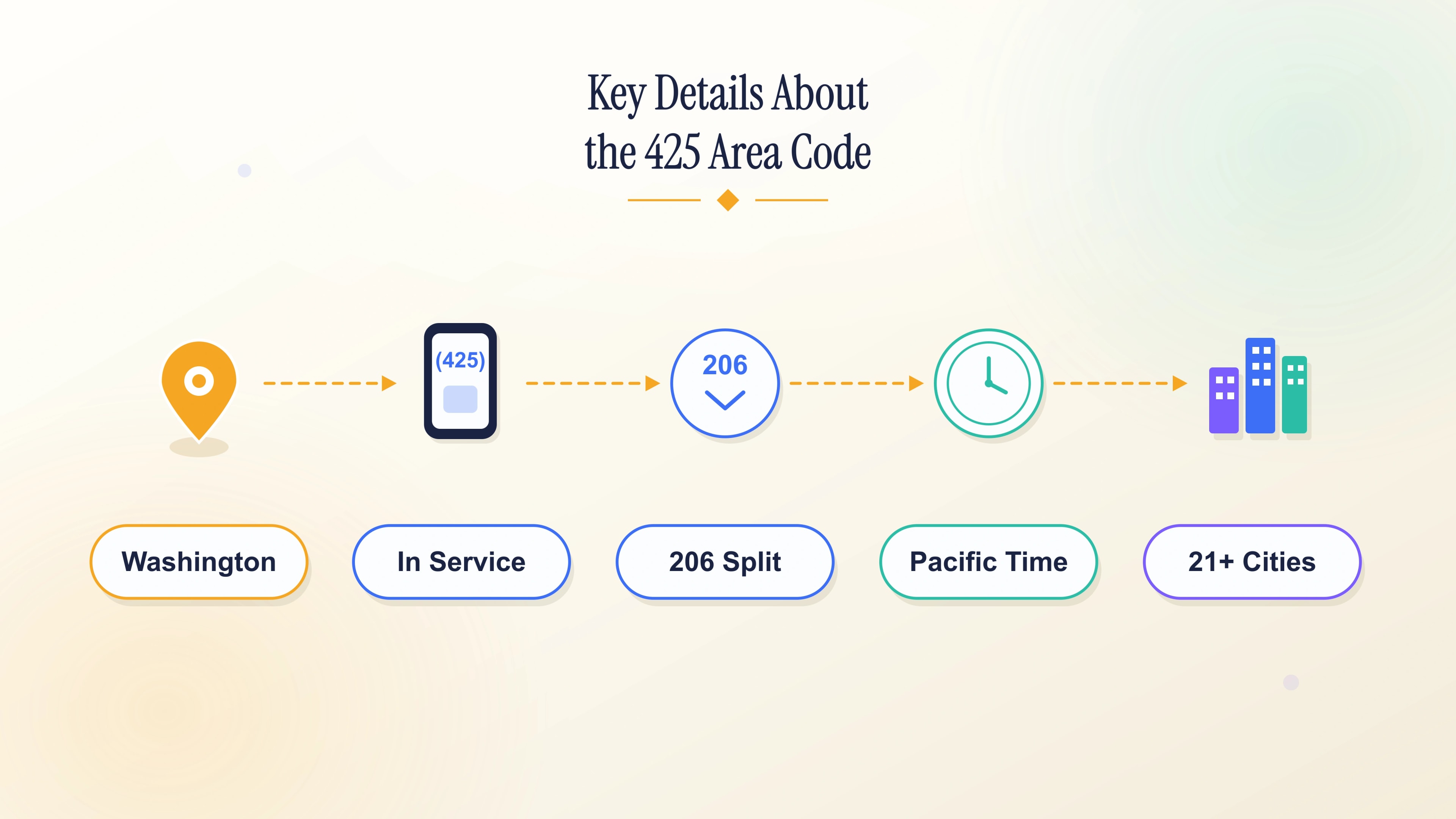
- State: Washington
- Time zone: Pacific (UTC−8, shifting to UTC−7 during daylight saving)
- In service since: April 27, 1997
- Created by: a three-way split of area code 206
- Cities served: Bellevue, Redmond, Kirkland, Everett, Renton, Bothell, Sammamish, Issaquah, Kenmore, Edmonds, Lynnwood, Mill Creek, Mukilteo, North Bend, Maple Valley, Duvall, Carnation, Fall City, Lake Stevens, Snoqualmie and Woodinville
The territory stretches east to North Bend, north to Everett and south toward Maple Valley, wrapping the eastern shore of Lake Washington and reaching into Snohomish County. It is one of six numbering plan areas in Washington, sitting alongside the 206 area code in Seattle, plus 253, 360, 509 and the newer 564.
How a 425 Number Benefits Your Business
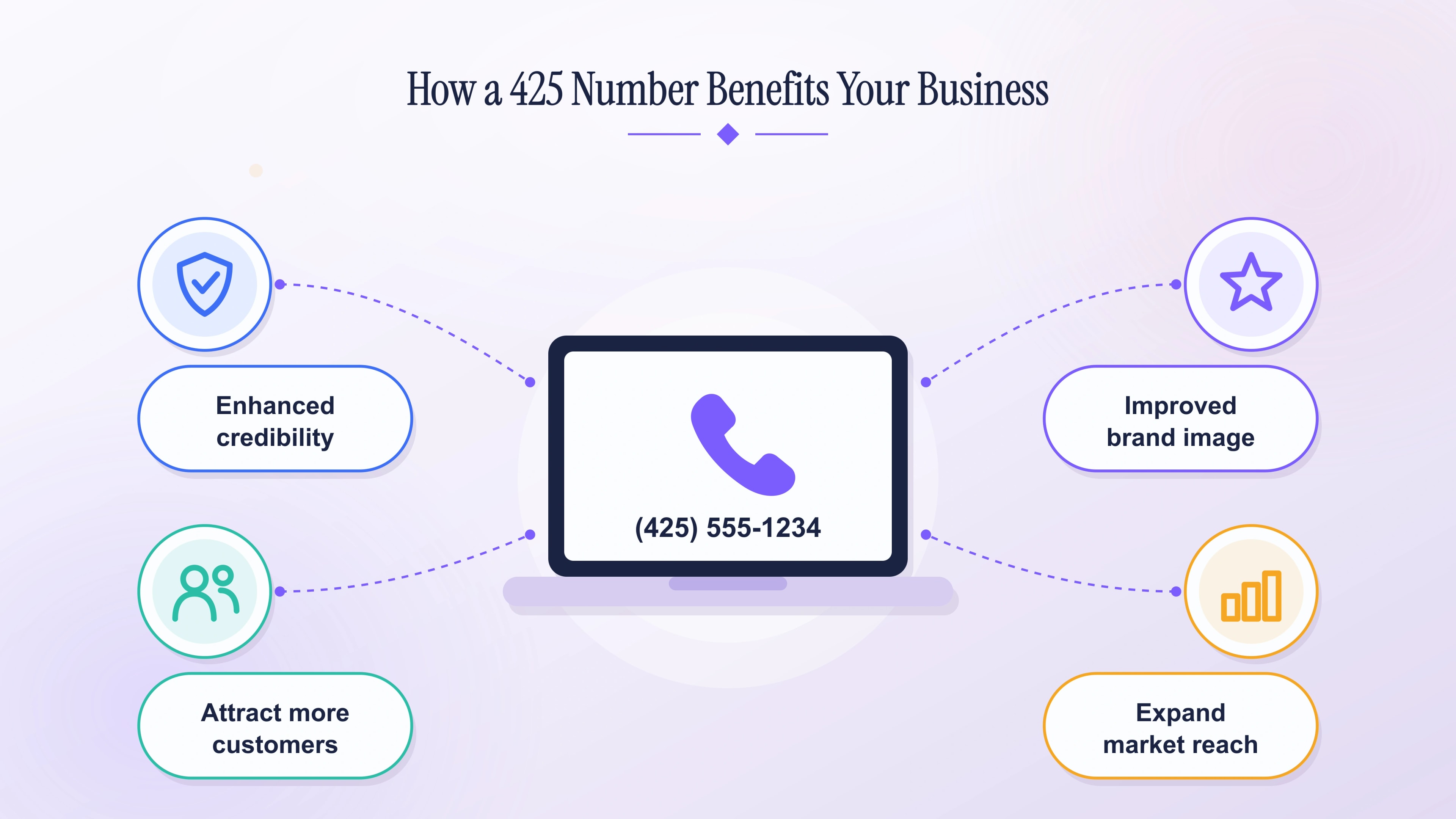
A recognizable local line does more than route calls. Four advantages stand out for companies serving the Eastside.
A number built for a six-figure market
The Eastside's median household income sits above $100,000, and a 425 line tells that audience a business is planted in the same corridor as Microsoft and T-Mobile rather than calling in from somewhere unfamiliar.
Borrowed weight from the tech corridor
Redmond and Bellevue anchor one of the most innovation-dense stretches of the country, and a matching prefix lets a company sit alongside that reputation instead of the older, statewide 206 identity next door.
Higher pickup from North Bend to Lynnwood
A 425 caller ID reads as a neighbor from Kirkland to Everett to Snoqualmie, cutting through the hesitation an out-of-area number now triggers, and a cloud platform can activate that identity for a team based anywhere in minutes.
Headroom under one prefix
With roughly eight million numbers available in the numbering plan area and 564 designated as the future overlay, a company can add lines across the Eastside for years without renumbering or new hardware.
Ready to sound local in Bellevue?
Acepeak activates Eastside numbers in minutes, with call routing, voicemail, and analytics included.
How to Get a 425 Number
Securing the right number is straightforward with the correct approach, and the process breaks down into a few clear steps.
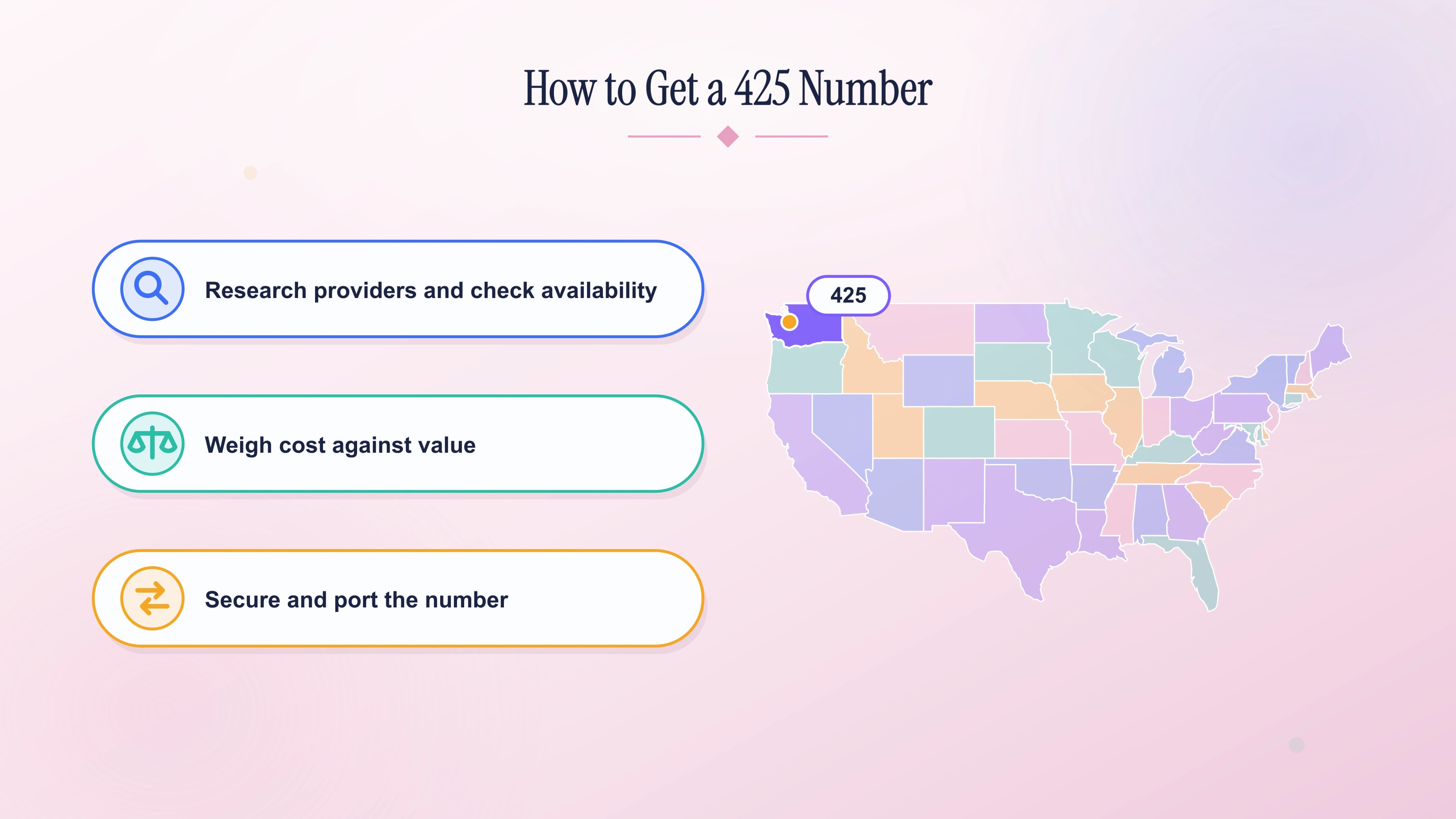
Confirm inventory across the Eastside footprint
Check that a provider actually holds numbers spanning Bellevue, Redmond, Kirkland, and Everett rather than a generic Washington block, since availability tightens fastest on the clean, easy-to-recall sequences within the region's roughly eight-million-number pool.
Weigh the cost against the Eastside premium
Compare upfront and monthly pricing, keeping in mind that vanity sequences in a market with a six-figure median income tend to command more of a premium than in less affluent numbering plan areas. A standard line still delivers most of the credibility benefit.
Reserve it and port cleanly
Once a suitable 425 number is found, reserve it quickly, then follow the provider's porting steps to move any existing line over with no downtime — typically completed within a few business days, the same timeline used across Washington's other numbering plan areas.
What a 425 Number Costs
Pricing varies widely by number type and provider. A standard local line on a cloud platform is inexpensive, often bundled into a low monthly plan alongside calling, messaging and voicemail features. Sought-after or vanity combinations command a premium, and resale prices for rare numbers can climb higher still. The practical question is not the sticker price but the return: weigh the modest monthly cost against the credibility, stronger brand image and higher answer rates a local Eastside line can deliver.
For a company targeting the region, that math usually favors buying in. Many providers also let a business run several numbers or campaign-specific lines under one plan, spreading the cost while keeping every touchpoint local.
Availability and the Future
Because demand across the Eastside stays high, the most memorable combinations can be scarce, especially clean, easy-to-recall sequences. Even so, the prefix remains an anchor for the region. It is currently the sole geographic code for its territory, with 564 designated as the eventual overlay for western Washington once the local number pool tightens — the same overlay approach already introduced elsewhere in the state. Each numbering plan area can hold roughly eight million numbers, and the steady shift from landlines to mobile and cloud lines keeps drawing on that pool.
As Bellevue, Redmond and the wider Eastside keep growing, a number tied to this corridor should hold its appeal for years. Businesses that secure one now benefit from its lasting recognition in a market that keeps expanding, and from the stability of a code that is not going anywhere.
Staying Safe: Spotting Scam Calls
A trusted local code is also a target. Scammers spoof familiar prefixes so their calls appear local, then impersonate banks, delivery services or government agencies to pressure people into sharing money or personal details. The tactic works precisely because a nearby-looking number lowers people's guard. Treat unsolicited calls with caution, never hand over sensitive information on an inbound call, and verify anything urgent by hanging up and dialing the organization's official number.
Suspicious activity can be reported through the FTC's fraud reports, which helps regulators track patterns nationwide. For a business, publishing one clear, consistent number protects both its customers and its reputation.
A Shortcut to Trust Across the Puget Sound Market
The Eastside prefix is more than a string of digits — it is a shortcut to local trust in one of the country's most dynamic regions. Knowing where it reaches, how it began and why it carries weight helps any business decide whether a Seattle-area number belongs in its communication strategy. Cloud platforms have removed the old barriers, so claiming a line takes minutes and pays off in stronger recognition, better answer rates and a lasting connection to the Puget Sound market.
Claim your Eastside presence
Talk to Acepeak about a local Washington number and see how quickly a professional line can lift your brand across the region.
Questions, answered.
It serves the suburbs north and east of Seattle in Washington State, known collectively as the Eastside, along with South Snohomish County. Major cities include Bellevue, Redmond, Kirkland, Renton and Everett, and the whole region sits in the Pacific Time Zone.
It went into service on April 27, 1997, as part of a three-way split of area code 206 that also created 253 for the Tacoma area. Despite marketing that suggests otherwise, it was not one of the original 1947 numbering-plan codes — that distinction belongs to 206.
It is a legitimate geographic code for western Washington. However, scammers can spoof any prefix to appear local, so a matching caller ID alone is not proof of a genuine local caller. Verify unexpected or urgent calls before acting.
Yes. Cloud phone services let any business or individual claim a local Eastside line and route calls to any device, anywhere, with no physical office in the region required. Setup usually takes minutes.
Ten-digit dialing is the standard across western Washington, so include the full number when calling locally. Long-distance calls add a leading 1, and international calls use +1 before the ten digits.
Seattle proper uses 206, Tacoma and the south metro use 253, and 564 is the overlay expanding across western Washington. Together these prefixes cover the Puget Sound area, with the Eastside code specifically tied to the suburbs east and north of the city.
Signing up for a 425 area code number takes minutes with a cloud phone provider — no local office in Seattle Eastside required. Pick the number, connect it to your existing phone or app, and calls route in immediately. This keeps the 425 area code presence you already have while adding the local credibility Washington customers respond to.