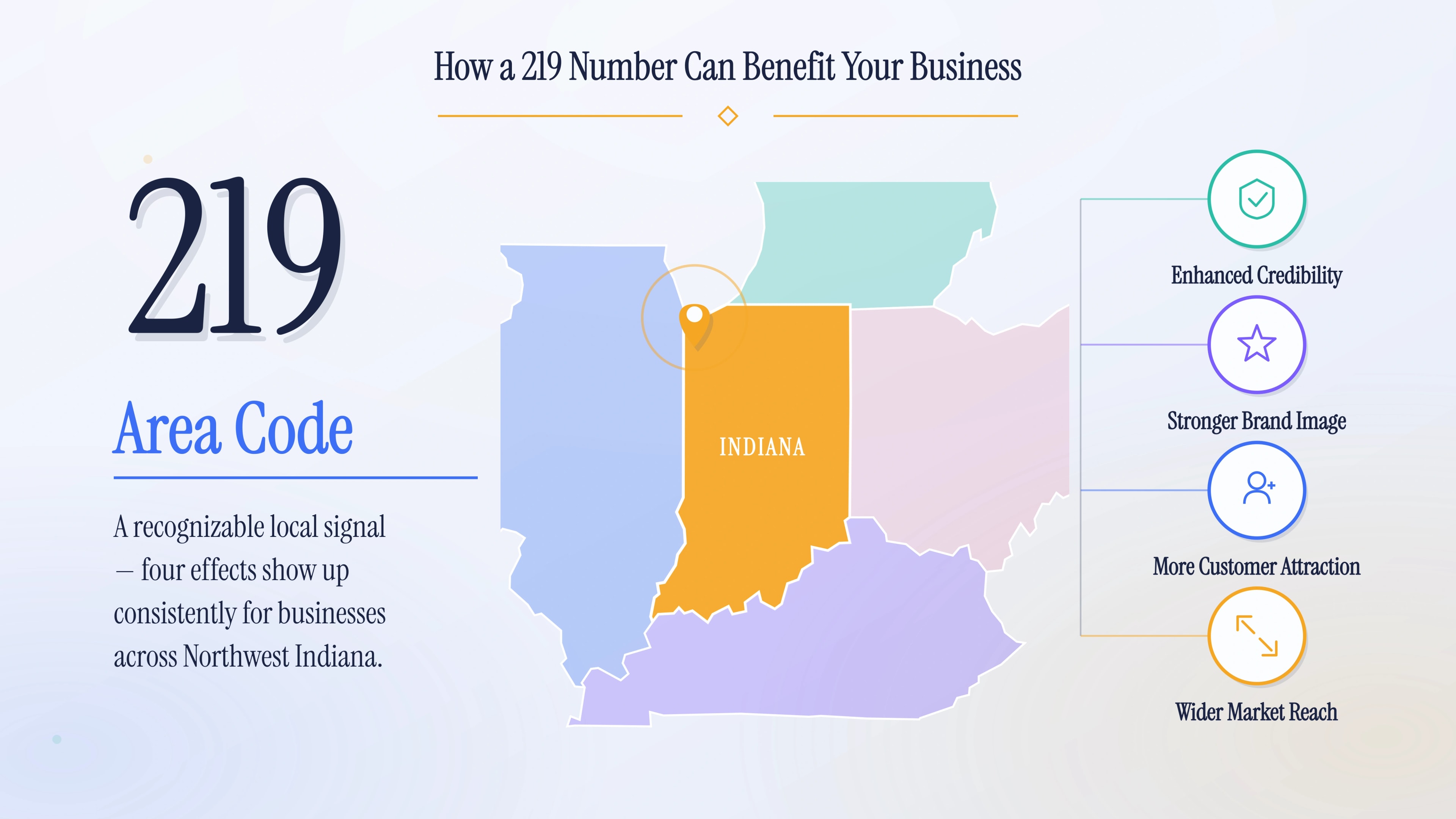
An Original Code Along the Indiana-Illinois Line
Since 1948, the 219 prefix has identified Gary and the steel and shipping towns along Indiana's Lake Michigan shore, and it is still one of the best-known codes on the Indiana-Illinois border. A Hammond freight broker or a Valparaiso professional-services firm choosing between a 219 line and a number from somewhere else is really deciding how Northwest Indiana callers will judge it on the first ring. The sections below cover the split that set today's boundaries, the towns the code reaches, typical costs, and practical ways to put a Gary number to work.
Key Takeaways
- Origin — the 219 area code was established in 1948, and it originally served the entire northern third of Indiana, including South Bend and Fort Wayne.
- Coverage — after a three-way split, the territory now centers on Gary, Hammond, and the rest of Northwest Indiana's share of the Chicago metro area.
- No overlay — the territory still runs on a single prefix, with no companion overlay code in service.
- Time zone — Central Time (CST, UTC−6 / CDT, UTC−5).
- Typical cost — a standard local number runs from a few dollars a month with a cloud provider up to several hundred dollars, or more, for a premium vanity pattern.
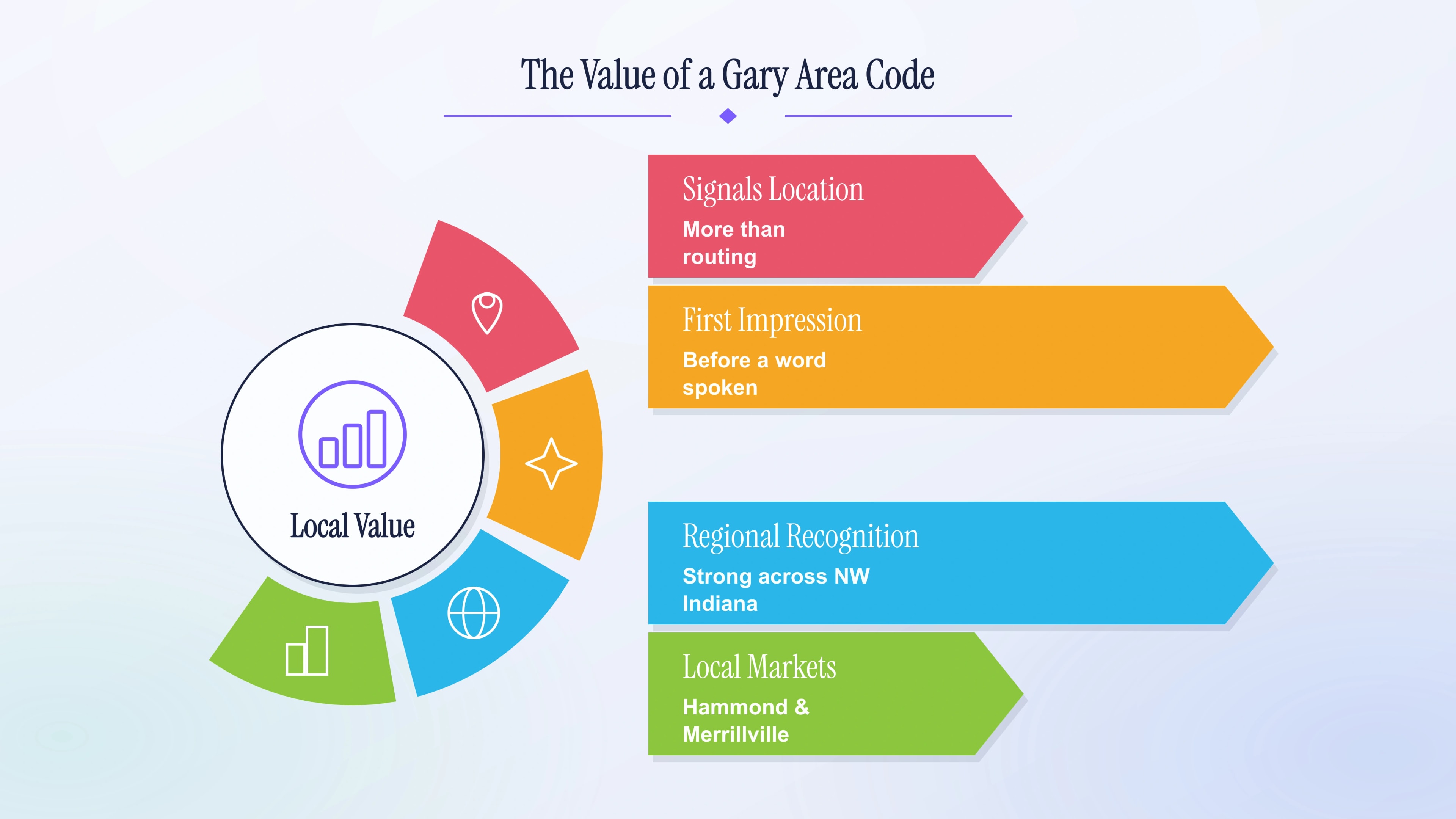
The Value of a Gary Area Code
The first three digits on a caller ID screen tell someone in Merrillville or Hobart whether a call is coming from nearby. A 219 number places the business in Northwest Indiana, not across the state line in Chicago or somewhere farther away. The code has belonged to this corner of the state since 1948, so residents recognize it at a glance, and a company calling from one starts the conversation as a neighbor instead of an outsider.
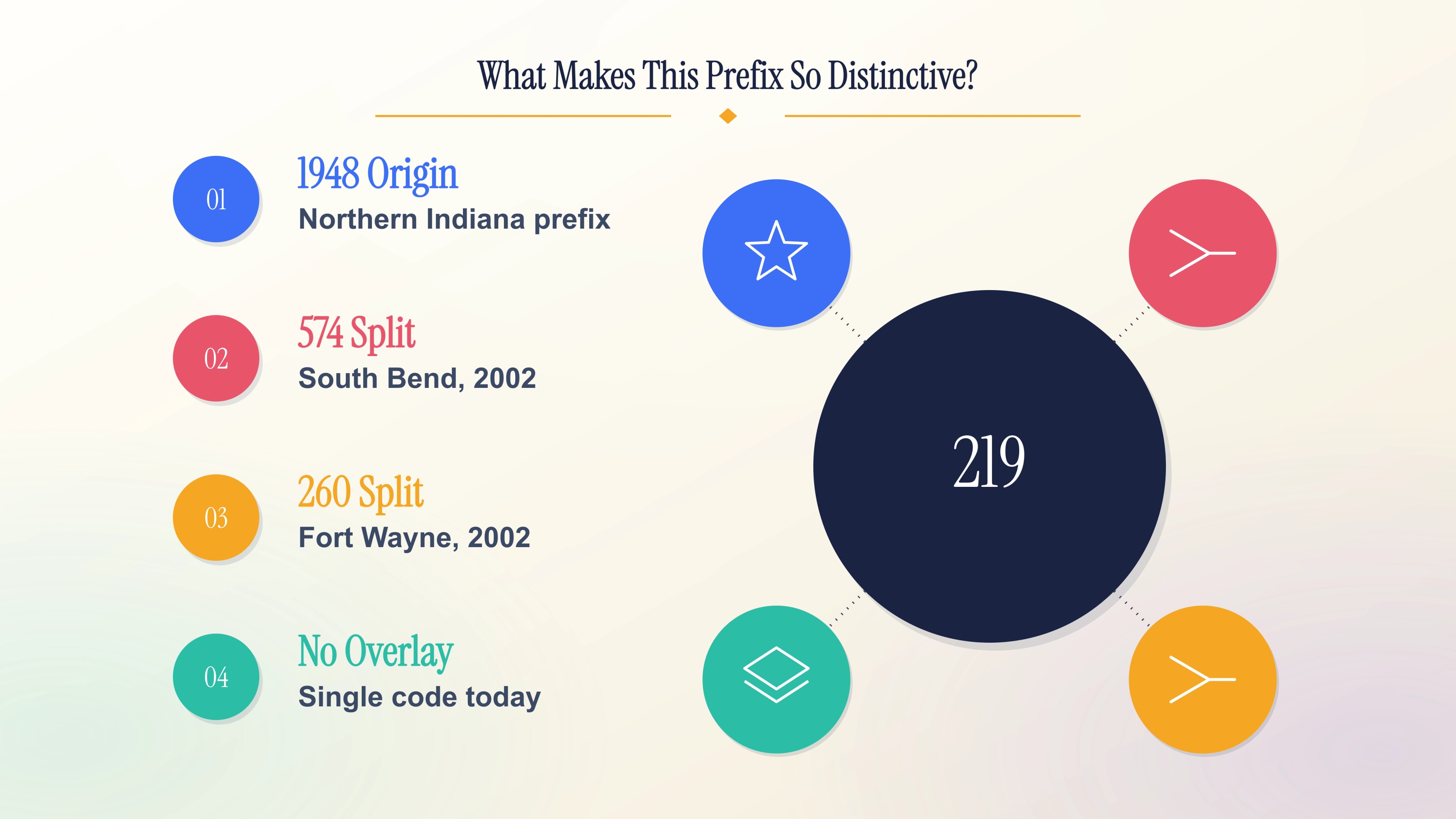
How a Random Drawing Kept the Original Code
The code traces back to 1948, when it was assigned to cover the entire northern third of Indiana, stretching from Gary to South Bend and Fort Wayne. As the region's population and phone demand grew, regulators split the territory on January 15, 2002: the South Bend area became 574 and the Fort Wayne area became 260, while Northwest Indiana kept the original 219 prefix following a random drawing among the three territories. That history, paired with the region's identity as a steel and shipping hub along Lake Michigan, is part of why the prefix still reads as a marker of an established, homegrown presence.
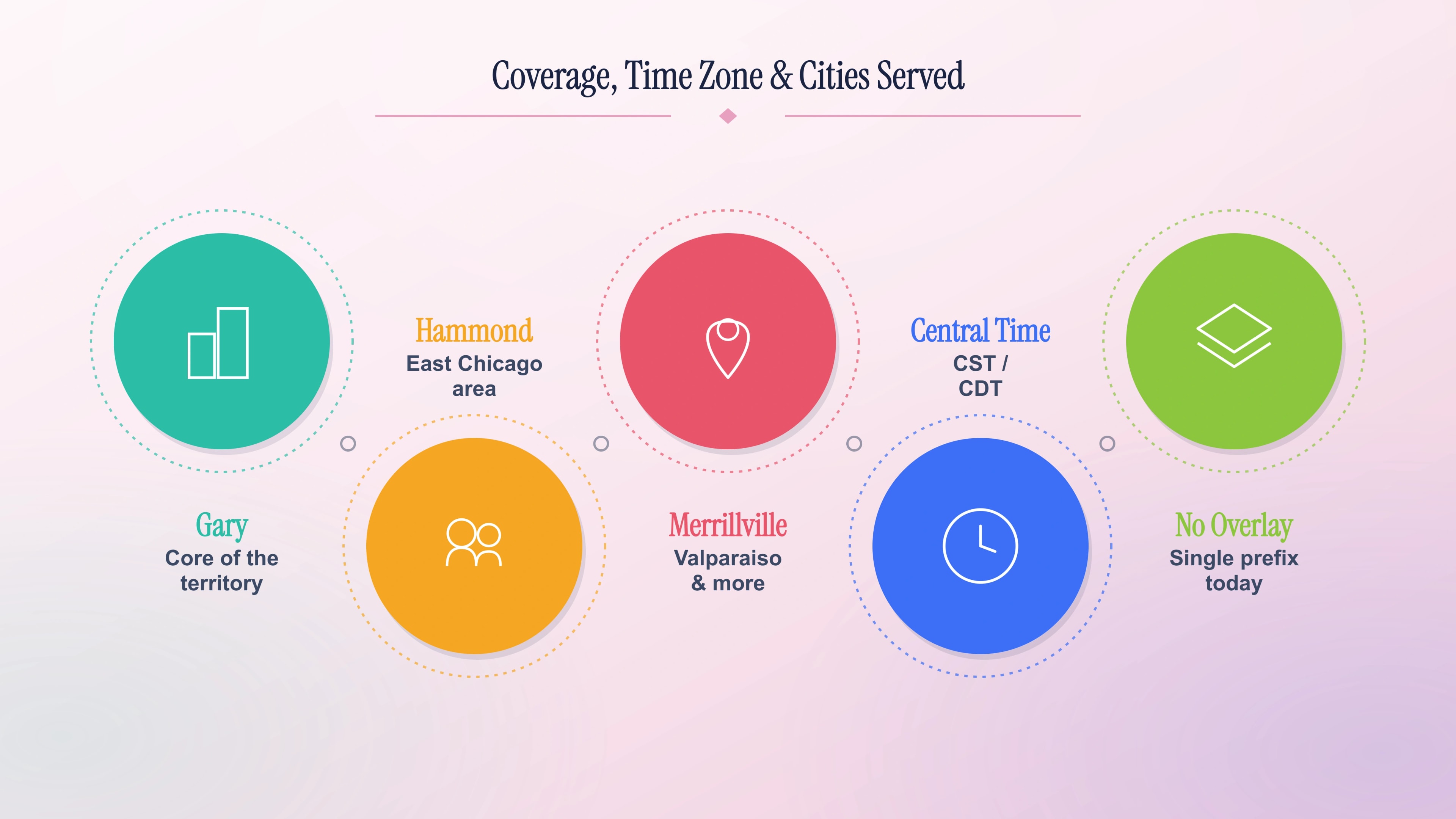
Towns Covered, Central Time and No Overlay
The service territory now centers on Gary and extends across Northwest Indiana, including Hammond, East Chicago, Merrillville, Valparaiso, Portage, Michigan City, Crown Point, and Hobart. The entire footprint sits in the Central Time zone, observing CST in winter and CDT during daylight saving. With no overlay code sharing its territory, the region remains a rarer case among metro-adjacent areas: a single prefix covering the whole footprint.
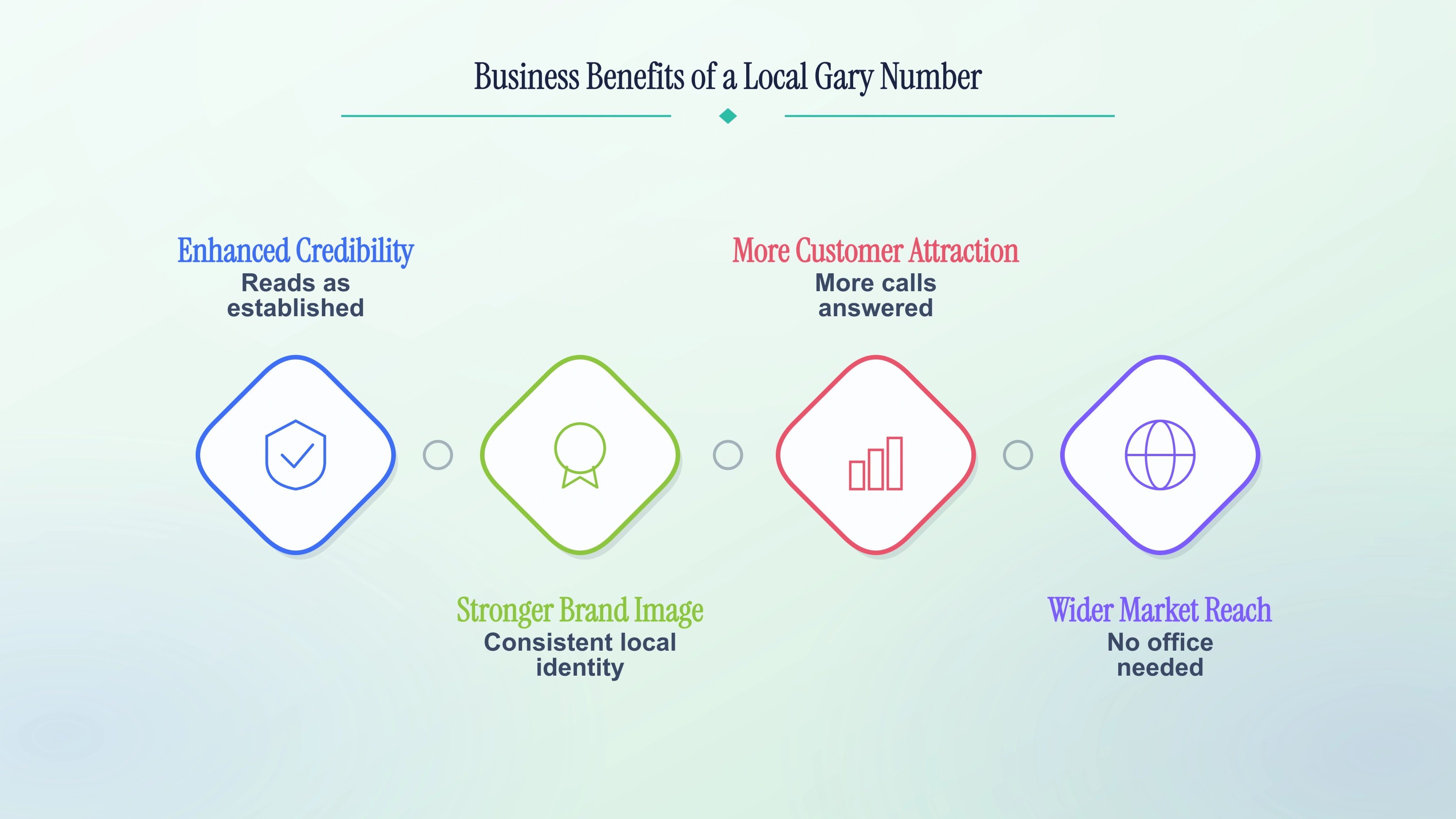
Business Benefits of a Local Gary Number
Businesses cite four consistent advantages to carrying a recognizable Gary number:
- Steel-corridor credibility — a 219 prefix places a business inside the same Lake County steel, freight, and rail network it is calling into, rather than reading as an outside vendor.
- One recognizable code for the region — because Gary, Hammond, Merrillville, and Valparaiso all share the single 219 prefix with no overlay, one number reads as local across the whole Northwest Indiana footprint instead of just one town.
- Higher answer rates on outbound calls — sales and service teams working Lake County accounts see more pickups dialing out on a 219 number than an unfamiliar Chicago or toll-free line, since the prefix matches what local businesses already have saved.
- Reach into the territory without an office — a virtual 219 line lets a team based anywhere serve Gary's steel and logistics customers directly, the same approach covered in Acepeak's 872 area code guide for the Chicago side of the metro.
Planning a Search in a Single-Code Territory
Every new line in Northwest Indiana comes out of the same 219 pool, because no overlay code has been added to share the territory. That pool is never static, with numbers being released, ported away, or reassigned all the time, so a business in Hammond or Crown Point gets further with a clear plan than by holding out for one exact sequence. Start with a provider's live inventory, decide whether a plain sequential number or a memorable vanity pattern suits the brand, and confirm that activation will not stall. Staying open on the final digits is usually what gets the line working fastest.
Getting the Number onto Wraps, Listings and Signatures
Put a new 219 number wherever Northwest Indiana customers already look for the business: the website header, the Google Business Profile for each location from Hobart to Michigan City, staff email signatures, the wraps on service trucks working the steel and freight corridor, and printed materials. A number that sits unused inside a phone system does little for the brand. Showing the same digits in every one of those places also keeps call-tracking reports clean when the business later measures results.
Comparing Call Results Before and After the Switch
Three figures tell most Gary-area businesses whether the new line is working: inbound call volume, how many of those calls turn into leads, and how quickly prospects respond to outreach. Set a few months of results beside the old number's record, and if the team previously dialed Lake County accounts from a Chicago or toll-free line, pay close attention to how outbound pickups change. Call-tracking software can typically separate the new line's contribution without manual tagging.
Ready for a local Gary number?
Acepeak activates 219-area numbers in minutes on a cloud platform — no Northwest Indiana office required. Explore plans and route calls to any device.
Monthly Plans Versus Broker-Sold Vanity Numbers
A standard 219 line from a cloud communications platform usually adds only a few dollars a month to a business phone plan, though prices differ by provider and number type. A distinctive vanity sequence bought through a number broker is a separate purchase, generally a one-time fee somewhere in the hundreds or low thousands of dollars. For most companies serving Merrillville, Portage, or Valparaiso, the ordinary monthly option captures nearly all of the local credibility, leaving the premium pattern as an optional extra rather than a necessity.
How Fast Sequential Blocks Get Claimed
Demand from the steel industry, freight and rail operators, and Chicago commuters keeps requests for Gary-area numbers steady, and the popular sequential 219 blocks tend to go quickly. A company set on one exact pattern should pick a provider that will alert it when a matching number comes back into stock, while a company content with whatever digits are open rarely waits long. Acepeak's 937 area code guide describes the Dayton region, a separate market where availability follows much the same pattern.
The Number Is Only One Part of the Impression
Customers in East Chicago or Crown Point form an opinion of a business from many signals, and the phone number is only one of them. Alongside a well-built website and branding that looks the same everywhere, a 219 line adds to a sense of reliability. By itself it cannot cover for missed deliveries or slow replies. The strongest results come when the number fits into a brand that is already consistent and well presented, not when it is expected to carry the impression alone.
Reach Beyond Indiana: The Global Angle
A 219 number is not tied to a desk in Gary. It runs over ordinary telecom networks, so a team in another state, or another country, can answer it while Northwest Indiana callers still see a local code. That suits a freight, rail, or manufacturing supplier that wants to test demand around Hammond and Portage before signing a lease on the Indiana side of the Chicago metro.
Why One Shared Code Looks Local Across the Region
Whether a call gets picked up often turns on recognition. People are generally far more willing to answer a number that shares their own area code than one from outside the area or from a toll-free number, since local digits suggest a relevant caller instead of a cold contact. In Northwest Indiana that effect reaches unusually far: Gary, Hammond, Merrillville, and Valparaiso all use the one code, so a single 219 number looks local in each of those towns, which helps outbound sales and service teams covering the whole territory.
Steel, Freight and Commuters Keep Demand Up
The region's economy continues to lean on steel production, freight and rail logistics, and its position within the Chicago commuter belt, all of which draw new business formation into Gary and the surrounding Lake County communities. As long as that activity continues, demand for a recognizable local number is likely to stay elevated, and the region's single-code status means the pool is watched closely by providers as older numbers get released and reassigned.
A Dialing Code That Became Regional Shorthand
Its multi-decade history gives it a layer of familiarity that newer area codes have not yet built up. Businesses in logistics, manufacturing, and professional services lean on it as a signal of genuine local roots, especially when competing for customers who default to trusting a recognizable regional number over an unfamiliar one.
Shortlist, Search, Compare, Confirm
Getting a Gary line running comes down to four steps. First, shortlist providers that actually carry 219 inventory. Second, search their live stock for the pattern you want. Third, weigh the cost of a standard number against a vanity option. Fourth, lock in the choice before activation. If the business is bringing over a number it already uses with another carrier, build in several business days for that transfer to finish.
Porting Rights and a Quick Path to a Live Line
Northwest Indiana businesses that switch carriers keep the right to their current number under the federal number portability rules overseen by the Federal Communications Commission, and a provider is not permitted to stall a valid port without a documented reason. For a company ready to act, the next moves are simple: ask for a quote, look through the 219 numbers on offer, and expect the line to be live in well under a business week.
A Modest Cost for Lasting Credibility in Gary
A random drawing in 2002 settled which part of northern Indiana would keep 219: the Gary region held on to it, while South Bend moved to 574 and Fort Wayne to 260. Northwest Indiana therefore kept the original digits, and it still has no overlay beside them. Keeping a standard 219 line costs a few dollars a month, and in return a business carries a number Lake County customers have known since 1948, decades before the newer codes existed.
Add a local Gary number to your business
Explore virtual number options through Acepeak and get a line activated today.
Questions, answered.
The territory covers Gary and Northwest Indiana, including Hammond, East Chicago, Merrillville, Valparaiso, Portage, Michigan City, Crown Point, and Hobart.
No. Unlike several Indiana codes that share territory with a companion overlay, this prefix remains the sole code for its footprint, and ten-digit dialing is standard practice for reliability.
Central Time — CST (UTC−6) in winter, shifting to CDT (UTC−5) during daylight saving, which runs from the second Sunday in March to the first Sunday in November.
Yes. Cloud communications providers issue virtual numbers in this territory to businesses located anywhere, and calls route through the standard telecom network while presenting a local Gary identity to callers.
A standard number typically costs a few dollars monthly through a business phone plan, while a distinctive vanity sequence sourced through a number broker can cost anywhere from roughly $150 to several thousand dollars as a one-time fee, depending on demand.
Consumers can report suspected scam or spoofed calls directly to the FCC and FTC, both of which track patterns of abuse tied to specific number ranges and can direct carriers to block confirmed offenders.
Signing up for a 219 area code number takes minutes with a cloud phone provider — no local office in Indiana required. Pick the number, connect it to your existing phone or app, and calls route in immediately. This keeps the 219 area code presence you already have while adding the local credibility Indiana customers respond to.