Philadelphia and Southeastern Pennsylvania Since 1947
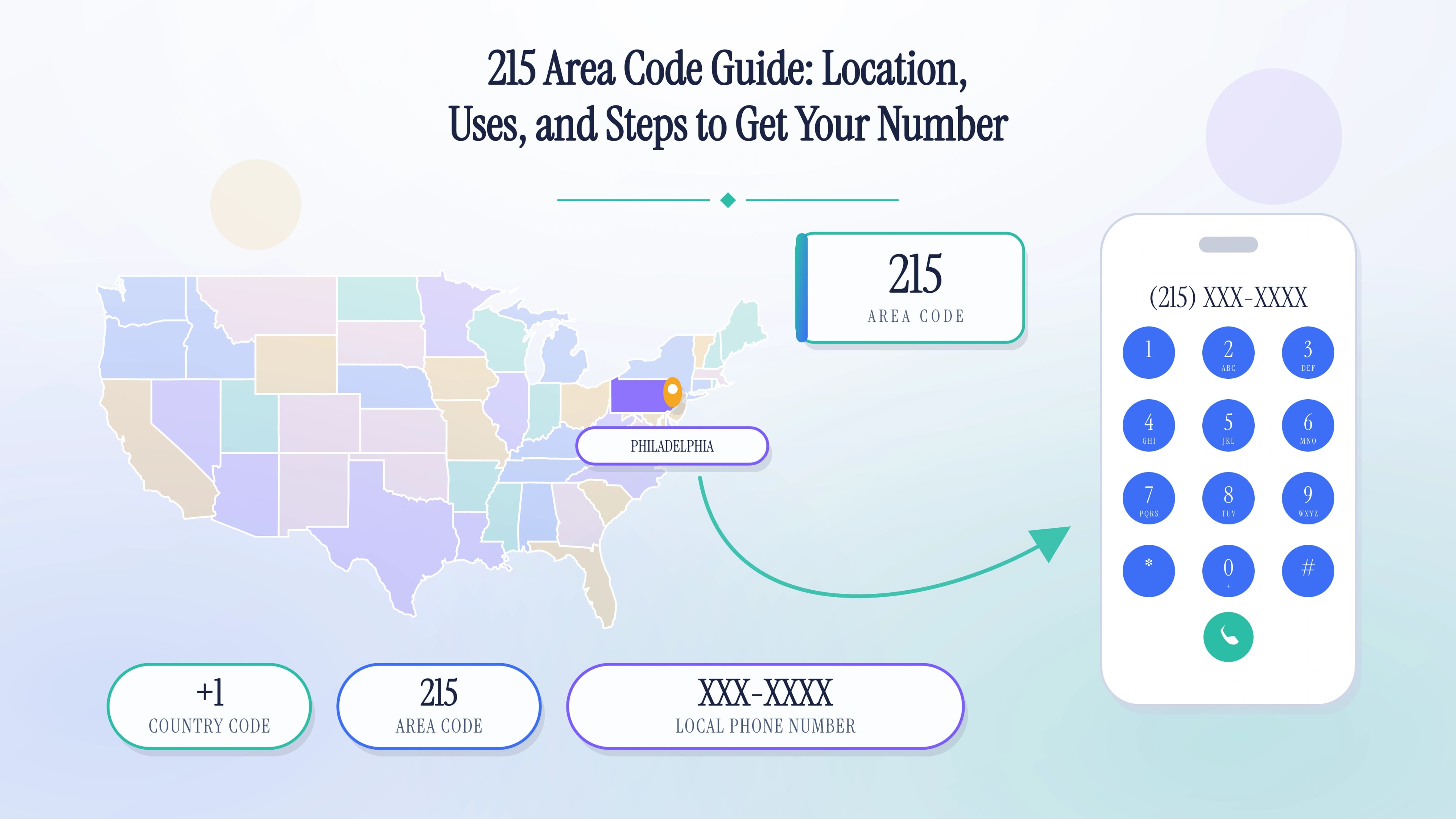
The 215 area code represents Philadelphia and the surrounding stretch of southeastern Pennsylvania. Established in 1947 as one of the very first codes under the North American Numbering Plan, it covers a historically rich, economically strong region and helps businesses and residents stay connected locally. This guide walks through everything worth knowing about the prefix — from its geographic reach and history to the practical steps for obtaining a local Philadelphia number through trusted providers like Acepeak.
Key Takeaways
- The prefix serves Philadelphia and the adjacent parts of Bucks, Montgomery, Chester, and Delaware counties across southeastern Pennsylvania.
- Area code 215 was created in 1947 as one of the original North American Numbering Plan codes and stayed the region's sole identifier for 50 years.
- Two overlays now share the territory: 267 went live on July 1, 1997, and 445 — activated on February 3, 2018 — made 10-digit dialing mandatory.
- A local Philadelphia number raises answer rates, signals credibility, and gives a business an established presence without a physical office.
- Neighbor spoofing, caller-ID spoofing, phishing, and robocalls all exploit familiar local prefixes, so call screening and verification habits matter more than ever.
Geographic Coverage and Location
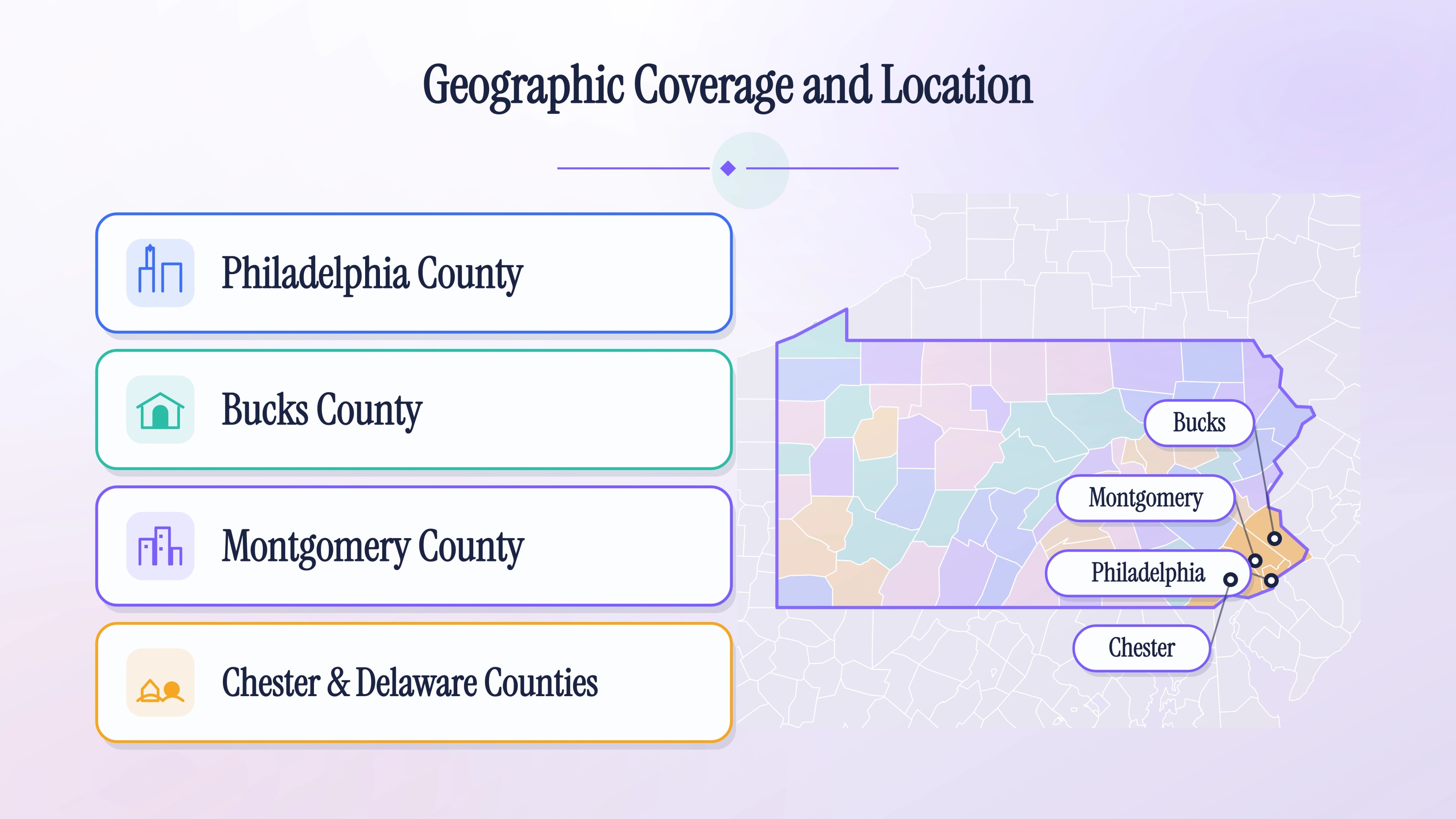
The prefix extends across Philadelphia County and reaches into Bucks, Montgomery, and parts of Chester and Delaware counties. It is the backbone of southeastern Pennsylvania, connecting bustling cities with vibrant suburban communities. The combined 215/267/445 territory holds roughly 23 million assignable numbers serving about four million people, one of the densest numbering pools in the state.
- Philadelphia County — The heart of the region, home to the bustling city and its financial centers.
- Bucks County — A suburban area with a growing business landscape.
- Montgomery County — A diverse county known for both residential areas and a wide variety of industries.
- Chester County and Delaware County — Offering a blend of suburban and rural settings, both with strong commercial presence.
Historical Significance and Evolution
As one of the first codes created under the North American Numbering Plan, the 215 region code holds a special place in the hearts of residents and businesses alike. For roughly 50 years it was the sole identifier for the Philadelphia region, making it not just a number but a piece of local history. As the region grew and demand for new lines increased, overlay codes were introduced to add capacity without disturbing existing numbers: 267 arrived on July 1, 1997, and 445 — first reserved around 2010 — switched on for service on February 3, 2018. Both overlays allowed millions of additional numbers to be assigned while preserving the original prefix.
Why the 215 Area Code Matters for Businesses
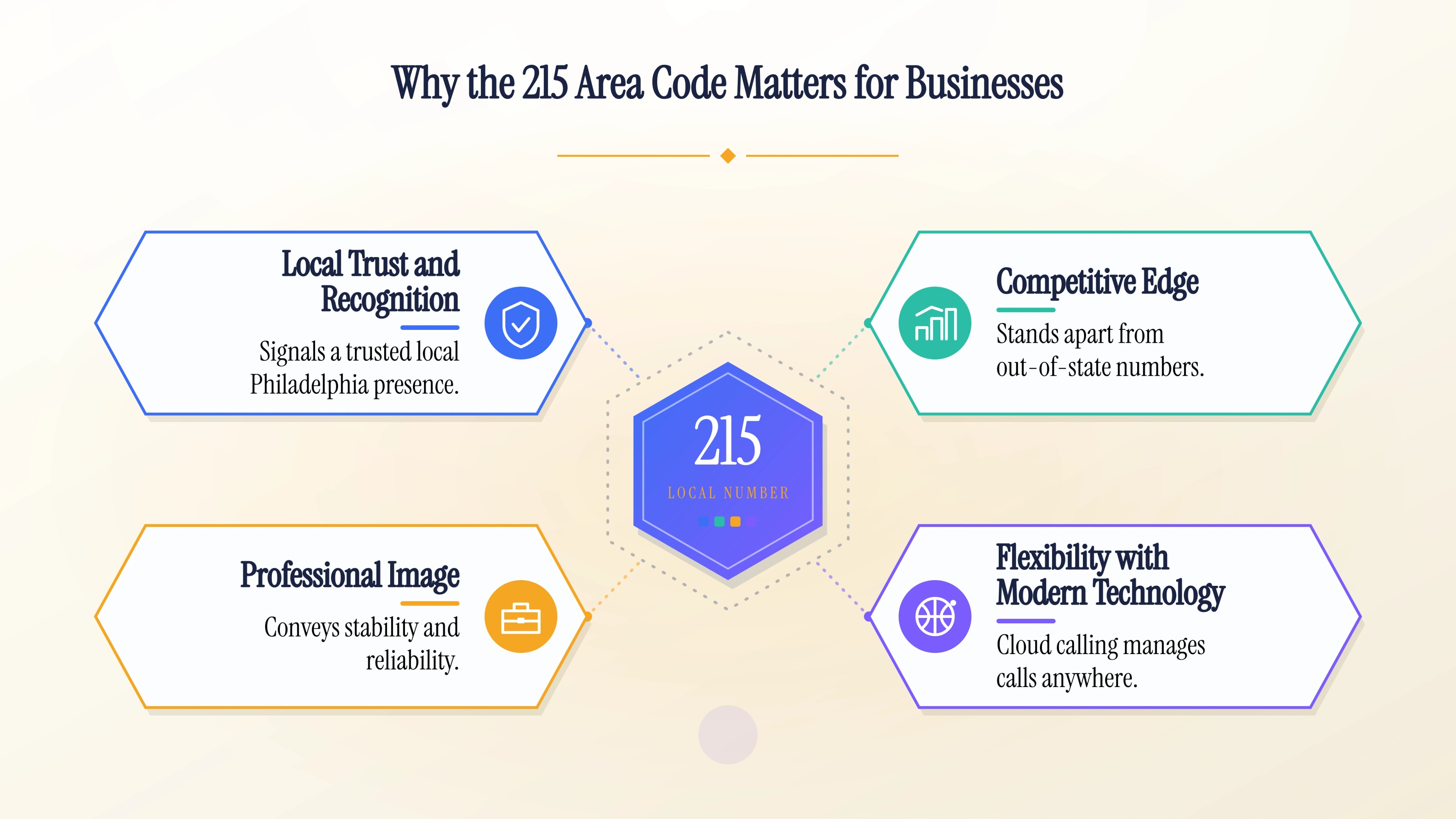
A local Philadelphia number instantly boosts a business's credibility, making it seem more approachable and reliable. It fosters trust with local customers and helps a company stand out in a competitive market where authenticity matters.
- Local Trust and Recognition — People are more likely to pick up the phone when they see a familiar, local number.
- Competitive Edge — In an age of toll-free and out-of-state numbers, a local number sets a business apart and makes it more approachable.
- Professional Image — A recognizable local number signals stability and reliability, two qualities every business wants to convey.
- Flexibility with Modern Technology — Cloud calling lets a business hold a Philadelphia presence from anywhere, extending reach across the Delaware Valley the same way a 551 area code number does for businesses across the river in New Jersey.
How the 215 Area Code Works
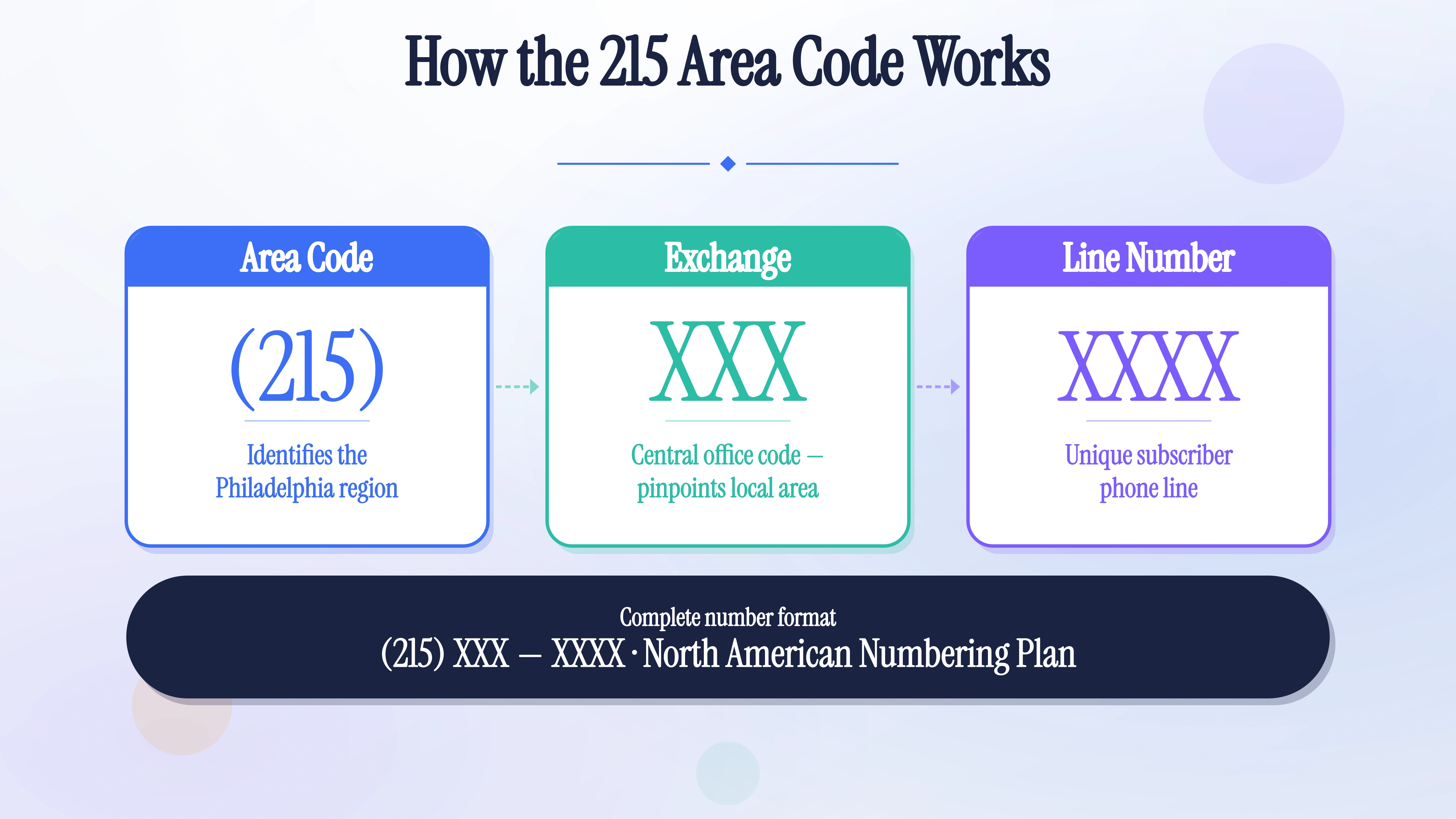
The format is simple: (215) XXX-XXXX. The first part identifies the Philadelphia region — it tells the system the call is bound for Philadelphia. The central office code (XXX) pinpoints a location within the area, and the last four digits identify the specific line. This format is part of the broader North American Numbering Plan, which manages phone numbers across the U.S., Canada, and parts of the Caribbean.
Want a Philadelphia number that customers actually answer?
Acepeak activates local 215 numbers in minutes — complete with call forwarding, voicemail, and a ready-to-go auto attendant.
Dialing Requirements and Overlay Impact
In the past, dialing local calls in the region required only seven digits. But once the 267 overlay arrived in 1997, the format shifted — today all local calls require 10-digit dialing, covering numbers with the 215, 267, and 445 prefixes. While this change adds an extra three digits, it is now the standard for local calls across the area. It keeps numbering conflict-free as the three overlay codes share the same geography, ensuring a smooth, reliable process for managing numbers in this growing region.
Obtaining a 215 Area Code Number
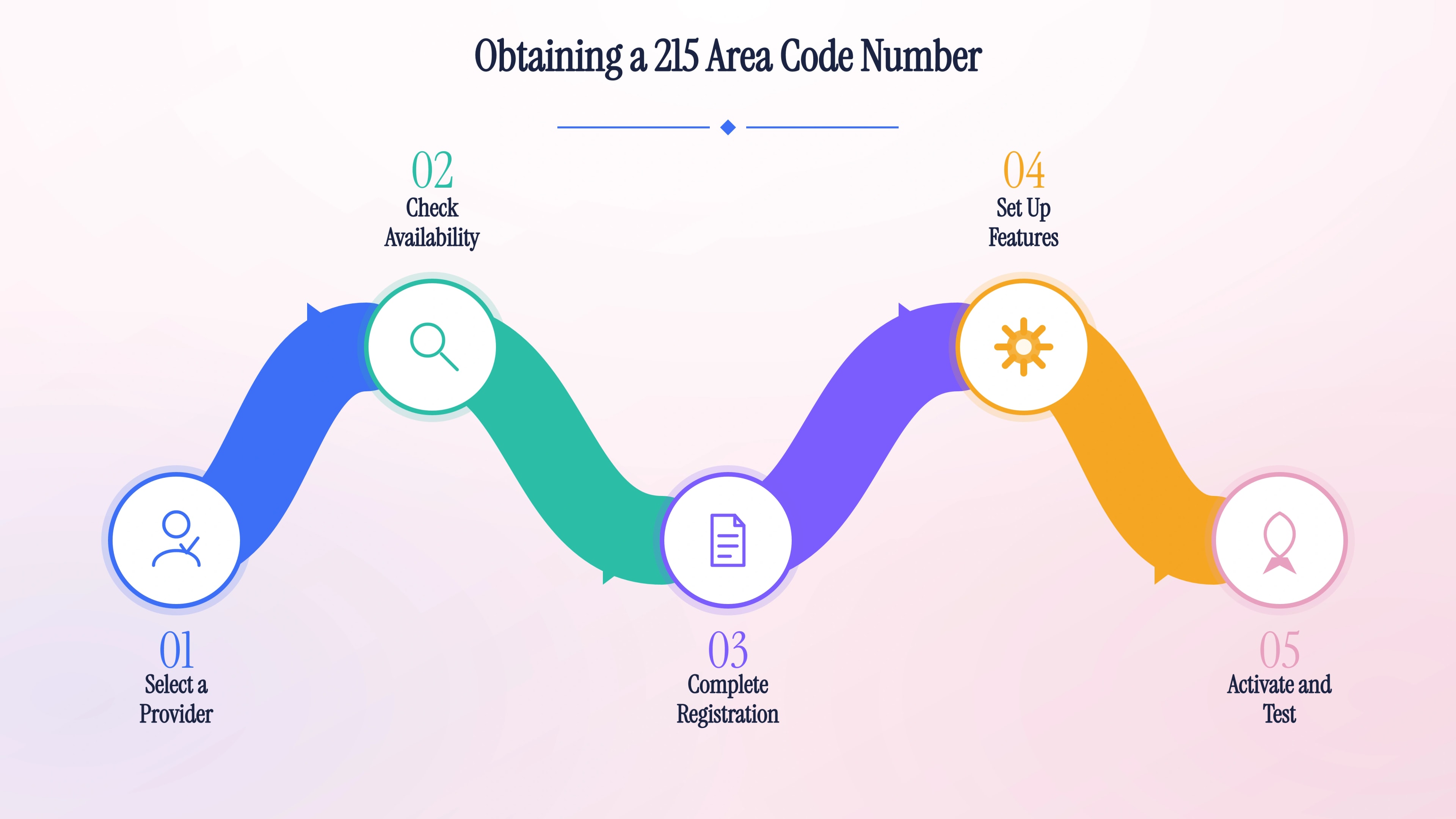
Getting a local Philadelphia number is easy and fast through a cloud calling provider. It delivers a local presence without needing a physical office — the same strategy businesses in the 862 area code corridor use to anchor a New Jersey presence from anywhere.
- Select a Provider — Choose a telecom or cloud calling service that offers 215 numbers. Acepeak keeps a variety of local numbers ready to be activated.
- Check Availability — Use the provider's online tools to confirm a desired number is available. Staying flexible helps in finding a good match.
- Complete Registration — Provide the necessary business or personal details, and verify identity and service address.
- Set Up Features — Once registered, configure call forwarding, voicemail, and an auto attendant to route every call to the right place.
- Activate and Test — After activation, place a test call to confirm the number is working properly. Most services offer quick, hassle-free activation.
Security and Fraud Prevention
With the rise of phone scams, protecting a 215 number is crucial. Scammers increasingly disguise fraudulent calls behind familiar local prefixes to lift their answer rates. The table below breaks down the most common threats and how to guard against each one.
| Security Concern | What It Is | How to Protect Yourself |
|---|---|---|
| Neighbor Spoofing | Scammers mimic local numbers to boost answer rates | Never share personal info with unsolicited callers |
| Caller ID Spoofing | Fraudsters fake caller IDs | Verify caller identity by calling official numbers |
| Phishing Calls | Scammers posing as trusted organizations | Hang up and contact the organization directly |
| Robocalls | Automated calls promoting scams | Use call-blocking features from your provider |
Providers like Acepeak offer features that automatically block suspicious calls and shield both personal and business lines from fraud. Treating any unsolicited request for personal or payment details with suspicion — regardless of the number on the display — remains the single best defense.
VoIP Technology and Advanced Features
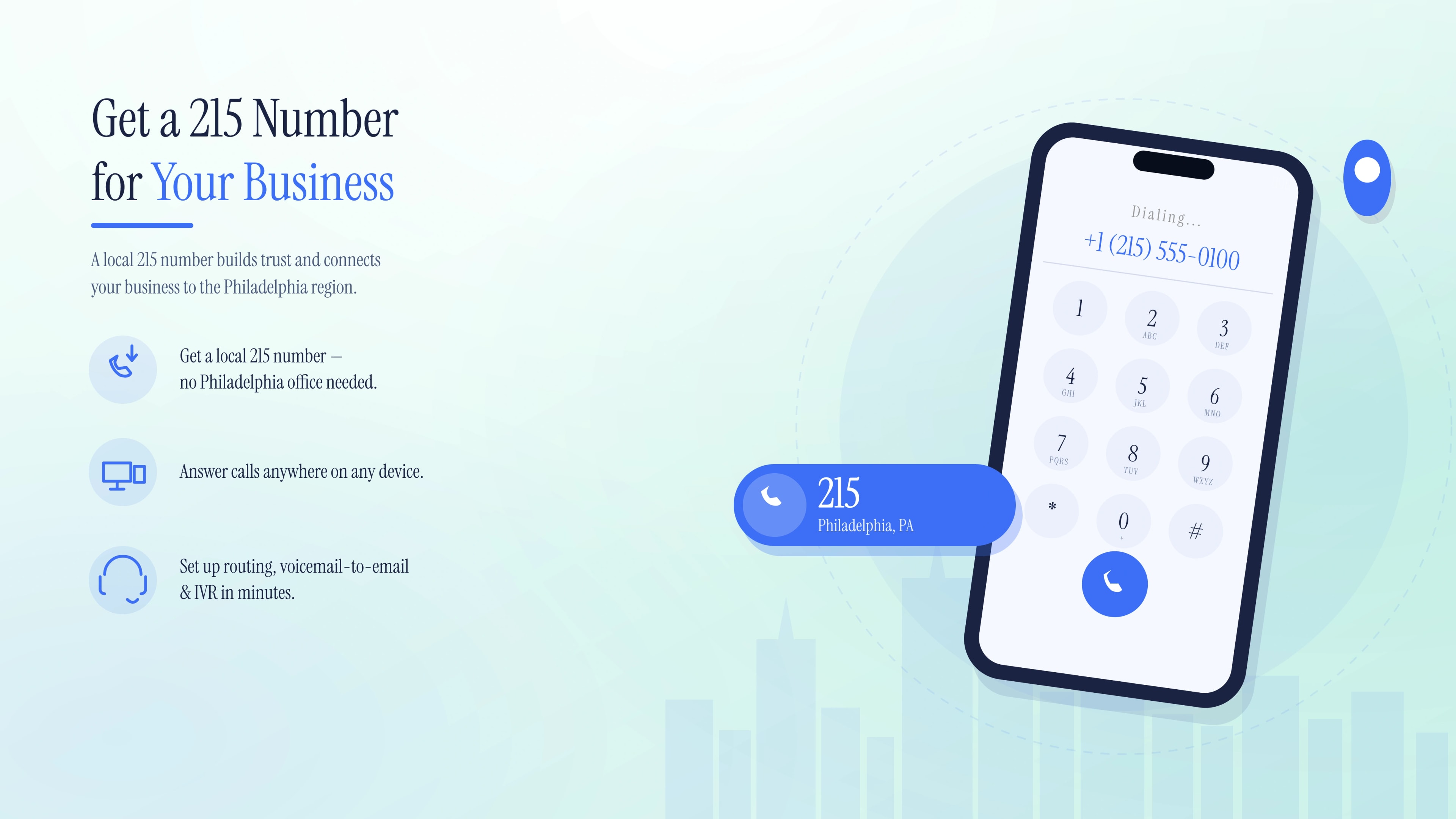
VoIP technology makes managing a 215 number simple and cost-effective. It enables features like call forwarding, voicemail-to-email, and seamless system integration. By using internet-based calling instead of traditional lines, it offers flexibility, efficiency, and scalability, helping businesses stay connected and operate smoothly with modern communication tools.
- Cost Efficiency — Internet-based systems eliminate the need for costly phone infrastructure, reducing monthly expenses.
- Integration — They connect seamlessly with CRM software and call-analytics platforms, putting everything in one place.
- Scalability — Whether adding more lines or expanding a team, these systems are easy and cost-effective to scale.
- Advanced Features — Providers like Acepeak offer call recording, voicemail-to-email, IVR menus, and real-time call tracking.
Future Outlook for the 215 Area Code
As the Philadelphia area continues to grow, demand for phone numbers will likely keep increasing. The overlay codes 267 and 445 were introduced precisely to meet that demand, and the combined pool of roughly 23 million numbers is not projected to need further relief until well beyond 2050. With sectors like healthcare, finance, and technology booming across the region — particularly in the City of Philadelphia's rapidly expanding innovation district — the appetite for local numbers is unlikely to fade. Securing a local Philadelphia number now places a business in a prime position to tap into this growth.
Local Prestige Meets Cloud Calling in Philadelphia
The 215 region code is more than just a telephone prefix — it is a part of the region's identity. It connects businesses and individuals, helping to foster trust and build meaningful relationships. Whether launching a new venture or simply needing a local number, choosing a local Philadelphia line through a reliable provider like Acepeak ensures a business is set up for success. With its combination of local prestige, modern cloud calling, and advanced features, the prefix remains a smart investment for business communications.
Claim a local Philadelphia presence today
Acepeak pairs trusted local numbers with cloud calling, call analytics, and built-in scam protection on one platform.
Questions, answered.
Area code 215 covers Philadelphia and the surrounding counties of southeastern Pennsylvania — chiefly Philadelphia, Bucks, and Montgomery, with additional reach into Chester and Delaware. It shares this territory with the 267 and 445 overlays.
Philadelphia is in the state of Pennsylvania, in the southeastern corner of the state along the Delaware River.
Pennsylvania uses several codes, including 215, 267, 412, 484, 570, 610, 717, 724, 814, and 878. The 215 prefix and its 267 and 445 overlays serve the Philadelphia region.
The region sits in the Eastern Time Zone (ET) — UTC-5 during standard time and UTC-4 during daylight saving time, the same as the rest of Philadelphia and southeastern Pennsylvania.
Anyone living or doing business in the Philadelphia region — companies and individuals alike — can hold a 215 number. Cloud providers like Acepeak let businesses anywhere get a local Philadelphia number with same-day activation.
Signing up for a 215 area code number takes minutes with a cloud phone provider — no local office in Philadelphia required. Pick the number, connect it to your existing phone or app, and calls route in immediately. This keeps the 215 area code presence you already have while adding the local credibility Pennsylvania customers respond to.