Lake Superior, the Iron Range and a Code That Never Changed
Northern Minnesota is a region defined by scale — the deep water of Lake Superior at Duluth, thousands of lakes stretching toward the Canadian border, and the Iron Range towns that built the state's mining economy. A single telephone code has covered nearly all of it since the dawn of area codes themselves: 218. Unlike most of the country, where population growth eventually forced a code to split or share its territory with an overlay, 218 has quietly kept the same footprint for more than seven decades. This guide walks through where the code reaches, how it came to be, and why a local 218 number is still one of the simplest ways for a business to sound like it genuinely belongs to the region.
Key Takeaways
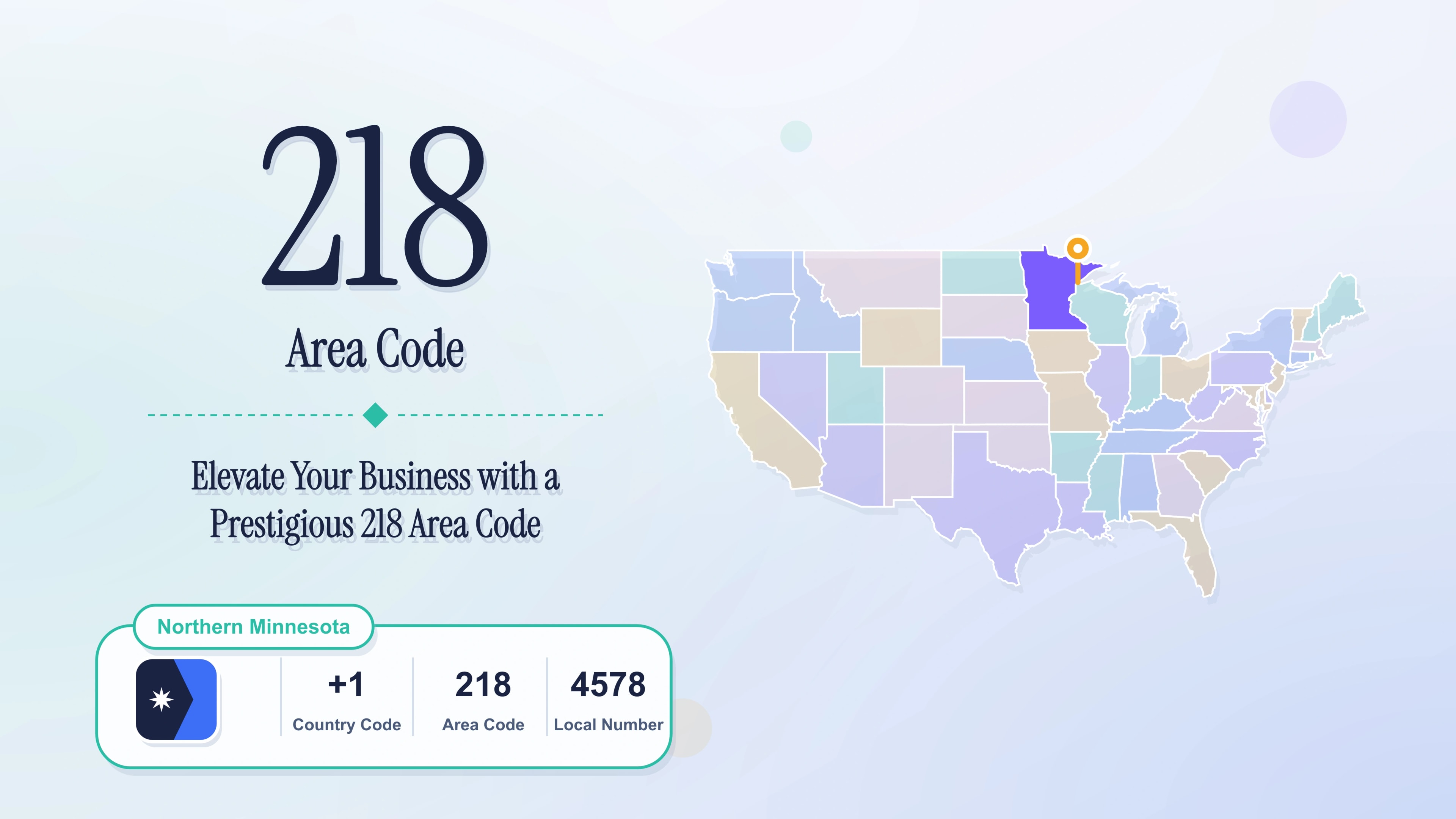
- The 218 area code covers northern and eastern Minnesota — Duluth, Bemidji, Brainerd, Hibbing, Moorhead, and the Iron Range — and is the largest Minnesota area code by land area.
- It was established in 1947 as one of Minnesota's original two area codes, assigned alongside 612 when the state was first divided under the North American Numbering Plan.
- In 1954, area code 507 was carved out of both 218 and 612 to serve southern Minnesota, but 218's own territory has stayed unchanged for more than 70 years — it has never been split or overlaid.
- The region observes Central Time, switching between Central Standard Time and Central Daylight Time like the rest of Minnesota.
- No overlay or split is currently planned for 218 — number forecasters project the region has enough supply to last until roughly 2028 — so a local 218 number remains simple to obtain today.
Why Did Minnesota Start With Two Codes Instead of One?
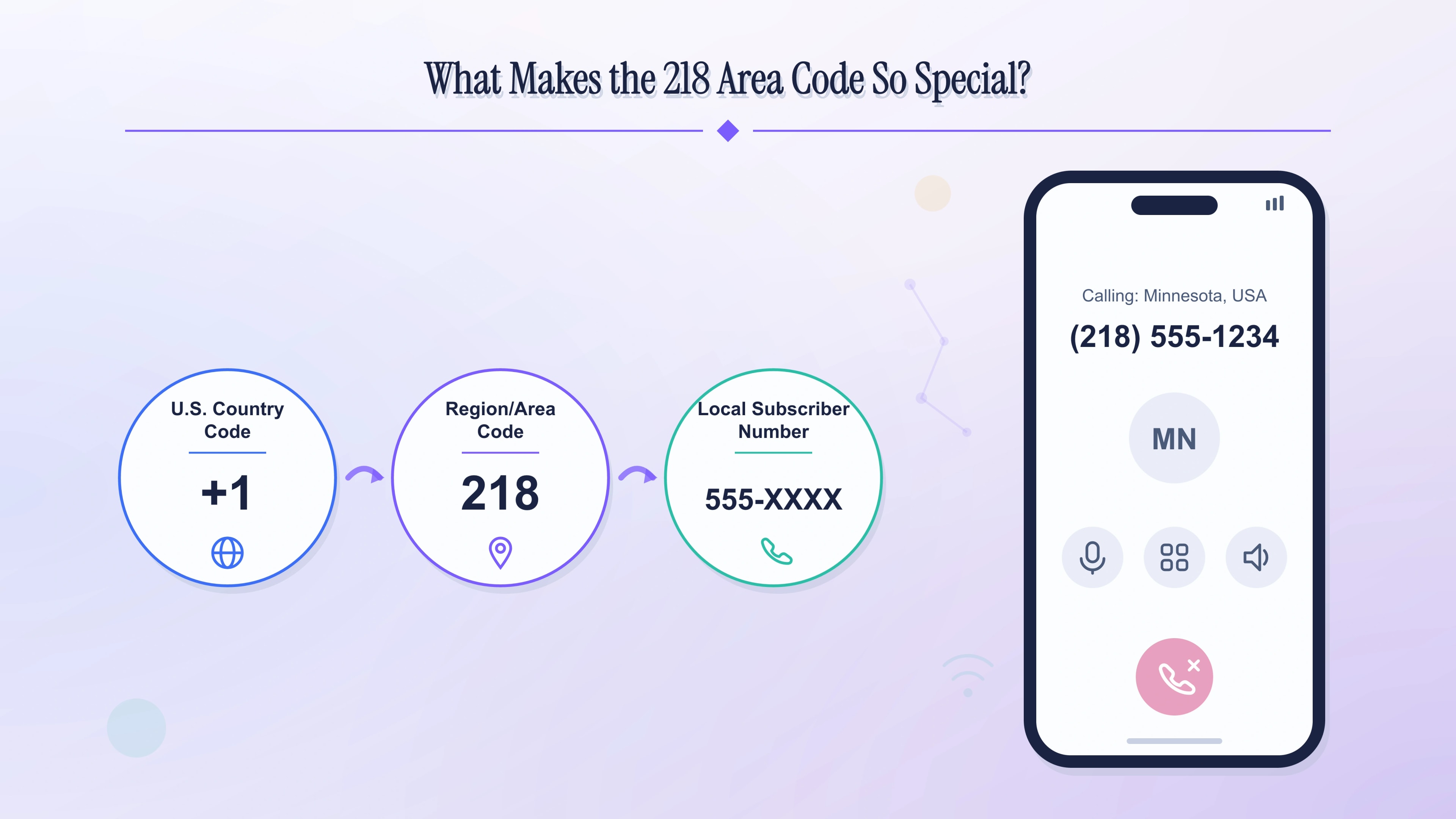
The 218 area code is the telephone prefix for northern and eastern Minnesota. It was assigned in 1947, the same year the North American Numbering Plan divided the entire country into its first area codes — and Minnesota, unlike smaller states that received just one code, was split into two from the very start: 612 for the southeastern corner around the Twin Cities, and 218 for everything else. That made 218 one of only two original Minnesota codes, and by far the larger of the pair in terms of land covered. Like Missouri's 816 area code, another original 1947 assignment that pairs a major urban anchor with wide stretches of quieter rural territory, 218 has held its ground through decades of growth without ever being redrawn.
From Duluth's Harbor to the Red River Valley
The 218 code blankets the northern two-thirds of Minnesota — a sprawling mix of Lake Superior shoreline, the Iron Range's mining towns, and the lake country running west toward the Dakotas. Its territory is so large that it remains Minnesota's biggest area code by geography, even though the state's population is concentrated much further south. Major communities include:
- Duluth — the region's anchor city and a major Great Lakes shipping port on Lake Superior (St. Louis County)
- Bemidji — a college and tourism hub near the headwaters of the Mississippi River
- Brainerd — a lakes-region resort and retail center in central Minnesota
- Hibbing and Virginia — historic Iron Range mining towns on the Mesabi Range
- Moorhead — a Red River Valley city directly across from Fargo, North Dakota
- International Falls — a border city on Rainy Lake, one of the coldest spots in the continental U.S.
- Grand Rapids, Ely, Cloquet, Fergus Falls and Detroit Lakes — smaller hubs spread across the region's forests and lakes
From working ports on Lake Superior to Iron Range mining communities and Red River Valley farmland, the 218 region carries a distinct identity — one built on natural resources, tourism, and small cities that anchor a very large, sparsely populated territory.
A 1954 Redraw, Then Seven Decades of Stable Borders
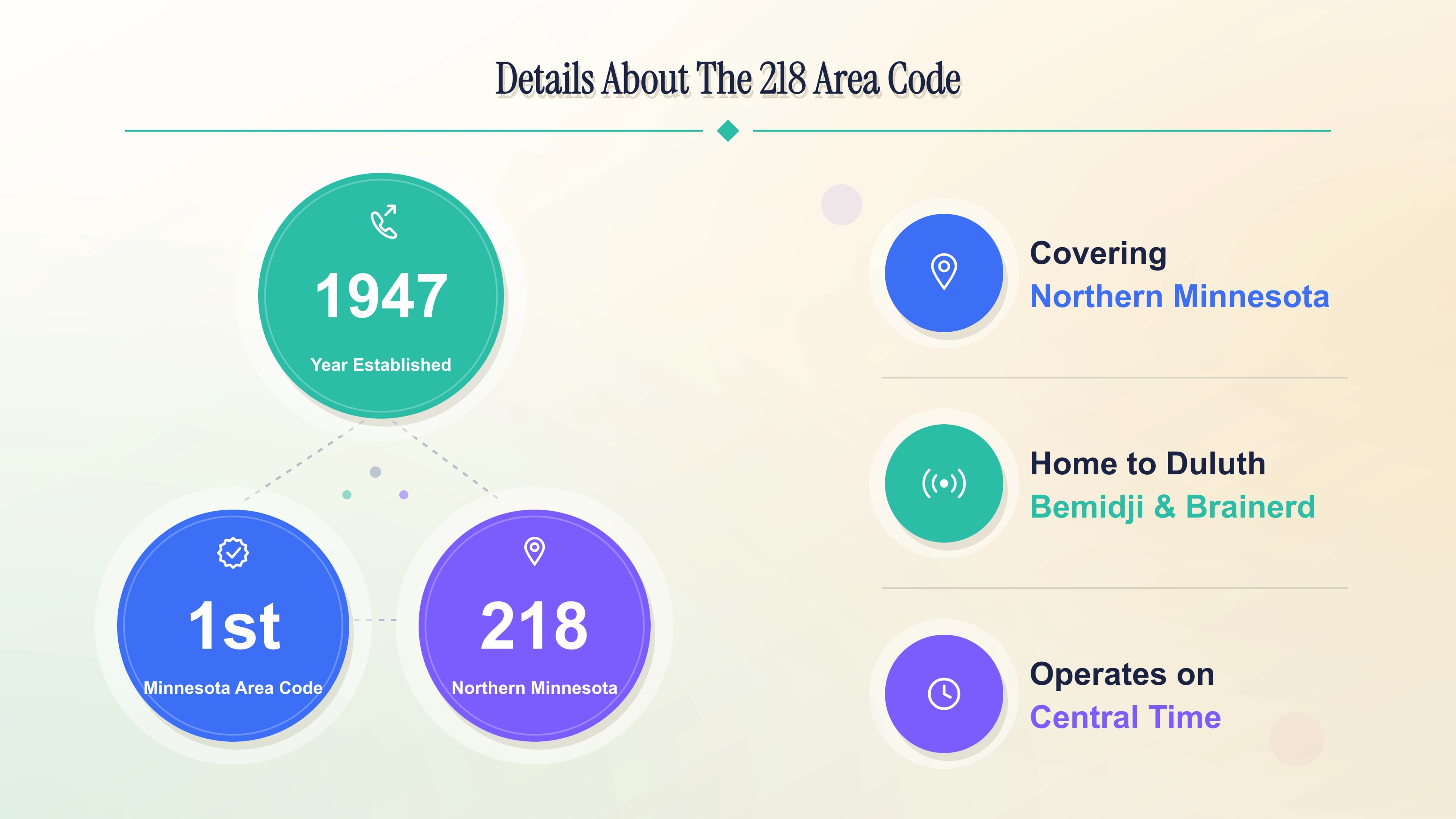
218's history is unusually stable compared to most American area codes. It was created in 1947 alongside 612 as Minnesota was first divided under the national numbering plan, making it one of the state's two original prefixes. In 1954, regulators redrew the map and carved a third Minnesota code, 507, out of the southern portions of both 612 and 218 to relieve growing demand in the southern half of the state; apart from that redraw, 218's boundaries have not changed since. The whole region runs on Central Time, switching between Central Standard Time and Central Daylight Time like the rest of Minnesota. Ten-digit dialing has been required across 218 since October 2021, part of the nationwide shift tied to the launch of the 988 Suicide & Crisis Lifeline.
How a 218 Number Can Benefit Your Business
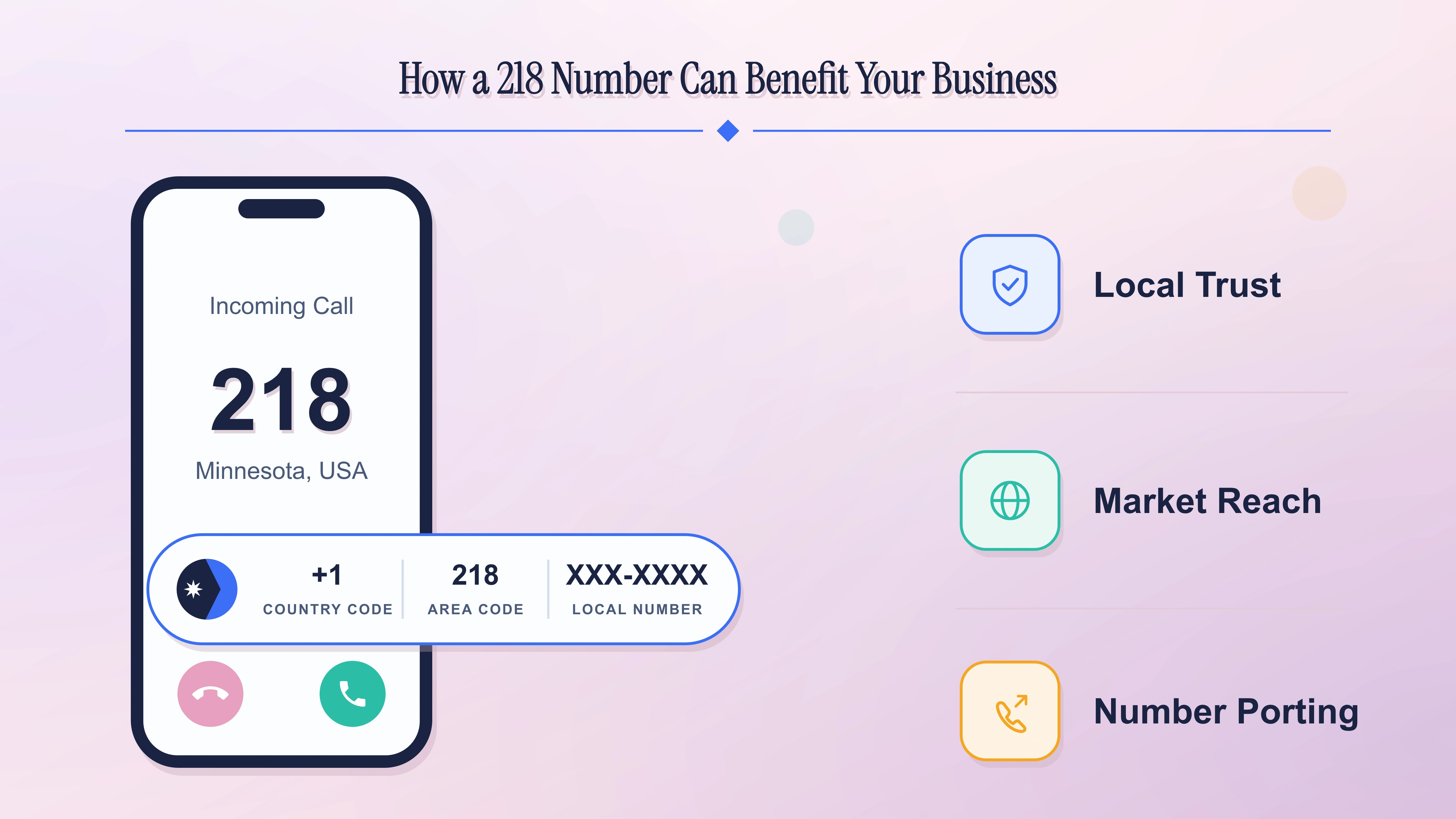
A local area code is one of the fastest ways to build trust with a regional customer base. When someone in Duluth or Bemidji sees a familiar 218 prefix on their caller ID, the call reads as local rather than as an out-of-state cold call.
- Matches the region's working identity: a 218 number reads as belonging to the same territory as the Iron Range mines, the Lake Superior docks at Duluth, and the lake country around Bemidji, rather than a downtown Twin Cities office.
- Covers the state's largest area code by land: one 218 number represents a business across a territory running from Duluth's harbor to Moorhead on the North Dakota line without switching numbers.
- Holds up in the coldest corner of the code: even in International Falls, one of the coldest spots in the continental U.S., a 218 line still reads as a known local prefix rather than an outside call.
- Carries the weight of an unchanged prefix: since 218 has covered this same territory since 1947, a local number lowers the friction of every inbound call the way a longstanding neighbor would.
Ready to establish a northern Minnesota presence?
Acepeak provisions local numbers with carrier-grade routing and instant activation, so a business can sound local from day one.
Picking an Exchange Across the Iron Range and Lake Country
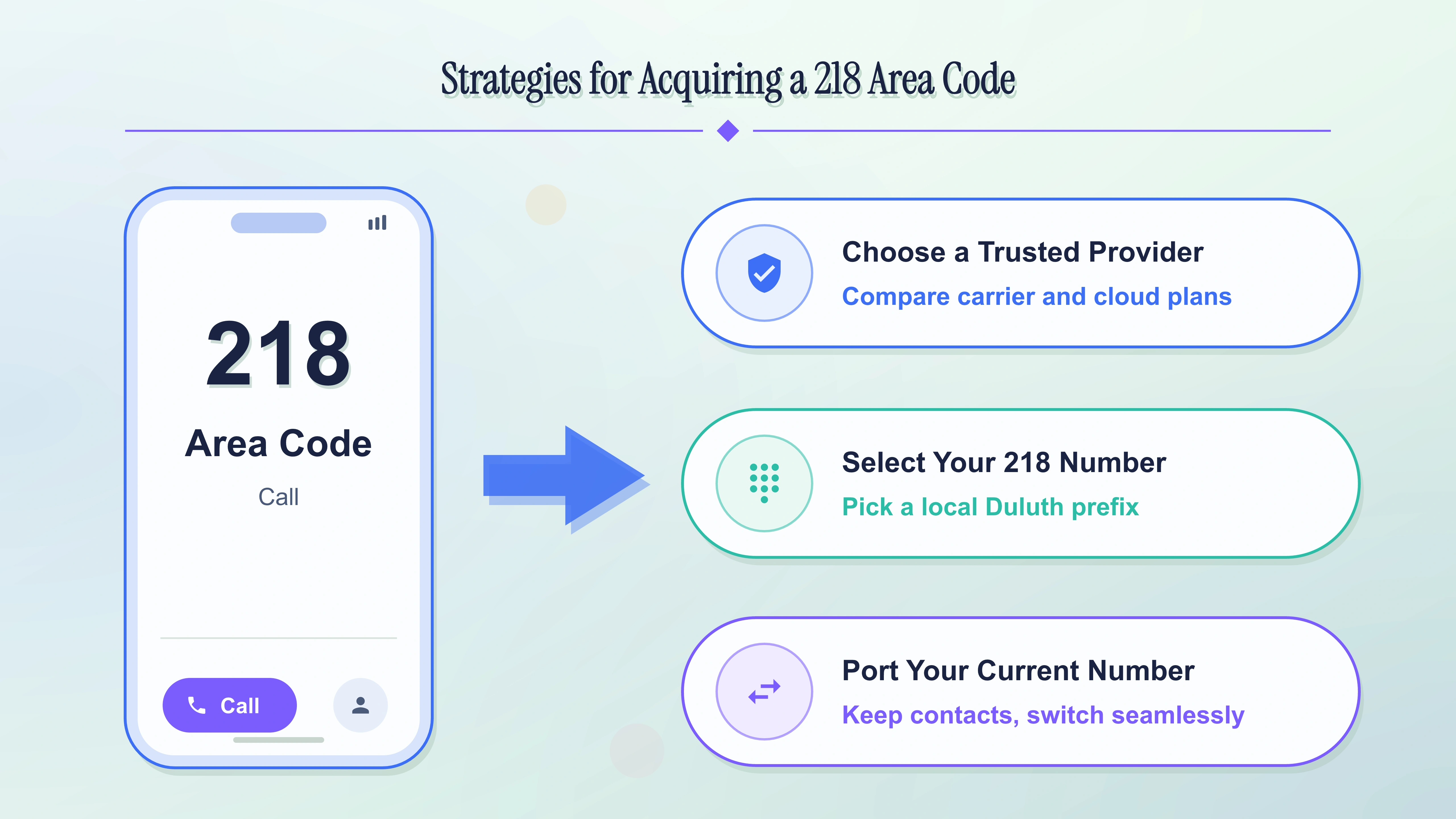
Whether it's one phone in Duluth or a staff spread across the Iron Range, setting up a 218 line takes four steps.
- Choose a trusted provider: look for one with inventory across the Iron Range, Duluth, and the lake country, not just the larger Bemidji or Brainerd exchanges.
- Select your 218 number: browse availability for the specific city or exchange that fits your business, since the region has no overlay competing for the same digits.
- Port your current number: keep an existing line active while adding a local 218 presence, useful for a business expanding north out of the Twin Cities' 612 territory.
- Activate and go live: cloud-based numbers typically activate the same day, with routing and voicemail ready before the next call comes in from Duluth or the Range.
Spoofed Neighbor Calls and How to Verify Them
Because a local code carries built-in trust, scammers sometimes spoof 218 numbers to make calls appear to come from a nearby neighbor. Any unexpected call deserves the same scrutiny, regardless of what area code shows up.
- Never share sensitive information — bank details, Social Security numbers or passwords — with an unexpected caller, even one showing a local 218 number.
- Verify urgent requests by hanging up and calling back on a published, official number from the organization's own website.
- Use call-blocking and spam-filtering tools built into most smartphones or offered through your carrier.
- Report suspicious calls to your provider and to consumer-protection authorities so others can be warned.
Why 218's Unbroken Footprint Signals Northern Minnesota
Few area codes in the country can claim the stability of 218. Assigned in 1947 as one of Minnesota's original two prefixes, it has covered the same sweeping territory — from Duluth's working harbor to the Iron Range and the lakes of the north woods — for more than seventy-five years without a split or an overlay. That consistency makes a 218 number one of the clearest, most trusted ways for any business to signal a genuine connection to northern Minnesota.
Put a trusted northern Minnesota number to work today.
Acepeak delivers local lines with smart routing, voicemail and 24/7 support — everything a business needs to stay reachable.
Questions, answered.
It covers northern and eastern Minnesota — the largest Minnesota area code by land area — including Duluth, Bemidji, Brainerd, Hibbing, Moorhead and International Falls.
It was assigned in 1947, the same year the North American Numbering Plan first divided the country into area codes. Minnesota was split into two codes from the start: 612 for the southeastern corner and 218 for the rest of the state.
No. In 1954, area code 507 was carved out of parts of both 612 and 218 to serve southern Minnesota, but 218's own territory has remained unchanged ever since — it has never had a split or an overlay of its own.
The whole region observes Central Time, switching between Central Standard Time and Central Daylight Time, including Koochiching and Lake of the Woods counties around International Falls.
Yes. Ten-digit dialing has been required across 218 since October 2021, when the change took effect nationwide alongside the launch of the 988 Suicide & Crisis Lifeline.
Yes. Cloud and hosted phone providers let any business or individual hold a local 218 number from anywhere, maintaining a genuine northern Minnesota presence without needing a physical office in the region.
Signing up for a 218 area code number takes minutes with a cloud phone provider — no local office in Northern Minnesota required. Pick the number, connect it to your existing phone or app, and calls route in immediately. This keeps the 218 area code presence you already have while adding the local credibility Minnesota customers respond to.
No — 218 has never been split or overlaid since it was created in the original 1947 area code rollout, and it remains the sole prefix for all of northern Minnesota.