What a Business Should Weigh Before Picking a Prefix
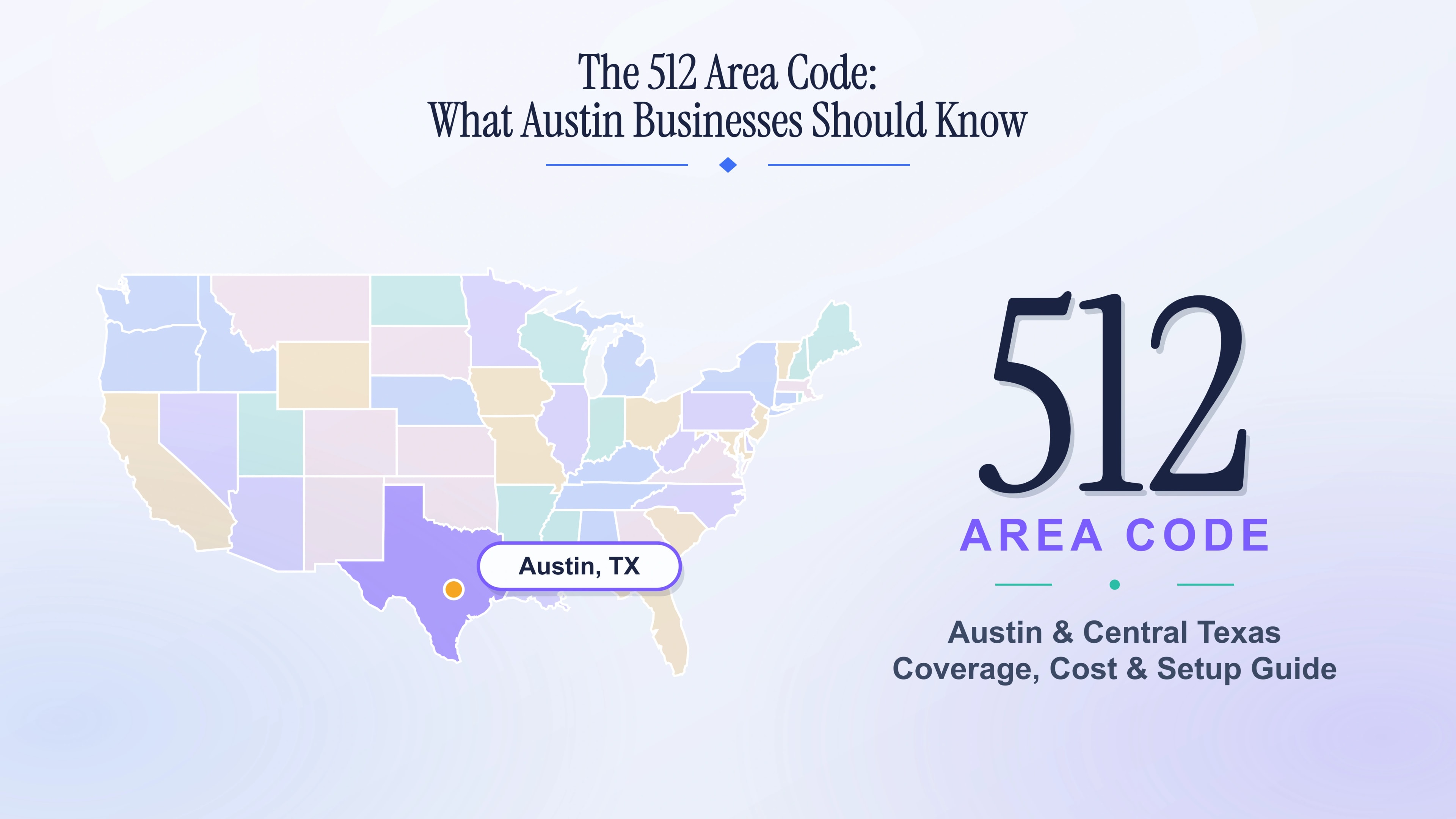
Austin has answered to 512 since AT&T handed out the first area codes in 1947, and the city held on to those digits while San Antonio and Corpus Christi moved to new codes. For a company choosing between a Central Texas number and one from another state, that choice shapes how a caller in Round Rock or San Marcos sizes up the business before answering. What follows covers the counties 512 reaches, its 737 overlay, typical costs, and how a business gets a line running.
Key Takeaways
- Original Austin assignment — the 512 area code dates to 1947 and once covered much of south-central Texas before later geographic splits.
- Coverage — Travis, Williamson, Hays, and parts of Bastrop, Burnet, Caldwell, and Milam counties, spanning roughly 40 cities.
- Overlay partner — the 737 code was added in 2013 so both prefixes now share the same territory.
- Time zone — Central Time (CST, UTC−6 / CDT, UTC−5).
- Typical cost — a standard local number runs from a few dollars a month with a cloud provider up to several hundred dollars for a premium vanity pattern.
The Value of an Original Austin Prefix
A local prefix does more than route calls — it is often the first signal a customer reads about where a business is based. Austin's designation is one of the earliest in Texas, assigned well before the state's population boom, and it still carries strong regional recognition among residents and transplants alike. For companies courting Central Texas customers, listing a familiar area code alongside an out-of-state one can shape a first impression before a single word is spoken.
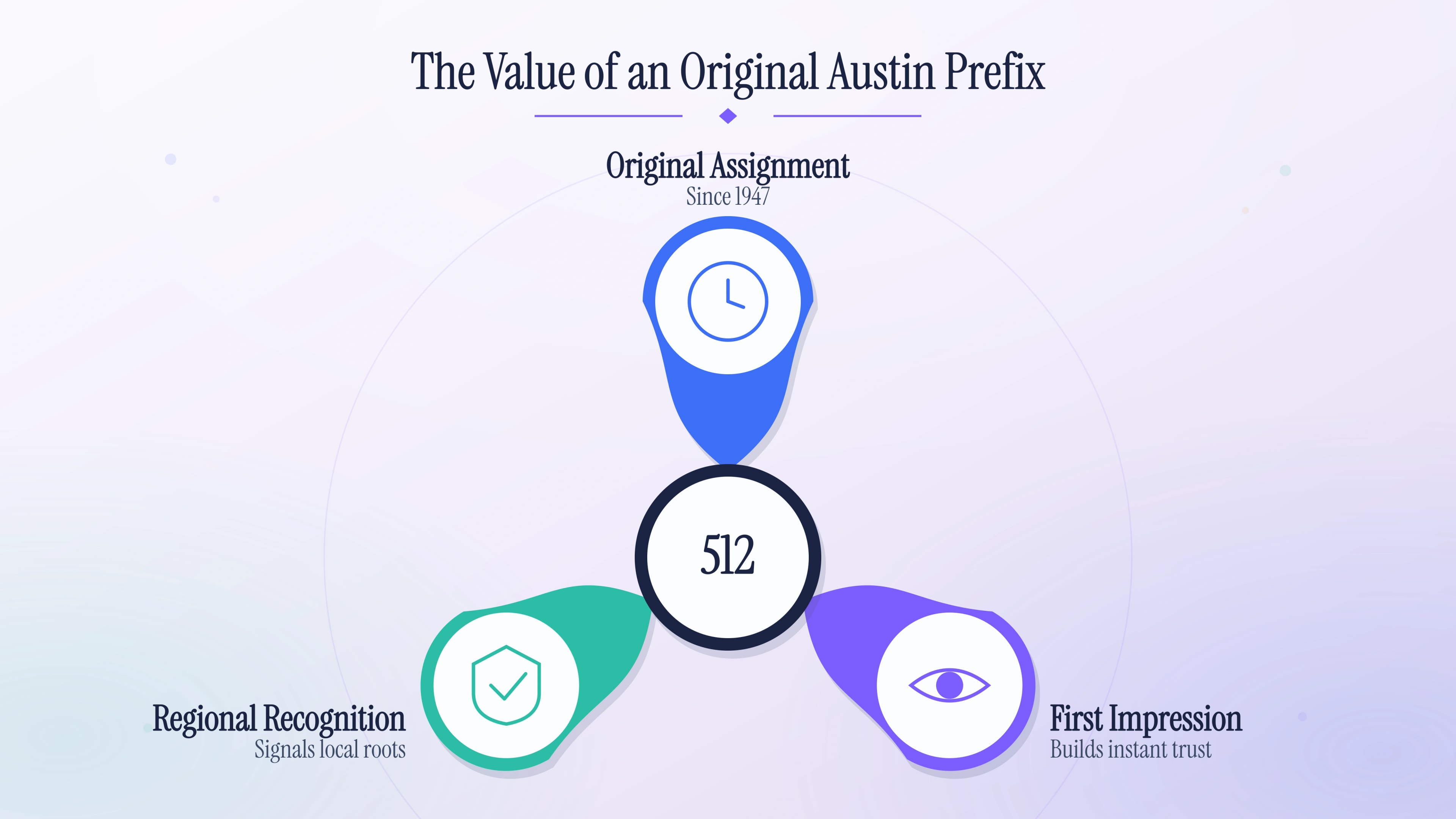
Early Assignment, Later Splits, Lasting Recognition
AT&T assigned the code in 1947 as one of the original area codes, and for its first 45 years it stretched across most of south-central Texas, taking in San Antonio, Corpus Christi, and the Rio Grande Valley as well as Austin. Splits in 1992 and 1999 moved those cities to 210 and 361 and left 512 with the Austin metro. Austin kept the original digits, a decades-long continuity that, alongside the city's growth as a technology and education hub, is why the prefix still signals a long-standing local presence.
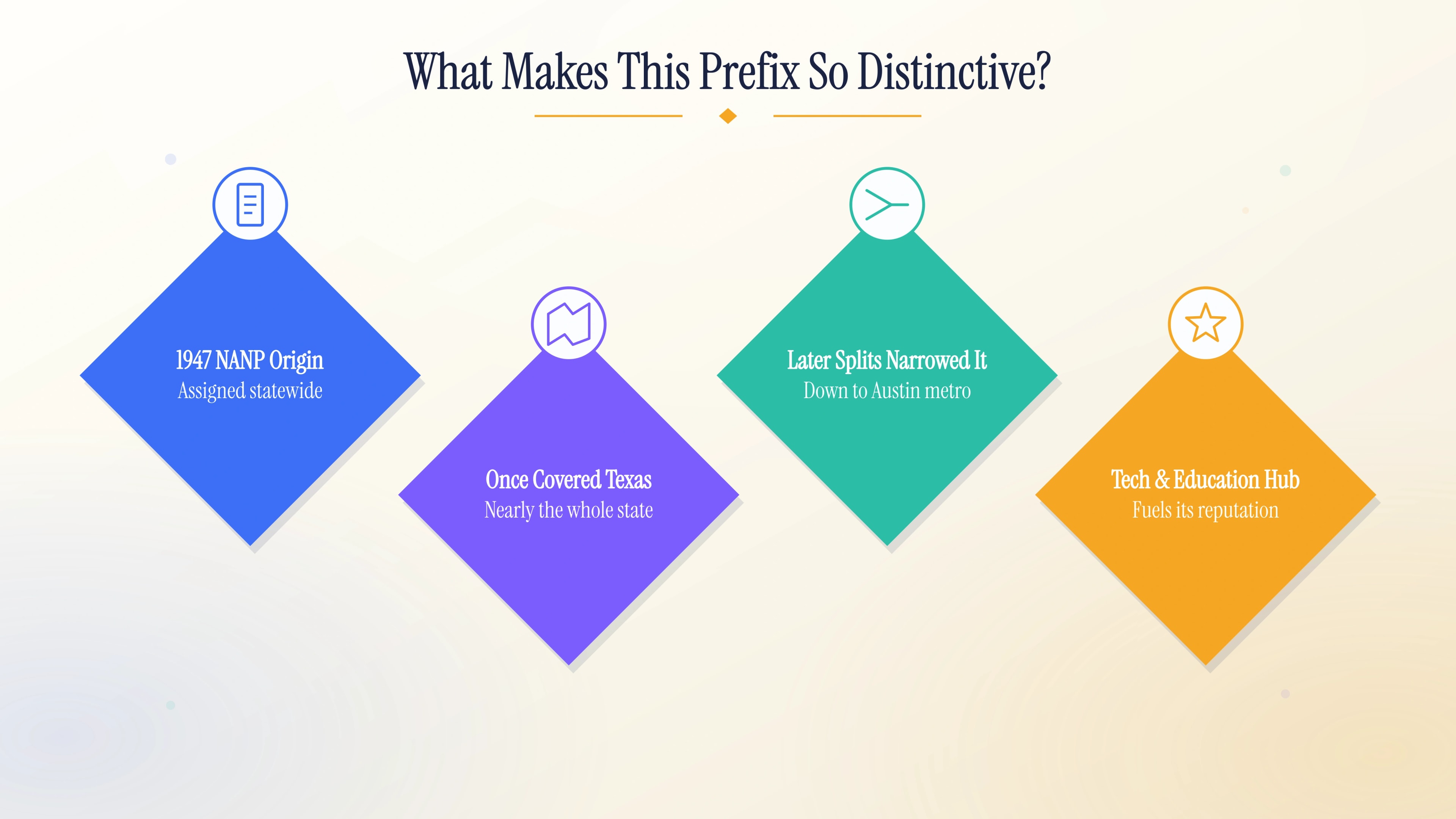
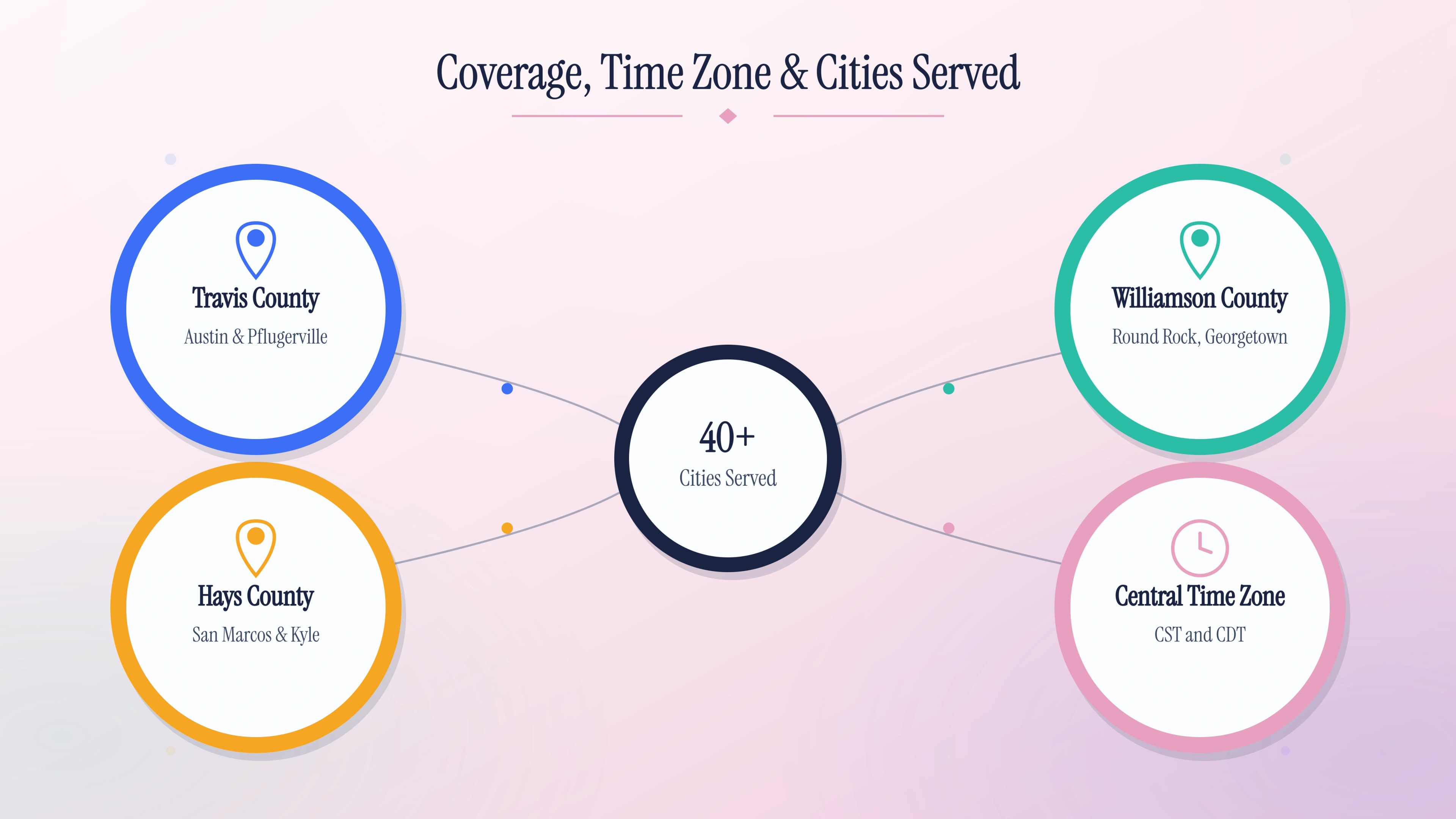
Counties, Communities, Central Time and the Overlay
The service territory concentrates on Travis, Williamson, and Hays counties, with additional reach into parts of Bastrop, Burnet, Caldwell, and Milam counties. Roughly 40 cities fall inside the boundary, including Austin, Round Rock, Georgetown, Cedar Park, San Marcos, Kyle, Leander, and smaller communities such as Rockdale and Milano. The entire footprint sits in the Central Time zone, observing CST in winter and CDT during daylight saving. Since 2013, the area has shared its territory with the 737 overlay, and both prefixes require ten-digit dialing for every local call.
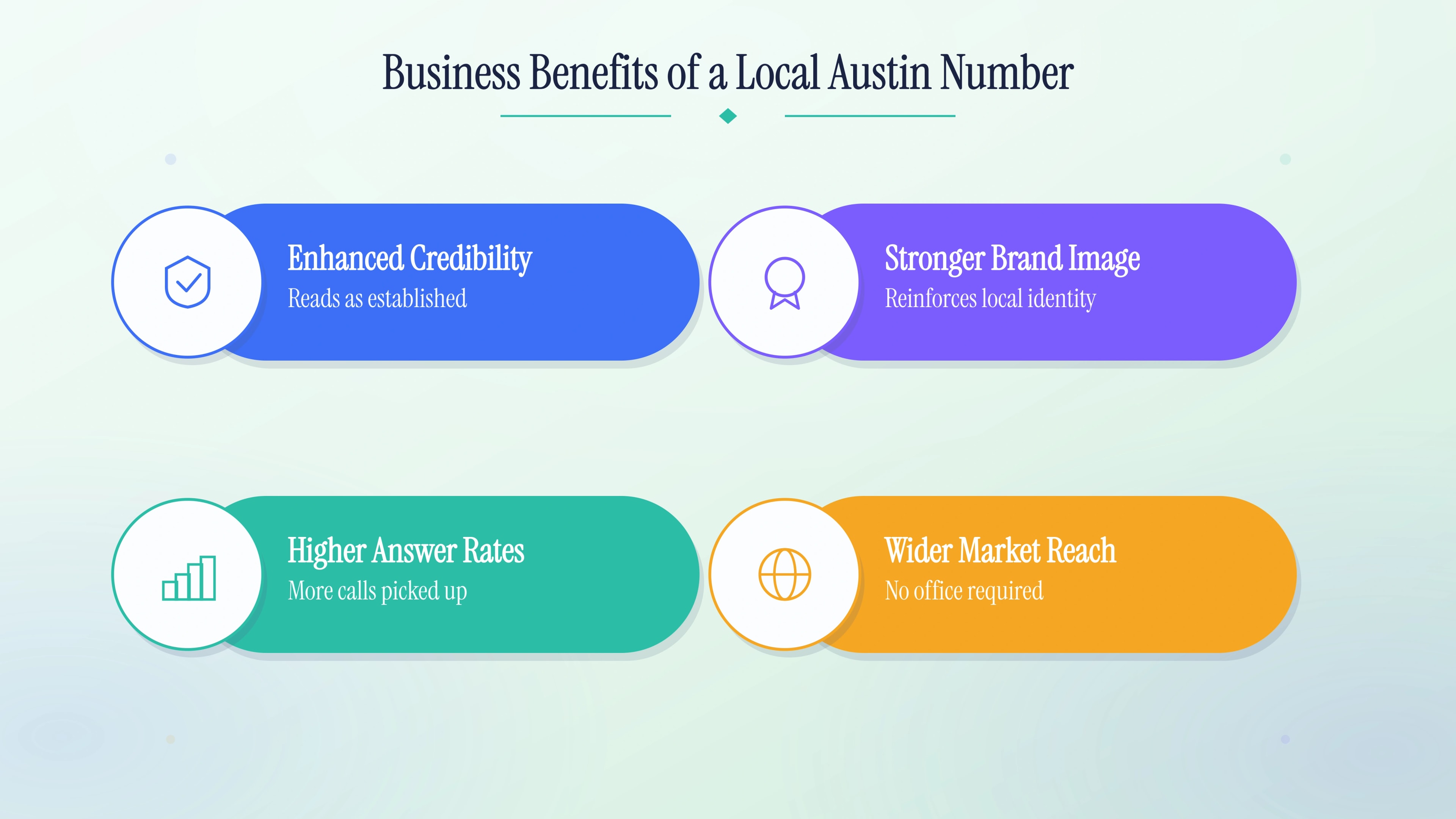
Business Benefits of a Local Austin Number
Businesses cite four consistent advantages to carrying a recognizable Austin number:
- Tech-hub recognition — a 512 prefix signals ties to a metro that crossed one million residents within city limits in 2025, reading as established rather than an unfamiliar outside caller.
- Industry alignment — pairing a 512 number with local listings reinforces credibility with Austin's technology, education-adjacent, and creative-industry customer base.
- Higher answer rates across the metro — a 512 caller ID is picked up more often in Round Rock, Georgetown, Cedar Park, and San Marcos than a toll-free or out-of-area number, since it reads as a neighbor rather than a stranger.
- Wider market reach without an office — a virtual 512 line lets a team based anywhere maintain an Austin identity while the metro keeps growing past 2.5 million people, an approach explored further in Acepeak's 737 area code guide to the same overlay territory.
Finding an Available Number Without Long Waits
A company opening in Round Rock or San Marcos should begin with what its provider can activate now, because Austin-area inventory turns over constantly, with numbers being released, ported to other carriers, or reassigned. From there, choose between a simple sequential number and a vanity pattern, and verify there is no long delay before the line goes live. Working from what is actually available, instead of a digit pattern picked in advance, generally shortens the whole process.
Making Sure Customers Actually See the Number
Getting the number is only half the job, because Central Texas customers still have to see it. Show it in the same format in the website header, on printed pieces, across vehicle wraps, in email signatures, and in the Google Business Profile listing, whether the business serves Austin proper or clients out in Leander and Kyle. Companies that bury the number as an internal detail miss most of its value, and a single consistent version across channels keeps call-tracking figures reliable for later analysis.
Judging Results Against the Old Number
After a few months on an Austin number, pull the inbound call volume, the rate at which those calls become leads, and any change in how quickly prospects respond to outreach. Stacking those results against the old number's track record shows whether the move is paying off. Call-tracking platforms can usually break out the new line's share automatically, even for a team fielding calls across Travis and Williamson counties.
Ready for a local Austin number?
Acepeak activates 512-area numbers in minutes on a cloud platform — no Texas office required. Explore plans and route calls to any device.
A Few Dollars a Month or a Broker Premium
A local Austin number rarely has to be expensive. On most cloud phone platforms, a standard 512 number comes bundled with a business plan and adds only a few dollars to the monthly bill, though pricing varies by provider. Vanity sequences are another story, since sourcing a highly memorable one from a broker can mean a one-time fee in the hundreds of dollars or the low thousands. For a tech startup or hospitality business in Central Texas, the regular number usually provides the main credibility benefit at a fraction of that outlay.
Easy-to-Remember Blocks Tend to Go First
With the Austin metro now past 2.5 million people, the catchiest 512 sequences are usually spoken for soon after they are released. A provider that watches inventory and alerts customers to new openings helps anyone targeting exact digits, while a business satisfied with an ordinary Round Rock or Cedar Park number seldom waits. Neighboring Central Texas communities outside the 512 boundary are covered in Acepeak's 830 area code coverage guide, and supply there behaves in a comparable way.
Why the Number Is Only One Part of the Impression
A polished website, branding that looks the same everywhere, and quick replies are what let a 512 number come across as a mark of reliability to Austin customers. If service is slow or the rest of the presentation is sloppy, the prefix will not rescue it. The number is one piece of a larger impression, and technology, hospitality, and creative businesses get the most from it when it sits inside a consistent, professional brand instead of serving as a one-off tactic.
Reach Beyond Texas: The Global Angle
Nothing about a 512 number requires a desk in Travis County. The line runs over cloud infrastructure, so staff working from out of state, or even abroad, can hold an Austin-area number and reach Central Texas callers under that local identity. For a company sizing up the Austin market, it offers a way to start conversations with customers in Georgetown or Kyle first and decide on office space later.
How a Local Prefix Lifts Answer Rates
Caller ID shapes the decision to answer before anyone says hello. People in Georgetown or San Marcos are considerably more likely to take a call bearing their home area code than one from somewhere unfamiliar or a toll-free block, because a local prefix looks relevant rather than like an anonymous solicitation. For outbound sales and outreach reps covering a Central Texas territory, that edge repeats with every call they place.
Population Milestones Point to Sustained Demand
The City of Austin crossed the one-million-resident mark within its city limits in 2025, and the broader metro area has grown to more than 2.5 million people, keeping it among the faster-growing large metros in the country. As long as that growth continues, demand for recognizable local numbers in the 512/737 territory is likely to stay elevated rather than fade.
Credibility Rooted in Decades of Local Use
Austin kept 512 through the 1992 and 1999 splits, so the code has been tied to the city far longer than 737, which joined the territory in 2013. That continuity matters to technology companies, education-adjacent services, hospitality operators, and creative studios that want to be seen as long-standing members of the Central Texas business community, particularly when a prospect trusts a familiar local number before an unfamiliar one.
Identify, Search, Compare, Confirm
Four steps cover most setups. Identify providers with inventory in the 512 territory, run a live availability search for the pattern you want, compare what a standard number costs with a vanity choice, and confirm the selection before the line is activated. A business porting its current number from another carrier should expect the handoff to take several business days.
Requesting a Quote and Moving an Existing Line
An Austin company ready to act can request a quote, review the numbers available across Travis, Williamson, and Hays counties, and have a new line running in less than a business week. Businesses bringing an existing number over from another provider hold a federally protected right to that number, so a provider cannot delay a valid port without a documented cause.
A Small Recurring Cost for Central Texas Credibility
Austin's original telephone prefix has outlasted several waves of Texas numbering changes and still functions as shorthand for a genuine Central Texas presence. From its 1947 origins to today's ten-digit dialing alongside the 737 overlay, it has adapted to a metro that recently crossed one million residents within city limits alone. For a business deciding between a local number and an unfamiliar one, the modest cost of the former is a small price for the credibility it buys with Austin-area customers.
Add a local Austin number to your business
Explore virtual number options through Acepeak and get a Central Texas line activated today.
Questions, answered.
The territory covers roughly 40 cities across Travis, Williamson, and Hays counties, plus parts of Bastrop, Burnet, Caldwell, and Milam counties, including Austin, Round Rock, Georgetown, San Marcos, Cedar Park, Kyle, and Leander.
No, but the two share identical geography through an overlay introduced in 2013. Both can be dialed and received anywhere within the shared territory, and every local call requires all ten digits.
Central Time — CST (UTC−6) in winter, shifting to CDT (UTC−5) during daylight saving, which runs from the second Sunday in March to the first Sunday in November.
Yes. Cloud communications providers issue virtual numbers in this territory to businesses located anywhere, and calls route through the standard telecom network while presenting a local Central Texas identity to callers.
A standard number typically costs a few dollars monthly through a business phone plan, while a distinctive vanity sequence sourced through a number broker can cost anywhere from roughly $150 to several thousand dollars as a one-time fee, depending on demand.
Consumers can report suspected scam or spoofed calls directly to the FCC and FTC, both of which track patterns of abuse tied to specific number ranges and can direct carriers to block confirmed offenders.
Signing up for a 512 area code number takes minutes with a cloud phone provider — no local office in Austin required. Pick the number, connect it to your existing phone or app, and calls route in immediately. This keeps the 512 area code presence you already have while adding the local credibility Texas customers respond to.