Pagers, Mobile Phones and a Late-1990s Growth Spurt
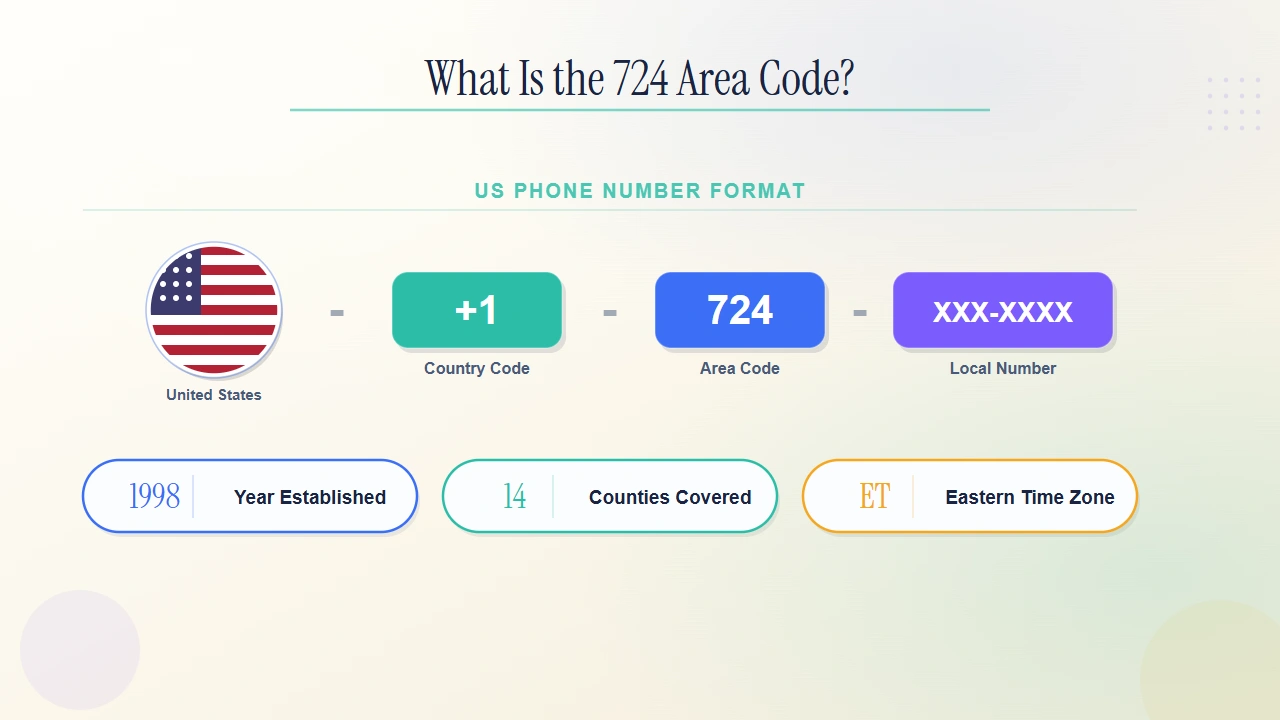
Back in the late 1990s, western Pennsylvania hit a digital growth spurt. As mobile phones and pagers became household staples, demand for new telephone lines outpaced supply. To keep the region connected, area code 724 launched on February 1, 1998. It stretched across 14 counties and relieved the overextended 412 prefix, which had handled all of western Pennsylvania's calls until then.
Today, the prefix is more than three digits. It is a local identity for residents and businesses, stretching from the suburbs of Pittsburgh to the rural expanses of Westmoreland and Butler counties.
Key Takeaways
- Area code 724 launched February 1, 1998, created as an overlay to relieve the overloaded 412 prefix across western Pennsylvania.
- The prefix spans 14 counties — from Armstrong and Clarion in the north to Greene and Fayette in the south — serving millions of residents and thousands of businesses.
- In 2001, the 878 overlay was added, requiring 10-digit dialing for all calls within the region.
- Local 724 phone numbers drive higher call answer rates because customers recognize and trust a familiar prefix.
- Scammers spoof local-looking numbers to exploit that trust — the FTC's Do Not Call Registry and complaint tools are the first line of defense.
Why 724 Still Matters
For businesses and residents alike, this western PA prefix delivers three core advantages:
- Local Trust: A 724 phone number signals community membership. Customers recognize the prefix as local, not a distant call center.
- Regional Reach: Spanning 14 counties, it connects commuters, farmers, and local shop owners from New Castle to Greensburg under one telecommunications umbrella.
- Infrastructure Legacy: The introduction of area code 724 paved the way for the overlay model now used throughout Pennsylvania, ensuring the region never runs short of assignable numbers.
What Happened When the 412 Prefix Reached Capacity?
Area code 724 is a North American Numbering Plan designation covering western Pennsylvania. Established on February 1, 1998, it was created to address the phone number shortage that emerged when the 412 prefix reached capacity. The prefix now serves millions of residents and thousands of businesses across the region, providing local dialing and fostering community connections.
Historical Background
The introduction of area code 724 marked a significant milestone in Pennsylvania's telecommunications history. Before 1998, the 412 prefix handled all phone numbers in western Pennsylvania, but rapid population growth and expanded business activity created urgent demand for additional capacity.
Rather than implementing a geographic split that would have disrupted existing service, telecommunications regulators introduced 724 as an overlay. This approach allowed both prefixes to coexist within the same geographic footprint, ensuring minimal disruption for existing subscribers while opening fresh numbers for new assignments.
Why It Was Necessary
Demand for telephone numbers in western Pennsylvania grew faster than planners anticipated. Businesses expanded, households multiplied, and mobile phones became ubiquitous. Area code 724 provided the solution by effectively doubling the region's available phone number capacity.
This expansion let residents and businesses get local numbers without delays or service disruptions. That mattered for a region whose economic ties reached well beyond county borders.
14 Counties Around Pittsburgh and the 878 Overlay
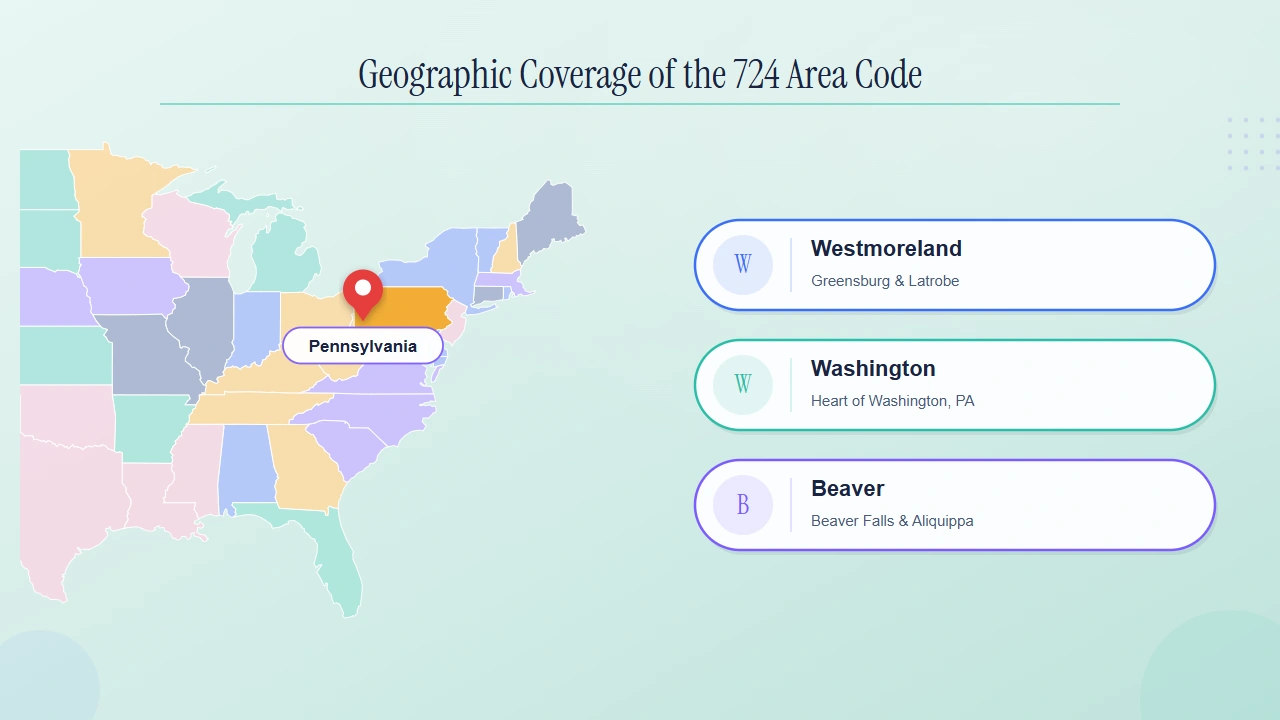
The prefix covers a substantial portion of Western Pennsylvania — spanning 14 different counties rather than a single city. Whether situated in a quiet rural stretch or a bustling suburb just outside Pittsburgh, residents and businesses across this footprint share the same three-digit identifier. For context on how area code prefixes divide Pennsylvania's telecommunications geography, the Pennsylvania area code serving the state's northeastern corridor follows a similar county-wide coverage model.
A Quick Look at the Neighborhoods
- Westmoreland: Places like Greensburg and Latrobe.
- Washington: Right in the heart of Washington, PA.
- Beaver: Over in Beaver Falls and Aliquippa.
- Butler: All throughout the city of Butler.
- Allegheny: The many suburbs ringing the Pittsburgh area.
The remaining counties in the coverage area include Armstrong, Clarion, Fayette, Greene, Indiana, Lawrence, Mercer, and Venango. That makes this one of the most geographically expansive prefixes in the Commonwealth. Because it covers so much ground, the prefix ties together commuters, farmers, and local shop owners across western PA.
The 878 Overlay
In 2001, planners added 878 as an overlay for both the 724 and 412 zones. Think of it like adding an extra lane to a highway — it does not change the destination, it simply gives more travelers room. Because of this expansion, the region switched to mandatory 10-digit dialing.
Even when a neighbor's number starts with 724 and a caller's begins with 878, reaching them requires nothing more than dialing the complete 10-digit number. It is a clean system that lets western Pennsylvania grow without forcing long-established users to change their numbers.
Time Zone and Daylight Saving Observance
Residents and businesses on this western Pennsylvania prefix run on Eastern Time (ET) — the same clock as New York, Washington D.C., and the rest of the East Coast. That alignment keeps cross-regional scheduling simple. There is no time-zone math when booking a meeting or coordinating a broadcast.
The Spring Forward, Fall Back Routine
Like the rest of Pennsylvania, the 724 region observes Daylight Saving Time:
- In Spring: Clocks advance one hour, trading sleep for long, bright summer evenings ideal for outdoor activities and local commerce.
- In Fall: Clocks fall back one hour, reclaiming that hour of rest as the region heads into shorter winter days.
The cycle keeps western Pennsylvania in sync with the national schedule. Whether placing a call from Butler or hosting a conference from Greensburg, timing aligns seamlessly with East Coast counterparts.
Dialing Patterns for This Prefix

Knowing the correct dialing format ensures calls connect reliably. Different scenarios require different patterns, and understanding each prevents missed connections.
- Local calls within the 724 area: dial all 10 digits — the full prefix followed by the seven-digit subscriber number, e.g. 724-555-0123.
- Long-distance calls from the 724 area: dial 1, then the destination area code, then the seven-digit number, e.g. 1-202-555-0123 to reach Washington, D.C.
- International calls to a 724 number: dial the United States country code (1), then the prefix and local number, e.g. +1-724-555-0123.
Benefits of Having a 724 Area Code Phone Number
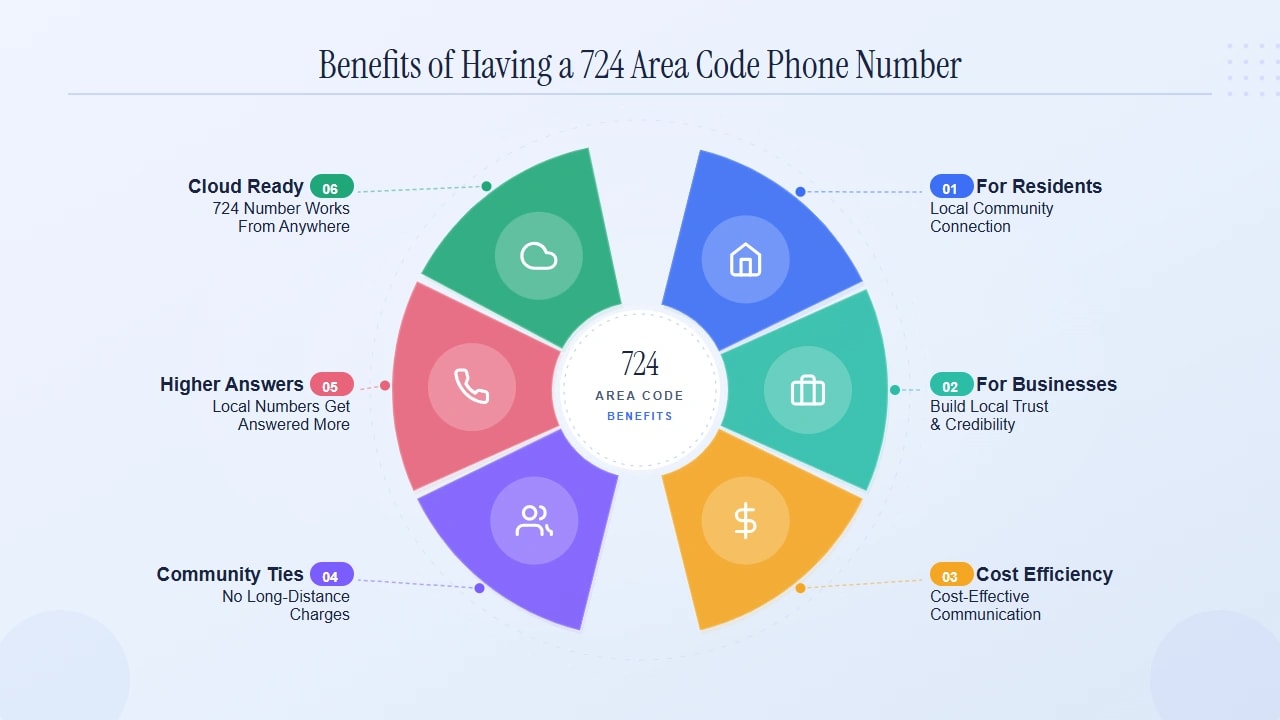
A 724 phone number delivers real advantages for both individuals and businesses operating in western Pennsylvania.
For Residents
Local phone numbers strengthen community connection and reduce communication costs. Residents with a 724 number can reach neighbors and local services without incurring long-distance charges, making everyday communication more accessible and affordable.
For Businesses
Businesses gain immediate credibility from a recognizable local prefix. Customers in western Pennsylvania identify 724 as familiar — and that recognition matters. Research consistently shows local numbers receive higher answer rates than toll-free or out-of-region alternatives. Small and mid-size businesses benefit from appearing locally established, even when operations run entirely from cloud infrastructure. For operators comparing Pennsylvania strategies, the Philadelphia area guide outlines parallel benefits in the southeastern part of the state.
Cost Efficiency
Area code 724 enables cost-effective communication. Calls within the coverage area are billed as local, eliminating long-distance charges. For businesses handling high call volumes or individuals who regularly contact local services, those savings accumulate meaningfully across the year.
Ready to establish a local presence in western Pennsylvania?
Acepeak makes it easy to get a 724 phone number with full cloud-calling features — call forwarding, voicemail transcription, and real-time analytics included.
How to Secure a 724 Area Code Phone Number
Obtaining a 724 phone number is straightforward for both individuals and businesses. Multiple providers offer this service through different channels.
For Individual Users
Contact a local carrier or major network provider such as AT&T, Verizon, or T-Mobile. These companies accept requests for a 724 number online, through customer service representatives, or at physical retail locations. The process typically completes within a few business days.
For Businesses
Businesses have expanded options. Cloud-based telecommunications platforms like Acepeak offer flexible solutions for securing area code 724 numbers alongside features including call forwarding, voicemail transcription, and call analytics. These services allow companies to establish a credible local presence in western Pennsylvania regardless of physical location.
Step-by-Step Process
- Assess your needs: Determine the number of lines required and which features — call routing, analytics, or SMS — matter most.
- Research providers: Compare traditional carriers against cloud-based telecommunications platforms for pricing and capability.
- Submit your request: Follow the chosen provider's process to request a 724 phone number.
- Activate your service: Once approved, activate the number and configure call routing and voicemail settings.
- Begin using your number: Start making and receiving calls with an active 724 prefix.
Telecommunications Infrastructure and Call Patterns
Behind every call placed with a 724 phone number sits a network that has changed dramatically since the late 1990s. What began as copper wire is now a high-speed web of fiber optics and digital switching. The infrastructure is built with redundancy at its core, so calls do not drop and audio stays clear. Businesses across western Pennsylvania rely on that reliability every day.
How We're Using Our Phones Today
- Community First: The majority of calls within the 724 region are intra-regional — neighbors checking in, parents calling schools, residents ordering from businesses down the street.
- Long-Distance Capacity: Western Pennsylvania's strong economic ties to national markets mean the network is built to handle heavy outbound traffic without strain.
Common Scams and How to Protect Yourself
Scammers know a local-looking number gets answered. A technique called "spoofing" lets bad actors make calls appear to originate from within the 724 region, exploiting the familiarity and trust that community-recognized numbers carry. Caller ID alone is not proof of identity, and western PA residents are not the only targets.
How to Spot the Fakes
The clearest warning sign is urgency. Be wary of any unsolicited caller who claims to represent the IRS, a utility, or a tech support team and demands immediate personal information or payment. That is a major red flag.
- Trust instincts: Legitimate organizations almost never cold-call to request Social Security numbers or bank credentials.
- The Hang Up and Call Back Rule: If a caller claims to represent a bank or service provider, end the call, locate the official number on a bill or the organization's verified website, and call directly.
Simple Ways to Protect Yourself
- Guard sensitive data: Never share passwords, account numbers, or financial details with anyone who initiated the contact.
- Register with the Do Not Call Registry: While not a complete solution, registering a number reduces unwanted call volume noticeably.
- Report suspicious callers: The FTC complaint portal gives residents a direct channel to flag scam calls. The FTC can also be reached at 1-877-FTC-HELP.
Future Outlook for the 724 Area Code
Area code 724 has been in continuous service for over 28 years and continues to carry significant telecommunications load across western Pennsylvania. State planners and local providers monitor available number inventory closely, ensuring capacity stays ahead of demand. Current projections indicate the prefix holds sufficient numbers for the foreseeable future. If a new growth cycle emerges, regulators could introduce an additional overlay — but for now, the region is well served.
How Tech Is Changing the Game
- Work from anywhere: A business headquartered in Greensburg can be managed from a laptop in another city while still presenting a local caller ID to western PA customers.
- Efficient number management: Cloud phone systems allocate number inventory far more efficiently than legacy landline infrastructure.
- Mobile-first reality: Even as smartphones dominate, the 724 prefix retains its weight as a digital handshake that signals community membership.
Western Pennsylvania's Cornerstone Since February 1998
Area code 724 represents more than a telecommunications designation — it embodies western Pennsylvania's growth, connectivity, and economic vitality. Since its introduction on February 1, 1998, the prefix has enabled millions of residents and thousands of businesses to communicate effectively within the region and beyond.
Knowing the history, coverage, and advantages of this prefix helps residents and businesses make informed telecom decisions. As western Pennsylvania keeps evolving, area code 724 will remain a cornerstone of the region's communication network. It connects communities across 14 counties and drives the commerce that keeps the area moving forward.
Establish your local presence in western Pennsylvania today.
Get a 724 phone number with advanced cloud-calling features — setup takes minutes and the system scales as your business grows.
Questions, answered.
The 724 prefix serves western Pennsylvania, spanning 14 counties including Westmoreland, Washington, Beaver, Butler, and the suburban ring around Pittsburgh. It was established on February 1, 1998, as an overlay to the existing 412 prefix.
For calls within the region, dial the full 10-digit number: 724-XXX-XXXX. For calls from outside the United States, dial +1-724-XXX-XXXX — the +1 prefix is the country code for the United States.
A 724 phone number helps businesses build a recognizable local presence in western Pennsylvania, improving customer trust and call answer rates. Residents benefit from local calling rates and easier access to community services without long-distance charges.
724 numbers are available through major carriers such as AT&T, Verizon, and T-Mobile, as well as cloud-based telecommunications platforms like Acepeak that include additional features such as call forwarding, voicemail transcription, and call analytics.
Not currently. The 878 overlay, introduced in 2001, significantly extended the region's number supply, and planners continue to monitor inventory. Current capacity is sufficient for near-term demand, with additional overlays available as a contingency if needed.
Signing up for a 724 area code number takes minutes with a cloud phone provider — no local office in Pennsylvania required. Pick the number, connect it to your existing phone or app, and calls route in immediately. This keeps the 724 area code presence you already have while adding the local credibility Pennsylvania customers respond to.