An Alamo City Identity That Nearly Vanished Twice
Few area codes carry as much local pride as 210. It is stitched into San Antonio's identity the way 210-branded murals, T-shirts, and city marketing already suggest — a three-digit shorthand for the Alamo City itself. That identity was almost lost twice: once when the code was born out of a crowded 512, and again just five years later when San Antonio's own explosive growth forced regulators to carve it down further. What survived is a compact, fiercely defended numbering area that has needed an overlay rather than another split to keep up with demand. This guide covers exactly where 210 reaches today, how its two splits and one overlay came about, its dialing rules and time zone, and how any business can claim a local San Antonio number.
Key Takeaways
- Area code 210 was created on November 1, 1992, when Texas's original 512 area code split, with San Antonio and Austin briefly sharing the new territory before Austin chose to keep 512.
- A second, three-way split on July 7, 1997 pared 210 down to most of Bexar County, sending the surrounding suburbs and Hill Country to the new 830 code and the Rio Grande Valley to 956.
- Since October 2017, new San Antonio-area lines have been assigned the overlay code 726 — layered over the exact same territory as 210 — and every local call now requires all ten digits.
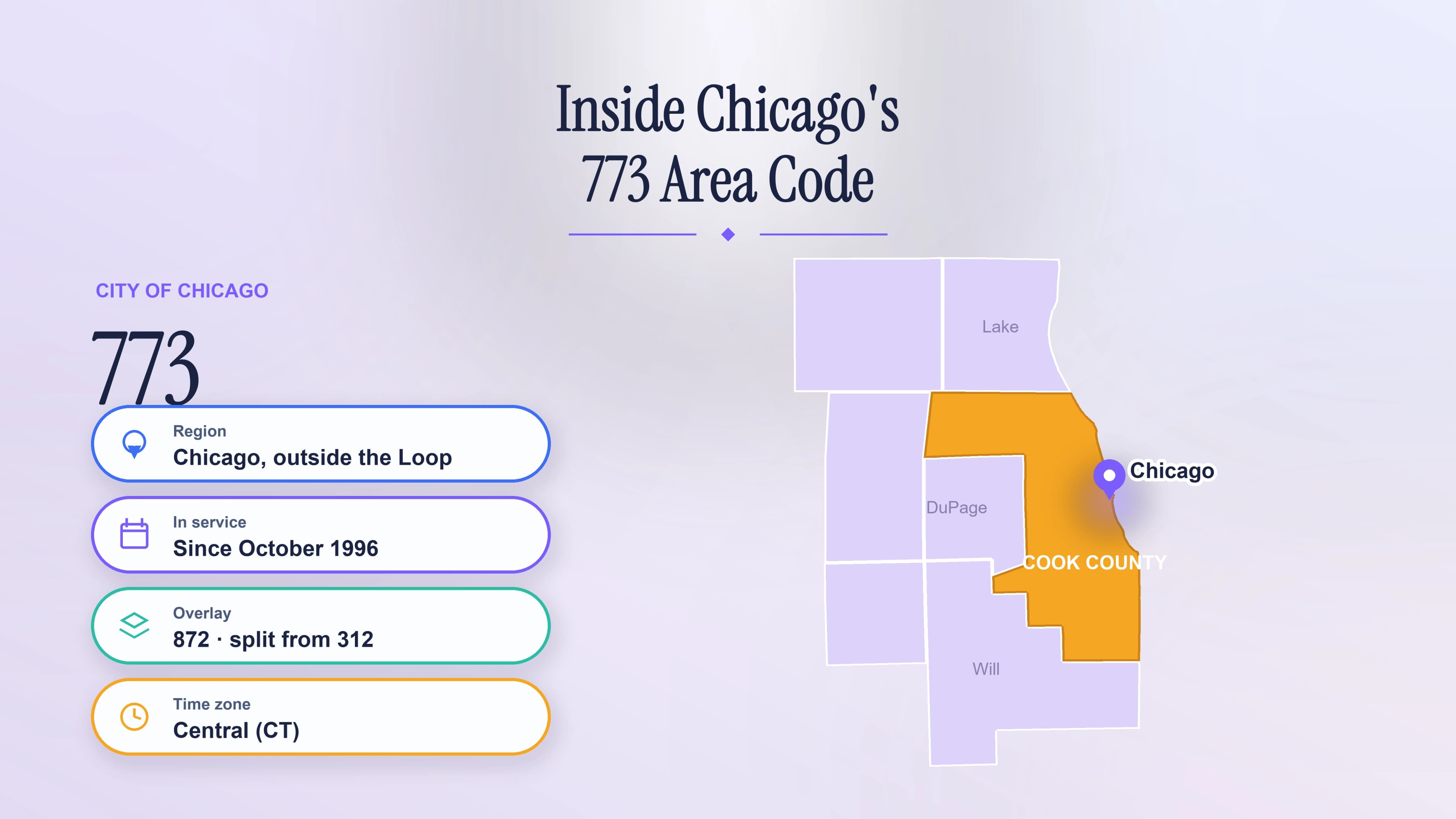
- 210 and 726 form an "enclave" numbering area completely surrounded by area code 830, similar to how Chicago's 312 sits inside 773.
- 210 sits in the Central Time Zone, and a local number still carries real weight in a metro anchored by Joint Base San Antonio, a major medical center, and a fast-growing tech and tourism economy.
What Is the 210 Area Code?
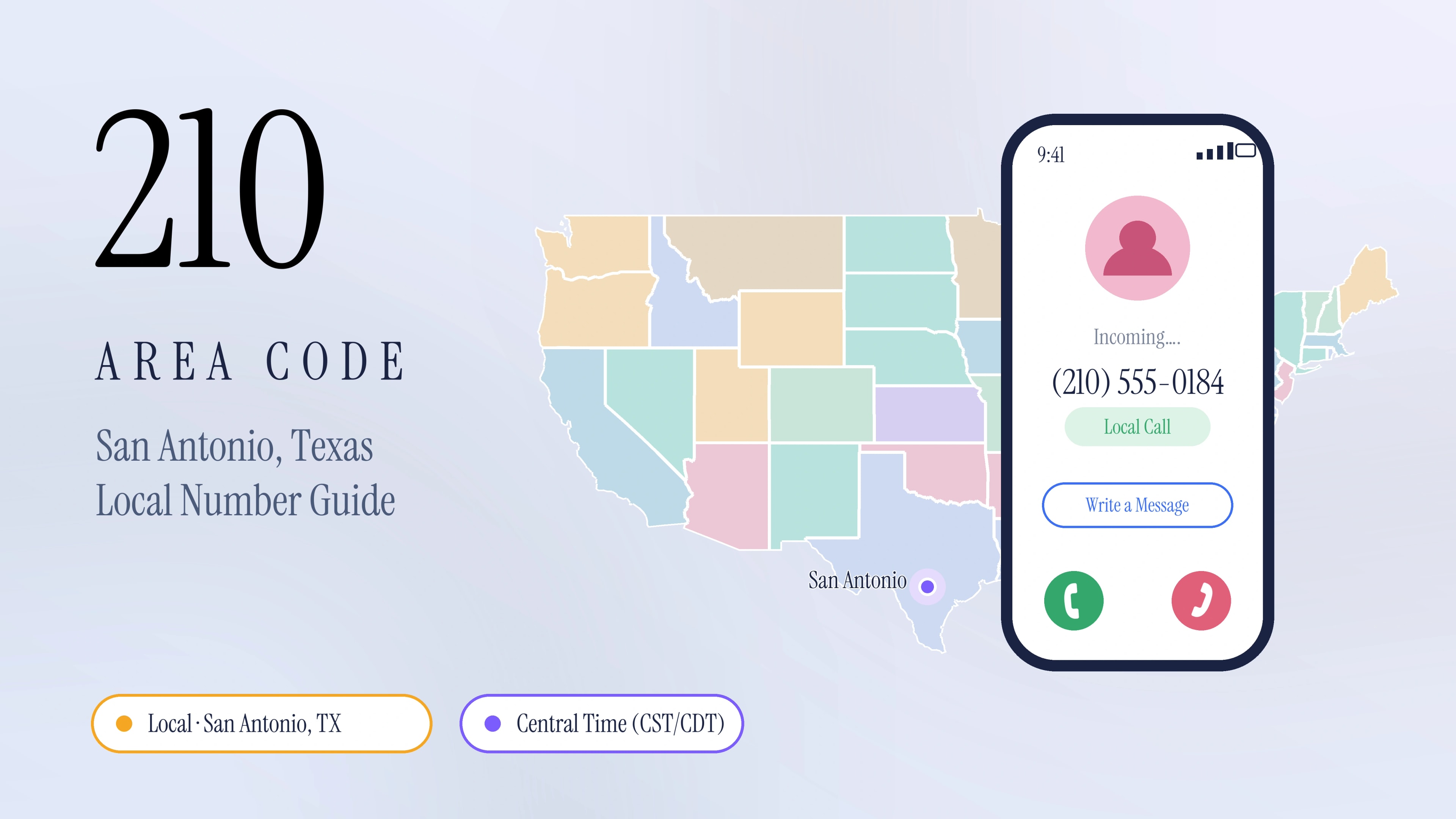
The 210 prefix is the telephone identity of San Antonio and Bexar County, one of the fastest-growing large metros in Texas. It was created on November 1, 1992, when the old 512 area code — which had covered south-central Texas since 1947 — was split in two. San Antonio took the new 210 code while Austin, the state capital, was allowed to keep the 512 area code rather than force state agencies to change every number. Within just a few years San Antonio's own growth, driven by cellular phones and pagers as much as population, pushed 210 itself toward exhaustion — and regulators responded the way many fast-growing regions do, with an overlay rather than another split.
Bexar County, Joint Base San Antonio and the 830 Ring
Today 210 (and its overlay, 726) cover most of Bexar County plus small slices of five neighboring counties, an area completely surrounded by area code 830. The region includes:
- San Antonio — the seventh-largest city in the United States and the anchor of the entire region
- JBSA Fort Sam Houston and JBSA Lackland — the Joint Base San Antonio installations, among the largest military medical and training complexes in the country
- Alamo Heights, Olmos Park, Terrell Hills, and Castle Hills — established inner-ring suburbs close to downtown
- Converse, Live Oak, Universal City, Windcrest, and Balcones Heights — fast-growing suburban communities ringing the city
- Helotes, Leon Valley, and Shavano Park, plus small portions of Atascosa, Comal, Guadalupe, Medina, and Wilson counties — the outer edge of the numbering area
Time Zone — Central
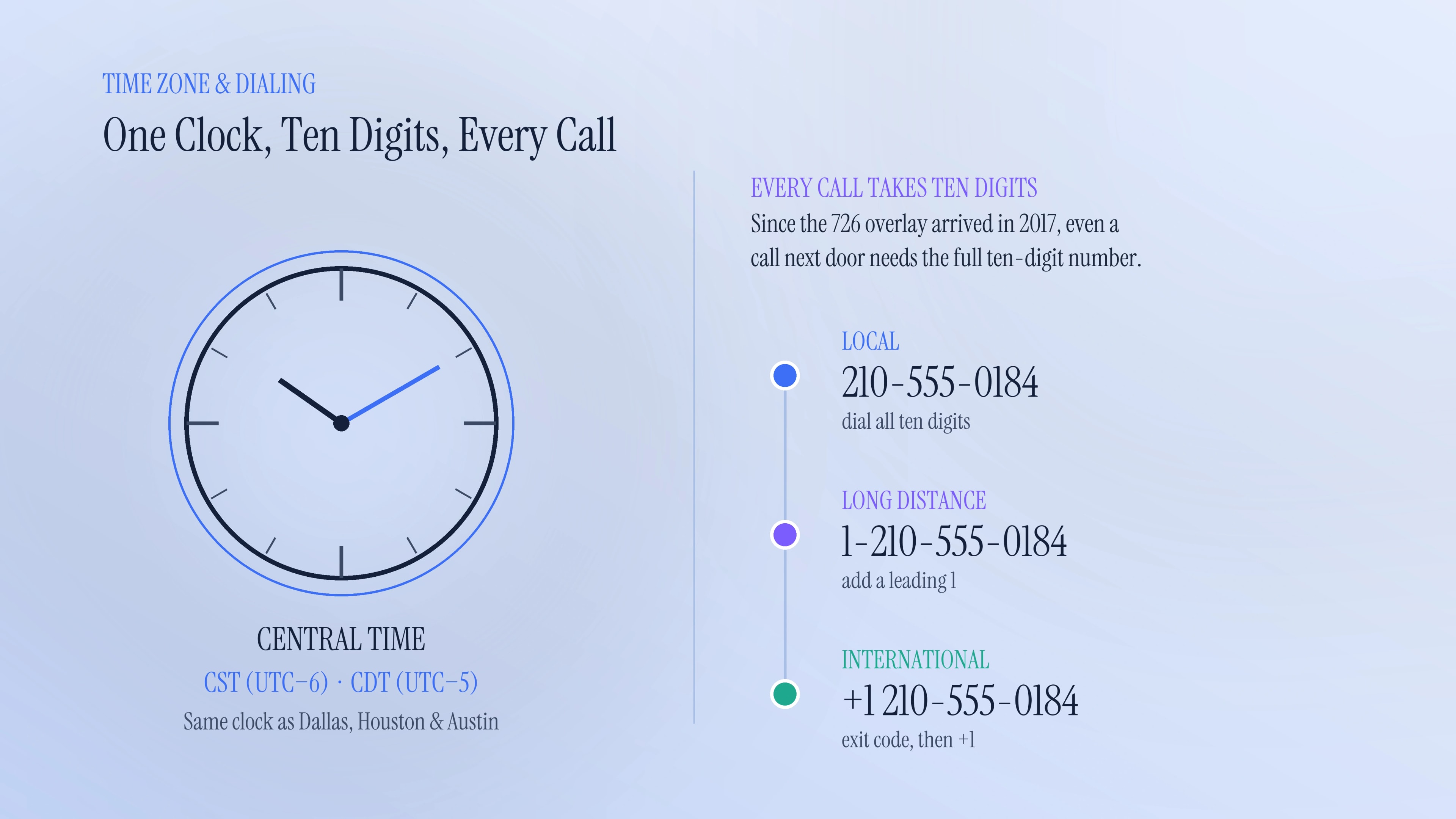
The entire 210/726 region runs on Central Time — UTC−6 during standard time (CST) and UTC−5 during daylight saving (CDT), which runs from March to November. That puts San Antonio on the same clock as Dallas, Houston, and Austin, with no time-zone split to track anywhere inside the numbering area.
The Splits, the 726 Overlay, and Ten-Digit Dialing
210's history is a story of a code shrinking almost as soon as it was born. It launched in 1992 carved out of 512, covering San Antonio, most of the Hill Country, and the Rio Grande Valley. Barely four years later that territory was already running out of numbers, so on July 7, 1997 regulators split it three ways: most of Bexar County and San Antonio stayed in 210, the surrounding suburbs and Hill Country became the new 830 area code, and the Rio Grande Valley took area code 956.
Even after that reduction, San Antonio kept growing, so instead of splitting the city again, regulators announced an overlay in August 2016 that went into effect in October 2017 — area code 726, assigned to new lines across the identical footprint as 210. That is also why every local call in the region now requires all ten digits rather than seven.
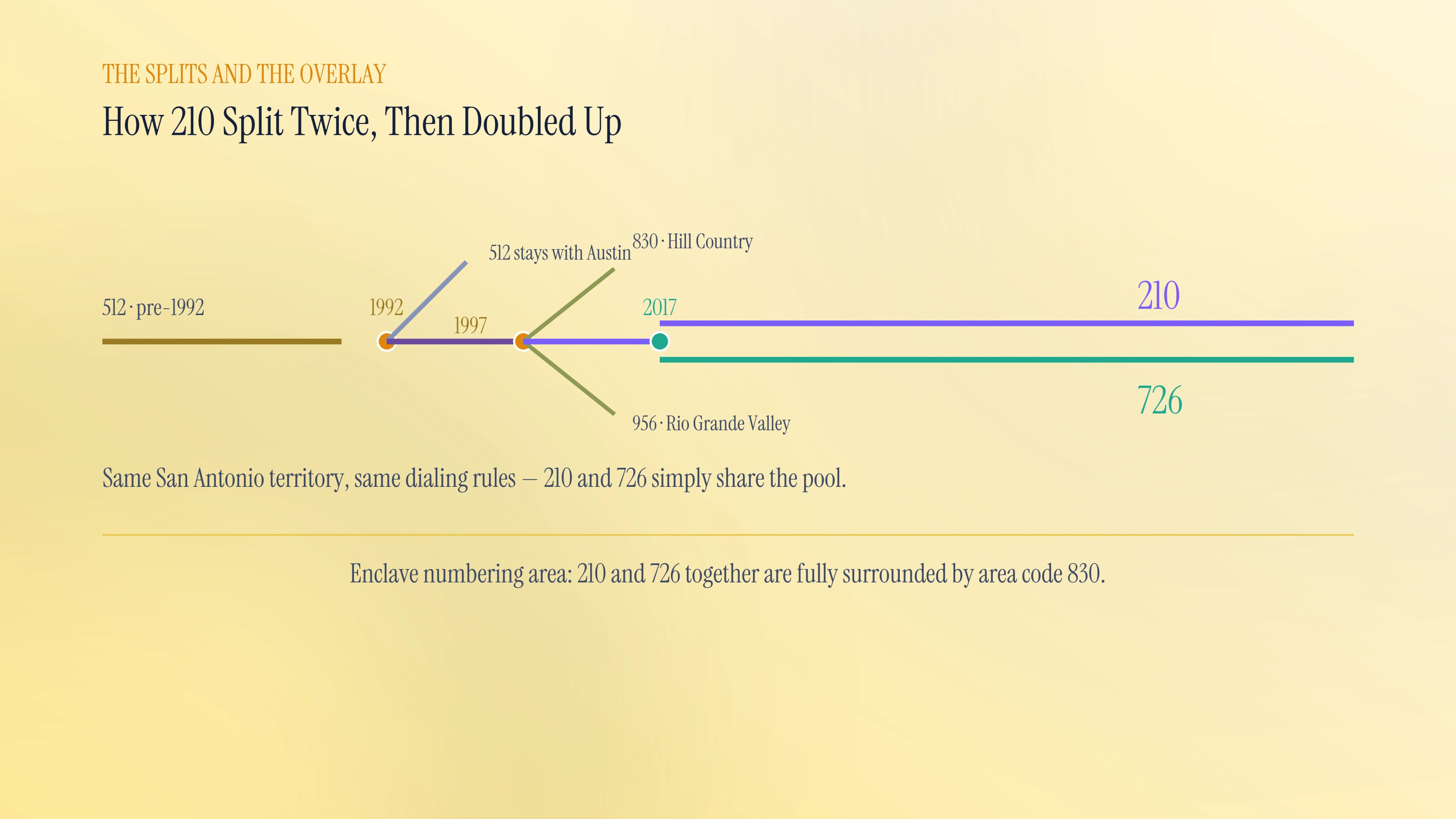
The result is an unusual "enclave" numbering area: 210 and 726 together are completely surrounded by area code 830, much like Chicago's 312 sits inside 773 or Pittsburgh's 412 and 878 sit inside a larger neighbor. On the alphanumeric telephone keypad, 726 even spells "SAN" — a small, deliberate nod to San Antonio when the overlay code was chosen.
Benefits of a 210 Number for Business
A recognizable 210 number does quiet work for any business trying to reach San Antonio customers. When a local number shows up on caller ID, it reads as a neighbor rather than an unfamiliar out-of-town call.
- An enclave identity: 210 and its 726 overlay are boxed in on every side by area code 830, so the prefix reads as authentically San Antonio rather than the surrounding Hill Country.
- Ties to a major institutional economy: Joint Base San Antonio, the South Texas Medical Center, and the city's growing cybersecurity corridor all draw contractors who expect a 210 or 726 point of contact.
- A tourism and convention signal: With the Alamo, the River Walk, and a steady flow of conventions downtown, a 210 number tells visitors and event planners a business is genuinely on the ground.
- Suburb-to-suburb reach: Cloud calling lets a business hold one 210 or 726 line while its team answers from Helotes, Universal City, or anywhere else in the country.
Ready to claim a San Antonio presence?
Acepeak provisions local 210 numbers with carrier-grade routing and instant activation, so a business can sound local from day one.
How to Get a 210 Number
Because 210 has needed an overlay to keep up with demand, a fresh number in the original code can be harder to find than a 726 line, but a cloud provider handles both the same way.
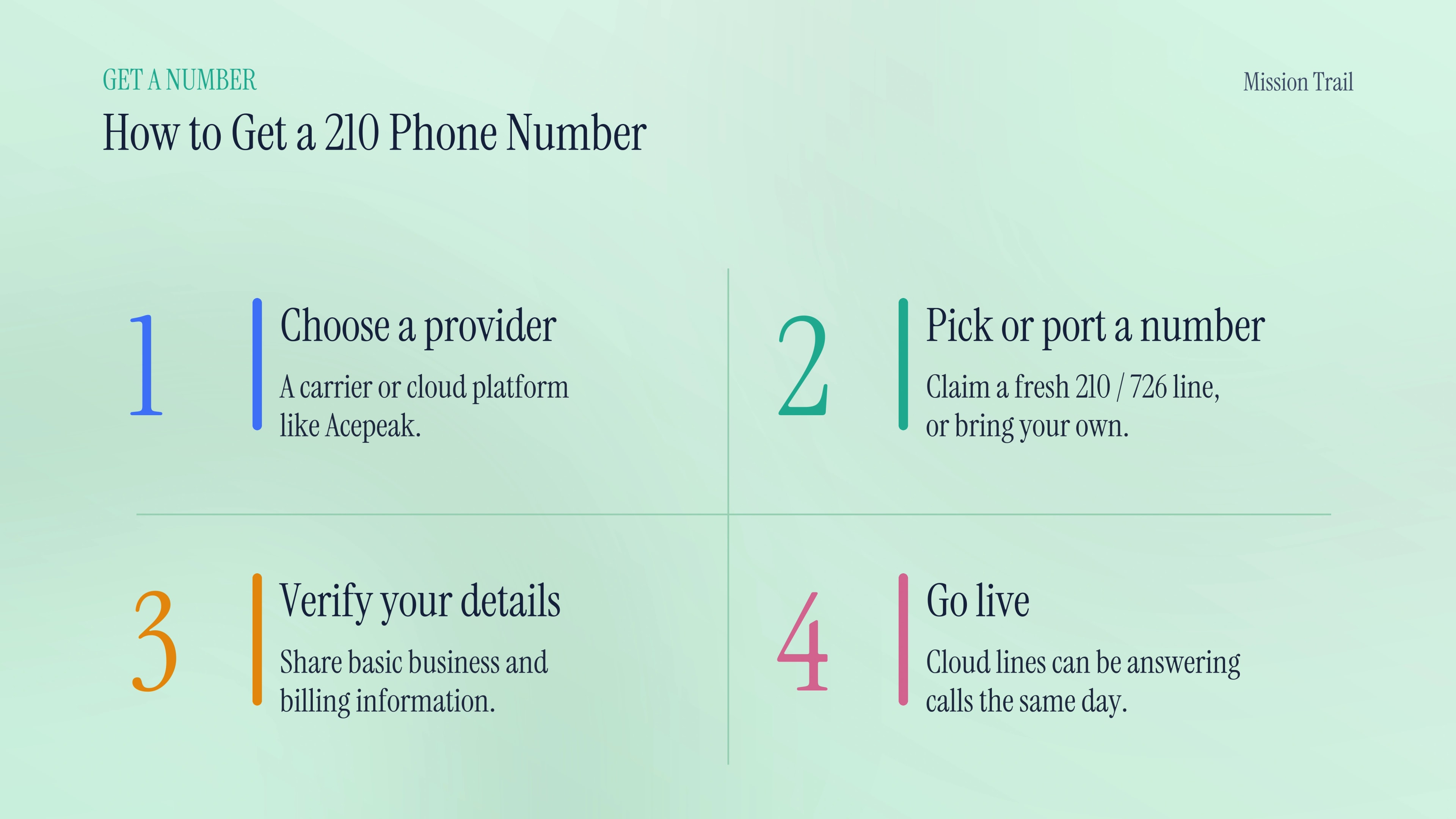
- Check 210 and 726 inventory. Because 210 numbers are scarcer after two splits, a provider like Acepeak can show live availability across both the original code and the 726 overlay.
- Pick or port a number. Claim a fresh San Antonio line or transfer a number you already hold in Bexar County.
- Verify your business details. Share basic company and billing information to complete setup.
- Go live the same day. Provisioning is typically same-day, with no on-site hardware needed for either code.
Spoofed San Antonio Calls and the Red Flags to Heed
Because a local code looks trustworthy, scammers sometimes spoof a 210 or 726 number to appear nearby. A local-looking call still deserves scrutiny — even a familiar area code on your caller ID can be faked.
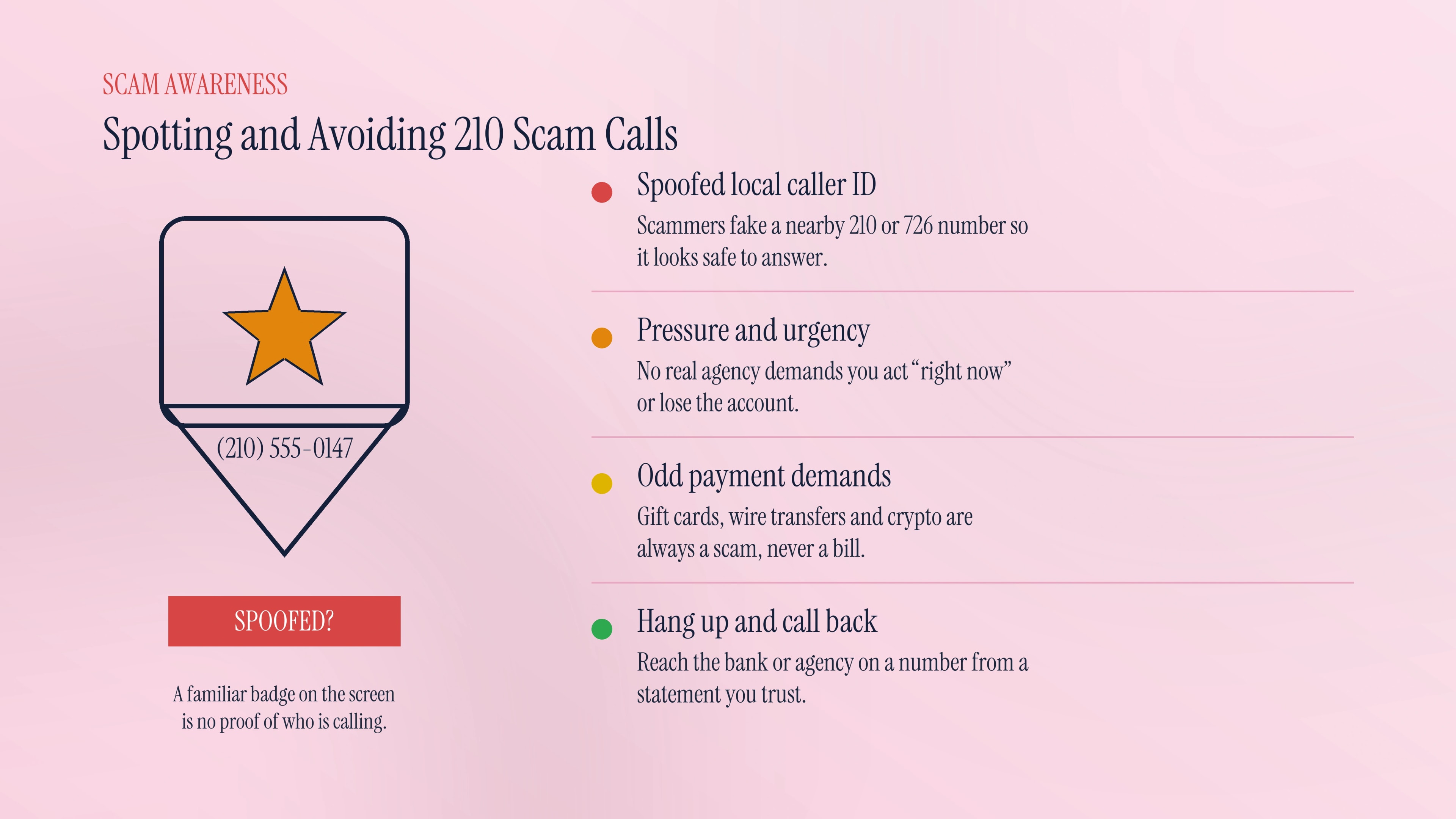
- Ignore urgent demands for payment by gift card or wire — they are classic red flags.
- Never share personal or financial details on a call you did not place.
- Block and report suspected spoofed numbers to your carrier and the FTC.
- Heed the spam labels many carriers now add to suspicious calls.
The Future of the 210 Area Code
San Antonio remains one of the fastest-growing large metros in the country, and Bexar County's population keeps climbing alongside it — the county that both 210 and 726 largely serve, according to Bexar County census figures. With the overlay already absorbing new growth, another split is unlikely any time soon, but continued expansion around Joint Base San Antonio, the medical center, and the city's growing tech corridor means demand for local numbers will keep rising. For now, the outlook is stable: existing 210 numbers stay in place, 726 continues to absorb new lines, and a recognized San Antonio identity remains available through any cloud provider or carrier today.
Two Splits and an Overlay Later, Still San Antonio's Number
The 210 prefix is more than a routing code; it is shorthand for San Antonio itself, from the Alamo and the River Walk to Joint Base San Antonio and the fast-growing suburbs ringing the city. It has survived a split, another three-way split, and an overlay without losing its identity as the city's number. For a business, a local 210 or 726 number remains one of the cheapest, most credible ways to signal genuine San Antonio roots — and with cloud calling, that presence is available to anyone, anywhere.
Put a trusted San Antonio number to work today
Acepeak delivers local 210 lines with smart routing, voicemail, and 24/7 support — everything a business needs to stay reachable.
Questions, answered.
It covers San Antonio and most of Bexar County, Texas, along with small portions of Atascosa, Comal, Guadalupe, Medina, and Wilson counties — including Joint Base San Antonio, Alamo Heights, Converse, Universal City, and Helotes.
Central Time — UTC−6 in winter (CST) and UTC−5 during daylight saving (CDT), the same clock as Dallas, Houston, and Austin.
It was created on November 1, 1992, in a split from area code 512. A second three-way split on July 7, 1997 reduced it to most of Bexar County, sending the suburbs and Hill Country to the new 830 code and the Rio Grande Valley to 956.
726 is an overlay assigned to the same territory as 210, activated in October 2017 to relieve number exhaustion. Existing 210 numbers were unaffected — new lines are simply assigned from either code.
Yes. Ten-digit dialing has been required across the 210/726 region since the overlay took effect in 2017 — every local call needs the area code plus the seven-digit number.
Yes. Cloud providers like Acepeak can activate a local 210 or 726 number remotely and route it to a team anywhere, with no physical office in San Antonio required.
Signing up for a 210 area code number takes minutes with a cloud phone provider — no local office in San Antonio required. Pick the number, connect it to your existing phone or app, and calls route in immediately. This keeps the 210 area code presence you already have while adding the local credibility Texas customers respond to.